

The Science of Sedentary Strain: Why Your Back Aches at 3:00 PM
For the modern remote professional, the home office is more than a workspace; it is a high-stakes environment for musculoskeletal health. While the convenience of telework is undeniable, it often leads to longer hours of static sitting, which exerts a cumulative toll on the human frame. If you find that a dull ache begins to radiate through your lower back by mid-afternoon, you are experiencing the physiological consequences of a breakdown in spinal neutral positioning.
The human spine is not a straight pillar but a sophisticated "S" curve designed to distribute mechanical loads. The lumbar region—the five vertebrae of the lower back (L1-L5)—features a natural inward curve known as lordosis. When we sit for prolonged periods without adequate support, the pelvis often tilts backward (posterior tilt), flattening this curve. This shift increases intradiscal pressure and forces the paraspinal muscles to work overtime to stabilize the torso. According to EU-OSHA research on prolonged static sitting, these static loads are a primary risk factor for Work-Related Musculoskeletal Disorders (WMSDs).
To mitigate these risks, the integration of dedicated lumbar support is not a luxury but a fundamental engineering requirement for the workstation.

Physiological Mechanisms of Lumbar Support
The primary objective of lumbar support is to maintain the natural lordotic curve of the lower spine while seated. By "filling the gap" between the chair's backrest and the lower back, the support stabilizes the pelvis and prevents it from rolling backward into a slouching position.
Reducing Paraspinal Fatigue
When the lumbar curve is unsupported, the muscles surrounding the spine—the multifidus and erector spinae—must maintain a constant state of contraction to prevent the spine from collapsing into a "C" shape. This leads to localized fatigue, reduced blood circulation, and the eventual buildup of metabolic waste products, which manifest as pain. Scientific reviews, such as those by Agarwal et al. (2018), suggest that sit-stand interventions and proper lumbar positioning significantly alleviate this discomfort.
Managing Intradiscal Pressure
Sitting actually places higher pressure on the spinal discs than standing. When we slouch, the front of the vertebrae compress the discs, pushing the soft inner material (nucleus pulposus) toward the back, where sensitive nerves are located. A well-placed lumbar support shifts the weight-bearing load back onto the bony structures of the vertebrae, preserving the integrity of the intervertebral discs.
The "Tall User" Paradox: A Case Study in Ergonomic Mismatch
General ergonomic advice often fails when applied to users at the extremes of the height spectrum. To demonstrate the critical nature of workstation synergy, we modeled the requirements for a Tall Professional Male (193cm / 6'4") with pre-existing lower back pain.
In this scenario, a standard fixed-height desk (typically 29 inches) creates a significant "ergonomic deficit." For a user of this stature, the ideal sitting desk height is approximately 31 inches (78.7cm). This 2-inch discrepancy forces the user into a "shoulder hike" or a forward lean to reach the keyboard. This postural compensation creates thoracic kyphosis (hunching), which effectively negates the benefits of even the most advanced lumbar support.
Modeling Note: Tall Professional Workstation Scenario
Methodology: This analysis uses a deterministic parameterized model based on ANSI/HFES 100-2007 anthropometric ratios. It assumes a professional remote work setting with high-performance hardware.
| Parameter | Value | Unit | Rationale |
|---|---|---|---|
| User Height | 193 | cm | 95th percentile male stature |
| Ideal Desk Height (Sit) | 78.7 | cm | Based on elbow-to-floor height ratios |
| Ideal Desk Height (Stand) | 117.3 | cm | Based on 90-degree elbow angle |
| Workstation Load | 95.5 | kg | Multi-monitor + Liquid-cooled PC tower |
| Productivity Uplift | 15 | % | Conservative estimate for pain-free work |
Analysis Result: For this user, a single-motor standing desk with an 80kg capacity would operate at ~119% utilization, leading to mechanical "sag" and inconsistent height positioning. A dual-motor system with a 120kg capacity is mandatory to maintain the structural integrity required for precise lumbar alignment.

Strategic Selection: What to Look for in a Support System
When selecting an ergonomic chair for a home office, "one size fits all" is a dangerous misconception. The BIFMA G1-2013 Ergonomics Guideline emphasizes that furniture must accommodate the 5th to 95th percentile of the population through adjustability.
1. Height Adjustability
The apex of the lumbar support must align with the deepest part of your lower back's curve. In professional practice, we use the "Palpation Method": sit back in the chair, feel for the natural inward curve just above your pelvis, and adjust the support until it rests firmly against that point.
2. Depth and Tension Control
The support should feel firm enough to provide resistance but not so aggressive that it pushes your entire torso forward. A useful heuristic is the "Two-Finger Resistance Rule": when sitting upright, you should be able to press into the support with two fingers and feel firm resistance, yet still be able to maintain a slight anterior pelvic tilt.
3. Seat Depth Interaction
A common "gotcha" in chair setup is ignoring seat depth. If the seat pan is too deep, you cannot sit far enough back to engage the lumbar support without the edge of the seat cutting into the back of your knees. Ensure there is a two-finger gap between the back of your knee and the seat edge to allow for full backrest contact.
The Economic Value of Ergonomic Integrity
Investing in high-quality ergonomic equipment is often viewed as a cost, but scenario modeling suggests it is a high-yield investment in operational efficiency.
Based on our performance ROI model, a professional earning $65/hour who experiences a 15% productivity increase due to reduced pain and improved focus (a figure supported by Texas A&M research) stands to gain approximately $9,750 in annual productivity value. For a premium workstation setup costing $1,500, the "payback period" is roughly two months. This does not account for the long-term avoidance of healthcare costs associated with chronic MSDs.
Beyond the Chair: The Ecosystem Approach
Lumbar health is not solely the responsibility of the chair. It requires a coordinated effort across the entire workstation.
Monitor and Arm Positioning
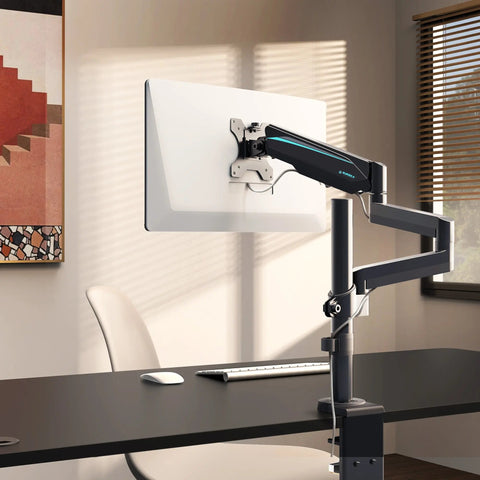
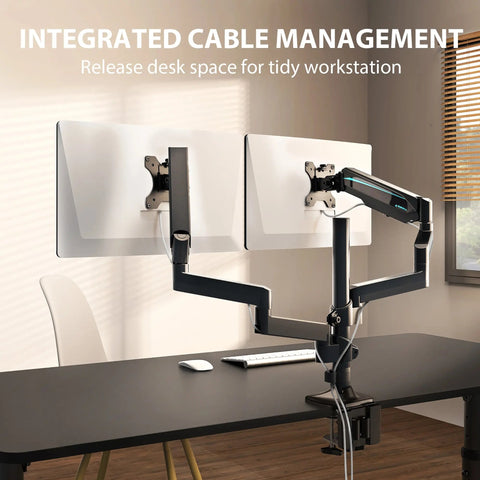
If your monitors are too low, you will naturally lean forward, pulling your lower back away from the lumbar support. Using a Dual Monitor Arm allows you to set the top of the screens at eye level, encouraging a "head-back" posture that keeps your spine against the backrest.
The Role of the Footrest
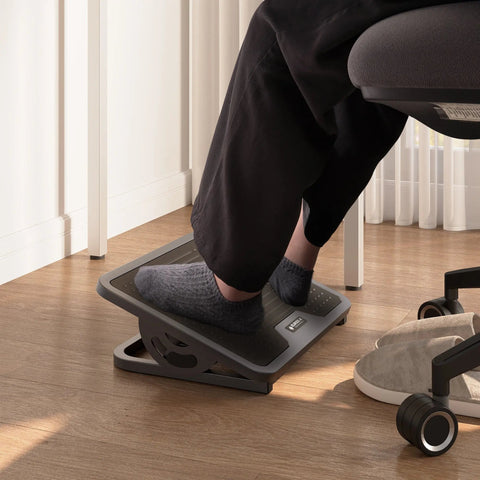
For shorter users or those using a desk that is slightly too high, the feet may dangle or not rest flat on the floor. This pulls the pelvis forward and creates a gap at the lumbar region. An Adjustable Ergonomic Footrest stabilizes the lower body, ensuring the pelvis remains anchored against the chair's support system.
The Sit-Stand Rhythm
The Cornell University Ergonomics Web recommends a "20-8-2" rhythm: 20 minutes of sitting, 8 minutes of standing, and 2 minutes of moving/stretching. When transitioning, remember that your pelvic angle changes. You may need to slightly readjust your lumbar support height when moving from a seated to a standing desk height to maintain optimal contact.
Eureka Ergonomic Adjustable Ergonomic Footrest designed for blood circulation and stress relief.
Practical Setup Checklist
To ensure your home office is optimized for all-day comfort, follow this expert-verified checklist aligned with OSHA eTools for Computer Workstations:
- Lumbar Placement: Is the support at the level of your "belt line" or slightly above, filling the natural hollow of your back?
- Seat Depth: Is there a 2-3 inch gap between the seat edge and the back of your knees?
- Armrests: Are your elbows at a 90-degree angle, with shoulders relaxed? (Avoid "shoulder hiking").
- Feet: Are they flat on the floor or a footrest?
- Eyes: Is the top third of your monitor at eye level?
Final Professional Insights
While high-quality hardware like the Exis, Ergonomic Office Chair or the Lira, Ergonomic Office Chair provides the necessary engineering foundation, ergonomics is ultimately a behavioral science. As noted in The 2026 Workstation White Paper: Converging Ergonomic Science and Sustainable Engineering, the most effective "active" support comes from your own core muscles.
Lumbar support should be viewed as a complement to, not a replacement for, movement. Regular micro-breaks and core-strengthening exercises (such as planks) provide the internal stability that makes external ergonomic support even more effective. By combining professional-grade equipment with disciplined postural habits, you can transform your home office from a source of strain into a hub of sustainable productivity.
Disclaimer: This article is for informational purposes only and does not constitute professional medical advice. If you suffer from chronic back pain or pre-existing spinal conditions like lumbar stenosis or hyperlordosis, please consult a qualified healthcare professional or physical therapist before making significant changes to your workstation or exercise routine.
Sources & Citations
- BIFMA: G1-2013 Ergonomics Guideline for Furniture
- OSHA: Computer Workstations eTools - Neutral Postures
- ISO: ISO 11226:2000 Evaluation of Static Working Postures
- PubMed: Agarwal et al., 2018 – Sit-Stand Desks & Low Back Discomfort
- Cornell University: Workstation Setup Guides & 20-8-2 Rhythm
- WHO: 2020 Guidelines on Physical Activity & Sedentary Behaviour
- EU-OSHA: Musculoskeletal Disorders and Prolonged Static Sitting




Leave a comment