


Luxury desk materials should be judged by three things: how the surface looks in the room, how much care it needs, and whether it fits executive work, gaming, or both. A premium desktop can elevate the space, but the wrong finish can also create cleaning friction or feel off for the way you actually use the desk.
What Luxury Desktop Materials Need to Deliver
The right premium surface should do more than look expensive. It should fit the room's tone, handle daily laptop and accessory use without becoming fussy, and support the kind of setup you run most often. That is why luxury desk materials are better compared by use case than by style alone.
For an executive office, the main question is whether the desk feels calm, polished, and easy to keep presentable. For gaming, the question shifts toward visual impact, cleanup comfort, and whether the surface works well with peripherals. If you are building a hybrid space, check which priority is stronger before you compare finishes.
A good first filter is simple: choose the material that matches your routine, not just the one that looks most premium in photos. If a surface adds too much maintenance anxiety, it is probably not the best luxury desk material for daily use.
Sintered Stone vs. Wood Executive Desk
Sintered stone and wood both read as premium, but they send different signals in an executive workspace. Sintered stone usually feels more modern and high-polish, while wood tends to feel warmer and more traditional. The better choice depends on whether the room should project contemporary precision or classic character.
Visual Style and Room Presence
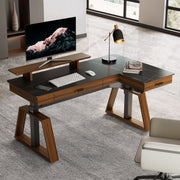
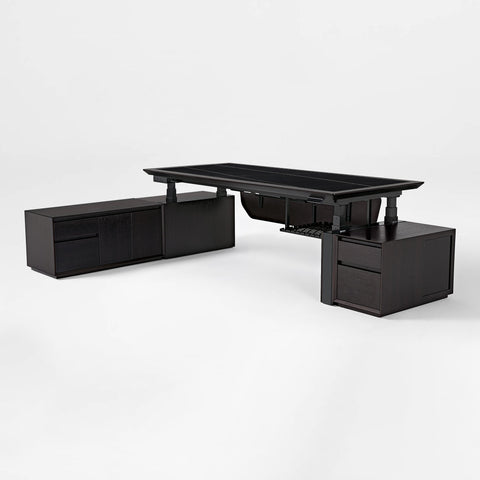
A sintered stone executive desk can create a crisp, refined look that fits a modern leadership office. The Zen Pro executive desk uses a sintered stone top and is positioned as a large, organized workstation with a classic black-and-walnut palette. That makes it a strong fit when the room needs to feel polished without looking busy.
Wood still has a place, especially if the office should feel warmer, softer, or more traditional. If you want a more familiar executive tone, a wood desktop can support that mood better than a harder, colder visual profile. The tradeoff is that the finish you choose matters more than the material label alone.
Daily Cleaning and Maintenance
This is where the comparison starts to matter for real day-to-day use. The supported guidance on sintered stone leans toward easier upkeep than wood in comparative settings, which is why it often appeals to buyers who want a cleaner-looking workspace with less routine care. For busy offices, that can be the deciding factor.
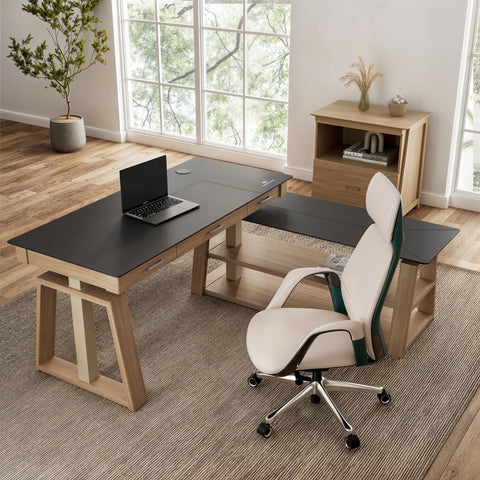
The Executive Office Set: Ark Standing Desk & Premium Executive Chair is a useful example because its sintered stone desktop is described as scratch-resistant and easy to clean. That is a product-level claim, not a universal rule for every stone surface, but it does show why this material often gets chosen for low-fuss executive setups.
Wood can still be a great choice if you value texture and warmth more than the cleanest upkeep profile. Just do not assume it will feel as wipe-and-go as a stone surface. In practice, the better office pick is the one you will keep looking composed without extra effort.
Durability Cues Buyers Should Verify
Do not buy on the material name alone. Check whether the specific desk finish is described as scratch-resistant, heat-resistant, or easy to maintain, and remember that those claims are product-specific. A wood desktop may be beautifully made, but it is still a different care profile from sintered stone.
The technical specifications of sintered stone surfaces describe the material as highly scratch resistant, while a comparative guide on sintered stone versus wood durability frames stone as lower-maintenance than wood in typical use. That supports the comparison, but not a universal winner-take-all conclusion.
Which Office Aesthetic Fits Better
If your office needs warmth, wood usually fits better. If your office needs a sleek, modern, premium look with simpler day-to-day care, sintered stone is often the safer fit. That is the cleanest way to think about a sintered stone vs wood executive desk comparison.
For most buyers, the question is not which material is better in theory. It is whether the room should feel classic and inviting or contemporary and highly polished. Once that is clear, the right choice gets much easier.
Low-Maintenance Surfaces for Daily Use
Low maintenance does not mean maintenance-free. It means the desk stays presentable with normal wiping and does not create extra worry every time you set down a laptop, monitor arm, drink, or controller. For daily use, that practical comfort matters as much as the finish itself.
What Low Maintenance Means in Practice
A low-maintenance high-end desk surface should make cleanup feel routine, not delicate. Buyers usually want a desktop that survives normal life without special treatment, repeated conditioning, or constant second-guessing. That is especially important in offices where the desk is used all day.
The best luxury desk material for daily use is the one that lets you keep working, not the one that asks for a care ritual every week. If a surface looks beautiful but stresses you out, it is not really low maintenance in the way most shoppers mean it.
Surfaces That Fit Busy Workdays
Sintered stone fits this need well in the provided product examples. The Zen Pro executive desk lists a sintered stone tabletop with scratch resistance, high-temperature resistance, anti-corrosion, and impermeability, which are the kinds of finish cues buyers usually want when they need a high-end surface for constant use.
That does not mean every sintered stone desk behaves the same way. It means the material is often positioned for a more forgiving daily routine than wood, especially when the buyer wants a clean presentation with less upkeep anxiety.
Gaming Setups and Cleanup Convenience
Gaming rooms bring a different kind of friction. You may want a premium look, but you also want a surface that is easy to wipe down after long sessions and does not complicate the mouse, keyboard, or accessory layout. That is where tempered glass becomes an interesting option.
The Logitech Darkfield Laser Tracking Technology whitepaper is useful here because it shows a real caveat: standard optical mice can struggle on clear glass, while Darkfield-style sensors are designed for glossy surfaces. In other words, glass can work in a gaming setup, but the sensor matters.
That is why the GTG - I43 glass gaming desk and the GTG - L60 glass gaming desk should be viewed as style-plus-setup decisions, not automatic performance upgrades. If your mouse and room lighting are compatible, glass can look sharp. If not, the premium look may come with frustration.

What to Confirm Before You Buy
Before you treat any premium surface as easy care, verify the finish details, the care instructions, and whether the desk is meant for office use, gaming use, or both. Also check dimensions, weight capacity, and shipping coverage if the desk is large or L-shaped.
That is especially important for hybrid rooms. A material that feels ideal for client-facing work may be too formal for a gaming room, and a gaming surface with RGB styling may feel too busy in an executive office. The right choice is the one that fits the whole room, not just the desktop.
Durable Desktop Finishes for Gaming Setups
Gaming rooms have their own version of luxury. The best desktop finish is not always the flashiest one; it is the one that looks refined, stays easy to clean, and does not create extra setup friction around mice, monitors, and accessories. A premium gaming surface should feel intentional, not just decorative.
| Material or Finish | Visual Effect | Maintenance Feel | Gaming-Room Fit | Verified Notes To Check |
|---|---|---|---|---|
| Sintered stone | Sleek, modern, and polished | Usually the lowest-fuss option in this comparison | Strong for a premium room that also needs easy cleanup | Verify the exact finish claims on the product page |
| Wood | Warm, traditional, and softer visually | More care-sensitive than stone in typical use | Good when the room should feel refined rather than flashy | Check finish care notes and long-term maintenance expectations |
| Tempered glass | Bright, clean, and visually high-end | Easy to wipe, but setup compatibility matters | Best when the aesthetic is the priority and the mouse setup is compatible | Confirm sensor compatibility, glare comfort, and included accessories |
For a premium gaming room, tempered glass is often about visual polish first. The GTG glass desks show how that can work in practice, with tempered glass construction, RGB lighting, and accessory kits that make the desk feel complete. That can be a good fit if you want the desktop itself to be part of the room's design.
The main catch is not whether glass looks premium. It is whether your mouse, lighting, and comfort expectations line up with the surface. If they do, the result can feel clean and upscale. If they do not, wood or sintered stone may be a more practical daily-use choice.
This is why durable desktop finishes for gaming setups should be judged by more than scratch talk. A material can look strong on paper and still feel awkward in a real room if it creates glare, sensor issues, or too much visual noise.

Choose the Right Premium Surface
Start with the room, not the material. If the desk is mainly for executive work, lead with calm presentation and easy upkeep. If it is mainly for gaming, lead with visual style and setup comfort. If it is a hybrid room, decide which use gets the most hours.
- Identify the primary room and routine.
- Decide whether the space should read more executive or more gaming-focused.
- Choose the surface family that matches your maintenance tolerance.
- Verify tabletop material, dimensions, warranty, return policy, and shipping coverage before checkout.
- Confirm the finish matches the long-term look you want in the room.
That process works because it keeps the decision grounded. A sintered stone desk is usually the safer low-maintenance choice for an executive-heavy room. Tempered glass can make sense in gaming spaces if the mouse setup and visual comfort are right. Wood remains the better fit when warmth and tradition matter more than the easiest upkeep.
If you want a premium office example to compare against the criteria above, check the desk size and executive productivity guide and verify the size, shipping, and return details before you buy. For gaming-focused buyers, the same rule applies: use the product page to confirm the finish and setup fit, not just the look.
FAQs
What Luxury Desk Material Is Easiest to Keep Clean?
In most buyer comparisons, sintered stone is the easiest premium surface to live with because it is usually framed as lower maintenance than wood. That said, the exact result still depends on the finish, the product design, and how much care you want to spend keeping the desk looking sharp.
Is a Sintered Stone Desk Better Than Wood for an Executive Office?
It depends on the room's tone. Sintered stone usually fits a modern, polished office, while wood is often better when you want warmth and a more traditional executive feel. Neither is universally better; the best choice is the one that matches the room's image and maintenance tolerance.
Can a Luxury Desktop Material Work in a Gaming Setup?
Yes, if the surface matches your setup habits. Tempered glass can work well in a premium gaming room, but mouse compatibility matters more than many shoppers expect. If the desk looks right but the sensor setup does not, the experience can feel annoying fast.
What Should I Check Before Buying a Premium Desk Surface?
Check the tabletop material, finish claims, dimensions, weight capacity, warranty, shipping coverage, and return terms. Those details matter more than a vague promise of luxury. If the product page does not confirm the use case you need, treat it as a possible fit, not a sure thing.
Why Do Some Buyers Choose Sintered Stone for Daily Use?
Because it often gives them the premium look they want without adding much care anxiety. In the featured desks, the finish is positioned as scratch-resistant and easy to clean, which is exactly the kind of low-friction profile many daily-use buyers are after. It is still a product-level claim, so always verify the exact model.
Final Takeaway
Luxury desk materials are easiest to choose when you separate style from daily friction. Sintered stone is often the best fit for low-maintenance executive work, wood is stronger when warmth matters more, and tempered glass can work well in gaming rooms when the sensor and comfort details line up. Use the product page to confirm the finish, size, and policy details before you decide.



Leave a comment