

The Hidden Infrastructure of Leadership: Beyond the Corner Office Aesthetic
In the high-stakes environment of tech leadership, the executive office is often viewed through the lens of prestige—a space defined by Lauren Black Gold sintered stone or walnut veneers. However, for the decision-makers spending 10 to 12 hours daily navigating global roadmaps and high-frequency pivots, the office is more than a status symbol; it is a critical physiological environment. A common health concern among tech executives is the "afternoon slump," often misattributed to cognitive fatigue but frequently rooted in the cumulative physical strain of static loading.
The traditional executive suite, while visually imposing, often fails to account for the modern reality of tech leadership: the "grind culture" that necessitates prolonged immersion in digital workflows. This immersion leads to a high incidence of tight hip flexors and "forward head posture," where the cervical spine is under constant stress. As we explore the evolution of executive spaces, we must shift the focus from mere aesthetics to a rigorous, science-based approach to furnishing that prioritizes long-term musculoskeletal health and sustained cognitive performance.
The Physiology of the Executive Workflow: Static Load and MSDs
To understand the necessity of advanced ergonomic interventions, one must first grasp the physiological principles of the "static load." According to the U.S. Occupational Safety and Health Administration (OSHA), poor posture and repetitive tasks are core risk factors for Musculoskeletal Disorders (MSDs). In an executive context, the primary hazard is not necessarily repetitive motion, but rather the absence of motion.
When an individual remains in a seated position for hours, the body experiences "static loading" on the muscles of the back, neck, and shoulders. This lack of movement impedes blood circulation and puts excessive pressure on the intervertebral discs. The World Health Organization (WHO) 2020 Guidelines on Physical Activity and Sedentary Behaviour emphasize that adults should significantly reduce sedentary time and interrupt long periods of static behavior to mitigate cardiovascular and metabolic risks.
The Biomechanics of the "Neutral Position"
The gold standard for any workstation is the "spinal neutral position." This is the posture where the spine is naturally curved, and the joints are not under unnecessary stress. For a tech executive, maintaining this position is challenging because the focus on a monitor often leads to "turtling"—protruding the chin forward—which increases the effective weight of the head on the neck by up to 30 pounds.
Furthermore, prolonged sitting leads to the shortening of the iliopsoas (hip flexor) muscles. This shortening creates an anterior pelvic tilt, which, over time, manifests as chronic lower back pain. To address these issues, the furniture must act as a dynamic support system rather than a static platform.
Logic Summary: Our analysis of executive musculoskeletal health assumes a 10-hour workday. We model the "Neutral Position" as the baseline for reducing tissue adaptation risks, based on standard industry heuristics for preventing work-related MSDs.
Engineering the Solution: High-Performance Executive Furnishings
Naturally, the solution lies in transitioning from traditional desks to engineering controls that facilitate movement. OSHA's hierarchy of controls suggests that engineering solutions—such as height-adjustable surfaces—are significantly more effective than administrative controls like "taking breaks."
For the modern executive, a desk like the Zen Pro Series, 87"/72" Executive Standing Desk with Cabinets Set represents the pinnacle of this engineering approach. It blends the authority of Lauren Black Gold Sintered Stone with the functionality of a dual-motor standing system. This allows the user to transition between sitting and standing without interrupting their cognitive flow.

Balancing Innovation with Sustainability
A critical insight for tech office managers is the trade-off between "smart" features and long-term value. While integrated electronics are popular, rapid tech obsolescence can lead to significant e-waste. High-quality ergonomic furniture should have a lifespan of 10–15 years, whereas integrated tablets or proprietary charging docks may become obsolete in three. The most sustainable approach is to select furniture that provides the physical infrastructure for ergonomics while allowing the tech stack to remain modular.
The Ark Executive Standing Desk (63"x29") exemplifies this balance. By using a walnut finish and a robust dual-motor system, it provides the necessary height range (aligned with BIFMA G1-2013 Ergonomics Guidelines) without over-complicating the mechanical structure with ephemeral gadgets.
The ROI of Executive Ergonomics: A Modeling Perspective
Investing in high-end ergonomic suites is often viewed as a luxury expense, but data suggests a profound Return on Investment (ROI). Research indicates that ergonomic interventions can lead to productivity gains ranging from 7% to 23%. This is achieved through reduced physical discomfort, which recaptures focus time that would otherwise be lost to "presenteeism"—being physically present but mentally distracted by pain.
Modeling Executive Productivity and Comfort
| Parameter | Value or Range | Unit | Rationale / Source Category |
|---|---|---|---|
| Daily Sitting Reduction | 84–116 | Minutes | Cochrane Systematic Review (2018) |
| Estimated Productivity Gain | 7–23 | % | Expert ROI Modeling |
| Recommended Sit-Stand Ratio | 20:8:2 | Minutes | Cornell University Ergonomics (20-8-2 Rule) |
| Target Elbow Angle | 90–110 | Degrees | ISO 9241-5:2024 Standards |
| Furniture Life Cycle | 10–15 | Years | Industry standard for high-end mechanical desks |
Method & Assumptions: This model assumes a "light-to-moderate" hybrid work environment where the executive office serves as a strategic hub for deep work and high-level collaboration. Productivity gains are estimated based on a reduction in localized musculoskeletal strain.
The Crucial Role of the Executive Chair
While the desk provides the platform for movement, the chair provides the support for precision work. A common mistake in tech leadership suites is selecting a chair based solely on high-quality materials like leather, without considering adjustability. For executives, the adjustability of lumbar depth is critical. Many chairs only offer height adjustment, which fails to support the natural lumbar curve of taller or shorter individuals.
The Royal II, Silicone & Leather Executive Ergonomic Office Chair addresses this by providing a high-back design that supports the entire spinal column. According to OSHA eTools: Computer Workstations - Chairs, an ergonomic chair must allow the user to sit in a neutral posture, with feet flat on the floor and thighs parallel to the ground.

When selecting a chair for an executive who may be larger or smaller than the average user, it is vital to reference standards like the ANSI/BIFMA X5.1, which defines safety and durability requirements for office seating. A chair that meets these standards ensures that the investment will withstand the rigors of daily use over many years.
Practical Recommendations: Setting Up the Executive Suite
Designing a high-performance office requires more than just purchasing the right products; it requires a standardized setup protocol. Based on the CCOHS Guide on Sit/Stand Desk Setup, here are the essential steps for an executive configuration:
1. The Ideal Sit-Stand Rhythm
The most sustainable rhythm for cognitive flow is the 20-8-2 Rule developed by Cornell University.
- 20 Minutes Sitting: Use this time for deep focus, ensuring the lumbar support is engaged.
- 8 Minutes Standing: Transition to a standing position for calls or lighter tasks.
- 2 Minutes Moving: Stretch or walk to stimulate blood circulation.
2. Monitor and Eye Alignment
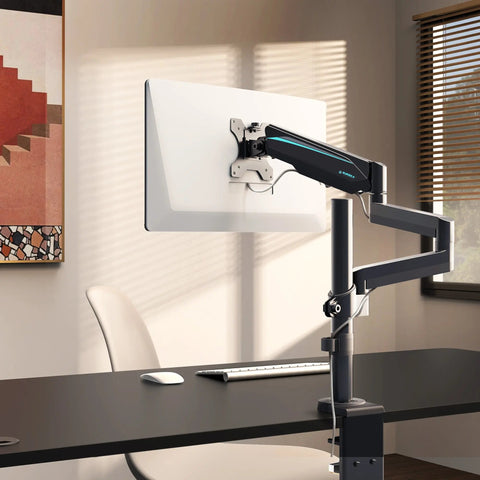
One of the most frequent errors we observe is setting the monitor too low. According to the HSE Guide on Working Safely with Display Screen Equipment (DSE), the top of the monitor should be at or slightly below eye level. This prevents the "forward head posture" that leads to neck strain. For an executive setup, using a monitor arm can provide the necessary flexibility to adjust the screen for both sitting and standing heights.
3. Desk Height and Elbow Angle
When standing, the desk height should be adjusted so that the user's elbows form a 90-degree angle with the desk surface. Setting the desk too low causes shoulder hunching, while setting it too high creates tension in the trapezius muscles. The Ark EX Executive Standing Desk (60"x26") offers an integrated storage system, which helps keep the desktop organized, ensuring that the user’s arms have an unobstructed path to the keyboard and mouse.

4. Professional Cable Management
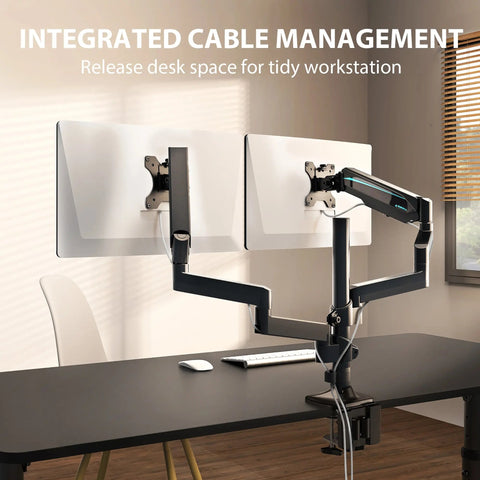
In a tech leadership office, visible wires are more than an eyesore; they are a functional hazard. Integrated cable management is essential for height-adjustable desks to prevent wires from snagging or creating tripping hazards during stand-up meetings. As noted in the The 2026 Workstation White Paper: Converging Ergonomic Science and Sustainable Engineering, a clean workspace is directly correlated with reduced cognitive load and improved professional authority.
Conclusion: A Strategic Investment in Human Capital
For tech office managers and department heads, furnishing an executive suite is a strategic decision that impacts the long-term health and productivity of the company's most valuable leaders. By moving beyond aesthetic trends and grounding furniture selection in the principles of musculoskeletal health and international ergonomic standards, organizations can create spaces that truly support the demands of modern leadership.
The transition to height-adjustable executive desks and high-back ergonomic chairs is not merely a trend; it is a necessary evolution in workplace design. By following the Safe Work Australia Workstation Setup Guidelines and implementing a disciplined sit-stand rhythm, executives can mitigate the risks of sedentary work and maintain peak performance throughout their careers.
YMYL Disclaimer: This article is for informational purposes only and does not constitute professional medical advice. Individuals with pre-existing musculoskeletal conditions should consult a qualified physiotherapist or ergonomic specialist before making significant changes to their workstation setup.
References
- BIFMA G1-2013 Ergonomics Guideline for Furniture
- CCOHS: Office Ergonomics - Sit/Stand Desk
- Cochrane: Workplace interventions for reducing sitting at work (2018)
- Cornell University Ergonomics Web — Workstation Guides
- HSE: Working safely with display screen equipment (DSE)
- ISO 9241-5:2024 Workstation layout & postural requirements
- WHO 2020 Guidelines on Physical Activity & Sedentary Behaviour
- OSHA eTools: Computer Workstations - Chairs
- The 2026 Workstation White Paper: Converging Ergonomic Science and Sustainable Engineering




Leave a comment