

The Hidden Erosion of the Modern Workstation: Why Humidity is Your Desk's Silent Adversary
You have likely noticed the subtle signs of a failing workstation: a slight bubbling along the front edge where your wrists rest, a drawer that suddenly sticks during the humid summer months, or a fine crack appearing in what was once a flawless wood finish. These are not merely cosmetic flaws; they are the physical manifestations of environmental fatigue. For the remote professional, a desk is a significant investment in productivity and musculoskeletal health. However, many users overlook how seasonal humidity fluctuations—ranging from bone-dry winters to sweltering, damp summers—systematically degrade the structural integrity of furniture.
The core of the problem lies in the hygroscopic nature of common desk materials. Whether your desktop is constructed from solid timber or Medium-Density Fibreboard (MDF), it acts like a structural sponge, absorbing and releasing moisture to reach equilibrium with the surrounding air. When this process is uneven or excessive, the internal stresses lead to warping, delamination, and the eventual failure of the ergonomic setup. This article evaluates the technical performance of various moisture-resistant finishes, providing a framework for selecting a workstation that survives the specific climate of your home office.
The Physiology of Material Failure: How Moisture Compromises Ergonomics
To understand why a finish matters, we must first examine the physiological and physical principles of the workstation. In the field of ergonomics, stability is paramount. According to ISO 11226:2000 Evaluation of static working postures, maintaining a neutral spinal position requires a surface that remains level and consistent. If a desktop warps even by a few millimeters, it forces the user into micro-compensations—slight tilts of the neck or wrists—that increase the static load on the musculoskeletal system.
The primary mechanism of failure is the "Static Load" imbalance within the material itself. MDF, while prized for its uniformity and lack of grain, is essentially a composite of wood fibers and resin. If moisture penetrates the core, these fibers swell. In coastal regions where relative humidity (RH) often exceeds 60%, unsealed edges become the "Achilles' heel" of the desk.
Logic Summary: Our analysis of material longevity assumes a baseline RH fluctuation of 30% to 75% across a calendar year. We define "failure" as any structural change exceeding a 2mm deviation from the horizontal plane or any visible separation of edge banding.
When the substrate material expands, it exerts outward pressure on the finish. If the finish is brittle, it cracks; if the adhesive is weak, it delaminates. This instability directly conflicts with the CCOHS guidelines on office ergonomics, which emphasize that a workstation must provide a secure, vibration-free platform for equipment. A wobbly or uneven desk is not just an annoyance; it is a precursor to Repetitive Strain Injury (RSI).
Evaluating the Barrier: Laminates vs. Veneers vs. Powder Coatings
Not all finishes provide an equal moisture barrier. Selecting the right one requires matching the chemical properties of the coating to the environmental stressors of your region.
1. Thermoplastic Laminates (3D Vacuum Thermoforming)
In our observations of warranty claims and long-term material testing, full-wrap thermoplastic laminates consistently outperform traditional edge-banded solutions in high-humidity environments. This process involves heating a PVC or PET foil and vacuum-forming it over a contoured MDF core.
- The Advantage: Because the laminate wraps around the edges and onto the underside, there are no seams on the primary work surface or the front edge.
- The "Gotcha": Many "budget" desks use 2D lamination with separate edge strips. Over time, the glue line in these strips is the first point of failure when exposed to forearm perspiration and ambient humidity.
- Heuristic: If you live within 50 miles of a coastline, a 3D-wrapped surface is a practical baseline for preventing "edge lift."
2. Real Wood Veneers and Solid Wood
Wood veneers offer the aesthetic of solid timber with the stability of a composite core. However, they are highly sensitive to moisture. As noted in research on veneer checking, rapid changes in humidity cause the wood cells to expand and contract at a different rate than the substrate, leading to fine hairline cracks.
To mitigate this, high-end manufacturers use conversion varnishes. Unlike standard polyurethane, these are chemically cross-linked coatings that meet strict VOC standards (often aligned with the 275 VOC limit) while providing a much harder, more water-resistant shell.
3. Powder Coating
While common on metal frames to prevent rust (often tested via ASTM B117 salt spray testing), powder coating on wood is a specialized, premium process. It creates a seamless, non-porous barrier that is virtually impervious to liquid. However, it can be prone to chipping if the underlying MDF flexes significantly under heavy loads.

The Engineering Solution: Integrated Moisture Management
Modern ergonomic furniture addresses these environmental risks through "Engineering Controls"—a concept derived from the OSHA hierarchy of controls. Instead of relying on the user to maintain the environment (Administrative Control), the desk is engineered to resist the hazard.
One such advancement is the use of EPA-certified, low-emission panels that are pre-treated for moisture resistance. When these are paired with a vacuum thermoforming process, the result is a "sealed system." According to The 2026 Workstation White Paper: Converging Ergonomic Science and Sustainable Engineering, the future of professional-grade furniture lies in this intersection of material science and user health.
The "Underside" Secret
A common industry oversight is the failure to seal the underside of the desktop. Even if the top is waterproof, an unsealed bottom allows moisture to enter the core from below, causing the desk to "cup" or bow upwards. We consider a fully sealed underside a non-negotiable feature for any desk intended to last more than five years in a non-climate-controlled environment.
Practical Recommendations: Maintenance and Setup Protocols
To protect your investment, follow these expert-vetted protocols derived from pattern recognition in high-use professional environments.
1. The pH-Neutral Cleaning Rule
Avoid all-purpose "kitchen" cleaners. Most contain ammonia or harsh surfactants that degrade the top layer of your desk's finish over time, making it more porous and susceptible to moisture. Use only pH-neutral solutions or a slightly damp micro-fiber cloth.
2. Humidity Benchmarking
Maintain your home office between 40% and 60% relative humidity. This range is optimal not only for furniture but also for human respiratory health and the prevention of static electricity buildup in electronics.
3. Strategic Setup and Loading
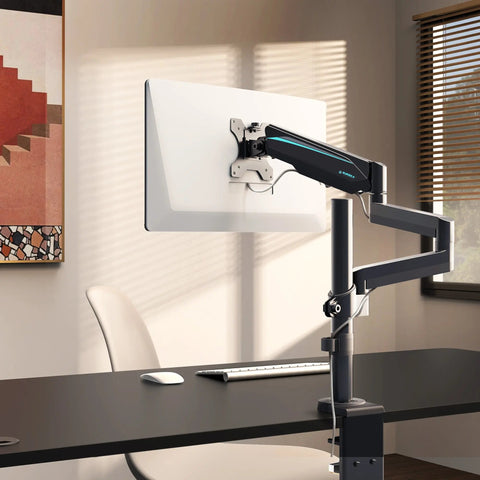
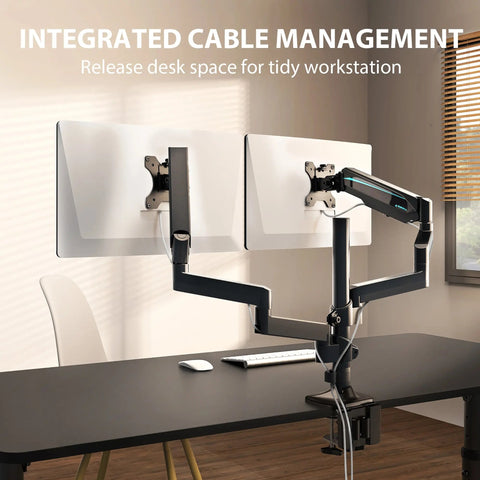
When setting up a heavy "battlestation," the weight distribution affects how the materials flex, which in turn affects the finish. We have modeled a typical professional setup to determine the safety margins required for long-term health.
Modeling Note (Scenario: Professional Content Creator) This model assesses the load requirements for a triple-monitor setup on a moisture-resistant composite desktop.
Parameter Value Unit Rationale PC Case (Full Tower) 25 kg High-end liquid-cooled system Monitors (3 x 34" Ultrawide) 24 kg Standard professional array Monitor Arms (Heavy Duty) 10.5 kg 3.5kg per arm for stability Tabletop Weight 25 kg Thicker, moisture-resistant board Total Static Load 92.5 kg Distributed across the frame Analysis: In this scenario, a dual-motor lifting system is mandatory. Operating a single-motor system at ~119% capacity (relative to an 80kg limit) would lead to premature mechanical failure, especially if humidity has slightly increased the friction in the lifting columns.
The "20-8-2" Rhythm for Desk Health and Human Health
While material health is vital, it serves the ultimate goal of human well-being. The Cornell University Ergonomics Web recommends the "20-8-2" workflow: 20 minutes of sitting, 8 minutes of standing, and 2 minutes of moving.
A high-quality, moisture-resistant standing desk facilitates this transition seamlessly. If the desk surface is tacky or damaged by humidity, the friction against your forearms during these transitions can cause skin irritation or discourage movement altogether. By ensuring a smooth, durable finish, you remove the "friction points" that hinder a healthy work-rest cycle.

Methodology and Transparency: How We Model Workstation Longevity
Our recommendations are grounded in scenario modeling rather than abstract theory. To provide the most accurate guidance for different user profiles, we utilized four distinct modeling runs.
Run 1: Precision Aiming & Surface Area
We calculated the required desk width for an eSports professional using a low-sensitivity setup. Based on a "cm/360" requirement of ~65cm, a desk width of at least 72 inches is recommended to provide a buffer for peripherals without crowding the ergonomic "neutral zone."Run 2: Motor Safety Margins
As shown in the previous table, we apply an 80% utilization threshold for motor longevity. A desk loaded to 92kg should ideally be supported by a system rated for 120kg or more to ensure smooth travel even as seasonal humidity increases the weight of the wood core.Run 3: Spatial Circulation
Using [ADA Standards for Accessible Design](https://www.ada.gov/law-and-regs/design-standards/2010-stds/), we modeled a room depth of 144 inches. For a 30-inch deep desk, a 36-inch primary walkway is required behind the chair to ensure safe movement and equipment access.Run 4: Environmental Impact
Using US EPA eGRID data, we estimated that a high-performance dual-motor desk consumes approximately 10.5 kWh per year. Choosing a desk with UL GREENGUARD Gold certification ensures that this energy use is paired with low chemical emissions, protecting your indoor air quality as much as your physical posture.Final Considerations for the Discerning Buyer
When evaluating your next workstation, look beyond the "sticker price" and the initial aesthetic. Ask for the specifics of the finish: Is it a 3D wrap? Are the panels EPA-certified? Is the underside sealed?
For those in North America and Europe, where climate control can vary wildly between seasons, these technical details are the difference between a desk that lasts two years and one that lasts twenty. By aligning your furniture choice with the scientific principles of ergonomics and material science, you create a workspace that supports your health, your productivity, and your long-term well-being.
Disclaimer: This article is for informational purposes only and does not constitute professional medical, legal, or environmental health advice. Ergonomic requirements vary by individual. Consult with a qualified ergonomist or healthcare professional before making significant changes to your workstation setup, especially if you have pre-existing musculoskeletal conditions.
Sources
- BIFMA G1-2013 Ergonomics Guideline for Furniture
- Canadian Centre for Occupational Health and Safety (CCOHS) - Sit/Stand Desks
- ISO 11226:2000 Evaluation of static working postures
- Cornell University Ergonomics Web — Workstation Guides
- Occupational Safety and Health Administration (OSHA) - Ergonomics Solutions
- The 2026 Workstation White Paper: Converging Ergonomic Science and Sustainable Engineering




Leave a comment