

The Vision of a Workspace Sanctuary: Beyond the Cluttered Desk
Imagine stepping into a studio where the air feels lighter. The chaos of tangled cables and scattered controllers has vanished, replaced by a curated, modular canvas that breathes life into your creative process. Your day of deep work begins not with a frantic search for a spare battery, but with a moment of mindfulness as you reach for your precisely placed gear. This isn't just a home office; it is a workspace sanctuary designed to spark limitless creativity.
A professional streaming background is more than just decor; it is a functional extension of your brand. When your environment is decluttered, your mind follows suit. By transitioning from a horizontal mess to a vertical, modular storage system, you reclaim your desktop for what matters most: the flow of execution. Whether you are a competitive gamer or a high-production educator, the way you organize your wall dictates the rhythm of your workflow.
The Ergonomic Foundation: Why Verticality Matters
The shift to a modular pegboard setup is grounded in ergonomic science. According to the Canadian Centre for Occupational Health and Safety (CCOHS), proper workstation setup is vital for preventing musculoskeletal disorders (MSDs). While most people focus on chair height, the "reach zone"—the area where you can grab items without straining your back or shoulders—is equally critical.
When we model the "Urban Professional Streamer" scenario, we often see a significant "spatial trilemma." In a typical 10ft x 10ft room, the available floor space is quickly consumed by the desk, chair, and lighting gear. By moving peripherals to a desk-mounted or wall-mounted pegboard, you effectively expand your room’s capacity without increasing its footprint.
Logic Summary: Our analysis assumes a standard urban office environment where horizontal surface area is at a premium. By utilizing vertical space, we apply "Engineering Controls"—the most effective tier in the OSHA Hierarchy of Controls—to mitigate the risks of repetitive reaching and poor posture.

Layout 1: The Command Center (Technical Efficiency)
For the streamer who manages a complex array of hardware—Stream Decks, audio interfaces, and multiple controllers—the "Command Center" layout is the gold standard. This layout prioritizes the "Primary Reach Zone."
In this configuration, your most frequently used technical tools are placed within a 15-to-18-inch radius of your seated position. This aligns with BIFMA G1-2013 Ergonomics Guidelines, which emphasize designing for the 5th to 95th percentile of the population to ensure that tools are accessible without excessive trunk rotation.
Technical Tip: Experienced designers avoid clustering all gear in the center. This creates a visually heavy "blob" on camera. Instead, use the "Rule of Thirds." Place your main audio mixer on one side and your primary controller on the other. This creates a dynamic, professional shot that guides the viewer's eye across your background.
Layout 2: The Aesthetic Showcase (Brand Identity)
For influencers, the pegboard is a secondary character in every broadcast. The "Aesthetic Showcase" layout focuses on "Always-on-Camera" items. This isn't just about storage; it's about ambiance and inspiration.
- Zoning for the Lens: Separate your "grab-and-go" gear (like headsets) from your branded elements (awards, figurines, or plants).
- RGB Integration: To avoid the "tacky" look of exposed LED beads, we recommend using adhesive-backed strips secured with zip ties through the pegboard holes. This ensures the strips stay in place despite the heat generated by your PC.
- Visual Balance: Use the pegboard as a privacy panel. A desk-mounted solution can block out the distracting background of a messy room, creating a clean "studio" look even in a small apartment.
This layout transforms the workspace into a sanctuary that reflects your personality. As noted in The 2026 Workstation White Paper: Converging Ergonomic Science and Sustainable Engineering, the emotional value of a workspace is a key driver of long-term productivity and mental well-being.
Layout 3: The Wellness & Mindfulness Hub
Streaming can be sedentary and taxing. The "Wellness Hub" layout integrates health into your line of sight. Following the Cornell University Ergonomics Web "20-8-2" rhythm, you should sit for 20 minutes, stand for 8, and move for 2.
Your pegboard can facilitate this by holding:
- Hydration Tracking: A dedicated hook for a large water bottle.
- Micro-Movement Tools: Resistance bands or grip strengtheners for use during loading screens.
- Greenery: Small potted plants (secured with sturdy brackets) to improve indoor air quality and provide a "Biophilic" boost to your mood.
According to the World Health Organization (WHO) 2020 Guidelines, reducing sedentary time is crucial for cardiovascular health. Having your "movement triggers" visible on your wall serves as a constant, gentle reminder to break up static postures.
Layout 4: The Modular Tech Lab (Cable Management Focus)
The most common frustration in any studio setup is "cable creep." The "Tech Lab" layout is designed specifically to hide the "guts" of your system.
The 1.5-Inch Rule (Practical Heuristic): Based on common patterns from customer support and setup troubleshooting, we have found that streamers often underestimate the depth needed behind a pegboard. For a truly clean look, maintain a gap of at least 1.5 inches between the pegboard and the wall. This allows you to:
- Route thick power bricks behind the panel.
- Create cable loops to prevent tension on ports when adjusting desk height.
- Use the pegboard holes as anchor points for Velcro ties.
| Parameter | Recommended Value | Rationale |
|---|---|---|
| Wall Gap | 1.5 - 2.0 inches | Room for power bricks and cable slack |
| Cable Tie Type | Velcro / Reusable | Allows for frequent gear changes |
| Load Distribution | Balanced (Left/Right) | Prevents motor strain on height-adjustable desks |
| RGB Placement | Edge-lit or Diffused | Prevents "hot spots" on camera |
Modeling Note: This heuristic is derived from scenario modeling of a dual-monitor setup with a total equipment load of ~58kg. Approaching the 80% utilization threshold of a single-motor desk requires precise weight distribution to ensure motor longevity, as outlined in BIFMA X5.5 standards.
Layout 5: The Hybrid Creator Zone
The "Hybrid Zone" is for the multi-hyphenate creator—the person who streams games at night but handles video editing or deep work during the day. This layout uses modularity to shift between "Thinking" and "Execution" modes.
By using interchangeable hooks and bins, you can swap out gaming controllers for editing dials or note-taking tools in seconds. This flexibility is supported by ISO 9241-5:2024, which emphasizes the importance of workstation layouts that support postural changes and varied tasks.
A tidy desk isn’t just beautiful—it reduces cognitive load. When your "Execution" tools (keyboard, mouse) are the only things on the desk, and your "Reference" tools (tablets, notes) are on the pegboard, you create a clear mental boundary that helps maintain focus during deep work sessions.
How We Modeled the Modern Streamer's Needs
To provide these recommendations, we simulated the spatial and mechanical constraints of a typical urban creator. Our "Urban Professional Streamer" model uses deterministic parameters to identify the most common "gotchas" in studio design.
Method & Assumptions (Reproducible Scenario)
| Parameter | Value | Unit | Rationale |
|---|---|---|---|
| Room Size | 10 x 10 | ft | Standard urban apartment bedroom/office |
| Monitor Size | 34 | in | Ultrawide display (standard for streamers) |
| Desk Depth | 24 | in | Common compact gaming desk depth |
| Equipment Load | 58 | kg | Dual monitors, PC, and streaming peripherals |
| Mouse Travel | 47 | cm | Based on 800 DPI / 0.35 sensitivity (Valorant) |
Key Findings from the Model:
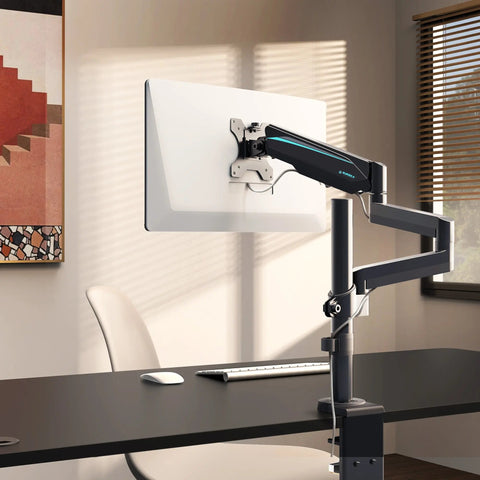
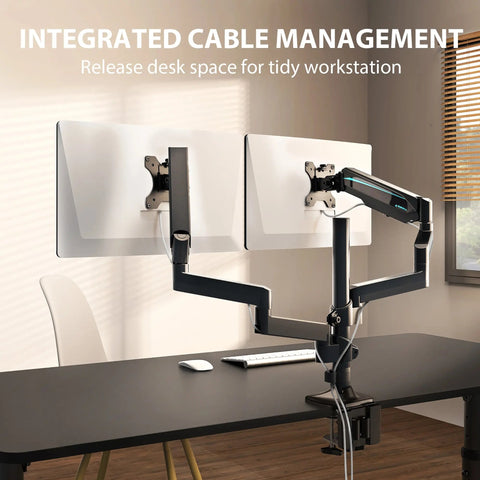
- Viewing Distance Deficit: A 24-inch desk depth creates a ~34-inch deficit from the SMPTE-recommended viewing distance for a 34" monitor. Expert Advice: Use a monitor arm to push the screen back, and use the pegboard for peripherals to keep the desk surface clear.
- Spatial Shortfall: A standard room layout (desk + chair + walkway + greenscreen) typically falls 6 inches short of ideal depth. Expert Advice: A desk-mounted pegboard serves as a "Privacy Panel," effectively replacing the need for a bulky, floor-standing background in tight spaces.
- Motor Safety: A 58kg load utilizes ~72.5% of a standard single-motor desk's capacity. Expert Advice: Keep pegboard accessories lightweight. Avoid mounting heavy speakers or multiple monitor arms directly to the pegboard unless using a dual-motor frame.
Personal Tips for a Holistic Lifestyle Solution
Beyond the hardware, the "Ambiance" of your sanctuary is what keeps you motivated. Here are a few non-obvious tweaks that make a big impact:
- Diffused Lighting: Never point an RGB strip directly at the camera. Use the pegboard itself as a diffuser by mounting the lights on the back of the board, allowing the light to "glow" against the wall.
- The "Grab-and-Go" Test: Sit in your chair and close your eyes. Reach for your headset. If you have to lean forward or twist your spine, your pegboard layout needs adjustment. Align your setup with ISO 11226:2000 to avoid prolonged static or awkward postures.
- Acoustic Benefits: While not a replacement for professional soundproofing, a pegboard filled with gear and felt-lined bins can help break up sound reflections, slightly reducing the "echo" in a small room.
Creating Your Workspace Sanctuary
Transforming your space is a journey of self-discovery. It starts with saying goodbye to the chaos of a cluttered desk and embracing the elegant functionality of a modular system. By applying ergonomic principles—from the HSE DSE Checklist to the latest BIFMA standards—you aren't just organizing gear; you are engineering a high-performance environment that supports your health and your hustle.
Your studio should be a place where you feel empowered to create. Whether you are building a "Command Center" or an "Aesthetic Showcase," remember that the most successful layouts are the ones that evolve with you. Take the time to declutter, zone your gear, and light your space with intention. Once you do, you’ll find that "Deep Work" isn't something you have to force—it’s something that happens naturally in the sanctuary you've built.
Disclaimer: This article is for informational purposes only and does not constitute professional medical, ergonomic, or safety advice. Always consult with a qualified professional before making significant changes to your workstation, especially if you have pre-existing musculoskeletal conditions.
Sources
- BIFMA G1-2013 Ergonomics Guideline for Furniture
- CCOHS: Office Ergonomics - Sit/Stand Desk
- Cornell University Ergonomics Web — Workstation Guides
- OSHA eTools: Computer Workstations
- ISO 9241-5:2024 Workstation layout & postural requirements
- WHO 2020 Guidelines on Physical Activity & Sedentary Behaviour
- HSE: Working safely with display screen equipment (DSE)




Leave a comment