

The Hidden Strain: Why Standing Isn't a Cure-All for Wrist Pain
The transition to a sit-stand workstation is often motivated by a desire to alleviate chronic back pain or combat the lethargy of a sedentary lifestyle. However, many professionals and gamers find that while their lower back feels better, a new, sharper discomfort begins to manifest in their wrists and forearms. This phenomenon—the "standing desk wrist ache"—is frequently the result of a fundamental misunderstanding of how body mechanics change when we move from a seated to a standing position.
While the health benefits of reducing sedentary time are well-documented, simply standing up does not automatically correct poor ergonomics. In fact, without precise adjustment, standing can exacerbate Repetitive Strain Injury (RSI) risks. Research indicates that the prevalence of work-related musculoskeletal disorders (MSDs) among office workers is approximately 72.20%, according to a pooled prevalence study published in BMJ Open. For those whose work involves intensive typing—estimated at 95% of an office worker's day—the wrist becomes a primary point of failure.
This article explores the physiological principles of neutral wrist positioning, the common mechanical errors made during desk adjustment, and the evidence-based strategies required to maintain musculoskeletal health in a high-performance standing environment.
The Physiology of the Neutral Position
In ergonomics, the "neutral position" refers to the posture where joints are naturally aligned, minimizing stress on muscles, tendons, and nerves. For the wrist, this means a straight line from the forearm through the hand, with no significant upward (extension), downward (flexion), or side-to-side (deviation) bending.
The Carpal Tunnel and Static Load
The carpal tunnel is a narrow passageway on the palm side of the wrist that protects the median nerve and the tendons that flex the fingers. When the wrist is extended—a common error when a desk is set too high—the pressure within the carpal tunnel increases significantly. According to the ISO 11226:2000 standard for evaluating static working postures, prolonged maintenance of non-neutral angles leads to tissue adaptation and eventual injury.
Static load is the secondary culprit. Unlike dynamic movement, which promotes blood circulation, static postures cause muscles to remain contracted, restricting blood flow and allowing metabolic waste products to accumulate. This is why even a "perfect" posture can become painful if held for hours without interruption.
Pathophysiological Mechanisms
The OSHwiki guide on pathophysiological mechanisms explains that MSDs often arise from a combination of force, repetition, and posture. In a standing desk setup, the force is often subtle—the weight of the arms resting on the desk edge—but the repetition (typing) and poor posture (wrist extension) create a cumulative trauma.
The Standing Desk Paradox: Common Calibration Errors
The most frequent error in standing desk usage is setting the height based on visual preference rather than biomechanical alignment. Users often raise the desk until the monitor is at eye level, neglecting the position of the keyboard. This often results in a desk surface that is 2 to 3 inches too high, forcing the elbows to flare out and the wrists to bend back to reach the keys.
Parallax and Visual Bias
When standing, our perspective changes. We tend to look down at the desk, and through a trick of parallax, a desk that is too high may "look" correct because it feels closer to our field of vision. However, a reliable technical heuristic is to stand straight, relax the shoulders, and adjust the desk so the forearms are parallel to the floor, with the elbows maintained at a 90 to 110-degree angle. This often places the desk surface slightly below elbow height.
The Stability Factor
Another non-obvious mechanical issue is "monitor wobble." As desks extend to their maximum height, the center of gravity shifts, and micro-vibrations from typing can cause the screens to shake. This leads users to subconsciously tensed their forearms and wrists to "stabilize" their typing environment, increasing the static load on the small muscles of the hand. High-end solutions like the Zen Pro Series, 87"/72" Executive Standing Desk with Cabinets Set address this through robust architectural design and weighted stability, reducing the need for compensatory muscle tension.

Technical Deep Dive: The Alex Chen Case Study
To understand the precision required for wrist health, we simulated an extreme use case involving a professional esports athlete, Alex Chen. At 185cm (approx. 6'1"), Alex represents the 95th percentile of height, presenting unique ergonomic challenges that standard furniture often fails to solve.
The "Glass Box" Logic of Calibration
For a user of Alex's stature, the anthropometric requirements are specific. Using guidelines from BIFMA G1-2013 Ergonomics Guideline for Furniture, we calculated the following requirements for his workstation:
| Metric | Recommended Value | Impact on Wrist Health |
|---|---|---|
| Sitting Desk Height | 76.5cm (30.1") | Prevents ulnar deviation by aligning with seated elbow height. |
| Standing Desk Height | 113.5cm (44.7") | Maintains the 90-110° elbow angle required for neutral wrists. |
| Equipment Load | 79.5kg | Requires dual-motor lifting to ensure smooth, micro-adjustable transitions. |
| Mousepad Width | 56cm (22") | Allows for low-sensitivity movement without lifting the wrist. |
The data revealed a critical "ergonomic gap." Most standard desks max out at heights that would force Alex into a hunched posture or wrist extension. Furthermore, the 79.5kg load of his liquid-cooled PC and triple-monitor setup would push a single-motor desk to 99.38% utilization, creating jerky movements that disrupt fine motor control. A dual-motor system, such as that found in the Zen Pro Series, 87"/72" Executive Standing Desk with Cabinets Set, operates at a safer 66% utilization, providing the stability necessary for injury prevention.

Implementing the Neutral Position: A Practical Guide
Achieving a neutral wrist position requires a holistic approach that combines hardware adjustment with behavioral intervention.
1. The Elbow-Height Rule
According to the OSHA eTools for Computer Workstations, your keyboard and mouse should be at a height where your elbows are open between 90 and 120 degrees. If the desk is too high, you will feel a "burning" sensation in the trapezius and shoulders. If it is too low, you may lean on your wrists, creating pressure on the carpal tunnel.
2. The Negative Tilt Advantage
For those using keyboard trays, a flat or positive tilt (where the front of the keyboard is lower than the back) is a common mistake. A slight negative tilt of 5 to 10 degrees—where the back of the keyboard is slightly higher than the front—allows the wrists to remain in a natural, straight alignment while typing.
3. Monitor Alignment and Neck Strain
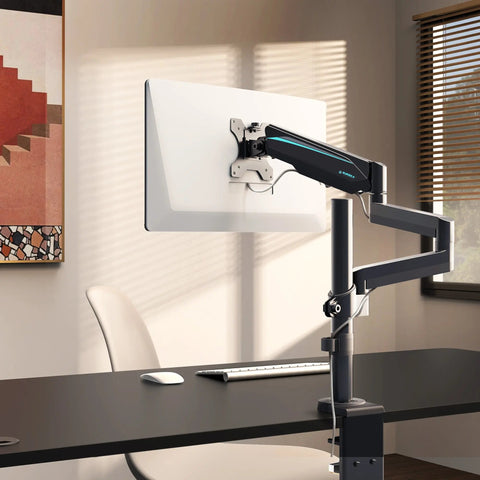
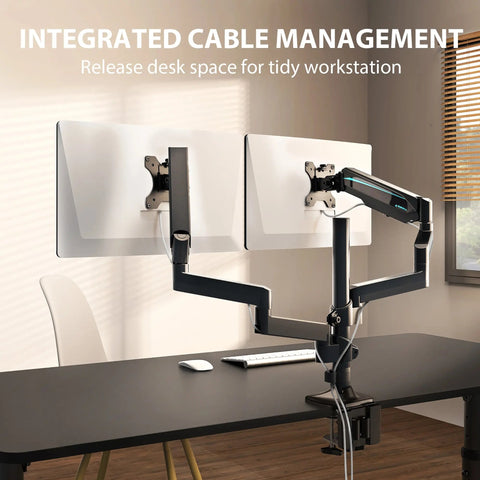
Wrist pain is often a secondary symptom of poor neck posture. If your monitors are too low, you will lean forward, shifting your weight onto your wrists. Utilizing a Carbon Fiber Dual Monitor Stand elevates the screens to eye level, as recommended by the HSE guide on Display Screen Equipment (DSE), ensuring your spine remains neutral and your weight stays balanced.

4. The "20-8-2" Rhythm
The Cornell University Ergonomics Web suggests the "20-8-2" rule for optimal health:
- 20 Minutes: Sit in a supportive chair like the Flex, Dual-Backrests Ergonomic Office Chair to allow the lower limbs to rest.
- 8 Minutes: Stand at your desk to engage the core and improve circulation.
- 2 Minutes: Move and stretch. Focus on wrist flexor and extensor stretches to counteract the repetitive motion of typing.

The Role of Lower Limb Support in Wrist Health
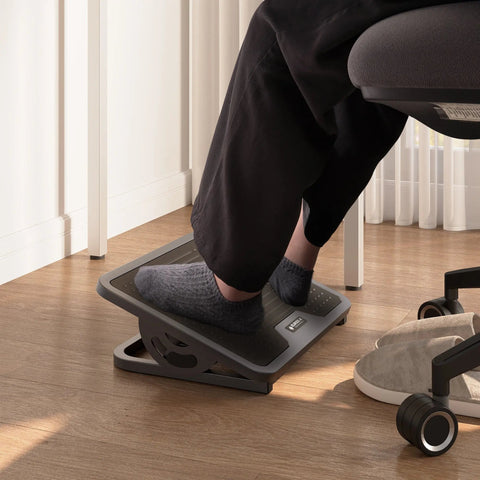
It may seem counterintuitive, but the position of your feet directly impacts your wrists. When sitting, if your feet are not flat on the floor, you will likely slump forward, putting pressure on your forearms. The Footstool with Wheels provides the necessary support to keep your pelvis aligned, which in turn stabilizes the upper body and reduces the need for the wrists to act as "anchors" on the desk surface.

Advanced Strategies for Power Users
For gamers and high-output professionals, the demands on the wrist are even higher. The "flick" movements in gaming or the rapid-fire shortcuts in coding require extreme tendon glide.
- Mouse Sensitivity: As seen in the Alex Chen case study, using a lower mouse sensitivity requires more arm movement and less wrist pivoting. This distributes the physical load to the larger muscle groups of the shoulder and bicep, protecting the delicate structures of the wrist.
- Surface Texture: A desk surface with high scratch resistance and a smooth touch, such as the sintered stone of the Zen Pro Series, 87"/72" Executive Standing Desk with Cabinets Set, reduces friction during lateral movements, further decreasing the force required for each task.
Summary of Ergonomic Best Practices
To transition from a painful setup to a high-performance workstation, follow this checklist derived from Safe Work Australia's workstation setup guidelines:
- Desk Height: Set so forearms are parallel to the floor; avoid the "reach up" posture.
- Monitor Height: Top line of text at eye level to prevent leaning.
- Wrist Alignment: Maintain a 0-degree bend; use a negative tilt keyboard tray if possible.
- Movement: Never stand for more than 30 minutes without a micro-break or a transition to sitting.
- Support: Use an ergonomic chair with independent lumbar support, such as the Flex, Dual-Backrests Ergonomic Office Chair, during sitting intervals.
Setting Up Your Standing Desk for Peak Productivity provides further insights into the spatial arrangement of these components.
Cultivating Long-Term Musculoskeletal Health
The goal of a standing desk is not just to stand, but to create a dynamic environment where the body can move through various "neutral" states. By understanding the physiological requirements of the wrist and the technical capabilities of your furniture, you can eliminate the friction points that lead to chronic pain.
Investing in high-quality, BIFMA-compliant equipment is a foundational step, but the ultimate success of an ergonomic setup depends on the user's commitment to movement and precise calibration. As research from Cochrane on workplace interventions suggests, sit-stand desks are most effective when combined with behavioral changes and proper education.
Disclaimer: This article is for informational purposes only and does not constitute professional medical advice, diagnosis, or treatment. Always seek the advice of your physician or other qualified health provider with any questions you may have regarding a medical condition. The ergonomic recommendations provided are based on general industry standards and may not be suitable for individuals with pre-existing musculoskeletal conditions or specific physical limitations.
References
- BIFMA G1-2013 Ergonomics Guideline for Furniture
- CCOHS: Office Ergonomics - Sit/Stand Desk
- Cochrane: Workplace interventions for reducing sitting at work (2018)
- Cornell University Ergonomics Web — Workstation Guides
- HSE: Working safely with display screen equipment (DSE)
- ISO 11226:2000 Evaluation of static working postures
- OSHA eTools: Computer Workstations - Neutral Working Postures
- Safe Work Australia: Workstation set-up (2023)
- WHO 2020 Guidelines on Physical Activity & Sedentary Behaviour




Leave a comment