

Many professionals spend over eight hours a day in a seated or standing workstation, yet few consider the foundational element that connects their ergonomic setup to the environment: the office chair caster. A common frustration among home office users is the "afternoon slump," often attributed to mental fatigue but frequently exacerbated by micro-strains caused by an unstable or poorly rolling chair. When a chair resists movement on a plush carpet or slides uncontrollably on a polished hardwood floor, the body compensates through subtle muscular contractions. Over time, these micro-adjustments contribute to significant physical discomfort and a decline in productivity.
The transition from commercial office spaces to home environments often introduces floor surfaces that were not originally designed for heavy ergonomic furniture. While a standard office chair might perform adequately on commercial-grade low-pile carpet, it may fail to provide the necessary stability on a residential medium-pile carpet or a delicate hardwood surface. Understanding the mechanics of caster performance is essential for maintaining a spinal neutral position and preventing the long-term development of musculoskeletal issues.
The Physiological Impact of Instability
The human body is not designed for prolonged static postures. According to the U.S. National Institute for Occupational Safety and Health (NIOSH), musculoskeletal disorders (MSDs) are often the result of "repetitive tasks, forceful exertions, and awkward postures." In a home office, an unstable chair foundation introduces a fourth risk factor: static load. When casters sink into a carpet or skid on hardwood, the user must exert excessive force to initiate movement or maintain a fixed position. This exertion involves the core, lower back, and lower limbs, leading to premature fatigue.
Physiologically, the body attempts to stabilize itself when the foundation is inconsistent. If a chair wobbles—a common occurrence when casters are too narrow for the carpet pile—the muscles of the lumbar region remain in a state of constant, low-level contraction to keep the torso upright. This "static loading" restricts blood circulation and leads to the accumulation of metabolic waste products in the muscle tissue, which manifests as the familiar ache in the lower back by mid-afternoon.
Furthermore, poor caster performance can disrupt the "Neutral Working Posture." As defined by OSHA's eTools on Computer Workstations, a neutral posture involves keeping the joints naturally aligned to reduce stress on the muscles, tendons, and skeletal system. An unresponsive chair often forces the user to lean forward or twist the spine to reach peripheral equipment, moving the body out of alignment and increasing the risk of strain.
Scientific Principles: Friction, Load, and Durometer
To choose the correct caster, one must understand the physics of the interface between the wheel and the floor. This involves three primary factors: rolling resistance, load distribution, and material hardness (measured on the Shore A durometer scale).
Caster Hardness (Durometer)
The Shore A scale measures the hardness of flexible mold rubbers and plastics. Conventional wisdom suggests a binary choice between "hard" and "soft" casters, but the reality is a continuous spectrum. For stability and floor protection, the material must be matched to the surface density.
- Hardwood Surfaces: Require a medium-soft polyurethane caster. Research indicates that a 95A durometer provides a balance of grip and protection. Materials softer than 80A may leave marks over time due to high friction, while harder materials can be noisy and prone to slipping.
- Carpeted Surfaces: Benefit from a harder wheel (85A–95A range). This prevents the wheel from deforming under the weight of the user, which would otherwise increase the surface area and create "sinkage."
Load Distribution and "Bridging"
Load distribution is critical, especially for users in the 95th percentile of weight or those with heavy equipment setups. A single hard wheel on a high-pile carpet often creates "bridging," where the wheel sits on top of a few carpet fibers, creating a dangerous pivot point. A dual-wheel design is an effective engineering control to address this. By distributing weight across two contact points, a dual-wheel caster can reduce the load per square inch by up to 50% compared to a single wheel. This prevents the chair from sinking too deeply into the carpet padding and eliminates the "wobble" felt when leaning back.

The Carpet Challenge: Sinking and Rolling Resistance
Carpet presents the most complex challenge for chair stability. The depth of the pile and the thickness of the underlay (pad) determine how much the caster will sink. If the combined weight of the user and the chair exceeds the caster's load-bearing capacity relative to the surface area, movement becomes restricted.
The 250-lb User Scenario For a professional weighing 250 lbs using a standard ergonomic chair, the total downward force is significant. On medium-pile carpet, standard casters rated for only 50 lbs each are often at their functional limit. In this scenario, practitioners recommend upgrading to casters with a minimum 2.5-inch diameter. Larger diameters increase the "attack angle" of the wheel, allowing it to roll over carpet fibers rather than pushing through them.
| Floor Type | Recommended Caster Type | Durometer (Shore A) | Key Benefit |
|---|---|---|---|
| Hardwood / Tile | Soft Polyurethane | 80A - 95A | Prevents scratches; reduces noise |
| Low-Pile Carpet | Hard Nylon / Poly | 90A+ | Low rolling resistance |
| Medium/High Pile | Dual-Wheel (Large Dia) | 85A - 95A | Prevents sinking; improves stability |
As noted in The 2026 Workstation White Paper: Converging Ergonomic Science and Sustainable Engineering, the integration of high-performance materials in the chair base is a prerequisite for long-term durability and user safety.
Hardwood Protection: Balancing Grip and Mobility
While carpet users struggle with sinking, hardwood users face the risk of floor damage and "runaway" chairs. Hard plastic casters can trap grit and debris against the floor, acting like sandpaper as the chair moves.
According to the UK Health and Safety Executive (HSE) guide on Display Screen Equipment (DSE), a workstation must be stable and allow the user comfortable movement. On slick surfaces, this means the caster must provide enough friction to prevent the chair from sliding away when the user sits down, yet enough mobility to allow for frequent posture changes. Soft polyurethane casters are the standard solution here, as they provide a "cushion" that absorbs vibrations and grips the surface without scratching the finish.
Case Study: The Heavy-Duty Professional Setup
To demonstrate the importance of system-wide stability, consider a "power user" setup involving a heavy solid wood desk, multiple ultrawide monitors, and a high-performance PC.
Experiment Data: Total System Load
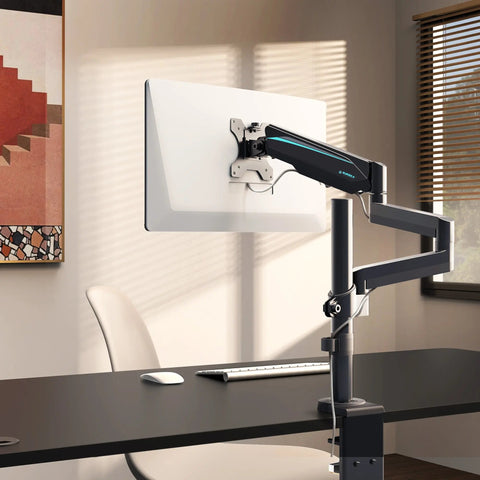
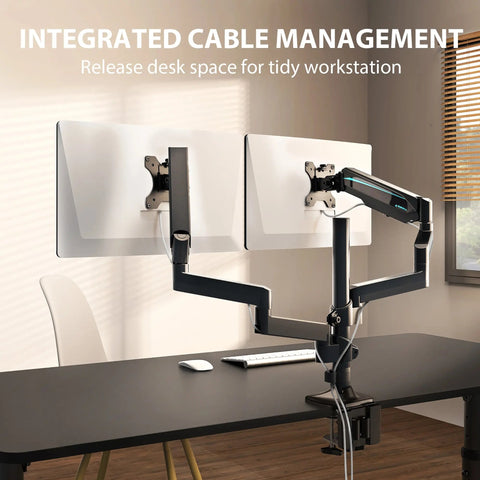
- Equipment Weight: ~69 kg (PC, three 34-inch monitors, heavy-duty arms).
- Tabletop (Solid Wood): ~25 kg.
- User Weight: ~113 kg (250 lbs).
- Total System Force: ~207 kg (456 lbs).
In this scenario, the stability of the entire workstation is at risk if the components are not rated for the load. A single-motor standing desk, typically rated for 80 kg, would be operating at 117.5% capacity, leading to instability and potential motor failure. A dual-motor system, rated for 120 kg, operates at a safe 78% capacity.
The same logic applies to the chair. With a total load of over 200 kg distributed across five casters, each caster bears approximately 41 kg (91 lbs). Standard casters often fail under this load on carpet, causing the chair to become "stuck" in indentations. Upgrading to wide, dual-wheel casters is not just a matter of convenience; it is a mechanical necessity to ensure the chair remains a tool for movement rather than a source of static strain.

Practical Recommendations for Home Office Optimization
Achieving a stable and ergonomic environment requires a holistic approach to the workstation layout. Beyond choosing the right casters, users should follow established industry guidelines for setup and behavior.
1. Establish the Ideal Sit-Stand Rhythm
The Cornell University Ergonomics Web recommends the "20-8-2" rule: sit for 20 minutes, stand for 8 minutes, and move or stretch for 2 minutes. This rhythm prevents the negative effects of prolonged static sitting and standing. A chair that rolls easily makes the transition between these phases seamless.
2. Monitor and Keyboard Alignment
To reduce neck and shoulder strain, follow the BIFMA G1-2013 Ergonomics Guideline:
- Monitor Height: The top of the screen should be at or slightly below eye level.
- Keyboard Position: The elbows should be at a 90-degree angle, with wrists in a neutral, flat position.
- Legroom: Ensure there is adequate clearance under the desk to allow for frequent leg movement.
3. Caster Maintenance and Cleaning
A common oversight is the buildup of hair, dust, and carpet fibers within the caster housing. This debris can seize the swivel mechanism within 3 to 6 months, leading to jerky movements that cause sudden spinal jolts.
- Action: Inspect and clean caster wheels quarterly. Use a pair of tweezers or compressed air to remove debris from the axle.
- Observation: If your chair requires significantly more force to turn than it did when new, the swivel bearings are likely compromised by debris.
4. Room Depth Planning
For users on carpet, rolling resistance effectively shortens the usable space. While ANSI/HFES guidelines suggest a 42-inch dynamic zone for chair movement, carpet users should aim for a 20-30% buffer. In a standard 12-foot deep room, a 30-inch deep desk leaves ample space for a 42-inch movement zone plus a 36-inch surplus, ensuring the user does not "scrub" the same patch of carpet repeatedly, which can lead to permanent fiber damage.

Investing in Long-Term Stability
Selecting the right casters is a high-impact, low-cost intervention that protects both your physical health and your home's flooring. By matching caster material to the floor surface and accounting for the total system load, you can eliminate the hidden friction points that lead to fatigue.
Whether you are styling a wood desk with an ergonomic chair or setting up a standing desk for peak productivity, the foundation must be the first priority. A chair that moves in harmony with your body allows you to maintain focus and support your musculoskeletal health throughout the workday.
YMYL Disclaimer: This article is for informational purposes only and does not constitute professional medical advice. Ergonomic requirements vary based on individual physical conditions. If you have pre-existing back, neck, or joint conditions, please consult a qualified physiotherapist or ergonomic specialist before making significant changes to your workstation setup.
References
- BIFMA G1-2013 Ergonomics Guideline for Furniture
- CDC / NIOSH – About Ergonomics
- Cornell University Ergonomics Web — Workstation Guides
- HSE: Working safely with display screen equipment (DSE)
- OSHA eTools: Computer Workstations - Neutral Working Postures
- OSHwiki: Musculoskeletal disorders and prolonged static sitting
- The 2026 Workstation White Paper: Converging Ergonomic Science and Sustainable Engineering




Leave a comment