

The Creator’s Dilemma: Why One Chair Often Fails
For many content creators, the workday is a marathon of shifting cognitive demands. One hour is spent in high-intensity video editing or precision color grading, while the next involves a deep-dive brainstorming session or reviewing hours of raw footage. A common frustration emerges by mid-afternoon: a persistent ache between the shoulder blades or a dull throbbing in the lower back.
The misconception that a single piece of furniture can optimally support every work mode often leads to "posture fatigue." Many creators gravitate toward plush, oversized recliners for their primary desk work, only to find themselves slouching during typing-intensive tasks due to a lack of structured lumbar support. Conversely, a high-performance gaming chair with aggressive side bolstering can feel restrictive during long ideation phases where a more open, relaxed posture is desired. Understanding the physiological requirements of these different tasks is the first step toward building a workspace that sustains both health and creativity.
The Physiology of Static Load and Spinal Neutrality
The human body is not designed for prolonged static positions. According to the Occupational Safety and Health Administration (OSHA), "static loading" occurs when muscles are kept in a state of tension without movement, which can impede blood circulation and lead to Musculoskeletal Disorders (MSDs).
When a creator sits at a desk, the goal is to maintain a "neutral position." This involves keeping the joints naturally aligned to reduce stress on the muscles, tendons, and skeletal system. Key components of this position include:
- Spinal Alignment: Maintaining the natural S-curve of the spine, specifically the lumbar (lower) and cervical (neck) regions.
- Joint Angles: Elbows, hips, and knees should ideally remain at approximately 90-degree angles to minimize mechanical strain.
- Blood Circulation: Avoiding pressure points on the underside of the thighs (the "waterfall" edge of a seat) to ensure unimpeded blood flow to the lower limbs.
Research highlighted by EU-OSHA suggests that prolonged static sitting is a primary risk factor for lower back discomfort. Interestingly, while "sitting is the new smoking" is a popular trope, the Cochrane Library notes that while sit-stand desks significantly reduce sedentary time, the most effective intervention is a combination of ergonomic equipment and behavioral changes, such as micro-movements and posture switching.
The Case for the Gaming Chair: Precision and Focus
For tasks requiring high concentration and frequent peripheral use (mouse, keyboard, mixing consoles), a dedicated ergonomic task chair—often categorized as a gaming chair—is the standard "Engineering Control."
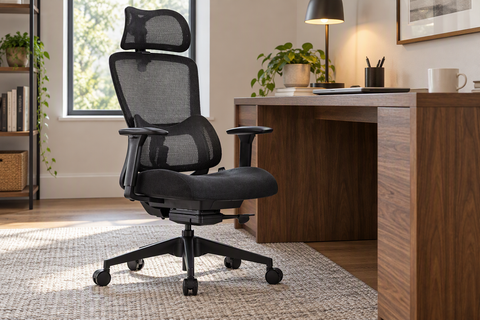
A model like the Axion, Ergonomic Hybrid Chair is designed to facilitate the 90-degree neutrality required for computer-heavy work. Its 4D adjustable headrest and independent lumbar support allow for fine-tuning to the user's specific anthropometry. This is critical because, as the BIFMA G1-2013 Ergonomics Guideline emphasizes, furniture must accommodate the 5th to 95th percentile of the population to be truly effective.
One often overlooked feature is the "4D armrest." For creators using drawing tablets or specialized controllers, the ability to swing armrests out of the way or adjust their height to match the desk surface is more valuable than simple padding. This prevents "shoulder shrugging," a common cause of trapezius strain.

The Case for the Recliner: Ideation and Recovery
When the workflow shifts to "consumption" or "ideation"—reading scripts, reviewing footage, or brainstorming—the ergonomic requirements change. Research into recline angles suggests that a backrest angle of roughly 120–135° relative to the seat significantly reduces lumbar disc pressure. However, recliners that exceed 140° can shift the load to the sacrum and, in some cases, slightly impede deep breathing during extended discussions.
A professional recliner like the Lucia, Swivel Rocking Manual Recliner offers a "triple-action" design: 360° swivel, gentle rocking, and manual recline. The rocking motion is particularly beneficial as it provides "dynamic loading," which helps keep the spinal discs hydrated through a process called imbition.
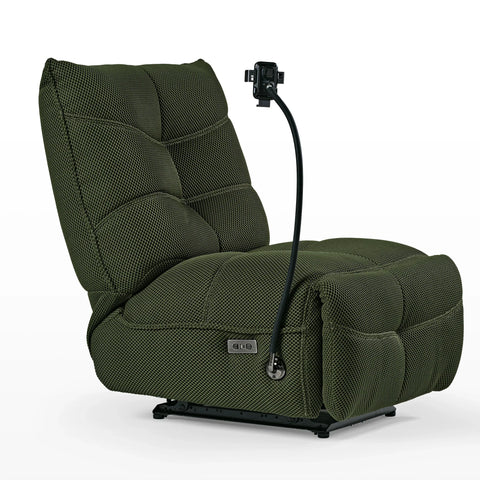
For creators who spend more than 30% of their day in deep recline, a dedicated lounge chair like the Alexia, Comfy Soft Swivel Lounge Chair, Gray or the Marco, Soft Padded Cozy Lounge Chair, Blue serves as a vital secondary station. These chairs provide a psychological "gear shift," signaling to the brain that it is time for creative synthesis rather than technical execution.

The 90/10 Rule and the Two-Chair Strategy
Experienced ergonomists often recommend a "primary and secondary" seating strategy based on the 90/10 rule: your primary chair should support the posture you maintain for 90% of your focused computer work.
However, if your creative process is balanced, the "hybrid" approach is superior. Instead of a single "gaming recliner"—which often lacks the deep adjustability of a task chair and the comfort of a true recliner—professional creators are increasingly opting for two distinct zones within the same room.
Scenario Analysis: The Tall Creator with Heavy Equipment
To illustrate the importance of structural planning, consider a creator who is 190cm tall (95th percentile) with a heavy multi-monitor setup.
| Metric | Requirement | Logic/Source |
|---|---|---|
| Ideal Seat Height | 50.0 cm | Based on 190cm stature + shoe correction |
| Desk Height (Sitting) | 78.5 cm | Prevents hunching (standard desks are often ~5cm too low) |
| Total Equipment Load | 92.5 kg | PC (20kg) + 3x Monitors (24kg) + Arms/Peripherals |
| Motor Requirement | Dual-Motor Mandatory | Load exceeds 80% safety threshold of single-motor units |
| Chair Recommendation | Axion, Ergonomic Hybrid Chair | High-back support and 4D armrests for tall users |
For this user, a standard fixed-height desk is ergonomically inadequate, creating a 1.9-inch deficit that forces a slumped posture regardless of the chair chosen. In this setup, a gaming chair with high adjustability is the primary tool, while a secondary recliner like the Lucia, Swivel Rocking Manual Recliner provides the necessary postural relief during breaks.
Practical Recommendations for Your Setup
To optimize your workspace, follow these data-backed guidelines derived from Safe Work Australia and Cornell University’s Ergonomics Web:
- The 20-8-2 Rhythm: Aim for 20 minutes of sitting (in a neutral task chair), 8 minutes of standing, and 2 minutes of moving or stretching.
- Monitor Alignment: The top line of text on your screen should be at or slightly below eye level. Use monitor arms to adjust this height if you switch between a task chair and a recliner.
- Armrest Calibration: Adjust armrests so your shoulders are relaxed. If the armrests hit the desk before you are close enough to work, lower them or swing them away.
- Material Matters: For long sessions, choose breathable mesh (like the Axion) to regulate temperature. For lounge sessions, soft fabrics (like the Marco's terry cloth) provide superior tactile comfort.
- The "Gaze" Rule: When reclining in a chair like the Alexia, Comfy Soft Swivel Lounge Chair, Gray, ensure your screen can tilt downward. Looking "up" at a high monitor while reclined can lead to neck strain over time.
Assessing Your Primary Work Style
Before choosing your next chair, conduct a simple self-audit:
- The "Tasker" (70%+ computer time): Prioritize a chair with independent lumbar support and a mesh back. The Axion, Ergonomic Hybrid Chair is the ideal candidate here.
- The "Thinker" (40%+ ideation/review time): Invest in a secondary lounge station. A swivel recliner like the Lucia, Swivel Rocking Manual Recliner allows you to pivot between your desk and a creative zone effortlessly.
- The "Aesthete" (Small space/Multi-use): If your office is also your living room, the Marco, Soft Padded Cozy Lounge Chair, Blue offers a compact footprint without sacrificing the "plush" feel needed for relaxation.
Summary of Seating Strategies
| Feature | Ergonomic Gaming Chair (Axion) | Swivel Lounge/Recliner (Lucia/Alexia) |
|---|---|---|
| Primary Posture | Upright / Neutral (90°) | Relaxed / Reclined (120°+) |
| Best For | Editing, Gaming, Typing | Brainstorming, Reading, Breaks |
| Armrest Type | 4D Adjustable (High Precision) | Fixed / Padded (High Comfort) |
| Back Support | Dynamic Lumbar / Mesh | High-Density Foam / Fabric |
| Integration | Best with Standing Desks | Best as a Standalone Station |
By moving away from the "one chair" myth and adopting a strategy that recognizes the different physiological needs of your workflow, you can significantly reduce the risk of long-term MSDs. Whether it is the precision of a hybrid gaming chair or the restorative recline of a lounge chair, the right choice is the one that supports your body through every phase of the creative process.
Medical Disclaimer: This article is for informational purposes only and does not constitute professional medical advice, diagnosis, or treatment. Always seek the advice of your physician or other qualified health provider with any questions you may have regarding a medical condition or musculoskeletal pain. Adopting new ergonomic setups should be done gradually, and individuals with pre-existing back or neck conditions should consult a specialist before making significant changes to their workstation.
References
- BIFMA G1-2013 Ergonomics Guideline for Furniture
- CCOHS: Office Ergonomics - Sit/Stand Desk
- Cochrane: Workplace interventions for reducing sitting at work
- Cornell University Ergonomics Web — Workstation Guides
- OSHA: Ergonomics - Identify Problems
- Safe Work Australia: Workstation set-up (2023)
- EU-OSHA: Prolonged static sitting at work




Leave a comment