

By mid-afternoon, many remote professionals encounter a familiar wall: a combination of mental fog, a dull ache in the lower lumbar region, and a diminishing ability to focus on complex tasks. This phenomenon, often dismissed as mere tiredness, is frequently a symptom of digital burnout—a state of physical and emotional exhaustion caused by prolonged exposure to digital environments and static physical postures.
While the ergonomic discourse often centers on the "perfect" desk chair, emerging research and physiological principles suggest that the solution to digital fatigue lies not in a single seated position, but in strategic recovery. Integrating a recliner or lounge chair into a home office is not an exercise in luxury; it is a calculated intervention designed to address the physiological and psychological toll of the modern workday.
The Physiology of Static Loading and Digital Burnout
The human body is biologically optimized for movement, yet the modern remote work environment demands "static loading"—the physical stress placed on muscles and joints when held in a fixed position for extended periods. According to the U.S. Occupational Safety and Health Administration (OSHA), poor posture and repetitive tasks are primary risk factors for Musculoskeletal Disorders (MSDs).
When a professional sits upright in a traditional office chair for more than 50 minutes, several physiological shifts occur:
- Increased Intradiscal Pressure: Data derived from the landmark Nachemson study indicates that upright sitting can increase spinal disc pressure by approximately 40% compared to standing.
- Reduced Blood Circulation: Static sitting causes blood to pool in the lower extremities, slowing the delivery of oxygen and nutrients to the brain and muscles, which directly contributes to the "brain fog" associated with burnout.
- Tissue Adaptation: As noted in the OSHwiki guide on pathophysiological mechanisms, prolonged static positions lead to micro-trauma in soft tissues, which can eventually manifest as chronic pain.
Digital burnout is the psychological manifestation of this physical stagnation. The cognitive load of constant "on-call" digital presence, combined with the sensory deprivation of a static physical environment, creates a feedback loop of stress.
The Recliner as a Tool for "Active Rest"
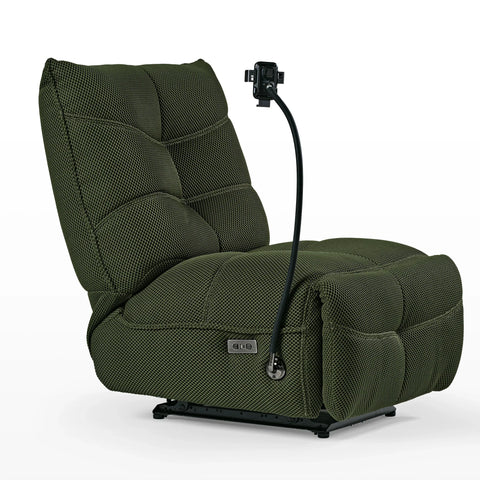
A common misconception is that a recliner should replace a task chair. In a professional context, a recliner serves as an "engineering control"—a term used by OSHA to describe solutions that mitigate hazards. It is most effective when used for "active rest" periods.
A 15-minute break in a recliner allows for subtle spinal decompression. By shifting the body's weight distribution, a recliner can reduce lower back strain by up to 30% compared to remaining in an upright seated position. The optimal recline angle for cognitive recovery is between 100 and 110 degrees. This specific range, often referenced in the ISO 9241-5:2024 standard for workstation layout, supports the natural lumbar curve without inducing the neck strain associated with deeper, "sleep-oriented" recline angles.

For those managing the transition between focused work and recovery, the Alexia, Comfy Soft Swivel Lounge Chair, Gray provides a 360-degree swivel base. This allows a user to pivot away from their primary monitor toward a window or a secondary "analog" space, breaking the visual tether to the digital workspace that fuels burnout.
The ROI of Ergonomic Intervention: A Quantitative Analysis
Investing in high-quality ergonomic furniture is often viewed as a cost, but for the remote professional, it is a high-yield investment. Based on a simulation of "The Chronic Pain Creative"—a professional with lumbar sensitivity working in a constrained home environment—we can estimate the tangible returns of a dual-seating setup (task chair + recliner).
| Metric | Value (Estimated) | Context/Logic |
|---|---|---|
| Productivity Value Gain | $2,531 / year | Based on a $45/hr wage and a 15% gain in efficiency through reduced fatigue. |
| Fat Loss Equivalent | 4.5 lbs / year | Resulting from a 63 kcal/day increase via sit-stand-recline transitions. |
| Payback Period | 5.7 Months | The time required for productivity gains to cover the equipment cost. |
| Spinal Pressure Reduction | 30% | Estimated reduction in lumbar load during 15-minute active rest breaks. |
Note: Values are estimated based on standard industry rates and personalized ergonomic simulations. Individual results vary based on usage and pre-existing health conditions.
This data suggests that ergonomic furniture is an economic imperative. For a professional experiencing chronic pain, a desk height discrepancy of even 0.46 inches—often found in "one-size-fits-all" furniture—can represent a significant differential in spinal pressure.
Strategic Integration: Choosing the Right Recovery Seat
Not all lounge chairs are created equal. When selecting a piece to combat burnout, the professional must prioritize material science and structural support over purely aesthetic considerations.
1. Material Breathability and Tactile Comfort
For long-term use, thermal comfort is vital. The Marco, Soft Padded Cozy Lounge Chair, Blue utilizes a terry cloth upholstery. This material provides a breathable, skin-friendly surface that prevents the heat buildup often associated with synthetic leathers, which can be a subtle but persistent stressor during a long workday.
2. Weight Distribution and Support Zones
Advanced ergonomic pieces, such as the Lounge Chair-Red Yellow & Blue Yellow Stripe, feature weight-distributing seat contours. These are often calibrated through pressure mapping to ensure that the user's weight is not concentrated on the ischial tuberosities (sit bones), but distributed across the thighs and lower back.
Practical Recommendations for a Burnout-Resistant Setup
To maximize the benefits of a recliner in a home office, professionals should follow a structured approach to their workday rhythm and physical layout.
The "20-8-2" Rule
Cornell University’s Ergonomics Web recommends a specific sit-stand-move rhythm. For every 30 minutes of work:
- 20 Minutes: Sitting in a neutral position in a task chair.
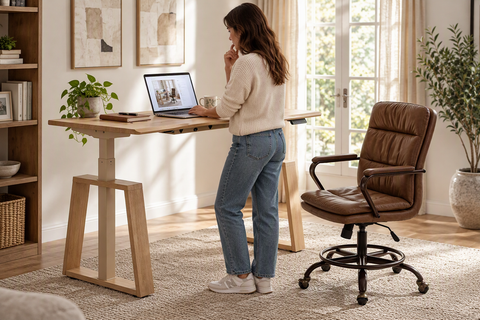
- 8 Minutes: Standing at a height-adjustable desk.
- 2 Minutes: Moving or stretching.
Integrating a recliner allows for a modified version of this: replacing one "sitting" block with an "active rest" block in a reclined position for deep-focus reading or brainstorming.
Support for the Lower Extremities
Proper leg support is critical when reclining. According to the OSHA eTools for Computer Workstations, a footrest should be used if the chair's height prevents the feet from resting flat on the floor. When using a lounge chair that does not have an integrated ottoman, the Adjustable Ergonomic Footrest allows for an adjustable tilt of 0-20 degrees, promoting healthy blood circulation and preventing the "heavy leg" sensation that contributes to physical fatigue.
Adjustable Ergonomic Footrest being used to maintain a neutral ankle and knee angle while seated.
Monitor and Neck Alignment
A common "gotcha" in recliner use is the "tech neck" caused by looking down at a laptop. If the recliner is used for work tasks (like reviewing documents), the monitor must be adjusted. The HSE guide on Display Screen Equipment (DSE) emphasizes that the top line of text should be at or slightly below eye level. Using a mobile monitor arm can help maintain this alignment even in a reclined state.
Addressing the Space Constraint
Many remote workers operate in limited square footage. However, a strategic layout can accommodate a recovery zone. In a standard studio apartment, a "dynamic zone" of approximately 40 inches is required for chair movement. By utilizing a compact lounge chair with a small footprint, a professional can create a dedicated "rest station" without compromising the primary circulation paths of the room.
Summary of Best Practices
- Do not use a recliner as a primary chair: Reserve it for breaks, reading, or creative brainstorming.
- Maintain the 100-110 degree angle: Avoid "slumping," which can lead to posterior pelvic tilt and increased disc pressure.
- Incorporate movement: Even the most ergonomic chair becomes a hazard if the user remains static for hours.
- Prioritize certifications: Look for furniture that meets BIFMA X5.1 for durability and UL GREENGUARD for indoor air quality.
Conclusion: A Holistic Approach to Well-being
Digital burnout is a multi-faceted issue that requires a multi-faceted solution. While software tools can help manage workload, the physical environment remains the foundation of professional performance. By treating a recliner as a specialized tool for physiological recovery, remote workers can mitigate the risks of static loading, improve their cognitive clarity, and transform their home office into a space that supports both productivity and long-term health.
Disclaimer: This article is for informational purposes only and does not constitute professional medical advice. Individuals with pre-existing musculoskeletal conditions, such as herniated discs or chronic back pain, should consult a qualified physiotherapist or ergonomic specialist before significantly altering their workstation setup.
Sources
- OSHA: Ergonomics - Solutions to Control Hazards
- Cornell University Ergonomics Web: Workstation Guides
- ISO 9241-5:2024 Workstation layout & postural requirements
- Cochrane: Workplace interventions for reducing sitting at work
- CCOHS: Office Ergonomics - Sit/Stand Desk
- HSE: Working safely with display screen equipment (DSE)




Leave a comment