

The rhythmic creak of an executive chair can be more than a minor office distraction. For big and tall users, these auditory signals often serve as early warning indicators of mechanical fatigue. When a chair is subjected to higher weight loads, the physical laws of static and dynamic pressure accelerate the wear on components that standard users might never notice.
For executives and home office professionals, maintaining a high-performance environment requires furniture that doesn't just look the part but stands up to the rigors of extended use. Understanding why these noises occur—and how to address them—is essential for preserving both your investment and your musculoskeletal health.

The Biomechanics of High-Load Seating
To understand why furniture "talks," we must first look at the physiological interaction between the human body and the workstation. According to the ISO 11226:2000 standard on the evaluation of static working postures, prolonged static sitting places significant stress on the musculoskeletal system. For users in higher weight brackets, this "static load" is amplified.
When you sit, your body weight is not distributed evenly. It concentrates on the ischial tuberosities (sit bones) and the central column of the chair. For a user weighing 250 lbs or more, the pressure exerted on the chair's gas cylinder and tilt mechanism during the simple act of sitting down can momentarily double due to gravity and momentum. This is known as dynamic loading.
Over time, this repeated stress can lead to Musculoskeletal Disorders (MSDs). The U.S. Occupational Safety and Health Administration (OSHA) identifies poor posture and excessive force as primary risk factors for MSDs. If your chair is squeaking or wobbling, it is likely failing to maintain your body in a "neutral position"—the gold standard of ergonomics where joints are naturally aligned to reduce strain.

The Anatomy of a Squeak: Why Heavy Loads Cause Noise
In our technical assessment of high-load scenarios, we simulated a workstation setup common among executives and power users. This "Battlestation" environment often includes a heavy-duty tabletop, multiple ultrawide monitors, and high-end peripherals.
| Component | Estimated Weight (kg) | Impact on Chair Stability |
|---|---|---|
| Full-Tower PC (Liquid Cooled) | 20 kg | Increases lateral desk vibration |
| Triple 34" Ultrawide Monitors | 27 kg | Raises center of gravity for the desk |
| Premium Tabletop (Solid Wood) | 25 kg | Adds to the total static downward force |
| Peripherals & Buffer | 8 kg | Contributes to micro-oscillations |
| Total System Load | 94 kg (approx. 207 lbs) | Requires dual-motor desk support |
When a 250+ lb user is added to this environment, the chair becomes the primary shock absorber for a system weighing over 450 lbs. This leads to three common failure points:
1. The Gas Cylinder Internal Seals
The most common failure point for heavy users is the internal seals of the gas lift. These seals are designed to hold highly pressurized nitrogen gas. Under constant high pressure, the seals can degrade, leading to a "slow descent" where the chair loses height over several hours. This is often accompanied by a distinct hissing sound or a grinding squeak during height adjustments.
2. The Tilt Mechanism and Spring Coil
The tilt mechanism allows the chair to recline, but for big and tall users, the spring tension must be significantly higher to provide adequate resistance. According to BIFMA G1-2013 Ergonomics Guidelines, furniture should accommodate the 5th to 95th percentile of the population. However, many standard chairs use springs that reach their "elastic limit" prematurely under heavy loads, causing the metal-on-metal popping or groaning sounds heard during a recline.
3. Fastener Fatigue and Bolt Stripping
As the user moves, lateral forces (side-to-side motion) cause the bolts connecting the seat plate to the frame to shift. Even a millimeter of play can create a loud creak. For users over 250 lbs, the torque applied to these bolts is immense.
The Diagnostic Framework: Identifying the Culprit
Before reaching for a wrench, perform these three expert-level diagnostics to locate the source of the noise.
The Swivel Test
Sit in the chair and slowly rotate 360 degrees. If the chair sinks more than an inch or produces a pronounced squeak during rotation, the gas cylinder is likely the culprit. This indicates that the internal bearings or the seal housing have become misaligned or worn.
The Recline Stress Test
Lock the chair in an upright position and try to lean back. Then, unlock it and recline fully. If the noise only occurs when the mechanism is unlocked, the issue lies within the tilt tension spring or the pivot points.
The Visual Bolt Inspection
Flip the chair over and inspect the bolts. Look for "metal dust"—tiny silver shavings around the bolt heads. This is a sign of friction caused by loose fasteners. As noted in technical guides for fixing unsteady chair armrests, internal bushings can also wear down, contributing to a wobbly, noisy experience.

Engineering Solutions: Selecting the Right Foundation
Troubleshooting is a temporary fix; the long-term solution lies in engineering-grade furniture designed for higher weight capacities. For big and tall users, the standard "one size fits all" approach is insufficient.
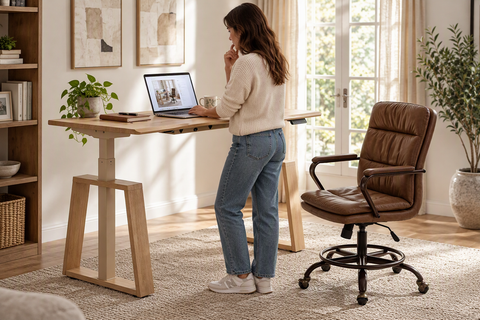
The Royal Microfiber Leather Executive Office Chair is a benchmark example of a high-capacity solution. Unlike standard office chairs, it features a high backrest and a "Cloud Cotton" cushion designed to distribute pressure more effectively across a larger surface area. This reduces the concentration of force on the central gas cylinder.
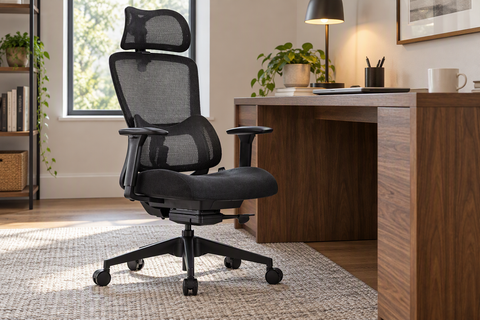
For those requiring more specialized lumbar support, the Exis Ergonomic Office Chair utilizes a 4-level adjustable lumbar system. This is critical because, as the Canadian Centre for Occupational Health and Safety (CCOHS) notes, maintaining the natural curve of the spine is vital for reducing the risk of long-term back pain. The Exis chair’s spring-foam seat cushion is specifically engineered to balance resilience and softness, preventing the "bottoming out" effect that often causes frame-level squeaks in lesser chairs.

The Role of Workstation Stability
Our experiment insights revealed a critical "Glass Box" logic: a squeaky chair is often exacerbated by an unstable desk. If a desk wobbles under the weight of a heavy PC and monitor setup, that movement transfers lateral stress to the chair as the user compensates for the desk's instability.
For heavy users, a dual-motor desk system is mandatory. The Zen Pro Series Standing Desk provides the structural integrity needed to support a 94 kg system load while remaining within the 80% motor safety margin. By providing a rock-solid surface, the desk reduces the micro-movements the user must make, thereby extending the life of the chair's mechanical components.
To further optimize the "neutral position," adding an Adjustable Ergonomic Footrest can alleviate pressure on the underside of the thighs. This improvement in blood circulation is a key recommendation of the WHO 2020 Guidelines on Physical Activity and Sedentary Behaviour, which emphasizes the importance of posture changes and reducing static muscle load.
Practical Maintenance and Prevention Tips
If you are currently dealing with a squeaky chair, follow these professional maintenance protocols to silence the noise and prevent further damage.
1. The PTFE Lubrication Strategy
Many users reach for silicone spray, but this can attract dust and eventually create a "gunk" that worsens the noise. Instead, apply a dry PTFE-based lubricant to the central pivot and the spring coil of the tilt mechanism. PTFE creates a low-friction barrier that doesn't attract debris.
2. The Crisscross Tightening Pattern
When tightening bolts on the seat plate or armrests, never tighten one bolt fully before starting the others. Use a crisscross pattern (like tightening lug nuts on a car tire). Stop when resistance increases significantly. Overtightening can strip the threads in the metal inserts, leading to a permanent wobble that cannot be easily repaired.
3. Manage Your Recline Angles
For users over 250 lbs, even a high-capacity chair has limits. Avoid constant, aggressive reclining at the maximum angle. This concentrates the entire load on a single weld or pivot point. Instead, use moderate recline angles and utilize the "20-8-2" rhythm recommended by Cornell University Ergonomics: 20 minutes of sitting, 8 minutes of standing, and 2 minutes of moving.
4. The Sit-Stand Integration
A height-adjustable desk allows you to alternate between sitting and standing, which Cochrane research suggests can significantly reduce total sitting time. By reducing the number of hours the chair is under load, you effectively double its maintenance interval.
Technical Checklist for Chair Longevity
Use this checklist once every three months to ensure your executive seating remains silent and supportive:
- Audit Fasteners: Check all 4-6 bolts on the underside of the seat.
- Lubricate Pivots: Apply PTFE to the tilt spring and recline joints.
- Clean the Cylinder: Wipe the chrome part of the gas lift with a clean cloth to remove dust that can score the seals.
- Check the Casters: Ensure hair or carpet fibers haven't clogged the wheels, which can cause the chair to "drag" and put lateral stress on the base.
By treating your executive chair as a precision tool rather than just a piece of furniture, you can eliminate the distractions of mechanical noise and focus on the work that matters. High-quality ergonomic solutions, when properly maintained, provide the foundation for a productive, pain-free career.
YMYL Disclaimer: This article is for informational purposes only and does not constitute professional medical advice. If you suffer from chronic back pain or pre-existing musculoskeletal conditions, please consult a qualified healthcare professional or physiotherapist before making significant changes to your workstation setup or adopting new ergonomic routines.
Sources
- BIFMA G1-2013 Ergonomics Guideline for Furniture
- CCOHS: Office Ergonomics - Sit/Stand Desk
- OSHA: Identifying Ergonomic Problems
- ISO 11226:2000 Evaluation of Static Working Postures
- Cornell University Ergonomics Web — Workstation Guides
- Cochrane: Workplace interventions for reducing sitting at work
- WHO 2020 Guidelines on Physical Activity & Sedentary Behaviour




Leave a comment