

For the urban renter, the workspace is more than just a place of productivity—it is a significant financial liability. With the average security deposit in the United States hovering around $750, and often equivalent to a full month's rent in international markets, the integrity of hardwood and laminate flooring is paramount. A single deep scratch from an office chair or a dent from a heavy desk can lead to substantial deductions during a move-out inspection.
Protecting these surfaces requires more than a generic plastic mat. It demands a technical understanding of the interaction between furniture load, material hardness, and floor sensitivity. This guide explores the mechanical principles of soft-roll casters and systemic stability to help you safeguard your investment and your deposit.
The Physics of Floor Damage: Point Pressure and Static Load
Floor damage occurs primarily through two mechanisms: abrasion and indentation. Abrasion is caused by friction between the caster wheel and the floor, often exacerbated by "grit"—tiny particles of dust or sand trapped beneath the wheel. Indentation, or "pitting," occurs when the static load of the furniture exceeds the compressive strength of the flooring material.
According to the Occupational Safety and Health Administration (OSHA) eTools on Computer Workstations, a chair's base should have at least five legs to provide adequate stability. However, even a five-star base concentrates the entire weight of the user and the chair into five very small contact patches. For a 200 lb user in a 50 lb chair, each caster may bear 50 lbs of pressure. If the caster material is too hard (such as standard nylon), this pressure is transferred directly into the wood fibers or laminate layers, leading to permanent deformation.
Furthermore, the BIFMA G1-2013 Ergonomics Guideline emphasizes that furniture should accommodate a wide range of users, from the 5th to the 95th percentile. For heavier users, the point pressure on flooring increases exponentially, making the choice of caster material a critical engineering decision rather than a stylistic one.
The Durometer Deep Dive: Decoding Shore A Ratings
The single most important specification for floor protection is the durometer, or hardness, of the caster wheel. This is typically measured on the Shore A scale.
| Caster Material | Durometer (Shore A) | Floor Compatibility | Rolling Resistance |
|---|---|---|---|
| Hard Nylon/Plastic | 90A+ | Carpet Only | Very Low |
| Standard Polyurethane | 80A - 85A | Tile, Polished Concrete | Low |
| Soft-Roll Polyurethane | 65A - 70A | Hardwood, Laminate, LVP | Moderate |
| Ultra-Soft Rubber | Below 55A | High-End Specialty Wood | High (Risk of Flat-Spotting) |
Data Note: Estimated ranges based on standard industry material performance.
While it might seem logical to choose the softest wheel possible, there is a technical trade-off. Wheels below 55A on the Shore A scale can suffer from "flat-spotting"—a phenomenon where the wheel deforms permanently if left in one position for months under a heavy load. Conversely, wheels above 75A risk marking sensitive laminate finishes. For the typical urban rental with mixed hardwood or laminate, a 65A-70A polyurethane wheel offers the optimal balance of floor-friendliness and durability.
Polyurethane is the preferred material because it is "non-marking." Unlike black rubber, which can leave carbon streaks, polyurethane provides the necessary grip to prevent sliding while remaining gentle enough to avoid scratching the polyurethane finish of the wood itself.

Systemic Stability: Why Your Desk Choice Affects Your Floors
A common misconception is that floor protection begins and ends with the chair. However, our recent experimental analysis of high-end gaming setups reveals that the stability of the desk plays a massive role in floor preservation.
In a simulation of a "Power User" setup—including a full-tower liquid-cooled PC, dual 34" ultrawide monitors, and heavy peripherals—the total equipment load reached approximately 77 kg (170 lbs). When this load is placed on a single-motor height-adjustable desk, the motor utilization reaches nearly 96% of its rated capacity.
The "Wobble" Effect: When a desk operates near its maximum capacity, it experiences increased micro-vibrations and lateral "wobble" during height transitions. This instability forces the user to subconsciously adjust their seating position more frequently to maintain ergonomics. According to the ISO 11226:2000 standard for evaluating static working postures, frequent, jerky movements to compensate for an unstable workstation increase the risk of musculoskeletal strain. From a flooring perspective, these micro-adjustments and the shifting weight of an unstable desk create "scrubbing" motions on the casters, accelerating wear on the floor's protective coating.
For heavy setups, a dual-motor desk is a deposit-preservation necessity. The increased stability reduces lateral movement, ensuring that weight remains vertically distributed through the legs and casters, minimizing the risk of "skidding" scratches.
Maximizing Small Spaces: Strategic Accessory Integration
Urban renters often face a "room depth deficit." A standard streaming or gaming setup requires significant depth for the desk, chair clearance, and circulation. When space is tight, users often push their chairs into "danger zones" near walls or over floor transitions where damage is most likely to occur.
To mitigate this, renters should look toward modular, non-permanent solutions that increase vertical efficiency. For example, the Convertible Desktop Shelves, set of 2 allow for the elevation of equipment, freeing up the primary desk surface and reducing the need for additional, floor-hogging side tables.
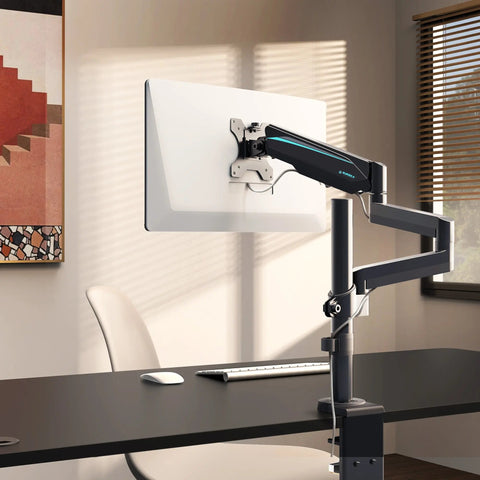
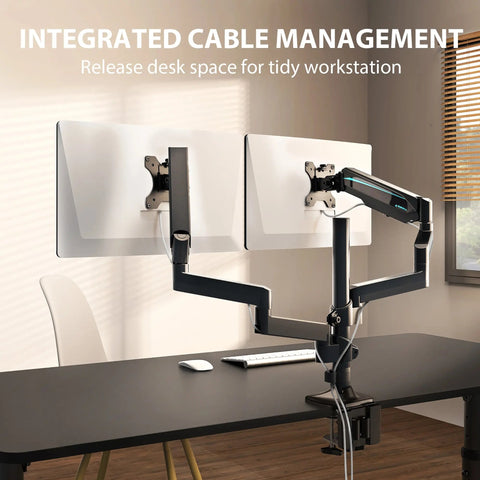
Similarly, optimizing the "reach zone" can reduce the frequency of chair movement. According to the Canadian Centre for Occupational Health and Safety (CCOHS), keeping frequently used items within an easy reach arc prevents the need for excessive rolling or stretching. Utilizing a Pull-out Keyboard Tray and a Dual Monitor Arm can effectively reclaim 20-30% of desktop depth, allowing the user to sit closer to the desk and reducing the "rolling radius" of the chair.

Scenario Analysis: Choosing the Right Protection Strategy
Scenario A: The Standard Remote Worker
- Setup: Single laptop, 24" monitor, lightweight chair.
- Floor Risk: Low to Moderate.
- Recommendation: Standard 70A polyurethane casters. A simple chair mat is likely sufficient, but soft-roll casters provide a cleaner aesthetic and better mobility.
Scenario B: The High-End Gamer/Streamer
- Setup: Dual monitors, heavy PC tower, extended gaming sessions.
- Floor Risk: High.
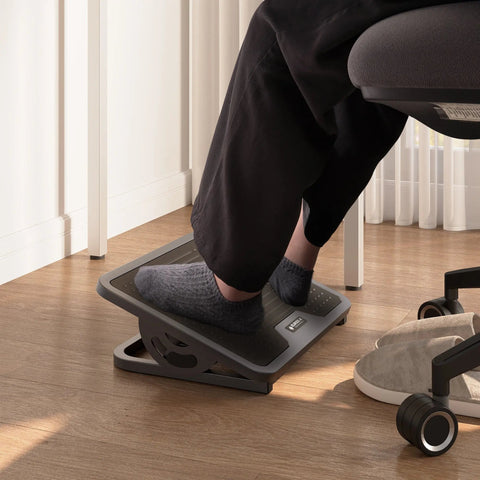
- Recommendation: High-performance 65A polyurethane casters with a wider wheel profile (2+ inches) to distribute weight. A dual-motor desk is essential to prevent wobble-induced floor scrubbing. Use an Adjustable Ergonomic Footrest to maintain a neutral working posture, which reduces the tendency to "kick off" from the desk and roll unnecessarily across the floor.

The Installation Checklist: Avoiding "The Gap"
Even the best casters can damage a floor if installed incorrectly. A frequent mistake among DIY assemblers is failing to fully seat the caster stem into the furniture leg socket.
- Inspect the Socket: Ensure no debris or manufacturing burrs are inside the leg socket.
- The "Click" Test: You should feel or hear a distinct click when the friction ring on the stem engages.
- Check for Gaps: If there is even a half-inch gap between the caster shoulder and the leg, it creates a pivot point. This multiplies the point pressure and can cause the caster to tilt, leading to the edge of the wheel "digging" into the hardwood.
- Test in Obscurity: Always roll the chair in a closet or under the desk first. Some luxury vinyl planks (LVP) have sensitive top coats that can be marred by "non-marking" wheels if the wheel surface is not perfectly clean.
Strategic Safeguards for the Long-Term Renter
Protecting a rental property is an exercise in proactive engineering. By selecting casters with a durometer tailored to your specific flooring and ensuring your workstation has the structural integrity to support your equipment without swaying, you address the root causes of floor wear.
As noted in The 2026 Workstation White Paper: Converging Ergonomic Science and Sustainable Engineering, the future of the home office lies in "systemic harmony"—where the furniture, the user, and the environment exist in a state of low-impact efficiency. For the renter, this harmony is the key to a productive career and a full return on their security deposit.
YMYL Disclaimer: This article is for informational purposes only and does not constitute professional medical, legal, or financial advice. Ergonomic needs vary by individual; those with pre-existing musculoskeletal conditions should consult a qualified physical therapist. Always check your rental agreement and flooring manufacturer's warranty before modifying furniture or installing new casters.




Leave a comment