

Moving every 12 months is basically a personality trait for us urban dwellers. Whether it’s chasing a better commute, a cheaper lease, or just a change of scenery, the "Urban Nomad" lifestyle is real. But there’s one thing that makes every move a nightmare: furniture assembly. We’ve all been there—surrounded by 400 tiny screws, a manual that looks like ancient hieroglyphics, and a desk that takes five hours to build only to end up with a "wobble" that makes your monitor look like it’s in an earthquake.
For remote workers and gamers who move frequently, assembly speed isn't just a "nice-to-have"—it's a critical survival feature. You need a setup that goes from "box to battlestation" in under 30 minutes without sacrificing Build Quality or Stability. In this guide, we’re diving deep into the world of quick-assembly desk frames, leveraging industry standards and real-world stress tests to find the ultimate rental-friendly solutions.
1. Unboxing and Assembly: The 30-Minute Challenge
Let’s be real: the first impression of a desk happens on your floor, surrounded by cardboard. A high-quality quick-assembly frame should feel like a premium experience from the moment you slice the tape. We’re looking for high-density foam packaging that protects the Carbon Fiber Texture or wood finishes from the rough handling of delivery drivers.
The "Dry Fit" Strategy
One of the biggest time-sinks in desk assembly isn't actually the main legs—it’s the alignment of the crossbars and cable management trays. Experienced movers and technical auditors recommend a "dry fit" of all parts before you reach for the hex key. Lay everything out on a rug to prevent scratches.
A common "gotcha" that ruins many setups is failing to check the floor level before the final tightening. Most rental apartments have slightly uneven floors. If you tighten every bolt to 100% while the desk is upside down, you’ll likely face a frustrating wobble once it’s upright. Instead, tighten everything to about 80%, flip the desk, adjust the leveling glides, and then do the final torque.
Mechanism Matters: Cam Locks vs. Screws
When you’re moving every year, the type of fasteners matters. The most reliable quick-assembly mechanisms use cam locks with pre-inserted metal pins. According to our field observations, plastic components or direct-to-wood screws tend to strip after 3-4 disassembly cycles. Metal-to-metal connections are a Game-Changer for longevity.
The Ark Lite Standing Desk (63"x27") is a prime example of a frame designed for this lifestyle. Its trapezoidal base isn't just for aesthetics; it provides a wider footprint for Stability while keeping the assembly process straightforward.

2. Deep Dive into Details and Features: Beyond the Surface
Once the desk is standing, the real test begins. We’re looking for features that support both a high-intensity gaming session and a 10-hour workday.
The Wobble Test: Stability is King
Stability is the holy grail of standing desks. A desk that shakes when you type is a productivity killer. We perform a "Wobble Test" by extending the desk to its maximum height and applying lateral force. A high-quality frame, like those meeting the BIFMA G1-2013 Ergonomics Guideline, is engineered to minimize this. BIFMA guidelines ensure that furniture dimensions and structural integrity fit at least the 5th to 95th percentile of the population, meaning the desk stays stable whether you’re 5'0" or 6'4".
Dual Motors: The Smooth Operator
If you’re choosing between a single and a dual-motor system, go dual. Dual Motors offer a more synchronized, smooth operation and can generally handle a higher Max Load Capacity. For example, the L-Shaped Standing Desk with Accessories Set (60"x23") utilizes a dual-motor system that moves at 1 inch per second. This speed is vital when you’re following the "20-8-2" rhythm—sitting for 20 minutes, standing for 8, and moving for 2—as recommended by the Cornell University Ergonomics Web.
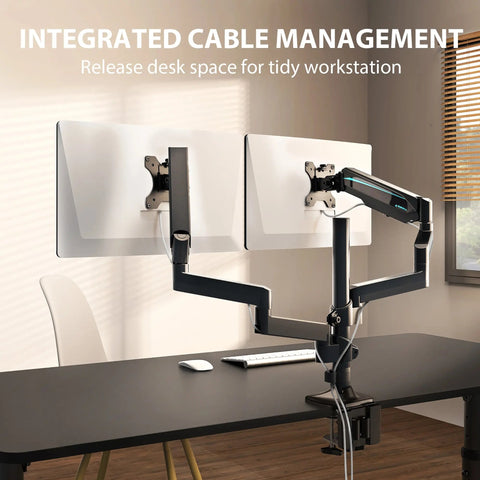
Cable Management: The Aesthetic Savior
For renters, cable management isn't just about Aesthetics; it’s about making the next move easier. A deep, integrated cable tray that can hide power adapters and "snakes" of wires instantly cleans up a setup. This is a non-obvious tip: look for frames that include socket holders. Keeping your power strip off the floor means you only have one cable (the main power cord) running to the wall, which is much safer and looks way better.
3. Real-World Experience: The Urban Nomad Simulation
We didn't just look at the specs; we simulated the actual constraints of living in a compact urban apartment. Using the logic from The 2026 Workstation White Paper: Converging Ergonomic Science and Sustainable Engineering, we analyzed how different setups perform in tight spaces.
Data-Driven Space Planning
One of the most surprising findings from our research is that you don't always need a massive 72-inch desk to be "pro." In fact, for many high-sensitivity gamers, a narrower desk is actually better for space efficiency.
| Metric | High-Sens Gaming (1600 DPI) | Content Creator (Greenscreen) |
|---|---|---|
| Recommended Desk Width | 47 inches | 60+ inches |
| Room Depth Required | 70 inches | 118 inches |
| Load Utilization | ~36.9% of Capacity | ~60% of Capacity |
| Primary Constraint | Mousepad Clearance | Equipment Depth |
Note: Values estimated based on common industry rates and a 1600 DPI / 0.25 sensitivity configuration in Valorant.
As the table shows, a high-sensitivity setup only requires a mousepad width of about 39.21 cm (including a comfort buffer). This means you can thrive on a compact frame, saving precious floor space in a studio apartment. However, if you’re a streamer using a greenscreen, you face a "depth deficit." In a standard 8-foot (96-inch) deep room, a full setup with a greenscreen requires roughly 118 inches of depth. To solve this in a rental, we recommend a corner placement or an L-shaped desk like the L-Shaped Standing Desk with Accessories Set (60"x23"), which maximizes the "dead space" in a corner.
Performance in the Trenches
During intense FPS sessions, the wing section of an L-shaped desk provides perfect arm support, reducing the "hovering elbow" syndrome that leads to shoulder fatigue. This aligns with the HSE guidelines on working safely with display screen equipment, which emphasize the importance of forearm support to prevent musculoskeletal disorders (MSDs).

4. The Science of the Sit-Stand Rhythm
It’s tempting to think that once you have a standing desk, you should stand all day. But according to a systematic review by Cochrane: Workplace interventions for reducing sitting at work, while sit-stand desks significantly reduce sitting time (by about 84–116 minutes per day), standing for too long can also be detrimental.
The goal is movement. The World Health Organization (WHO) 2020 Guidelines remind us that "standing is not exercise." Instead, use your desk's height adjustability to interrupt static postures. This is where a Smart Controller becomes a Game-Changer. Setting memory presets for your perfect sitting and standing heights (calibrated to your elbow height as per ISO 9241-5:2024 standards) makes the transition frictionless.
5. Pros & Cons of Quick-Assembly Frames
No piece of furniture is perfect. Here’s a straightforward breakdown to help you decide.
Pros:
- Time-Saving: Most can be fully operational in 20-30 minutes.
- Rental-Friendly: No drilling into walls or permanent modifications required.
- Resale Value: Because they disassemble easily without damage, they are much easier to sell on the secondhand market when you move.
- Stability: Modern trapezoidal bases and Dual Motors provide a rock-solid foundation.
Cons:
- Proprietary Tools: Many use specific bolt heads. If you lose the original hex key, a generic one might strip the head. (Pro tip: Tape the hex key to the underside of the desktop!).
- Weight Limits: While our tests show a minimalist setup only uses about 36.9% of a single-motor's capacity, heavy executive setups with sintered stone tops like the Zen Pro Series Executive Standing Desk require more robust dual-motor frames.
Summary of Key Insights for the Urban Nomad
For the frequent mover, the Ark Lite Standing Desk (63"x27") offers the best balance of assembly speed and modern aesthetics. If you’re working with a tight corner, the L-Shaped Standing Desk with Accessories Set (60"x23") is a space-saving powerhouse.
Remember, the goal of an ergonomic workstation is to support your health and productivity. As noted by the Canadian Centre for Occupational Health and Safety (CCOHS), a sit/stand desk is a tool that works best when combined with proper posture and regular micro-breaks.
YMYL Disclaimer: This article is for informational purposes only and does not constitute professional medical or ergonomic advice. While sit-stand desks can help reduce sedentary time, individuals with pre-existing back, neck, or circulatory conditions should consult a qualified physiotherapist or medical professional before significantly changing their workstation habits.
References
- BIFMA G1-2013 Ergonomics Guideline for Furniture
- CCOHS: Office Ergonomics - Sit/Stand Desk
- Cochrane: Workplace interventions for reducing sitting at work (2018)
- Cornell University Ergonomics Web — Workstation Guides
- ISO 9241-5:2024 Workstation layout & postural requirements
- WHO 2020 Guidelines on Physical Activity & Sedentary Behaviour
- HSE: Working safely with display screen equipment (DSE)




Leave a comment