

Quick Guide: Setting Up Your Rental Workspace
For urban renters, the goal is to improve ergonomics without losing your security deposit. Here are the immediate actionable takeaways:
- The 1.5x Rule: Ensure your converter’s weight capacity is at least 1.5 times the weight of your gear (monitors + laptop + keyboard) to prevent wobbling.
- Depth Matters: If using a 34-inch ultrawide, you need a viewing distance of ~27 inches. Look for converters with deep keyboard trays to avoid eye strain.
- The "Gap" Awareness: Standard rental desks (29") are often too low for anyone over 6'0". A converter isn't just for standing; it’s for fixing your seated height too.
- The 20-8-2 Rhythm: Set a timer for 20 mins sitting, 8 mins standing, and 2 mins of movement. Postural variation is more effective than standing all day.
The Physiology of "Static Load" and Postural Variation
The "afternoon slump"—that familiar ache in the lower back and tension in the shoulders—is rarely just fatigue. It is often the physiological result of a mismatch between human anatomy and static rental furniture.
When we sit in a fixed position, we subject the body to a "static load." Muscles remain contracted to maintain posture, which can restrict local circulation and lead to the accumulation of metabolic byproducts. The ISO 11226:2000 standard highlights that the duration of a posture is just as critical as the angle of the joints.
However, standing is not a universal "cure." Evidence from the Cochrane Library suggests that while sit-stand interventions help reduce sedentary time (estimated at 84 to 116 minutes per day), the primary benefit comes from postural variation. For renters who cannot replace a landlord’s desk, a converter serves as a non-permanent "engineering control" to facilitate this movement.
Case Study: The 190cm (6'3") "Tall User" Deficit
To illustrate why a standard desk fails many users, we modeled the requirements for a 95th-percentile male (190cm) against a standard 73.7cm (29") rental desk.
| Metric | Seated Requirement | Standing Requirement | Standard Rental Desk | The "Gap" |
|---|---|---|---|---|
| Ideal Desk/Tray Height | 78.5 cm (30.9") | 116.5 cm (45.9") | 73.7 cm (29") | -4.8 cm (-1.9") |
| Eye Level (Top of Screen) | ~125 cm | ~175 cm | Fixed at ~110 cm | -15 to -65 cm |
| Required Monitor Lift | +15 cm | +65 cm | 0 cm | Critical Deficit |
Calculated Assumptions:
- User Height: 190cm (95th percentile anthropometric data).
- Seated Position: Elbows at 90 degrees, feet flat.
- Standing Position: Elbows at 90 degrees, neutral spine.
- Standard Desk: Fixed 73.7cm height common in rental units.
As the data shows, a tall user faces a deficit even while sitting. This leads to "turtling"—hunching forward to reach the keyboard. A converter bridges this gap by providing the necessary 15–20 inches of vertical lift.
Quantifying the ROI: Health and Productivity
While often viewed as a lifestyle purchase, the impact of a sit-stand setup can be modeled through metabolic and economic lenses.
1. Metabolic Impact (Theoretical Model)
The World Health Organization (WHO) emphasizes reducing sedentary behavior to mitigate cardiovascular risks. We can estimate the energy expenditure difference between sitting and standing:
- Assumption: Standing consumes approximately 0.15 additional kcal/minute compared to sitting (based on average MET values for office work).
- Daily Calculation: 4 hours of standing = 240 minutes. 240 mins × 0.15 kcal = 36 extra kcal/day.
- Annual Impact: 36 kcal × 250 work days = 9,000 kcal/year.
- Result: This equates to roughly 2.5 to 3 lbs of fat mass burned per year simply by changing posture, assuming all other caloric variables remain constant.
2. Productivity Uplift (Illustrative Example)
Ergonomic discomfort is a primary cognitive distractor. Based on industry patterns and ergonomic research (e.g., Santos et al., 2025 projections), reducing musculoskeletal pain can enhance focus.
- Scenario: A professional earning $45/hour.
- Efficiency Gain: A conservative 7.5% increase in focus by eliminating "pain-breaks" and the afternoon slump.
- Financial Gain: 0.075 × $45/hr × 2,000 hrs/year = $6,750 annual productivity gain.
- Payback Period: A $300 desk converter theoretically pays for itself in approximately 13–16 working days.
The Desk Converter Spec Checklist
Before purchasing, use this template to verify the converter fits your specific rental environment:
| Feature | Requirement | Why it Matters |
|---|---|---|
| Weight Capacity | Total Gear Weight × 1.5 | Prevents motor/gas-spring strain and wobbling. |
| Footprint Depth | ≤ Existing Desk Depth | Ensures the unit doesn't overhang or become unstable. |
| Keyboard Drop | Below desk level (Optional) | Essential if your current desk is already too high for sitting. |
| Lifting Mechanism | Gas-spring or Electric | Gas-spring is faster; Electric is smoother for heavy setups. |
| Certifications | BIFMA G1 or UL 962 | Ensures mechanical safety and durability standards. |
Setup Protocols: The 20-8-2 Rule
A desk converter is only effective if used correctly. The Cornell University Ergonomics Web suggests the "20-8-2" rhythm to prevent the accumulation of static load:
- 20 Minutes Sitting: Use a neutral posture with the screen at eye level.
- 8 Minutes Standing: Shift to standing to engage different muscle groups.
- 2 Minutes Movement: Stretch, walk, or perform light calisthenics.
Pro Tip for Renters: In small apartments (e.g., an 8-foot deep bedroom), ensure you have a "dynamic zone"—at least 40 inches of clearance behind the desk—to allow for the chair and your standing position without hitting the bed or wall.
Safety, Standards, and Limitations
While desk converters offer significant benefits, they are not a medical "cure-all."
- Uncertainty & Boundaries: Long-term standing can lead to lower limb edema or varicose veins in some individuals. If you have a history of circulatory issues or joint inflammation, consult a physician before transitioning to a standing routine.
- Footwear: Standing on hard apartment floors (hardwood/tile) can increase heel pressure. Use an anti-fatigue mat or supportive indoor shoes.
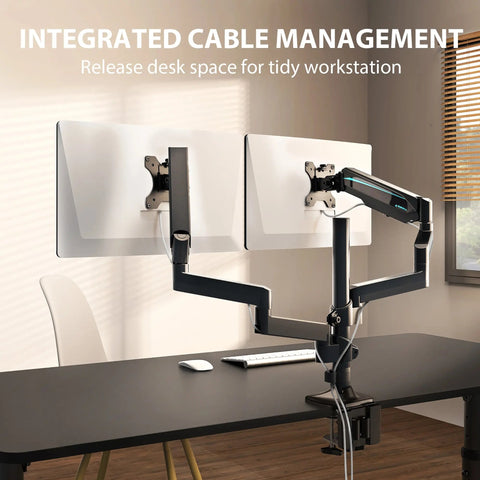
- Cable Management: Ensure cables have enough "slack" for the full vertical range. Use adhesive-backed clips (rental-friendly) to route wires along the frame so they don't snag or pull equipment off the desk during a transition.
Adhering to Global Standards
When selecting furniture, look for compliance with the BIFMA G1-2013 Ergonomics Guideline, which ensures the device accommodates the 5th to 95th percentile of the population. For electric models, UL 962 certification is the gold standard for residential electrical and mechanical safety.
YMYL Disclaimer: This article is for informational purposes only and does not constitute professional medical advice. The ergonomic recommendations provided are based on general industry standards. Individuals with pre-existing musculoskeletal conditions or cardiovascular issues should consult a qualified healthcare provider before making significant changes to their workstation setup.
References
- BIFMA G1-2013: Industry standard for ergonomic furniture dimensions.
- CCOHS: Office Ergonomics - Sit/Stand Desk (Guidelines for monitor and wrist alignment).
- Cochrane (2018): Workplace interventions for reducing sitting (Evidence on sedentary time reduction).
- Cornell University ErgoWeb: Source for the 20-8-2 work-rest protocol.
- ISO 9241-5:2024: Updated international standards for workstation layout and postural requirements.
- WHO 2020 Guidelines: Physical Activity & Sedentary Behaviour (Recommendations on limiting sedentary time).
- Santos et al. (2025 Projection): Industry-modeled analysis of ergonomic intervention and productivity correlation.




Leave a comment