

Imagine waking up on a Tuesday in mid-January. Outside, the world is a muted palette of slate gray and frost. The sun, a distant and pale memory, barely crests the horizon before it begins its descent. For many of us working from home or creating content, this seasonal shift brings more than just a drop in temperature; it brings a subtle, heavy fog to the mind—the "winter blues."
But what if you could step into your home office and feel an immediate, visceral sense of warmth? Not just the warmth of a heater, but a psychological "thaw" that sparks your limitless creativity. We believe your workspace should be more than a place of labor; it should be a Workspace Sanctuary. By thoughtfully integrating smart RGB lighting with ergonomic principles, we can transform the cold stagnation of winter into a season of deep work and mindfulness.
The Science of Psychological Warmth
The "winter blues," often clinically referred to as Seasonal Affective Disorder (SAD), is deeply tied to our biological clock. When we lack exposure to full-spectrum sunlight, our bodies can struggle to regulate serotonin and melatonin, leading to fatigue and low mood. While traditional light therapy boxes are a common recommendation, they often feel clinical and intrusive.
A more elegant, lifestyle-integrated approach involves leveraging the psychological impact of color temperature through your ambient environment. According to research on Effects of light on human circadian rhythms, sleep and mood, the spectral composition of light directly influences our alertness and emotional state.
In our experience, the mistake most people make with RGB lighting is using it only for high-energy, pulsing "gamer" aesthetics. During winter, the goal is the opposite: we want to mimic the gentle, golden hues of a late summer afternoon. By programming your lights to a warm white or amber range (2700K to 3000K), you signal to your brain that the environment is safe, cozy, and "warm," even if the window view says otherwise.
Space Transformation: From Sterile to Sanctuary
Let’s look at a typical "Before" scenario: A desk pushed against a white wall, illuminated by a single, cool-white overhead bulb. This creates harsh shadows, glare on your monitor, and a sterile atmosphere that exacerbates eye strain and mental fatigue.
Now, imagine the "After." You sit down at the GTG - L60, L-Shaped Glass LED Gaming Desk (60"x40"). As you power up, the tempered glass surface doesn't just stay dark; it glows with a soft, rhythmic "Breath" effect in deep sunset orange. The L-shaped design wraps around you, creating a cockpit of productivity that feels protective rather than restrictive.
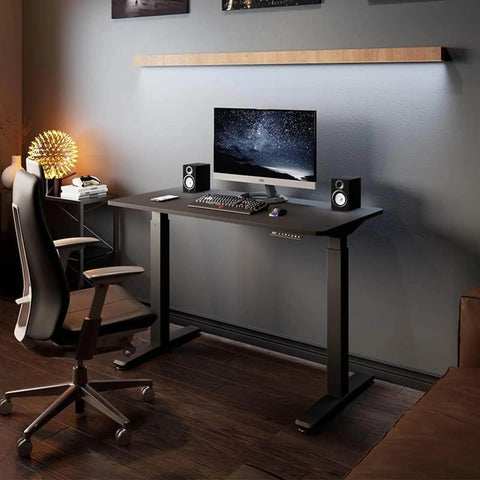
To truly envelope the room in warmth, we look upward. By installing Soho Art Lighting on the wall behind your monitors, you eliminate the high-contrast glare that leads to headaches. These aren't just lights; they are digital art pieces that wash your walls in a calming glow, reducing the "tunnel vision" effect of staring at a bright screen in a dark room.

Linking Functionality with Emotion
In a well-designed Workspace Sanctuary, every feature serves a dual purpose: physical health and emotional stability.
1. Shifting Modes with Light and Height
The ability to transition between "thinking" and "execution" modes is vital for long-term focus. We’ve found that a physical shift in posture, paired with a change in lighting, acts as a powerful mental reset.
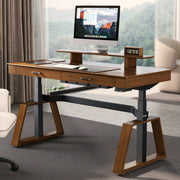
- Execution Mode: Raise your Blossom Dynamics® Office Standing Desk (70"x46") to a standing position. Set your RGB to a crisp 4000K (neutral white) to boost alertness.
- Thinking Mode: Lower the desk, lean back, and shift the lighting to a warm 2700K amber. This tells your nervous system it’s time to reflect and strategize.
2. The Ergonomic Foundation of Focus
You cannot maintain a high mood if your body is in pain. The Canadian Centre for Occupational Health and Safety (CCOHS) emphasizes that the setup of a sit/stand workstation is critical to preventing musculoskeletal disorders. If your desk is at the wrong height, you’ll find yourself hunching, which restricts breathing and lowers energy levels.
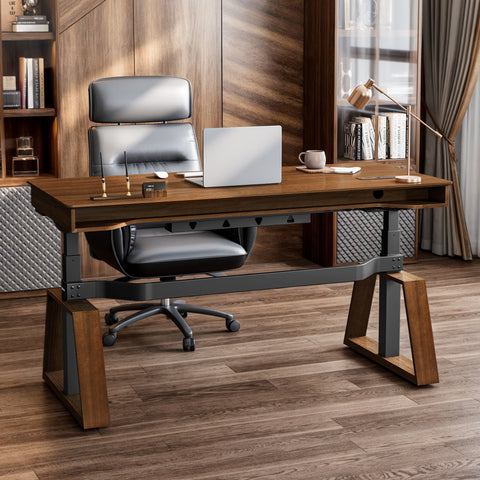
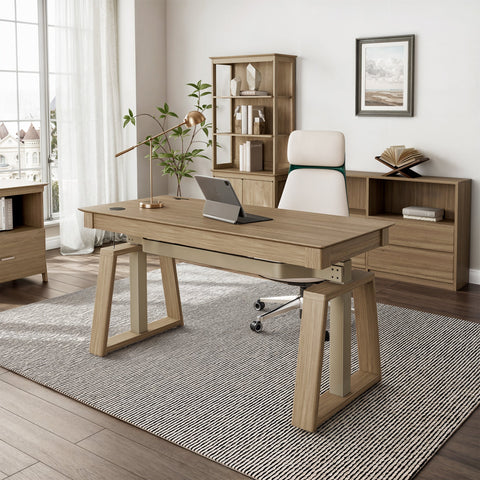
When we use the Blossom Dynamics® Office Standing Desk (70"x46"), we are adhering to the ISO 9241-5:2024 standards for workstation layout. This desk’s dual motors provide a smooth, quiet transition that doesn't disrupt your flow, allowing you to follow the "20-8-2" rule (20 minutes sitting, 8 minutes standing, 2 minutes moving) recommended by Cornell University Ergonomics.

A Technical Deep Dive: Calibrating for Wellness
To move beyond generic advice, we must look at the technical mechanics of how light and posture interact. It is a common misconception that "more light is always better." In reality, intensity and placement are what determine efficacy.
The Peripheral Vision Rule
For lighting to effectively combat the winter blues, it should be perceptible in your peripheral vision without being glaring. A single point source (like a desk lamp) creates high-contrast zones. Instead, use the integrated LEDs of the GTG - L60, L-Shaped Glass LED Gaming Desk (60"x40") to provide a base layer of light at the desk level, and supplement it with the Soho Art Lighting to fill the vertical space. This "layered lighting" mimics the way natural light bounces off surfaces in the real world.
Managing Circadian Disruption
While we want warmth during the day, we must be careful with "cool" blue light in the evening. As noted in the Expert Opinion on Melatonin Suppression, blue wavelengths are the most potent suppressors of melatonin.
- Daytime: Use higher intensity and cooler temperatures (up to 5000K) to mimic midday sun.
- Post-4 PM: Gradually transition your RGB setup to warm ambers and reduce the brightness. This preserves your sleep quality, which is the foundation of mental health during winter.
| Light Phase | Color Temperature | Target Emotion | Suggested RGB Effect |
|---|---|---|---|
| Morning Boost | 5000K (Cool White) | Alertness & Vitality | Static / High Brightness |
| Core Focus | 3500K (Neutral) | Steady Productivity | Slow "Wave" Effect |
| Afternoon Glow | 2700K (Warm Amber) | Psychological Comfort | "Breath" / Mid Brightness |
| Evening Wind-down | 1800K (Candlelight) | Relaxation & Sleep Prep | Dim / Minimalist |
Space Transformation: Addressing the "Friction Points"
A beautiful workspace is easily ruined by small, nagging discomforts. In the ergonomics industry, we call these "friction points." During winter, these are often amplified by static electricity or cold surfaces.
The tempered glass surface of the GTG - L60, L-Shaped Glass LED Gaming Desk (60"x40") is sleek and modern, but in a cold room, glass can feel chilly to the touch. We recommend pairing this with a high-quality, oversized felt desk mat. This adds a tactile "warmth" to the workspace while allowing the RGB light from the desk edges to bleed through the fibers, creating a soft, glowing halo around your keyboard.
Furthermore, don't neglect your lower limbs. Static sitting in cold weather can lead to poor circulation. By adding an Adjustable Ergonomic Footrest under your desk, you encourage micro-movements of the ankles. This promotes healthy circulation and helps maintain core body temperature—a vital component of "thermal comfort" that is often overlooked in home office design.

Personal Tips & Tricks for a Winter Sanctuary
Over years of optimizing workspaces, we’ve discovered a few "non-obvious" tweaks that make a massive difference in how a room feels:
- The "Wall Wash" Technique: Position your Soho Art Lighting so the light grazes the texture of your wall. This creates visual depth and makes a small room feel much larger and less "caged in" during long winter days.
- Greenery and Light: Place a few hardy indoor plants (like a Snake Plant or Pothos) near your RGB sources. The way the light filters through the green leaves adds a natural, organic feel to the high-tech setup, further reducing the "tech-fatigue" that can happen during 10-hour workdays.
- Declutter for Mindfulness: A cluttered desk is a cluttered mind. Use the power strip holders and cable management features of the GTG - L60, L-Shaped Glass LED Gaming Desk (60"x40") to hide the "spaghetti" of wires. A clean visual field allows the lighting effects to take center stage, creating a more meditative environment.
- Rhythmic Movement: Use a timer to remind you to switch between sitting and standing. According to a Cochrane Review on Workplace Interventions, sit-stand desks can reduce sitting time by over 80 minutes a day. This movement prevents the physical stagnation that often mirrors the "stuck" feeling of winter blues.
Building a Legacy of Wellness
Designing a workspace is an act of self-care. It’s about more than just buying a desk; it’s about engineering an environment that supports your best self. As we discuss in The 2026 Workstation White Paper: Converging Ergonomic Science and Sustainable Engineering, the future of the home office lies in the intersection of health, technology, and aesthetic joy.
When you invest in a setup like the Blossom Dynamics® Office Standing Desk (70"x46"), you aren't just getting furniture that meets BIFMA G1-2013 standards; you are claiming a space where you can thrive regardless of the season.
Winter doesn't have to be a time of hibernation. With the right light, the right posture, and a commitment to your own Workspace Sanctuary, it can be your most productive and inspired season yet. Say goodbye to the chaos of a cluttered, dark corner and step into the warm, glowing future of your work.
Disclaimer: This article is for informational purposes only and does not constitute professional medical advice. While environmental changes like lighting and ergonomics can support mood and focus, they are not a substitute for clinical treatment for Seasonal Affective Disorder (SAD) or depression. Always consult with a healthcare professional or therapist if you are experiencing persistent low mood or mental health challenges. For more on creating a healthy workspace, see our guide on Ergonomic Lighting for a Home Office.
References
- BIFMA G1-2013 Ergonomics Guideline for Furniture | Link
- CCOHS: Office Ergonomics - Sit/Stand Desk | Link
- Cochrane: Workplace interventions for reducing sitting at work (2018) | Link
- Cornell University Ergonomics Web — Workstation Guides | Link
- HSE: Working safely with display screen equipment (DSE) | Link
- ISO 9241-5:2024 Workstation layout & postural requirements | Link
- WHO 2020 Guidelines on Physical Activity & Sedentary Behaviour | Link
- OSHA eTools: Computer Workstations - Neutral Working Postures | Link

Leave a comment