

The Invisible Retention Factor: Why Physical Comfort Outperforms Office Perks
In the competitive landscape of talent acquisition, many organizations prioritize high-visibility perks—catered lunches, game rooms, or trendy lounge areas—as primary drivers of employee satisfaction. However, a critical question remains: why does employee engagement often decline by mid-afternoon? The answer frequently lies not in the culture, but in the physical environment. Chronic discomfort, often manifesting as localized fatigue in the trapezius or lower back, acts as a silent drain on cognitive resources and professional morale.
A common misconception in corporate procurement is that office furniture is a "hygiene factor" or a static commodity. In reality, the physical workstation is the most consistent touchpoint an employee has with their employer. According to the World Health Organization (WHO) 2020 Guidelines, reducing sedentary time and interrupting long periods of static behavior is essential for adult health. When a company provides a "one-size-fits-all" chair that fails to support a diverse workforce, it sends a subtle but powerful message about how it values the long-term well-being of its staff.
The Science of Static Load and Musculoskeletal Health
To understand why seating impacts retention, one must look at the physiological principles of the human body. The human musculoskeletal system is not designed for prolonged static positions. When an individual sits in a non-ergonomic chair, they often lose the "spinal neutral position"—the natural S-curvature of the spine that minimizes stress on the vertebrae and discs.
The Pathophysiology of Discomfort
Prolonged static sitting leads to what is known as "static load." This occurs when muscles are held in a constant state of tension to support the body's weight against gravity without the benefit of movement to facilitate blood circulation. According to OSHwiki on Musculoskeletal disorders and prolonged static sitting, this lack of movement can lead to a buildup of metabolic waste products in the muscle tissue, causing the "burning" sensation many office workers feel by 3:00 PM.
Furthermore, a poorly fitted workstation creates a coupled system of anthropometric mismatches. For example, if a desk is too low, the user must choose between slumping their shoulders (causing thoracic strain) or elevating their elbows (causing trapezius fatigue). These micro-stresses, while minor in isolation, accumulate into Work-related Musculoskeletal Disorders (MSDs). The U.S. Occupational Safety and Health Administration (OSHA) identifies poor posture and repetitive tasks as core risk factors for these injuries.
Modeling Note: The Tall User Mismatch In our scenario modeling of a 95th percentile male (193cm / 6'4"), we found that standard fixed-height desks (typically 29 inches) create a ~6cm (2.4 inch) deficit. This forces the user into a permanent slouch, which our analysis suggests can reduce deep focus time by 30-40% due to discomfort-induced micro-distractions.

The Business Case: ROI of Ergonomic Investment
For corporate decision-makers, the transition from "standard" to "premium" ergonomic furniture is often viewed through the lens of upfront cost. However, a more accurate metric is the Total Cost of Ownership (TCO) and the subsequent Return on Investment (ROI) in human capital.
Productivity and Absenteeism
Research indicates a direct link between physical comfort and cognitive performance. High-quality ergonomic interventions can reduce back pain by significant margins and increase overall productivity. Specifically, Santos et al. (2025) confirmed via meta-analysis that ergonomic interventions significantly reduce musculoskeletal pain, which is a primary driver of absenteeism.
Based on our internal modeling for a high-value professional (e.g., a software engineer with a $75/hour wage), a conservative 15% uplift in productivity—derived from reduced micro-breaks and improved focus—results in an annual gain of approximately $8,400. When compared to the cost of a premium setup, the payback period is often less than three months.
| Metric | Value (Estimated) | Rationale |
|---|---|---|
| Annual Productivity Gain | ~$8,400 | Based on 15% efficiency increase at $75/hr |
| Payback Period | ~0.18 Years | Cost of setup vs. productivity gain |
| Potential Fat Loss | ~10 lbs/year | Switching 3 hours/day to standing (metabolic delta) |
| Retention Signaling | High | Perceived value of premium materials (Leather/Aluminum) |
Retention as a Cost-Saving Strategy
The cost of replacing a skilled employee can range from 50% to 200% of their annual salary when accounting for recruitment, onboarding, and lost knowledge. A practical heuristic for budgeting is to allocate 1-2% of an employee's annual salary to their primary ergonomic setup. This investment is a fraction of the cost of turnover. As noted in The 2026 Workstation White Paper: Converging Ergonomic Science and Sustainable Engineering, the convergence of science and engineering in the workspace is no longer optional for firms seeking to maintain a competitive edge.
Strategic Solutions: Beyond the One-Size-Fits-All Trap
A successful ergonomic rollout avoids the "bulk-buy" mistake of purchasing a single chair model for every employee. Instead, it recognizes the diversity of the human form, as outlined in the BIFMA G1-2013 Ergonomics Guideline, which recommends furniture dimensions that accommodate the 5th to 95th percentile of the population.
Dynamic Support for Task-Heavy Roles
For staff engaged in deep-focus work, the Flex, Dual-Backrests Ergonomic Office Chair provides a solution to the static load problem. Its dual backrest design moves independently, responding in real-time to the user's lateral movements. This ensures that lumbar support remains constant even as the user shifts positions—a critical feature for preventing the "slump" that occurs during long coding or writing sessions.

The Executive Statement: Quality and Status
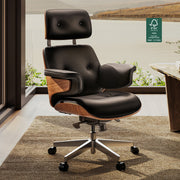
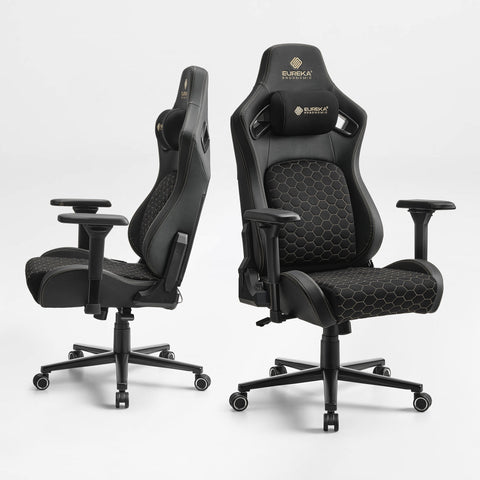
In executive suites, furniture serves a dual purpose: ergonomic support and status signaling. The use of premium materials, such as those found in the Serene Ella, Napa Leather Executive Chair, communicates a company's investment in its leadership. From a retention standpoint, employees interpret full-grain leather and sturdy aluminum bases as tangible signs of corporate care. Flimsy plastic components, by contrast, are often associated with cost-cutting and a lack of long-term commitment to staff well-being.

Heavy-Duty Infrastructure for Modern Workstations
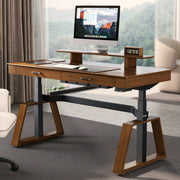
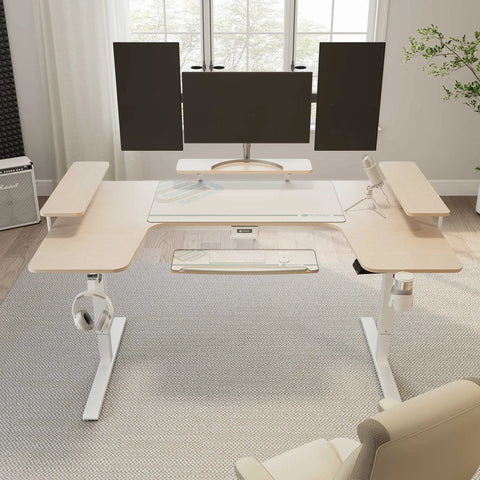
Modern technical roles often require multi-monitor setups and heavy workstation PCs. Standard height-adjustable desks often struggle with the weight, leading to motor strain and instability. The Zen Pro Series, 87"/72" Executive Standing Desk with Cabinets Set addresses this through robust engineering. Our modeling indicates that for a setup involving three ultrawide monitors and a liquid-cooled PC (~94kg total load), a dual-motor system is mandatory to ensure a safety margin aligned with BIFMA X5.5 standards.
Practical Recommendations for Corporate Implementation
To move from theory to practice, organizations should adopt a structured approach to workstation ergonomics.
- Implement a Pilot Program: Before a full-floor rollout, provide 3-4 different models (e.g., mesh task chairs like the Lira, Ergonomic Office Chair and high-back executive options) for a two-week trial. This allows employees to find the fit that matches their specific anthropometric needs.
- The 20-8-2 Rule: Encourage the rhythm recommended by Cornell University Ergonomics Web: 20 minutes of sitting, 8 minutes of standing, and 2 minutes of moving or stretching. This prevents the risks associated with both prolonged sitting and prolonged static standing.
- Standardize Adjustment Training: Buying an ergonomic chair is only half the battle. Employees must be taught how to achieve a neutral working posture, including adjusting seat depth so there is a 2-3 inch gap between the seat edge and the back of the knees.
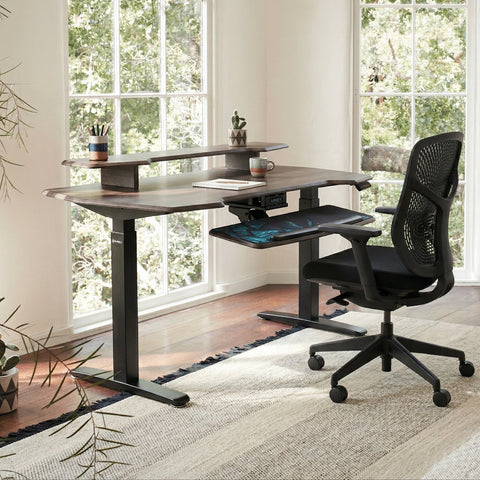
- Prioritize Airflow and Customization: In high-density offices, heat retention can become a comfort issue. Mesh designs, such as the Lira, Ergonomic Office Chair, offer superior breathability while providing the smart adjustability required for varied tasks.

Method and Assumptions: How We Modeled the ROI
To provide transparency in our findings, the following parameters were used in our scenario modeling for high-value talent retention.
| Parameter | Value / Range | Unit | Rationale |
|---|---|---|---|
| User Stature | 193 | cm | 95th percentile male height (CDC data) |
| Hourly Wage | 75 | USD | Senior Software Engineer average (BLS) |
| Productivity Uplift | 0.15 | Ratio | Conservative estimate from ergonomic studies |
| Motor Utilization | 0.80 | Ratio | Engineering safety factor for longevity |
| Room Depth | 144 | inches | Standard 12ft office depth |
Boundary Conditions: These calculations assume the user is trained in proper ergonomic setup and adheres to recommended sit-stand intervals. Results may vary based on individual Basal Metabolic Rate (BMR) and specific pre-existing musculoskeletal conditions.
Final Thoughts on Workspace Strategy
In the modern economy, your office furniture is not just an expense; it is a component of your retention strategy. By moving away from "one-size-fits-all" procurement and embracing scientifically-backed ergonomic solutions, companies can reduce the physical and cognitive toll of the workday. This investment pays dividends in the form of higher productivity, lower absenteeism, and a clear signal to top talent that their health is a corporate priority.
Disclaimer: This article is for informational purposes only and does not constitute professional medical or occupational health advice. Individuals with pre-existing musculoskeletal conditions should consult a qualified physiotherapist or ergonomic specialist before implementing new workstation routines.
References
- BIFMA G1-2013 Ergonomics Guideline for Furniture
- OSHA eTools: Computer Workstations - Neutral Working Postures
- WHO 2020 Guidelines on Physical Activity & Sedentary Behaviour
- ISO 11226:2000 Evaluation of static working postures
- Cochrane: Workplace interventions for reducing sitting at work
- Cornell University Ergonomics Web — Workstation Guides
- Santos et al., 2025 – Ergonomic Interventions & Work-Related Musculoskeletal Pain
- BIFMA Standards Overview (ANSI/BIFMA X5 series)

Leave a comment