

Quick Answer: To successfully integrate a lounge chair into a small office, you need a minimum 30–36 inch "dynamic zone" behind your desk and a 30-inch diameter clear path for swivel bases. For a seamless look, ensure the chair’s armrests are at least 1 inch lower than your desk’s underside to allow for "tuck-under" storage.
Disclosure: This guide includes examples of Eureka Ergonomic products to illustrate spatial concepts. While we are the manufacturer of these items, the layout principles are based on universal ergonomic standards (ISO/BIFMA).
Imagine a corner of your home that doesn't just hold furniture, but sparks your limitless creativity. Picture a sanctuary where the morning light hits a perfectly placed chair, inviting you to dive into deep work with a sense of calm rather than clutter. This is the goal of the modern home office: a transition from the chaotic to the curated.
When we talk about small-space living, every inch is a precious resource. The difference between a room that feels like a "workspace sanctuary" and one that feels like a storage unit often comes down to a few critical inches of floor clearance. Selecting a lounge chair for a compact office isn't just about aesthetics; it's about the geometry of flow. Here is how you transform a cramped corner into a high-performance retreat.
The Geometry of Comfort: Decoding the Footprint
Conventional wisdom suggests that if a seat is 22 inches wide, it will fit in a 24-inch gap. In reality, the "footprint" of a lounge chair is far more complex than its seat dimensions.
Authority Level: Primary International Standard
According to the ISO 9241-5:2024 standard for workstation layout, postural requirements demand space for movement and adjustment, not just static placement. A common oversight is focusing on the internal seat width while ignoring the wheelbase or the flare of the armrests.
For instance, a chair might have a cozy 20-inch seat, but a five-star base or splayed legs that require 30 inches of diameter to sit flat. When planning your layout, treat the "overall width" and "base diameter" as your non-negotiable boundaries.
The "Tuck-Under" Test
One of the most effective ways to maintain a clean aesthetic in a small room is to ensure your chair can tuck under your desk when not in use.
- Measurement Step: Measure from the floor to the lowest point of your desk frame (the "apron").
- Target: Your chair armrests should be at least 1 inch (2.5 cm) lower than this point. If your chair features a fixed armrest that is even half an inch too high, it becomes a permanent obstacle in your walkway, disrupting the "decluttered" vibe essential for mindfulness.
The Friction Points: Measuring for Real-World Movement
A room is a dynamic environment, not a still photograph. The most frequent installation error in small offices is forgetting the "door swing zone"—the arc a door travels when opening. Placing a piece like the Marco, Soft Padded Cozy Lounge Chair, Blue within this zone creates a functional bottleneck.
The Swivel and Recline Radius
If you choose a chair that swivels or reclines, your measurements must account for the full 360-degree rotation.
- Swivel Radius: Ensure the chair can spin without hitting the wall. Most lounge chairs require a 30–32 inch diameter circle of clear floor space.
- Recline Path (Experience-Based Value): A chair that feels compact when upright can consume an extra 12–18 inches of depth when tilted back.
- Circulation Space: Industry Recommendation: Aim for at least 30–36 inches of "clearance" behind a desk for movement, as suggested by ergonomic workstation guides.

Scenario Analysis: The Gamer vs. The Minimalist
To understand how these measurements play out, we simulated two distinct user personas. By applying a "Glass Box" analysis, we show the exact math behind the layout requirements.
Scenario A: The Competitive Streamer (The Power User)
This user needs a high-performance gaming setup and a lounge nook. They use a 60-inch desk and a greenscreen.
| Metric | Measurement/Value | Calculation Breakdown |
|---|---|---|
| Mouse Sensitivity | 800 DPI | Requires 56 cm (22") clear desk width for mousepad. |
| Total Room Depth | 118 Inches | Desk (24") + Dynamic Zone (40") + Greenscreen (24") + Circulation/Access (30"). |
| Available Surplus | 2 Inches | Status: Tight. Requires armless or compact lounge chairs. |
| Equipment Load | 50 kg | 62.5% utilization of a standard single-motor desk capacity. |
In this scenario, the Marco Lounge Chair is ideal because its armless design minimizes the "dynamic zone" requirement, preventing it from colliding with the streamer's backdrop.
Scenario B: The Minimalist Reader (The Standard Case)
This user prioritizes a "mindful" environment with a laptop and a side table. Without a greenscreen, they gain 30–40 inches of surplus space. This allows for the Chloé, Modern Modular Sofa, creating a "conversation pit" feel.
Linking Functionality with Emotion: The 20-8-2 Rhythm
Authority Level: Academic Guideline
The Cornell University Ergonomics Web recommends a "20-8-2" rhythm: 20 minutes of sitting, 8 minutes of standing, and 2 minutes of moving.
In a small office, a lounge chair serves as the "thinking mode" station. To make this area work-ready, you must adjust for the lower seating height.
Calculation for Low-Seated Work:
- Formula: [Seat Height] + [Seated Elbow Height] = [Ideal Table Height]
- Example: A 175 cm user in a 40 cm-high lounge chair (like the Marco) typically has a seated elbow height of ~28–34 cm.
- Result: You need a work surface roughly 68–74 cm from the floor to maintain neutral elbow angles. Pairing the chair with a 23" Contemporary Style Side Table allows you to keep a tablet within reach without cluttering your main desk.

Technical Deep Dive: Standards and Safety
When selecting furniture, durability and safety are paramount.
- Safety & Durability (Industry Standard): Ensure pieces meet ANSI/BIFMA X5.1 standards. This guarantees the chair is engineered for the rigors of a 40-hour work week, even in a compact form.
- Anti-Tip Safety (Regulatory Standard): If your office has storage, be mindful of the CPSC STURDY Act (16 CFR Part 1261). In tight spaces, a chair pushed too close to an unanchored cabinet could create a tipping hazard if the drawers are opened.
Step-by-Step Measuring Checklist for Your Sanctuary
- Measure the "Static Footprint": Record maximum width (arm to arm) and maximum depth (front to back).
- Calculate the "Dynamic Zone": Add 12 inches to depth for recliners; ensure a 30-inch diameter for swivel bases.
- Map the "Door Swing": Trace the arc of every door. Mark this "no-fly zone" with painter's tape.
- The Under-Desk Check: Ensure chair armrests are at least 1 inch lower than the desk apron.
- Assess Visual Weight: Chairs with exposed legs (like the Marco) feel lighter and make small rooms appear larger.
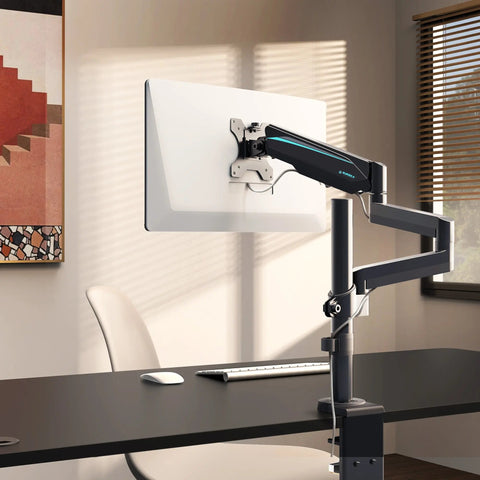
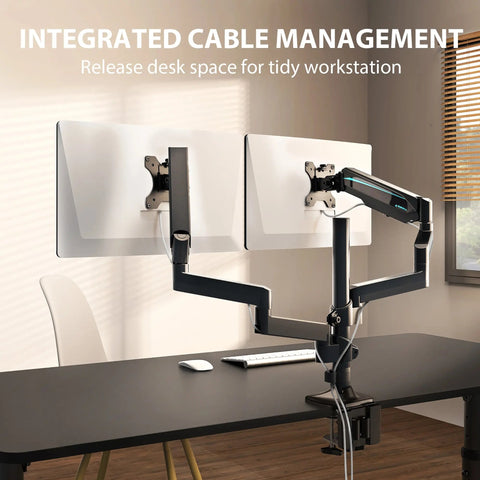
- Optimize with Accessories: Use a Dual Monitor Arm to "reclaim" desktop surface, allowing you to position your lounge chair closer to the desk without feeling crowded.

Creating the Ambiance
As discussed in The 2026 Workstation White Paper, the future of the home office lies in the integration of health-conscious design with sustainable materials. Choosing furniture that fits your space perfectly is the first step toward a more sustainable, long-term lifestyle choice.
By measuring your "door swing zones," testing your "tuck-under" heights, and respecting the "20-8-2" rhythm, you transform a simple apartment room into a professional-grade office. Say goodbye to the chaos of overcrowding and hello to a day of deep work that begins the moment you step into your perfectly planned nook.
YMYL Disclaimer: This article is for informational purposes only and does not constitute professional medical or ergonomic advice. While guidelines are based on industry standards like BIFMA and ISO, individuals with pre-existing musculoskeletal conditions should consult a qualified physiotherapist before making significant changes to their workstation.
References
- ISO 9241-5:2024 - Workstation layout & postural requirements (Primary International Standard)
- Cornell University Ergonomics Web — Workstation Guides (Academic Research)
- BIFMA G1-2013 Ergonomics Guideline for Furniture (Industry Standard)
- CPSC STURDY / 16 CFR Part 1261 (Federal Anti-Tip Safety Regulation)
- WHO 2020 Guidelines on Physical Activity & Sedentary Behaviour (Global Health Authority)
- CCOHS Office Ergonomics - Sit/Stand Desk (Government Health & Safety Resource)




Leave a comment