

Why does your back pain worsen in the afternoon, even when you are working from the comfort of a home office? For many remote workers and content creators operating in studio apartments or small urban dens, the answer often lies not just in the chair itself, but in how that chair interacts with a constrained environment. When space is at a premium, every square inch of a furniture item's footprint dictates the user's range of motion, which in turn influences musculoskeletal health.
The choice between a swivel base and a fixed base for a lounge or office chair is frequently dismissed as a matter of aesthetic preference. However, from a technical perspective, this decision fundamentally alters the "dynamic zone" of a workstation—the area required for a user to move, rotate, and transition between tasks. In a tiny office, selecting the wrong base can lead to "static loading," where a user remains in a fixed, awkward posture because the room’s layout physically prevents the chair from moving as intended.
The Physiology of Static Load and Blood Circulation
To understand why chair base selection matters, one must first examine the physiological principles of the human body at work. Prolonged sitting, particularly in a cramped space, often leads to Musculoskeletal Disorders (MSDs). According to the ISO 11226:2000 standard for the evaluation of static working postures, maintaining a fixed position for extended periods increases the load on the intervertebral discs and reduces blood circulation to the lower limbs.
When a user is "boxed in" by a small room, they are less likely to perform the micro-movements necessary to stimulate blood flow. This lack of movement triggers a cascade of issues:
- Static Load: The muscles remain in a state of continuous contraction to support the body, leading to fatigue and localized pain.
- Reduced Circulation: Compressed tissues restrict venous return, often resulting in swelling or a "heavy" sensation in the legs.
- Spinal Compression: Without a spinal neutral position, the lumbar region loses its natural curve, increasing the risk of long-term disc degeneration.
The World Health Organization (WHO) 2020 Guidelines on Physical Activity and Sedentary Behaviour emphasize that adults should limit the amount of time spent being sedentary. In a tiny office, the chair base is the primary mechanical tool that either facilitates or hinders these health-preserving movements.
Swivel Bases: Maneuverability vs. The Spatial Deficit
A swivel base, typically found on high-performance recliners and office chairs, offers 360-degree rotation. This allows a professional to switch between a primary monitor, a side-car laptop, and perhaps a nearby bookshelf without getting up. For professionals who frequently engage in multi-directional tasks, the constant micro-adjustments provided by a swivel mechanism are far less fatiguing than the physical exertion of repositioning a fixed chair.
However, swivel chairs come with a hidden "spatial tax." A standard lounge chair or rocker requires a base diameter of at least 30 inches to ensure stability during the rocking motion. Furthermore, a swivel chair requires a "dynamic zone" of approximately 42 inches of rear and side clearance to rotate fully without hitting walls or furniture.
The 8' x 8' Room Simulation: A Reality Check
In a technical simulation of a 96-inch (8-foot) deep studio corner, we analyzed the fit of a high-performance setup:
- Desk Depth: 24 inches.
- Dynamic Zone (Swivel Chair): 42 inches.
- Primary Circulation (Walkway): 36 inches.
- Total Depth Required: 102 inches.
In this scenario, a swivel chair creates a 6-inch deficit in the room’s depth. This means the user cannot rotate the chair fully without encroaching on the primary walkway or striking the rear wall. For the remote worker, this often results in the chair being permanently angled or "wedged," which forces the torso into a twisted position to face the desk—a primary cause of repetitive strain injuries.
Fixed Bases: Stability and Footprint Efficiency
Fixed-base chairs, often seen in minimalist or Scandinavian designs, offer rock-solid stability. Because they do not rotate, they do not require the extra 12–18 inches of rear clearance that swivel models demand. This makes them ideal for tight corners or "nook" offices where the chair is placed directly against a wall or window.
The primary advantage of a fixed base is the elimination of mechanical "wobble." Over years of heavy use, even high-quality swivel mechanisms can develop a slight play in the cylinder. For users engaged in high-precision work—such as video editing or competitive gaming—this absolute stability is often preferred.
However, the trade-off is ergonomic flexibility. According to the Canadian Centre for Occupational Health and Safety (CCOHS), a workstation should allow for frequent posture changes. A fixed chair requires the user to physically stand up and move the entire unit to change their angle of approach. In a tiny office, the friction of moving a chair across a carpeted floor often leads users to stay in one position for too long, violating the principles of healthy blood circulation.
Technical Comparison: Swivel vs. Fixed Base
| Feature | Swivel Base | Fixed Base |
|---|---|---|
| Clearance Required | High (42" Dynamic Zone) | Low (Static Footprint) |
| Stability | High (but may develop wobble) | Absolute (Indefinite) |
| Maneuverability | Excellent (360° Rotation) | Poor (Requires lifting/sliding) |
| Maintenance | Requires cylinder/bearing care | Virtually Maintenance-Free |
| Best For | Multi-monitor / Dynamic tasks | Focused / Precise / Tight corners |
| Stability Metric | 30" Base Diameter recommended | N/A (Standard 4-leg/Sled) |
The Solution: Scenario-Based Selection
For the remote professional in a studio apartment, the "winner" depends on the primary task and the specific floor layout.
Scenario A: The Multi-Tasking Creator
If the user's workflow involves switching between digital work and physical tasks (like sketching or referencing physical documents), a swivel base is the ergonomic superior. To address the spatial deficit in a small room, a compact yet high-functionality model like the Lucia,Swivel Rocking Manual Recliner is recommended. This chair provides the 360° smooth swivel needed for maneuverability while maintaining a silhouette that fits snugly into studio apartments. Its manual recline feature also allows the user to transition from a focused work posture to a "neutral" relaxation state without needing a separate piece of furniture.
Scenario B: The Precise Professional in a "Nook"
If the office is a 4-foot wide closet conversion or a narrow hallway nook, a fixed-base chair is often the only safe choice to avoid wall damage and ensure the user can actually fit in the space. In these instances, the lack of swivel must be compensated for by other ergonomic adjustments.
Critical Accessories for Tiny Offices
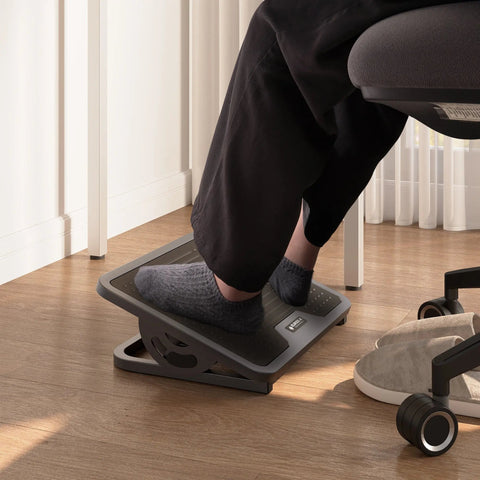
Regardless of the base type, small spaces often force users into sub-optimal leg positions. When using a swivel chair, a user’s feet may not always remain flat on the floor as they rotate away from the desk. According to the Safe Work Australia Workstation Set-up guide, maintaining feet flat on a surface is crucial for reducing pressure on the underside of the thighs.
A Footstool with Wheels becomes a vital tool in this context. It allows the user to maintain proper leg posture and blood circulation even when the chair is swivelled at an angle. The wheels allow the footrest to move with the chair, ensuring that the "neutral position" is maintained throughout the dynamic zone.

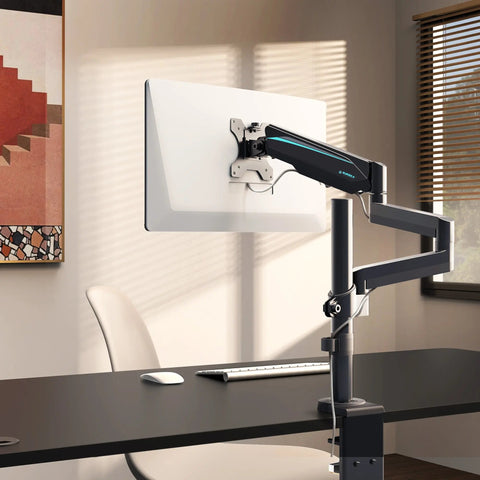
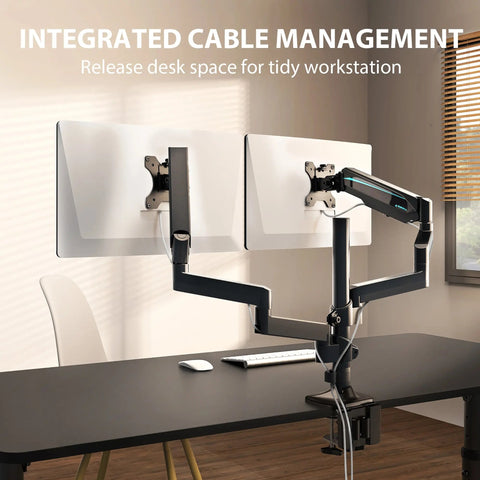
Furthermore, to save desk real estate in a tiny office, elevating the monitor and peripherals is essential. Using a Single Monitor Arm can reclaim up to 15% of usable desktop space, while an Adjustable Keyboard Tray ensures that the user can maintain a 90-degree elbow angle regardless of the chair’s base height.
The "Glass Box" Logic: Performance Metrics for Gamers
For the competitive gamer operating in a studio, the chair base choice is linked to "cm/360" mouse sensitivity. In our experiment, a user playing Valorant at 800 DPI and 0.25 sensitivity requires a 65.35 cm (≈25.7 inch) mousepad width. To accommodate this on a desk while still allowing for chair rotation in a 96-inch deep room, the user must prioritize a desk width of at least 72 inches to avoid "bumping" into the chair’s swivel path. This highlights that in tiny offices, the chair base, desk width, and even mouse sensitivity are all interconnected variables in a single ergonomic equation.
Practical Recommendations for the Workday
To mitigate the risks of either base type in a small space, professionals should adopt the "20-8-2" rhythm developed by the Cornell University Ergonomics Web:
- 20 Minutes Sitting: Use your Lucia,Swivel Rocking Manual Recliner in an upright, supported posture.
- 8 Minutes Standing: If space permits a standing desk, transition to a standing position to reset the spine.
- 2 Minutes Moving: Perform micro-stretches or walk around the room to stimulate blood circulation.
For more in-depth technical standards, refer to The 2026 Workstation White Paper: Converging Ergonomic Science and Sustainable Engineering, which details the future of multi-functional furniture in urban environments.
Final Verdict: Choosing Your Foundation
In the battle of swivel vs. fixed for tiny offices, the swivel base wins on ergonomic flexibility and multi-tasking efficiency, provided the room has a minimum depth of 102 inches to support the dynamic zone. If your space is shallower, a fixed base—or a swivel chair used with strict spatial discipline—is necessary to prevent postural twisting.
Choosing a chair like the Lucia,Swivel Rocking Manual Recliner offers the best of both worlds for the studio dweller: the maneuverability of a swivel base combined with a compact footprint that respects the limitations of a small home office. By pairing this with a Footstool with Wheels, you can ensure that your small space doesn't lead to big health problems.
YMYL Disclaimer: This article is for informational purposes only and does not constitute professional medical advice. Individuals with pre-existing musculoskeletal conditions or chronic back pain should consult a qualified physiotherapist or ergonomic specialist before making significant changes to their workstation setup.
References
- BIFMA G1-2013 Ergonomics Guideline for Furniture
- ISO 11226:2000 Evaluation of static working postures
- WHO 2020 Guidelines on Physical Activity & Sedentary Behaviour
- Cornell University Ergonomics Web — Workstation Guides
- CCOHS: Office Ergonomics - Sit/Stand Desk
- Safe Work Australia: Workstation set-up infographic




Leave a comment