

Why Your Standing Desk Wobbles on Carpet
A stable workstation is the bedrock of productivity. When your desk shakes as you type or shifts when you lean, it breaks your focus and can even feel unsafe. If you've placed a standing desk on a carpeted floor, you may have noticed this instability is more pronounced. The issue often isn't a defect in the desk itself, but a fundamental conflict between the desk's design and the nature of soft flooring.
Standing desks, with their adjustable height, have a higher center of gravity than traditional fixed-height desks. This means any instability at the base is magnified at the desktop. Carpet and its underlying pad create a soft, compressible foundation. As the desk applies pressure, the carpet fibers and padding compress unevenly, causing the desk feet to sink and shift. This phenomenon, known as carpet compression, creates a constantly unstable base, leading to the wobble you feel.
According to the U.S. Occupational Safety and Health Administration (OSHA), an unstable work surface is a risk factor that can contribute to awkward postures and other ergonomic hazards. To create a truly ergonomic and productive space, addressing this foundational instability is the first and most critical step.
Debunking a Common Misconception: Is It the Frame or the Foundation?
A frequent assumption is that a wobbly desk must have a faulty or poorly designed frame. While frame construction certainly plays a role in overall desk stability, the foundation is a more common culprit, especially on soft surfaces. Before concluding the frame is to blame, try this quick diagnostic test derived from professional installer experience:
- Carefully move your desk setup off the carpet.
- Place a single, solid piece of 3/4" plywood or engineered board where the desk stood.
- Position the desk back onto the board.
- Test for wobble. If the instability is significantly reduced, the problem is your soft flooring, not the desk frame.
This simple test proves that creating a solid, non-compressible surface is the key to solving wobble on carpet.
Foundational Solutions: How to Create a Rock-Solid Base
Once you've identified the carpet as the source of instability, the solution is to create a stable platform that bridges the soft surface. This prevents the desk legs from sinking and shifting, providing the rigid foundation necessary for a wobble-free experience.
The Plywood Platform: An Expert-Approved Method
The most effective and durable solution is to build a solid platform for your desk. By distributing the desk's weight across a larger, rigid area, you effectively bypass the carpet and its padding, creating a stable, level surface.
Here’s how to create one:
- Measure Your Desk's Footprint: Measure the width and depth of your desk's legs to determine the minimum size for your platform. Add a few inches to each dimension for a comfortable margin.
- Acquire a Rigid Board: Purchase a piece of 3/4" (or 19mm) plywood or medium-density fibreboard (MDF) cut to your required dimensions. Most hardware stores can cut this for you.
- Finish the Edges (Optional): For a more polished look, you can sand the edges and apply paint or a sealant that matches your room's decor.
- Add Anti-Slip Pads: Place dense rubber anti-slip pads on the bottom of the platform to prevent it from sliding on the carpet. More importantly, place another set of anti-slip pads on top of the platform, directly where the desk feet will sit. This maximizes friction and prevents the desk from sliding on the board.
- Position Your Desk: Place your standing desk onto the platform and confirm its stability. A properly secured desk should withstand a 10–20 lb lateral force applied at the center of the desktop without significant swaying.
Alternative Solutions for Different Needs
While the plywood method is highly effective, other options can also improve stability, depending on your carpet type and budget.
- High-Density Mats: Instead of a full wood platform, you can use a high-density, commercial-grade rubber or vinyl mat. The key is density; the mat must be firm enough to resist compression. A thin, dense anti-fatigue mat (around 1/8" to 1/4" thick) placed under the entire desk footprint can work well on low-pile carpets. Avoid soft foam mats, as they will only worsen the problem.
- Furniture Cups/Coasters: For low-pile carpets, wide, solid furniture coasters (not slick sliders) placed under each foot can help distribute the load over a slightly larger area. However, this is less effective than a single platform, as the coasters can still sink independently.
Comparison of Stability Solutions
To help you choose the right approach, here is a comparison of the most common methods for stabilizing a standing desk on carpet.
| Method | Primary Material | Effectiveness (High-Pile Carpet) | Effort Level | Cost | Best For |
|---|---|---|---|---|---|
| Plywood Platform | 3/4" Plywood or MDF | Excellent | Medium | Low to Moderate | The most reliable, long-term solution for any carpet type. |
| High-Density Mat | Dense Rubber or Vinyl | Good | Low | Moderate | Users with low to medium-pile carpets seeking an easy-to-install solution. |
| Wide Furniture Coasters | Solid Plastic or Rubber | Fair to Poor | Low | Low | A temporary or budget fix for very low-pile carpets only; not recommended for high-pile. |
| Direct on Carpet | N/A | Poor | N/A | N/A | Not recommended; leads to chronic instability and potential ergonomic issues. |
Optimizing Your Setup to Reduce Wobble
Creating a solid foundation is half the battle. The other half is minimizing forces that create or amplify wobble. This involves strategically managing weight and ensuring all components work together smoothly.
Lighten the Load: Strategic Weight Distribution
Every item on your desktop adds to the total mass that can sway. The heavier and higher the load, the more torque it can generate. By reducing the weight on the desktop—especially heavy items—you lower the center of gravity and reduce the potential for movement.
One of the heaviest components in many setups is the computer tower. Instead of placing it on your desktop, move it to a dedicated holder. A solution like the Mobile Height Adjustable CPU Cart not only frees up valuable desk space but also removes a significant source of top-heaviness. Its mobile design ensures your PC remains accessible without being tethered directly to the moving desktop.

Master Your Cables
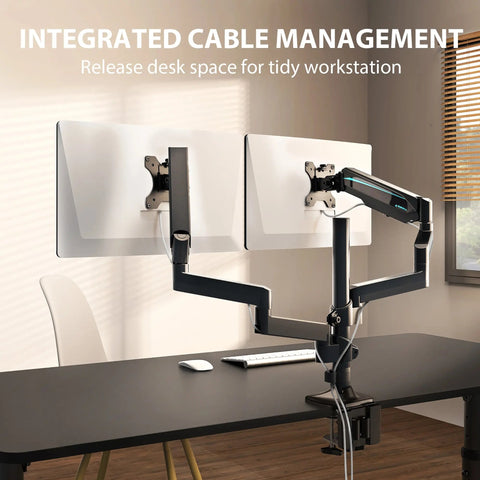
Cable management is not just for aesthetics; it’s critical for stability. Cables that are too short or that get snagged during height adjustments can tug on the desk, causing it to jerk or wobble. A professional tip is to ensure every cable has at least 20% more slack than needed to reach its full height. Secure cables neatly under the desktop every 12 inches or so to prevent them from catching. Using flexible organizers like the Magnetic Cable Tie allows you to bundle cables securely while making it easy to add or remove them later.

Check Your Monitor Arm Placement
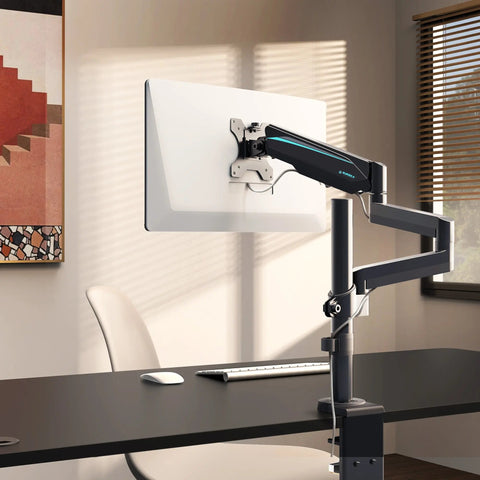
Monitor arms offer excellent ergonomic benefits, but poor placement can introduce instability. Mounting a heavy monitor on an arm extended too far forward creates a constant forward-pulling torque. According to Cornell University's Ergonomics Web, proper monitor distance is crucial for visual comfort. Try to position your monitors closer to the central support columns of the desk to keep the weight balanced over its foundation.
Final Adjustments: A Checklist for a Stable Workstation
With a solid foundation and an optimized load, the final step is to perform a series of checks and micro-adjustments to eliminate any remaining play.
- Tighten All Fasteners: Over time, bolts on the frame can loosen slightly. Go over every screw on the legs, frame, and desktop, and ensure they are fully tightened.
- Perfect the Leveling Feet: Every standing desk has adjustable leveling feet to compensate for uneven floors. However, making large adjustments can strain the leg alignment. The correct method is to make small, iterative turns—no more than 1/8 of a turn at a time. Adjust one foot, test for wobble, and then move to the next until the desk feels solid.
- Calibrate Anti-Collision Sensors: If you've added a platform or made significant changes, check your desk’s user manual to see if you need to recalibrate the motor’s anti-collision system. This ensures smooth and safe operation.
- Avoid Furniture Sliders: Never place slick furniture sliders under your desk feet on a hard platform. These are designed to reduce friction for moving, which is the opposite of what you need for stability. Stick to high-friction rubber pads.
Wrapping Up: Building a Foundation for Focus
A wobbly standing desk is a solvable problem. While it may seem like a flaw in the desk, the issue for users on carpet is almost always the soft foundation. By understanding the physics of carpet compression and implementing a foundational solution like a plywood platform, you can create the unshakable stability needed for deep work.
Optimizing weight distribution—by moving heavy items like PC towers to a Mobile Height Adjustable CPU Cart—and practicing good cable management further minimizes forces that cause movement. These steps not only enhance your productivity but also contribute to a safer and more comfortable work environment, aligning with the broader health goals of reducing sedentary time as encouraged by the World Health Organization (WHO).
Frequently Asked Questions (FAQ)
Will furniture sliders help stabilize my desk on carpet? No. Furniture sliders are designed with a low-friction surface to make moving furniture easier. Using them under a standing desk will reduce friction and likely increase instability, allowing the desk to slide and shift more easily.
Is a small amount of wobble normal for a standing desk? Yes, a minor amount of movement is expected, especially when the desk is at its maximum height, due to the leverage involved. However, it should not be enough to spill a drink or disrupt your typing. If you can easily rock the desk with a light 10-20 lb push, you should implement the stability solutions in this guide.
Can I just put a small piece of wood under each desk leg individually? While this is better than nothing, it is not as effective as a single, solid platform. Separate pieces can still sink or shift independently into the carpet. A single, large board distributes the entire load of the desk and its contents evenly, creating a unified and far more stable foundation.
Disclaimer: This article is for informational purposes only and does not constitute professional engineering or safety advice. If you have pre-existing health conditions, such as musculoskeletal disorders, consult with a qualified medical professional or certified ergonomist before making changes to your workstation.




Leave a comment