

Are Standing Desks a Good Investment for Young Students?
The landscape of learning has changed. With the rise of digital classrooms and home-based study, children are spending more time than ever at their desks. This increased sedentary time has led many parents to question the long-term impact of traditional homework stations on their children's health, posture, and focus. A question we frequently encounter is: could a standing desk be the answer?
This guide explores the benefits and practical considerations of integrating an adjustable standing desk into a child's learning environment. We will move beyond simple assertions and delve into the principles of pediatric ergonomics, safety standards, and actionable setup advice. Our goal is to provide a clear, evidence-based framework to help you decide if a standing desk is the right choice for your child and how to implement it effectively for long-term well-being.
The Science Behind Movement and Active Learning
Before adjusting any furniture, it's crucial to understand why movement is so important for a developing body. The core issue with traditional desks isn't sitting itself, but the prolonged, static nature of it.
The Problem with Static Postures
When a child sits for extended periods without changing position, their body experiences a static load. According to occupational health experts at OSHA, this can lead to reduced blood circulation and contribute to the risk of Musculoskeletal Disorders (MSDs) over time. For children, whose bodies are still growing, maintaining a neutral spine and avoiding postural strain is especially critical. A poorly configured workstation can encourage slouching, forward head posture, and rounded shoulders, setting patterns that can persist into adulthood.
How Alternating Postures Can Help
The primary benefit of a sit-stand desk is its ability to break the cycle of sedentary behavior. It encourages dynamic movement, shifting from sitting to standing throughout the day. This aligns with global health recommendations. The World Health Organization's 2020 Guidelines emphasize the need for people of all ages to reduce sedentary time and interrupt long periods of static activity.
It is important to manage expectations: standing is not a replacement for exercise. Rather, a standing desk is a tool to combat a static environment. A 2018 Cochrane review found that sit-stand desks can significantly reduce sitting time by over an hour each day. For a student, this translates to less time locked in a single posture, promoting better blood flow and reducing physical strain. This small change can have a significant impact on their comfort and endurance during long study sessions.

A Practical Guide to Setting Up a Desk for a Growing Child
Proper setup is not just important; it's everything. An improperly configured standing desk can create more ergonomic problems than it solves. For children, the setup must be precise and adaptable to their rapid growth.
The Measurement-First Rule
Before your child even uses the desk, take two key measurements. This is a practice occupational therapists recommend to ensure a neutral, low-stress posture from day one.
- Standing Elbow Height: Have your child stand with their arms relaxed at their sides, elbows bent at a 90-degree angle. Measure the distance from the floor to the bottom of their elbow. The desk surface should be set at this height or just 1-2 cm below it. This ensures their wrists remain straight when typing or writing, preventing strain.
- Monitor Viewing Height: The top of the monitor screen should be level with or slightly below the child's eye level. This encourages a slight downward gaze of 10-20 degrees, which is the natural resting position for the eyes and neck.
Ergonomic Checklist for a Child's Workstation
Use this checklist, adapted from guidelines by organizations like OSHA, to fine-tune your child's setup. Getting these details right is fundamental to preventing strain.
| Component | Seated Position | Standing Position | Key Goal |
|---|---|---|---|
| Feet | Flat on the floor or a stable footrest. | Flat on the floor or an anti-fatigue mat. | Provides a stable base for the spine. |
| Knees | Bent at approximately a 90-degree angle. | Straight but not locked. | Reduces strain on the lower back. |
| Desk Height | Elbows at a 90-degree angle, wrists straight. | Elbows at a 90-degree angle, wrists straight. | Prevents shoulder shrugging and wrist strain. |
| Monitor | Top of screen at or slightly below eye level. | Top of screen at or slightly below eye level. | Maintains a neutral neck position. |
| Monitor Distance | At least an arm's length away. | At least an arm's length away. | Reduces eye strain. |
Phased Adaptation: The 20-8-2 Rhythm
A common mistake is encouraging a child to stand for hours at a time. This can lead to fatigue and discomfort in the legs and back. Instead, introduce standing gradually. A great starting point is the "20-8-2" rule recommended by ergonomics experts at Cornell University: for every 30 minutes, aim for 20 minutes of sitting, 8 minutes of standing, and 2 minutes of moving or stretching. Start with just 15-20 minutes of standing per hour and slowly increase as your child adapts.
Safety and Stability: Non-Negotiable Features
When choosing a desk for a child, safety and stability are more important than any other feature. A wobbly or unstable desk is not just an annoyance; it's a hazard.
Expert Warning: Stability Is More Than Just Weight Capacity
A common misconception is that a high load rating (e.g., 100 kg) automatically means a desk is stable. This is not true. Real-world stability is determined by frame geometry, the quality of the lifting columns, and adherence to rigorous safety standards. Many budget desks may support a heavy static load but can fail dynamic tests for tipping or wobbling. For peace of mind, look for desks that are certified to meet standards like ANSI/BIFMA X5.5, which include specific tests for horizontal force and tip-over prevention. These certifications ensure the desk has been independently verified to withstand the dynamic forces of daily use.
Key Features for a Child-Friendly Standing Desk
- Wide Adjustment Range: A desk that can go low enough for a small child to use while seated and high enough for them as they grow into their teen years is a smart long-term investment.
- Anti-Collision Sensors: This is a critical safety feature. Gyroscope-based sensors can detect an obstruction (like a chair, a pet, or a person) when the desk is in motion and automatically stop and reverse, preventing injury or damage.
- Durable and Low-Maintenance Surface: Look for materials that are scratch-resistant and easy to clean. A desktop with rounded corners is also a safer choice for a child's room.
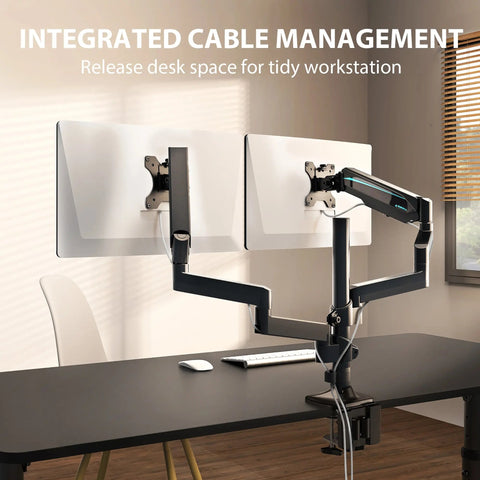
- Integrated Cable Management: A built-in tray or channel to hide cords is essential for preventing trip-and-pull accidents, especially when the desk is being raised and lowered.
Common Mistakes and Essential Accessories
Perfecting an ergonomic workstation often involves a few key accessories and an awareness of common setup pitfalls.
Common Mistakes and How to Fix Them
Even with the right desk, small setup errors can undermine its benefits. Here are some of the most frequent issues I see and their simple solutions.
| Common Mistake | The Problem It Causes | How to Fix It |
|---|---|---|
| Desk is Too High | The child shrugs their shoulders to reach the keyboard, causing neck and shoulder tension. | Lower the desk until the child's elbows are at a 90-degree angle and shoulders are relaxed. |
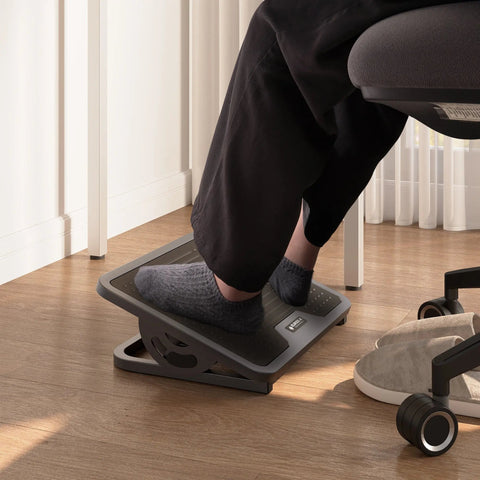
| Dangling Feet | When seated, the child's feet don't touch the floor, causing their pelvis to tilt back and their spine to curve into a "C" shape (slouching). | Provide a stable, height-adjustable footrest to support their feet and maintain a neutral lumbar curve. |
| Overusing Standing | The child stands for too long, leading to fatigue, leg pain, and poor posture as they tire. | Use a timer to alternate between sitting and standing. Pair standing with focused tasks and sitting with more creative work. |
| Reaching for Items | The desktop is too large or poorly organized, forcing the child to lean and reach, straining their back and shoulders. | Keep frequently used items (pencils, notebooks) within easy reach. Use a monitor riser to create space underneath the screen. |
Accessories That Make a Difference
A few well-chosen accessories can solve common ergonomic challenges, especially for shorter children.
- Footrest: A non-negotiable for any child whose feet do not rest flat on the floor when seated. It provides the stability needed for proper spinal alignment.
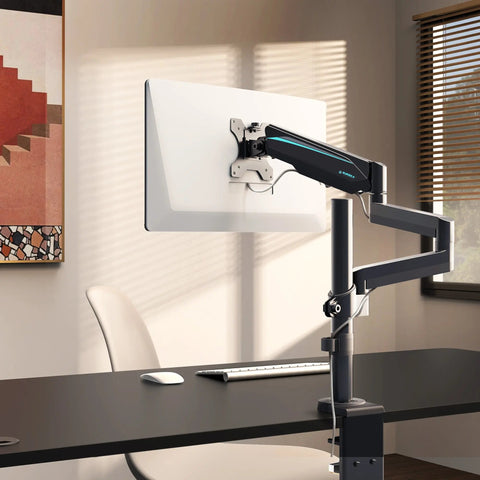
- Monitor Arm or Riser: This allows you to position the screen at the perfect height and distance, independent of the desk surface. This is crucial for achieving the correct downward gaze angle.
- Pull-Out Keyboard Tray: For some children, especially younger ones, a keyboard tray can be the best way to achieve a neutral wrist posture. An adjustable model like the Pull-out Keyboard Tray allows you to position the keyboard lower than the main desk surface, which is often necessary to get the right elbow angle while keeping the desk at a comfortable height for writing.

Wrapping Up: An Investment in Healthy Habits
A standing desk can be an excellent tool for promoting movement, improving posture, and enhancing focus in young students. However, it is not a passive solution. Its success depends entirely on proper ergonomic setup, a commitment to alternating between sitting and standing, and choosing a product built with safety and stability as its top priorities.
By following the measurement-first rule, using an ergonomic checklist, and adapting the workstation as your child grows, you can create a learning environment that supports their physical well-being. This investment goes beyond a piece of furniture; it's an opportunity to teach your child healthy habits that will last a lifetime.
Frequently Asked Questions (FAQ)
1. At what age can a child start using a standing desk? There is no specific minimum age, but the child should be tall enough to use the desk at its lowest setting while maintaining proper ergonomic posture, both sitting and standing. For most desks, this is typically around elementary school age. The key is ensuring the desk can adjust to fit the child, not forcing the child to adapt to the desk.
2. How often should my child switch between sitting and standing? A good starting point is the 20-8-2 rule: 20 minutes of sitting, 8 minutes of standing, and 2 minutes of moving. For younger children, start with shorter standing intervals of 10-15 minutes and gradually increase as they feel comfortable. The goal is frequent posture changes, not prolonged standing.
3. Is an anti-fatigue mat necessary for a child? While not strictly necessary, an anti-fatigue mat can significantly increase comfort during standing periods. It provides cushioning that reduces strain on the feet, legs, and back. It can be a worthwhile addition, especially as your child begins to stand for longer durations.
4. When should I consult a professional? If your child complains of persistent pain, you notice significant postural asymmetry (e.g., one shoulder consistently higher than the other), or you have concerns about their musculoskeletal development, it is always best to consult a pediatric physical or occupational therapist. They can provide a professional ergonomic assessment and personalized recommendations.
Disclaimer: This article is for informational purposes only and does not constitute professional medical advice. The information provided is intended to support, not replace, the relationship that exists between a patient/site visitor and his/her existing physician. Always seek the advice of a qualified health provider with any questions you may have regarding a medical condition.
References
- Canadian Centre for Occupational Health and Safety (CCOHS). (n.d.). Office Ergonomics - Sit/Stand Desk. Retrieved from https://www.ccohs.ca/oshanswers/ergonomics/office/sit_stand_desk.html
- Cornell University Ergonomics Web. (n.d.). Workstation Guides. Retrieved from https://ergo.human.cornell.edu/ergoguide.html
- European Agency for Safety and Health at Work (OSHA). (n.d.). Musculoskeletal disorders and prolonged static sitting. Retrieved from https://oshwiki.osha.europa.eu/en/themes/musculoskeletal-disorders-and-prolonged-static-sitting
- U.S. Department of Labor, Occupational Safety and Health Administration (OSHA). (n.d.). OSHA eTools: Computer Workstations. Retrieved from https://www.osha.gov/etools/computer-workstations
- World Health Organization. (2020). WHO 2020 Guidelines on Physical Activity and Sedentary Behaviour. Retrieved from https://www.who.int/publications/i/item/9789240015128




Leave a comment