

The Hidden Conflict: Why Your Armrests and Keyboard Tray Must Sync
Have you ever noticed a persistent, dull ache in your shoulders by 3:00 PM, or perhaps a tingling sensation in your pinky finger after a long gaming session? Often, these symptoms are dismissed as the inevitable cost of a digital lifestyle. However, from a physiological standpoint, these are frequently the early warning signs of Musculoskeletal Disorders (MSDs) caused by a fundamental misalignment in your workstation: the conflict between your chair’s armrests and your keyboard tray.
In many home offices, these two components act as independent agents. You adjust your chair for comfort, then you reach for your keyboard, unaware that your body is compensating for a height gap that shouldn't exist. This compensation typically manifests as "shrugged" shoulders or "reaching" wrists, both of which introduce static load—a condition where muscles remain tensed to maintain a position, restricting blood flow and accelerating fatigue.
According to the Occupational Safety and Health Administration (OSHA), repetitive tasks and poor posture are core risk factors for MSDs. When armrests and keyboard trays are out of sync, the body loses its ability to maintain a "neutral position." This article explores the scientific principles of upper-body ergonomics and provides a technical framework for synchronizing these two critical interfaces to optimize musculoskeletal health and productivity.
The Physiology of Upper-Body Misalignment
To understand why synchronization is vital, we must look at the mechanics of the shoulder and the arm. The human shoulder is a complex of four joints, designed for mobility rather than sustained weight-bearing in fixed positions. When you type with your keyboard too high, your trapezius muscles must contract to lift your shoulders. This creates a "static load" that compresses local blood vessels, reducing the delivery of oxygen and the removal of metabolic waste products like lactic acid.
The Ulnar Nerve and the "One-Inch Rule"
A common mistake in workstation setup is allowing the armrests to push the forearms upward into the sharp edge of a desk or tray. This can lead to compression of the ulnar nerve, which runs through the cubital tunnel at the elbow and continues down to the hand. Prolonged pressure here is a leading cause of numbness in the ring and pinky fingers.
To mitigate this, professional ergonomists often suggest the "one-inch rule." When your hands are on the keyboard, there should be approximately a one-inch gap between the bottom of your forearm (just behind the wrist) and the top of the armrest. This gap ensures that the armrest supports the weight of the arm without acting as a fulcrum that pivots the wrist into an extended, stressful angle.
Neutral Wrist Posture and the "B-Key" Check
The goal of any keyboard interface is to achieve a neutral wrist position—where the hand, wrist, and forearm form a relatively straight line. As noted by the University of Nevada, Las Vegas (UNLV) Ergonomics Guide, the keyboard should be at or slightly below elbow height.
A reliable heuristic for this is the "B-key check": when your hands are on the home row, your elbows should be at or slightly above the height of the 'B' key. If your elbows are lower, you are likely in a state of wrist extension (bending the hand back), which increases pressure within the carpal tunnel.

Step 1: Establishing the Foundation (The Chair)
Synchronization cannot begin with the desk; it must begin with the chair. The chair provides the stable base from which all other measurements are derived. Following the BIFMA G1-2013 Ergonomics Guideline, furniture should be adjustable to fit the 5th to 95th percentile of the population.
- Seat Height: Adjust your seat so that your feet are flat on the floor and your thighs are parallel to the ground. This creates a stable pelvic base and prevents pressure on the underside of the thighs, which can impede blood circulation.
- Seat Depth: Ensure there is a gap of about two to three fingers between the edge of the seat and the back of your knees to prevent pressure on the popliteal fossa.
- Armrest Initial Position: Lower the armrests completely before moving to the desk. You will bring them up to meet your elbows only after the keyboard tray is positioned.
Step 2: Calibrating the Keyboard Tray
Once the chair is set, the keyboard tray acts as the bridge between your body and your work. Unlike a fixed desk surface, an adjustable tray allows for "negative tilt." According to the Canadian Centre for Occupational Health and Safety (CCOHS), a slight negative tilt (where the front of the keyboard is higher than the back) of 5 to 10 degrees can be more effective than a flat position. This tilt encourages the wrists to remain in a neutral or slightly declined position, mimicking the natural hang of the arms.
Technical Requirements for the Tray:
- Vertical Adjustability: It must be able to drop below the desk surface to accommodate the "elbow-height" rule.
- Width: A minimum width of 26 inches is recommended to ensure both the keyboard and the mouse reside on the same plane, preventing "mouse reach" strain.
- Stability: The tray must lock securely. Any "bounce" while typing introduces micro-vibrations that can fatigue the small muscles of the hand.
Scenario Analysis: The Tall User vs. The Standard Setup
Ergonomics is not a "one size fits all" science. To demonstrate the necessity of synchronization, we modeled two distinct user profiles based on anthropometric data.
Scenario A: The 50th Percentile User (Average Height)
For an individual of average height, a standard 29-inch desk combined with a basic adjustable chair often suffices. The keyboard tray usually sits about 2 to 3 inches below the desk, aligning perfectly with the resting elbow height.
Scenario B: The 95th Percentile User (The 195cm / 6'5" Male)
For a tall user, standard furniture dimensions often fail. Our simulation of a 195cm male professional reveals a "cascade of compromises." At this height, the ideal seated desk height is actually 80.5cm (approx. 31.7 inches). Using a standard 29-inch desk creates a deficit that forces the user to choose between slouching or raising their chair so high that their feet dangle.
| Metric | Standard User (175cm) | Tall User (195cm) | Context/Basis |
|---|---|---|---|
| Ideal Seat Height | 44.5 cm | 51.3 cm | Feet flat, thighs parallel |
| Ideal Seated Desk Height | 71.0 cm | 80.5 cm | Based on elbow rest height |
| Keyboard Tray Offset | -5.0 cm | -7.5 cm | To achieve neutral wrist |
| Armrest Sync Height | Level with Tray | Level with Tray | The "One-Inch Rule" |
| Desk Depth Required | 30 inches | 55.9 inches | For 49" monitor FOV |
Values estimated based on ANSI/HFES 100-2007 standards and theoretical anthropometric modeling.
For the tall user, a deeper desk and a dual-motor height-adjustable system are essential. A dual-motor system provides the necessary torque to lift heavy "battlestation" setups (often exceeding 75kg) while maintaining the precision required to sync the armrest and tray within millimeter accuracy.

Step 3: The Final Sync (Armrests to Tray)
With the chair and tray set, it is time to bring the armrests into the equation. The goal is to provide a "landing pad" for the elbows that does not interfere with the movement of the wrists.
- The Height Match: Raise the armrests until they just touch the underside of your forearms when your hands are on the keyboard.
- The Width Adjustment: If your chair allows, move the armrests inward. Your elbows should be tucked close to your torso. If the armrests are too wide, you will be forced to "wing out" your elbows, which causes tension in the rotator cuff.
- The Depth Check: Ensure the armrests do not hit the edge of the keyboard tray. If they do, you will be unable to sit close enough to the desk, leading to "forward leaning" and loss of lumbar support.
The Sit-Stand Transition: A New Sync
When transitioning to a standing position, the relationship between your armrests (now gone) and the keyboard tray changes. According to the ISO 11226:2000 standard on static working postures, standing for long periods introduces different risks, such as lower limb fatigue.
When standing, the keyboard tray height should be recalibrated. Because you no longer have armrests to support the weight of your limbs, the tray often needs to be slightly higher than it was during the seated phase to allow the forearms to rest lightly on the tray itself. This prevents the "hanging arm" syndrome, which can lead to neck strain.
The Cochrane systematic review (2018) suggests that sit-stand desks can reduce sitting time by over 100 minutes per day, but the benefit is only realized if the posture in both positions is optimized. Following the "20-8-2" rule (20 minutes sitting, 8 minutes standing, 2 minutes moving) is a highly effective rhythm for maintaining blood circulation and preventing static load.

Common Pitfalls and Expert Solutions
Even with the best equipment, small errors can undermine your ergonomic health. Here are the most frequent "gotchas" identified by workstation auditors:
- The "Armrest Hike": Many users raise their armrests too high, thinking more support is better. This actually "shrugs" the shoulders and can compress the brachial plexus nerves in the neck. Always default to the "one-inch rule."
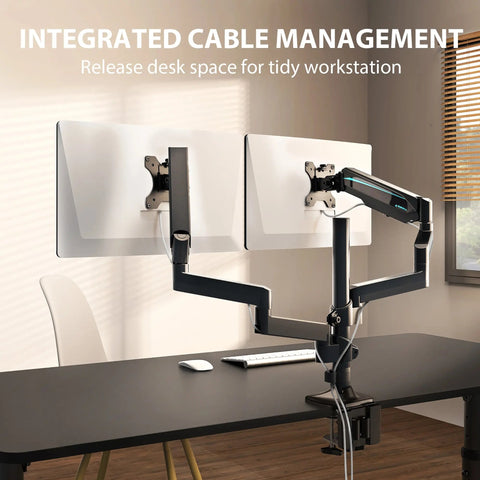
- The Cable Tension Trap: When using a height-adjustable desk and a keyboard tray, ensure your peripheral cables (mouse, keyboard, headset) have enough slack. Tension on a mouse cable can create a "pull" that forces your wrist into a repetitive micro-correction, leading to strain.
- Visual Parallax at Standing Height: Users often set their standing desk height based on where their eyes think the keyboard should be. Always set the height based on your elbows first, then adjust the monitor height to meet your eyes.
Achieving Holistic Workspace Harmony
Syncing your armrests and keyboard tray is a technical exercise in geometry and physiology. It is about removing the friction between your body and your tools. By adhering to international standards like ISO 9241-5, you transform your workstation from a source of strain into a platform for performance.
As detailed in The 2026 Workstation White Paper: Converging Ergonomic Science and Sustainable Engineering, the future of office health lies in the seamless integration of adjustability and user-centric design. Whether you are a professional navigating a 10-hour workday or a gamer in a high-stakes environment, the synchronization of your support surfaces is the foundation of long-term musculoskeletal well-being.
YMYL Disclaimer: This article is for informational purposes only and does not constitute professional medical advice, diagnosis, or treatment. The ergonomic recommendations provided are general guidelines and may not be suitable for individuals with pre-existing musculoskeletal conditions, chronic back pain, or nerve disorders. Always seek the advice of a qualified healthcare professional, such as a physical therapist or ergonomic specialist, before making significant changes to your workstation setup or work habits.
References
- BIFMA. (2013). G1-2013 Ergonomics Guideline for Furniture. Link
- CCOHS. (2023). Office Ergonomics - Sit/Stand Desk. Link
- Cochrane Library. (2018). Workplace interventions for reducing sitting at work. Link
- ISO. (2024). ISO 9241-5:2024 Workstation layout & postural requirements. Link
- OSHA. (n.d.). Computer Workstations eTool: Neutral Working Postures. Link
- UNLV RMS. (n.d.). Keyboard and Keyboard Trays Guidelines. Link




Leave a comment