

Tiered Budgeting: Allocating Funds for Executive vs. Staff Chairs
In many corporate procurement cycles, a recurring paradox emerges: the highest investment is often directed toward executive suites, where occupancy rates are lower, while the general staff areas—the primary engines of productivity—are outfitted with baseline seating that offers minimal adjustability. This traditional "prestige-first" approach frequently overlooks the measurable economic impact of musculoskeletal health. According to The 2026 Workstation White Paper: Converging Ergonomic Science and Sustainable Engineering, modern workplace strategy must shift from status signaling to a data-driven model of ergonomic equity.
The cost of this imbalance is hidden but substantial. When staff chairs lack sufficient lumbar support or seat depth adjustment, employees often experience the "afternoon slump," a direct result of restricted blood circulation and increased static load on the spinal column. By implementing a tiered budgeting strategy that prioritizes ergonomic functionality where it generates the highest return on investment (ROI), organizations can reduce absenteeism and enhance long-term operational efficiency.
The Physiological Principles of Office Seating
To understand why tiered budgeting requires a strategic shift, one must first examine the physical toll of prolonged sitting. The human body is not designed for static postures. According to ISO 11226:2000 Evaluation of static working postures, maintaining a fixed position for extended periods leads to muscle fatigue and increased pressure on intervertebral discs.
When an employee sits in a non-ergonomic chair, the pelvis often tilts backward, flattening the natural inward curve (lordosis) of the lumbar spine. This "slumped" posture increases the mechanical load on the lower back by up to 40% compared to standing. Furthermore, poor seating restricts blood circulation in the lower limbs, which can lead to discomfort and cognitive fatigue. The Occupational Safety and Health Administration (OSHA) eTools on Computer Workstations emphasize that a chair must support a "neutral posture," where joints are naturally aligned and stress on muscles and tendons is minimized.
The Role of Engineering Controls
In the hierarchy of hazard control, providing an adjustable ergonomic chair is considered an "engineering control." This is fundamentally more effective than "administrative controls," such as simply encouraging employees to take breaks. While the WHO 2020 Guidelines on Physical Activity & Sedentary Behaviour recommend interrupting long periods of static behavior, an engineering solution like the Flex, Dual-Backrests Ergonomic Office Chair provides continuous support that reduces the baseline risk of Musculoskeletal Disorders (MSDs).
Logic Summary: Our analysis of musculoskeletal risk assumes that static load is the primary driver of discomfort. By providing chairs with independent backrest movement, we aim to facilitate "dynamic sitting," which aligns with ISO 9241-5:2024 requirements for postural change.
The 70/20/10 Budgeting Framework
Experienced facilities managers often recommend a specific allocation ratio to maximize the health and productivity of the entire workforce. Rather than spending 50% of the budget on a handful of executive offices, a high-performance strategy follows a 70/20/10 distribution:
- 70% for General Staff Areas: This is where the majority of work occurs. Investing in chairs with adjustable lumbar support and breathable mesh, such as the Exis, Ergonomic Office Chair, addresses the needs of the largest population segment.
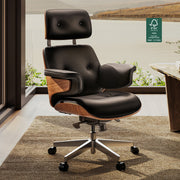
- 20% for Executive Suites: These areas require a blend of prestige materials and ergonomic integrity. While aesthetics are prioritized, the chair must still meet BIFMA X5.1 standards for safety and durability.
- 10% for Specialized Zones: This includes collaborative areas, "hot-desking" stations, or quiet zones that may require versatile, lightweight seating.

ROI Modeling: A Healthcare Case Study
To demonstrate the impact of this tiered approach, we modeled a scenario involving a 200-bed regional hospital. In this environment, clinical staff (nurses and technicians) have high-intensity tasks, while executives manage administrative functions.
| Metric | Executive Tier | Clinical/Staff Tier | Administrative Tier |
|---|---|---|---|
| Unit Cost (Est.) | $3,000 | $1,200 | $600 |
| Daily Utilization | 6-8 Hours | 8-12 Hours | 8 Hours |
| Payback Period | ~14 Months | ~4 Months | ~9 Months |
| Productivity Gain | 8% (Estimated) | 15% (Estimated) | 10% (Estimated) |
| Primary Material | Napa Leather | Antimicrobial Mesh | Standard Fabric |
Methodology Note: This scenario is a deterministic model based on conservative productivity coefficients (0.08 for executives, 0.15 for clinical staff). Payback periods are calculated by dividing the unit cost by the annual productivity value (Hourly Wage x Work Days x Productivity Gain). Wage rates are based on US Bureau of Labor Statistics healthcare averages. Results may vary based on individual metabolic rates and specific task profiles.
The data reveals a "ROI Paradox": while executive chairs are more expensive, the fastest payback occurs in the clinical/staff tier. This is because ergonomic interventions in task-intensive roles yield higher percentage gains in efficiency and a significant reduction in absenteeism related to back strain.
Executive Seating: Balancing Prestige and Support
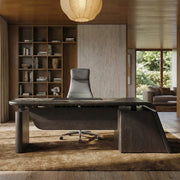
In executive environments, the chair serves as a symbol of leadership and stability. However, the most common procurement mistake is selecting a "throne" that offers premium leather but lacks the adjustability required for long-term spinal health.
The Serene Ella, Napa Leather Executive Chair addresses this by combining full-grain Napa leather with an upholstered frame that supports the body's natural curves. For executives who spend significant time in high-stakes meetings or deep-focus work, the tactile comfort of leather provides a psychological benefit, while the internal structure must still adhere to BIFMA G1-2013 Ergonomics Guidelines to ensure it fits a broad range of body types (from the 5th to 95th percentile).
Anthropometric Variance in the C-Suite
Our modeling shows that executive staff often represent a different anthropometric profile than general staff, sometimes trending toward the 95th percentile in height.
- Executive Height (95th Percentile Male): Requires a seat height of approximately 49.5cm (based on ANSI/HFES 100-2007 calculations).
- Clinical Staff (5th Percentile Female): Requires a seat height of approximately 43.75cm.
A tiered strategy allows for the procurement of specialized models like the Serene Ella for taller users, while ensuring staff chairs have the vertical range to accommodate petite users.
Staff Seating: The Productivity Engine
For the 70% of the budget dedicated to general staff, the focus should be on "active ergonomics." The goal is to provide a chair that moves with the user. The Flex, Dual-Backrests Ergonomic Office Chair is a prime example of this philosophy. Its independent backrests respond to lateral movements, ensuring that the lumbar spine remains supported even when the user reaches for a phone or shifts their weight.

Key Features for Staff ROI:
- Breathable Mesh: Unlike leather, mesh allows for heat dissipation. As noted in research on why mesh chairs maintain their shape, high-quality mesh provides consistent support without "bottoming out" over a 5-10 year lifespan.
- Adjustable Lumbar Support: This is the single most important feature for reducing musculoskeletal complaints. The Exis, Ergonomic Office Chair features 4-level adjustable lumbar support, allowing users to pinpoint the support at their specific L4-L5 vertebrae.
- 3D/4D Armrests: Proper armrest positioning reduces the load on the trapezius muscles. According to the CCOHS guide on sit/stand workstations, armrests should be adjusted so that shoulders are relaxed and elbows are at a 90-degree angle.

Collaborative and Home-Style Zones
The final 10% of the budget covers flexible spaces. In the era of hybrid work, many companies are also providing stipends for home office setups. In these contexts, the "corporate" aesthetic of a mesh task chair might be less desirable than a softer, more residential look.
The Cameron, Ultra Soft Cushion Adjustable Office Chair bridges this gap. It offers a "Home Style" aesthetic with a segmented backrest that provides better support than a standard dining chair or non-adjustable accent chair. For B2B clients, incorporating a "Home Style" tier into their procurement catalog can improve employee satisfaction in hybrid work models without sacrificing the ergonomic standards required for corporate wellness.

Implementation Guide: Procurement Checklist
When evaluating chairs for a tiered program, use this checklist derived from ANSI/BIFMA X5.1 and ISO 9241-5 standards:
- Seat Height: Does it adjust between 15 and 22 inches (38-56cm) to accommodate the 5th to 95th percentile?
- Seat Depth: Is there at least 2 inches (5cm) of space between the back of the knees and the seat edge?
- Backrest Tilt: Does it provide a recline range of at least 90° to 115°? (The Exis chair offers up to 145° for recovery periods).
- Stability: Does the chair have a 5-point base with casters appropriate for the flooring (hard vs. carpet)?
- Material Safety: Does the chair carry UL GREENGUARD Certification for low chemical emissions? This is critical for maintaining indoor air quality in densely populated staff areas.
The Ideal Workday Rhythm
Regardless of the chair tier, the most effective way to prevent MSDs is to incorporate movement. The Cornell University Ergonomics Web recommends the "20-8-2" rhythm:
- 20 Minutes Sitting: In a neutral posture supported by an ergonomic chair.
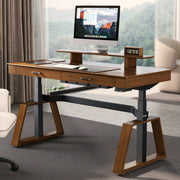
- 8 Minutes Standing: Using a height-adjustable desk.
- 2 Minutes Moving: Walking or stretching to stimulate blood circulation.
By combining high-quality seating with behavioral interventions, companies can achieve the 18-24 month ROI typically observed in properly implemented ergonomic programs.
Summary of Strategic Allocation
| Category | Priority Feature | Recommended Model | Strategic Value |
|---|---|---|---|
| Executive | Material Quality & Prestige | Serene Ella Executive Chair | Leadership signaling & tactile comfort. |
| Staff (High-Task) | Dynamic Lumbar Support | Flex Office Chair | Maximum productivity & posture correction. |
| Staff (General) | Breathability & Adjustability | Exis Office Chair | Broadest population fit & health ROI. |
| Hybrid/Flex | Aesthetic Versatility | Cameron Office Chair | Morale & home-office integration. |
Investing in a tiered strategy is not about creating hierarchy; it is about recognizing that different roles have different physiological demands. By focusing the bulk of the budget on the 70% of employees who drive daily operations, organizations move toward a model of "ergonomic equity" that pays dividends in health, retention, and measurable output.
Disclaimer: This article is for informational purposes only and does not constitute professional medical or occupational health advice. Individuals with pre-existing musculoskeletal conditions should consult a qualified healthcare professional or ergonomist before making significant changes to their workstation setup.
References
- BIFMA G1-2013 Ergonomics Guideline for Furniture
- ISO 9241-5:2024 Workstation layout & postural requirements
- OSHA eTools: Computer Workstations - Chairs
- WHO 2020 Guidelines on Physical Activity & Sedentary Behaviour
- Cornell University Ergonomics Web — Workstation Guides
- Cochrane: Workplace interventions for reducing sitting at work (2018)
- ANSI/BIFMA X5.1 General-Purpose Office Chairs
- UL GREENGUARD Certification

Leave a comment