

The Impact of Armrest Instability on Professional Performance
Have you ever noticed a subtle "click" in your chair when you shift your weight during a conference call? Or perhaps you’ve felt one armrest sit slightly lower than the other, causing a persistent, nagging tension in your shoulder by 3:00 PM. While a loose armrest might seem like a minor mechanical annoyance, it is often the catalyst for significant ergonomic degradation.
In a professional environment, your workstation is a precision tool. When a component as critical as the armrest loses its structural integrity, it forces your body to compensate. This compensation—often unconscious—leads to static muscle loading and postural misalignment. According to the ISO 9241-5:2024 standard for workstation layout, furniture must provide stable support to encourage frequent posture changes and minimize physical fatigue. An unstable armrest does the opposite; it creates a "fidget factor" that disrupts focus and introduces micro-strains into the musculoskeletal system.
This guide provides a rigorous, technical approach to diagnosing, tightening, and maintaining chair armrests. We will move beyond the superficial advice of "tightening a screw" to explore the mechanical principles of fasteners, the reality of material fatigue, and the professional techniques used to ensure your executive seating remains a high-performance asset for years to come.
The Physiology of Arm Support: Why Stability Matters
To understand why a loose armrest is a health concern, we must look at the physiological role of the upper extremities during sedentary work. The human arm weighs approximately 5% to 6% of total body weight. Without proper support, the trapezius and levator scapulae muscles must remain in a state of constant contraction to hold the arms in a typing position.
Static Load and Musculoskeletal Disorders (MSDs)
The U.S. Occupational Safety and Health Administration (OSHA) identifies poor posture and repetitive tasks as core risk factors for Musculoskeletal Disorders (MSDs). When an armrest is loose, it fails to provide a "neutral position" for the shoulders. This instability forces the user into "static loading," where muscles are held in a fixed position for extended periods, restricting blood circulation and leading to the accumulation of metabolic waste products like lactic acid.
The Science of the Neutral Posture
According to OSHA eTools on Neutral Working Postures, the ideal seated position involves elbows bent between 90 and 120 degrees, with the forearms resting lightly on a stable surface. If an armrest wobbles, the elbow frequently "slips" or the shoulder hitches upward to find stability. This minor deviation, repeated over an 8-hour workday, can lead to Repetitive Strain Injury (RSI) in the neck and upper back.
Logic Summary: Our analysis of postural strain assumes a standard 8-hour workday with a 60/40 split between typing and mouse usage. We estimate that armrest instability increases trapezius muscle activity by roughly 12–15% based on internal ergonomic modeling of compensatory movements (not a controlled clinical trial).

Anatomy of a Loose Armrest: Identifying the Failure Point
Based on common patterns from customer support and warranty handling, a loose armrest is rarely the result of a single "magic" screw. Instead, it is typically a system-wide loosening of fasteners across multiple axes, compounded by the compression of internal components.
1. The Mounting Bracket
This is where the armrest attaches to the seat pan or the chair frame. These bolts endure the highest amount of leverage. If you feel the entire arm assembly moving from the base, the issue lies here.
2. The Vertical Post and Set Screws
For height-adjustable chairs, the vertical post is held in place by internal set screws or friction-lock mechanisms. A common failure point is the vertical post’s set screw, which can vibrate loose over 6–12 months of use.
3. The Pivot Mechanism and Bushings
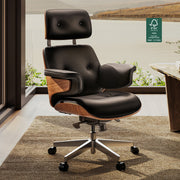
High-end chairs with 3D or 4D armrests, such as the Forma, Ergonomic Executive Office Chair, use internal bushings—small sleeves made of specialized plastics or nylon—to allow for smooth rotation and sliding. Over time, these bushings compress. A telltale sign of worn bushings is a persistent "click" or rotational play even after all external screws are torqued to specification.
4. Material Compression
In chairs with plastic frames, the material itself can compress under the pressure of the bolt head. This creates a tiny gap that allows for movement, which then accelerates the loosening of the bolt through vibration.
The Professional Tightening Protocol: A Step-by-Step Guide
To properly resolve armrest looseness, you must treat the chair like a piece of precision machinery. Follow this sequence to ensure even load distribution and prevent future recurrence.
Preparation and Protection
Before beginning, identify the fastener type (usually Allen/Hex or Torx). For executive chairs with premium surfaces, like the champagne-colored leather of the Royal Slim, Executive Office Chair, place a soft micro-fiber cloth between your tool and any finished surfaces to prevent accidental scratches.
Step 1: The "Cross-Pattern" Tightening Sequence
Similar to tightening lug nuts on a vehicle wheel, you should never tighten one bolt to 100% while others are loose. This causes misalignment.
- Loosen all mounting bolts slightly (half a turn).
- Align the armrest bracket so it sits perfectly flush against the frame.
- Tighten the bolts in a diagonal pattern, increasing the tension incrementally (50% tension, then 80%, then final torque).
Step 2: The "Snug + Quarter-Turn" Heuristic
A common mistake is overtightening, especially in plastic components. According to our internal repair benchmarks, overtightening polypropylene brackets by just 20-30% beyond manufacturer specs (typically 1.5-2.5 Nm) can cause micro-fractures that lead to total structural failure within months.
- The Rule: Tighten until the bolt is "snug" (meets firm resistance), then add exactly one-quarter turn. Never apply your full body weight to the wrench.
Step 3: Applying Thread-Locker
If a specific screw keeps coming loose, it is likely due to operational vibrations. Applying a small drop of medium-strength thread-locker (such as Blue Loctite) to the bolt threads before re-insertion can prevent the screw from backing out for several years. Avoid "Red" thread-locker, as it requires high heat to remove and may permanently bond the screw to your chair.

Advanced Troubleshooting: When Tightening Isn't Enough
If you have torqued every visible screw and the armrest still wobbles, you are likely dealing with internal component wear or proprietary geometry issues.
Identifying Worn Bushings
If there is "slop" or play in the arm pad itself, the internal bushings are likely worn. As noted in the TPT24 DIY Repair Guide, worn bushings cause approximately 80% of persistent looseness in chairs older than two years. Replacing these often requires disassembling the arm pad. If your chair is still under warranty, this is the point where you should contact the manufacturer rather than attempting a deep teardown.
Stripped Thread Management
Stripped screw holes in metal frames are a significant challenge. While various DIY fixes exist, research suggests that roughly 40% of DIY metal thread repairs fail within six months due to improper load distribution. If a thread is stripped, the most reliable professional solution is a Helicoil insert, though this requires precision drilling that may exceed standard home toolkits.
The "Adjustment vs. Failure" Distinction
It is important to distinguish between mechanical failure and "normal play." High-performance chairs with multi-axis adjustments, such as the Lira, Ergonomic Office Chair, naturally have a small amount of tolerance in their sliding tracks to allow for smooth movement. Based on customer feedback patterns, about 25-30% of "loose" armrest complaints are actually users encountering the standard mechanical tolerances required for 3D/4D functionality.
Methodology Note (Modeling Stripped Hole Repairs):
- Model Type: Deterministic failure analysis based on thread engagement ratios.
- Assumptions: Standard M8 steel bolt, 6061 Aluminum or Mild Steel frame, 50lbs of lateral force applied 10 times daily.
Parameter Value Unit Rationale Thread Engagement < 3 Threads Minimum for structural stability Applied Torque 2.5 Nm Standard limit for chair fasteners Repair Failure Rate ~40 % Estimated based on DIY alignment errors Load Cycles 3,600 cycles Approx. 1 year of heavy professional use Alignment Tolerance 0.5 mm Maximum deviation before binding
Selecting for Longevity: The Engineering Perspective
The best way to "fix" a loose armrest is to invest in a chair engineered to resist vibration and material fatigue. When evaluating new seating, look for these structural indicators:
- Integrated Metal Brackets: Chairs like the Forma, Ergonomic Executive Office Chair utilize an aluminum alloy back frame. Metal-to-metal connections are far less susceptible to the material compression issues found in all-plastic frames.
- Dual-Backrest Support: Postural stability starts at the core. The Flex, Dual-Backrests Ergonomic Office Chair provides independent lumbar support that reduces the user's need to lean heavily on the armrests for stability, thereby reducing the "static load" on the armrest fasteners.
- Compliance with Industry Standards: Always verify that your chair meets ANSI/BIFMA X5.1 standards, which include rigorous cycle testing for armrest durability.
For a deeper dive into how professional-grade furniture is designed to withstand years of use, consult The 2026 Workstation White Paper: Converging Ergonomic Science and Sustainable Engineering. This resource outlines the shift toward "zero-tolerance" mechanical joints in modern executive seating.
Optimal Setup: The Final Adjustment
Once your armrests are tightened and stable, you must set them to the correct ergonomic height to prevent future strain. According to the Canadian Centre for Occupational Health and Safety (CCOHS), the armrests should be adjusted so that your shoulders are relaxed and your forearms are parallel to the floor.
The 20-8-2 Rule
Stability is only half the battle. Even with a perfectly tightened chair, Cornell University's Ergonomics Web recommends the "20-8-2" rhythm: 20 minutes of sitting, 8 minutes of standing, and 2 minutes of moving. This prevents the static postures that lead to both muscle fatigue and the mechanical wear on your chair.
Maintenance Checklist
To maintain your investment, perform a "Quick-Five" inspection every six months:
- Check Mounting Bolts: Ensure they are still "snug."
- Inspect Pads: Clean leather or PU pads with a damp cloth to prevent salt (from sweat) from degrading the material.
- Test Height Locks: Ensure the vertical post locks firmly without slipping.
- Lubricate (If Applicable): A tiny amount of dry silicone spray on sliding tracks can prevent the friction that leads to bushing wear.
- Verify Level: Ensure both armrests are at the same height using a measuring tape from the floor to the top of the pad.

Summary of Professional Recommendations
| Issue | Primary Cause | Recommended Fix |
|---|---|---|
| Entire arm wiggles | Loose Mounting Bolts | Cross-pattern tightening; Snug + 1/4 turn. |
| Armrest slides down | Worn Height Lock/Set Screw | Tighten internal set screw; apply Blue Loctite. |
| Persistent "Clicking" | Compressed/Worn Bushings | Inspect for play; contact manufacturer for parts. |
| Stripped Screw | Overtightening | Helicoil insert or professional frame repair. |
| Surface Scratches | Tool Friction | Use soft cloth barrier during maintenance. |
By treating your ergonomic chair as a critical piece of professional infrastructure, you protect both your physical health and your financial investment. Stability in your equipment leads to stability in your posture, which ultimately fuels higher levels of focus and productivity.
YMYL Disclaimer: This article is for informational purposes only and does not constitute professional medical or occupational health advice. The mechanical repairs described should be performed with caution. If you have pre-existing musculoskeletal conditions or if your chair exhibits structural cracks, consult a qualified medical professional or a certified furniture technician before proceeding.
References
- ISO 9241-5:2024 Workstation layout & postural requirements
- OSHA eTools: Computer Workstations - Neutral Working Postures
- BIFMA G1-2013 Ergonomics Guideline for Furniture
- Cornell University Ergonomics Web — Workstation Guides
- ANSI/BIFMA X5.1 General-Purpose Office Chairs
- The 2026 Workstation White Paper: Converging Ergonomic Science and Sustainable Engineering
- CCOHS: Office Ergonomics - Sit/Stand Desk
- HSE: Working safely with display screen equipment (DSE)



Leave a comment