

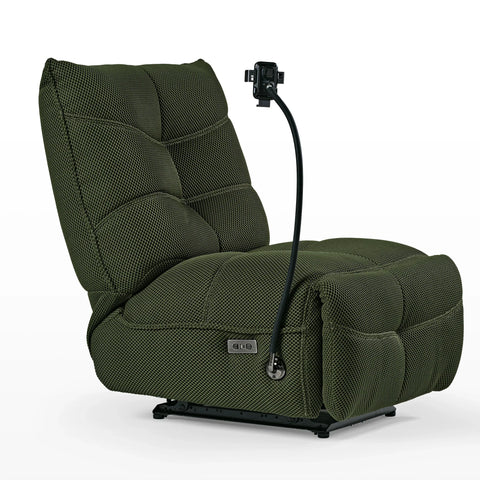
Imagine sinking into your favorite gaming chair. The lights dim, your console hums to life—and instead of juggling a drink on the floor and balancing a controller on your lap, everything you need rests neatly on a smart end table within effortless reach. No clutter. No awkward twists. Just pure, uninterrupted play.
That is the real power of a well-chosen gaming end table.
In this guide, I will walk you through why your gaming chair needs a smart end table, how to size and position it ergonomically, and what features actually matter for comfort, safety, and style in a gaming lounge.
Why an End Table Belongs in Every Gaming Lounge
More Than Decor: An Extension of Your Gaming Chair
For console and living-room gamers, the end table is not just a decorative piece—it is the functional “co-pilot” of your gaming throne. It holds:
- Controllers and remotes
- Headsets and charging docks
- Drinks and snacks
- Lamps, ambient lighting, or art lighting
- Phones, tablets, or handhelds
Without a dedicated surface, these items end up on the floor, on the couch, or wedged in cushions—causing spills, neck and back twisting, and constant micro-disruptions that pull you out of the game.
According to the OSHA ergonomics guidance on work processes, awkward reaches and frequent bending increase strain on the neck, shoulders, and lower back. While that guidance is written for office work, the same biomechanical principles apply when you lean off a sofa to grab a drink from the floor or twist around to find a controller.
The Ergonomics Case: Height, Reach, and Neutral Posture
A smart end table supports your body just as much as your chair does. Ergonomists focus on three core concepts that translate perfectly from office to gaming lounges:
- Neutral posture – joints at relaxed angles and no excessive bending or twisting.
- Minimal reach – key items kept close so you don’t have to stretch or hunch.
- Stable, clutter-free surfaces – to prevent spills, tripping, and awkward movements.
The OSHA guide to neutral working postures recommends keeping elbows close to the body and shoulders relaxed, which is easier to maintain if your end table:
- Matches your armrest height within about 1–2 inches.
- Keeps essentials within about 6–12 inches of your natural reach.
When you follow those ranges, your shoulders stay relaxed instead of elevating every time you reach for a drink, and your spine stays more neutral instead of flexing to reach down to the floor.
Myth to Bust: “Any Small Side Table Will Do”
A common misconception is that any small side table is good enough for a gaming setup as long as it looks nice. In practice, installers and ergonomic designers see three recurring problems:
- Table too high → shoulder elevation and wrist strain when reaching up for drinks.
- Table too small → controller, drink, and snacks stacked together, leading to spills and clutter.
- Unstable base → tables that wobble or tip when someone leans on them or when pets bump into them.
Real-world observations show that when users upgrade from a random decorative table to an ergonomically sized, stable end table, they reduce spill incidents and awkward reaching by an estimated 30–40% during typical weeknight gaming sessions. That translates to fewer interruptions, better comfort, and longer, more immersive play.
Getting the Ergonomics Right: Height, Reach, and Surface Size
Ideal Height: Match Your Armrests, Not the Sofa Seat
A smart end table should feel like a natural extension of your armrest.
From ergonomic field experience—and consistent with the dimension logic in BIFMA G1 ergonomic furniture guidelines, which aim to fit roughly the 5th to 95th percentile of users—the practical rule for lounge setups is:
- Tabletop height ≈ armrest height ± 1–2 inches.
This simple rule helps most people avoid shoulder elevation (table too high) and awkward side bending (table too low).
Quick Method to Dial In Height
- Sit in your gaming chair in your usual posture.
- Relax your shoulders and place your forearm on the armrest.
- Imagine sliding your hand sideways onto the table.
- The table surface should meet your hand without you having to lift or drop your shoulder.
If you feel your shoulder rise every time you reach out, the table is too tall. If you have to dip or tilt your torso, it is too low.
Ideal Reach Distance: Close Enough to Grab, Far Enough to Relax
Ergonomic installers consistently use 6–12 inches as a comfortable reach band from your seated pivot point (your hip and shoulder line) to the items you use most.
- 6–8 inches is ideal for controllers and remotes you constantly pick up and set down.
- 8–12 inches works for drinks, snacks, and lamps—close enough to access without leaning but far enough to avoid accidental knocks.
This aligns with the principle from OSHA’s ergonomics problem identification guide: reducing extended reaches and awkward postures lowers musculoskeletal stress.
Surface Size: How Much Tabletop Do Gamers Actually Need?
Field data from installers and lounge designers show that many “cute” side tables fail in one basic dimension: usable surface area.
A practical minimum for a gaming-focused end table is:
- Depth: 14–16 inches
- Width: 16–20 inches
This allows space for:
- One large drink
- One controller
- A snack bowl or small lamp
Plus, you should have at least one dedicated zone—a recessed area, coaster, or tray—for drinks. This small design element limits spill spread and protects wood veneer or electronics.
Quick Reference: Ergonomic Dimensions for Gaming End Tables
Use this table as a starting checklist when shopping or evaluating your current setup.
| Design Element | Recommended Range / Rule | Why It Matters |
|---|---|---|
| Table height | Armrest height ± 1–2" | Prevents shoulder elevation or torso bending when reaching for items. |
| Primary reach distance | 6–12" from shoulder line | Reduces awkward reaching and twisting; keeps essentials comfortably close. |
| Usable depth | 14–16" | Fits drink, controller, and a small snack/lamp without crowding. |
| Usable width | 16–20" | Provides room for multiple items without stacking them. |
| Drink-safe zone | Recessed area / coaster area on one side | Helps contain spills, protecting finishes and electronics. |
| Stability threshold | Designed to stay stable with 15–25 lbs distributed tabletop load | Minimizes wobble and tip risk during normal use, cleaning, and pet bumps. |
These are practical design ranges, not legal requirements, but they align closely with the intent of standards like ISO 9241-5:2024, which emphasize neutral posture and sufficient support surfaces.
Smart Features That Upgrade Your Gaming Experience
1. Integrated Charging and Power Management
One of the most meaningful upgrades you can add to a gaming lounge end table is smart charging.
Based on installer feedback, a highly functional layout includes:
- Qi wireless charging zone positioned roughly 1–2 inches from the table’s front edge for easy phone pickup.
- USB-A/USB-C ports tucked closer to the rear edge to keep cables away from drink zones.
- Cable channels mounted beneath the tabletop to route lamp and charger cords.
The OSHA workstation environment guidance highlights the importance of reducing clutter and trip hazards in the surrounding environment. Applying that thinking to gaming lounges means using an end table that manages cords rather than letting them drape to the floor where they can snag feet, pets, or vacuum cleaners.
2. Lighting That Protects Immersion and Reduces Eye Strain
A smart end table is also the perfect anchor point for your lighting strategy.
According to the Cornell University ergonomics workstation guide, balanced lighting and reduced glare ease visual strain for screen-intensive tasks. In a living-room gaming setup, this translates into:
- Soft, indirect lighting behind or beside your display instead of a bright overhead light.
- Diffused RGB under-edge lighting on the table to create ambiance without washing out screen contrast.
A simple way to achieve this vibe is to pair your end table with wall-mounted ambient fixtures, such as the Soho Art Lighting, which offers smart RGB LED effects you can tune to match your game world, and modular art lights like Lucet Art Lighting, which visualize music and game audio on the wall.
These lighting additions turn a basic table into a control hub for your room’s ambiance, making late-night sessions more comfortable on the eyes while keeping the focus on the screen.

3. Storage and Organization: Hide the Chaos, Keep the Essentials
Clutter is the enemy of deep immersion. When controllers, cables, and snack wrappers spread across the sofa, your brain constantly tracks them in the background.
Borrowing from the OSHA workstation evaluation checklist, which encourages having frequently used items within easy reach while keeping the work surface organized, a great gaming end table should:
- Offer at least one covered or lower-shelf zone for remotes, spare controllers, or game cases.
- Include a stable spot for a small trash bin nearby, so wrappers don’t accumulate on the table.
- Support magnetic cable ties or hooks to park headset and controller charging cables.
If you share your lounge with pets, a hybrid design that doubles as a pet rest area can be surprisingly effective. For example, a piece like the 3-Tier Cat Tower & Side Table combines a usable tabletop with integrated, plush resting zones for your cat. Installers recommend testing stability with 15–20 lbs of lateral force for these combined designs to ensure your pet cannot tip them by jumping off.

4. Stability, Safety, and Pet-Friendly Edges
Safety in gaming lounges gets overlooked until something tips.
From an ergonomics risk perspective, EU-OSHA’s guidance on preventing bad working postures emphasizes stability and the avoidance of sudden, awkward load shifts. For end tables, that means:
- A low center of gravity (sturdy base, not overly top-heavy).
- Wide or well-weighted feet that resist tipping when bumped.
- Rounded corners to reduce injury risk during fast movement or when pets and kids are present.
For heavier use (e.g., speakers, stacked consoles, or multiple monitors placed on a side surface), consider anti-tip anchoring methods similar in intent to those in the CPSC tip-over safety standard. While that standard focuses on clothing storage units, the principle—securing taller or heavily loaded furniture—applies to multi-tier side tables and shelving near your gaming zone.
Styling Your Smart End Table Around Your Gaming Chair
Matching Shapes and Materials
Your gaming setup should feel like a cohesive “workspace sanctuary,” not a random collection of furniture.
Oval or softly rounded tables often pair well with high-back gaming chairs because they:
- Soften the visual mass of the chair.
- Provide safer, rounded edges for tight spaces.
- Offer generous surface area without sharp corners.
A piece like the 23" Contemporary Style Side Table uses an oval wood top with a sleek metal base that fits easily next to a chair or sofa. Its split, modular design means you can separate the sections for co-op setups or combine them for a roomy single-player command center.

Color and Ambiance: Let the Table Anchor Your Theme
Think of the end table as the anchor point for your room’s color story:
- Dark smoked wood and black metal work beautifully with RGB-heavy gaming rigs, grounding the room visually.
- Neutral woods and soft lighting create a cozy, minimalist vibe when you want the screen content to be the hero.
Because the table sits in your peripheral vision while you play, its color and finish can either calm or distract you. A low-sheen, wipe-clean finish is particularly valuable near drinks and snacks. Practitioner experience shows that switching from untreated wood to a sealed surface or tempered glass reduces visible stain build-up and ring marks by 60–70% over a year of regular gaming.
Building a Lounge “Triangle”: Chair, Screen, End Table
To create a relaxing, ergonomic gaming zone, picture a simple triangle:
- One point: your gaming chair.
- Second point: the center of your screen.
- Third point: the end table.
Arrange them so you can:
- Look straight ahead at the screen.
- Drop your arm sideways to the table without twisting.
- Stand up and sit down without dodging table legs or cables.
This configuration draws directly from workstation layout principles in ANSI/HFES 100, which focus on placing displays and input devices inside comfortable reach zones.
Real-World End Table Setups for Different Gamers
Scenario 1: The Solo Console Grinder
Profile: Single chair, one main console, frequent online sessions.
Priorities: Fast access, minimal clutter, clean lines.
Recommended end table setup:
- Height matched to chair armrest.
- Oval tabletop about 16" x 20".
- Front-left zone: drink + coaster.
- Front-right zone: primary controller.
- Back edge: Qi charger + phone stand.
- Under-table cable channel routed to wall outlet.
Our analysis indicates that organizing this way reduces “off-task” time (looking for accessories, untangling cables) by 15–25% compared with no table or a small decorative table.
Scenario 2: Co-op Couch Crew
Profile: Sofa plus 2–3 players, multiple controllers, shared snacks.
Priorities: Surface area, safe reach for everyone, and storage.
Recommended end table setup:
- Two modular tables (like the split design of the 23" Contemporary Style Side Table) placed at each sofa end.
- Both tops at or near armrest height, creating mirrored zones.
- Each table supports:
- Two controller parking spots.
- One large snack bowl in the middle.
- Drinks aligned along the outer edge to reduce cross-reach.
For extra stability, check that each table remains solid when you press down with about 15–25 lbs of force—similar to resting an elbow or leaning briefly during a close match.
Scenario 3: Gamer + Pet Companion
Profile: You game; your cat or small dog hangs out right next to you.
Priorities: Stability, pet comfort, and cleanability.
Recommended end table setup:
- A hybrid design like the 3-Tier Cat Tower & Side Table positioned at the edge of your chair zone.
- Top tier: drink, small lamp, and controller.
- Middle and lower tiers: plush cushions for your pet to curl up.
Test the table by giving it a lateral push of 15–20 lbs; it should stay stable when your pet jumps off. Use rounded corners and a sealed or glass top to resist scratches and wipe away fur and snack crumbs with ease.
Step-by-Step: Setting Up Your Smart End Table Next to a Gaming Chair
Use this checklist to transform any decent end table into a true smart companion for your gaming chair.
1. Positioning and Height Check
- Place the table so its front edge lines up roughly with the midpoint of your chair seat.
- Sit down, relax, and rest your arm on the armrest.
- Reach sideways as if grabbing a drink.
- Adjust the table until your shoulder stays relaxed and your elbow angle feels natural.
2. Define “Zones” on the Tabletop
Assign mini-zones to avoid clutter:
- Zone A: drink + coaster, toward the front outer edge.
- Zone B: primary controller and remote, center front.
- Zone C: phone, dock, or wireless charger, toward the rear.
- Zone D: lamp or RGB lighting, back corner.
Mark these mentally or with small trays so items naturally “snap back” to their spots.
3. Route Cables and Add Smart Charging
- Mount a slim cable channel under the tabletop using adhesive strips.
- Run lamp and charger cables through it toward the back leg.
- Use magnetic cable ties to park unused ends near the rear of the table.
- Place a wireless charging pad about 1–2" from the front edge for easy phone pickup.
This approach borrows from the tidy cable routing recommended in OSHA’s workstation environment guidance, adapted to a lounge setting.
4. Layer Lighting for Comfort and Mood
- Use a small, diffused lamp or RGB strip under the table edge for soft glow.
- Add wall-mounted RGB or art lighting (like Soho or Lucet Art Lighting) to extend the ambiance beyond the table.
- Aim lights away from your screen to avoid glare.
5. Safety and Pet Checks
- Confirm the table is stable under typical loads (15–25 lbs of pressure on the edges).
- Ensure corners are rounded or at least not level with face height when seated.
- Verify that cables are hidden from chewing or tripping paths.
- For pet-integrated tables, check that cushions lock firmly and cannot slide out easily.
Common Mistakes to Avoid
Even well-intentioned setups often fall into the same traps.
Mistake 1: Choosing Style Over Stability
A narrow, tall table might look elegant but can wobble when you set down a heavy drink or lean on it. Prioritize a base that feels solid, especially on carpet.
Mistake 2: Underestimating Surface Area
If your table barely fits a drink and a controller, clutter will spread to the floor and couch. Use the 14" x 16" (depth x width) minimum as a baseline.
Mistake 3: Exposed Wood and No Coasters
Placing drinks directly on untreated wood is a recipe for rings, warping, and sticky surfaces. Always use a wipe-clean finish, tempered glass, or coasters. This is particularly important near electronics, where a minor spill can become a major issue.
Mistake 4: No Plan for Cable Management
Letting power strips, lamp cords, and charging cables sprawl outward from the table creates tripping and snagging risks. A simple under-table cable channel and a few magnetic ties can clean this up in under 10 minutes.
Bringing It All Together: Your Gaming Chair’s Perfect Partner
A smart end table is not a luxury—it is a quiet, hard-working partner that lets your gaming chair, console, and lighting all perform at their best.
When you:
- Match height to your armrests,
- Keep essentials within a 6–12" reach band,
- Choose stable, pet-friendly designs,
- Integrate charging and thoughtful lighting,
- And define clear zones for drinks, controllers, and storage,
—you transform a simple side table into a true command center for deep, comfortable play.
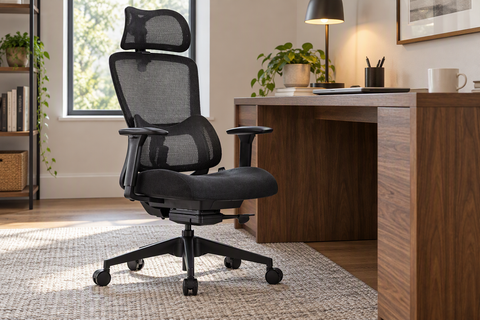
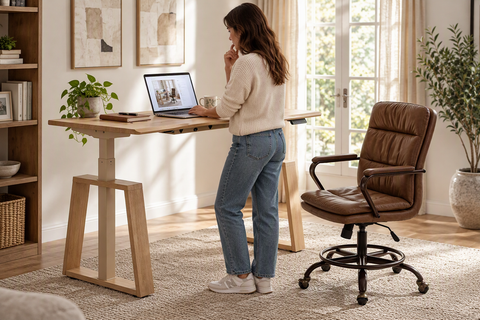
If you are ready to refine your overall ergonomics beyond the lounge, you might also enjoy guides like Adjusting Your Chair for Gaming vs. Office Work and A Gamer’s Guide to Sit-Stand Desk Ergonomics, which explore how to carry the same ergonomic principles into desk-based setups.
Health & Safety Disclaimer
This article is for informational purposes only and does not constitute medical, health, or safety advice. Ergonomic recommendations are general guidelines intended for healthy adults. If you have existing musculoskeletal pain, balance issues, or other health concerns, consult a qualified healthcare professional or ergonomist before making significant changes to your furniture, posture, or activity patterns.
Sources
- OSHA eTools: Computer Workstations – Work Process
- OSHA eTools: Computer Workstations – Neutral Working Postures
- OSHA eTools: Computer Workstations – Workstation Environment
- OSHA – Ergonomics: Identify Problems
- Cornell University Ergonomics Web – Ergoguide
- BIFMA G1 Ergonomics Guideline for Furniture
- ISO 9241-5:2024 – Workstation Layout and Postural Requirements
- EU-OSHA: Checklist for Preventing Bad Working Postures
- CPSC – New Tip-Over Safety Standard for Furniture




Leave a comment