

Imagine sinking into your gaming sofa, controller in hand, snacks in reach, cables tamed, and nothing digging into your shins or blocking your view of the screen. That effortless comfort does not happen by accident—it’s the result of getting your coffee table dimensions exactly right.
The wrong size coffee table can ruin your gaming lounge’s flow. Too tall and your shoulders creep up. Too far and you’re constantly leaning forward. Too close and you’re dodging corners every time you stand up. This guide walks you through the ideal coffee table height, length, depth, and clearances so your table perfectly matches your gaming sofa, recliners, and lounge chairs.
We’ll use proven ergonomic principles from organizations like OSHA’s computer workstation guidance and EU-OSHA’s posture checklist, then translate them into real-world gaming scenarios—co-op nights, movie marathons, and hybrid work-and-play spaces.
1. The Core Rules: Coffee Table Dimensions for Gaming Comfort
Before you fall in love with a coffee table’s style, lock in the fundamentals: height, length, depth, and clearances. These dimensions determine whether your table supports long, relaxed gaming sessions—or slowly wears you down.
1.1 Ideal Coffee Table Height for Gamers
For a gaming lounge, you want your arms relaxed, shoulders down, and wrists neutral when you reach for a controller, drink, or keyboard.
A practical rule that aligns with ergonomic guidance from sources like OSHA’s neutral posture recommendations is:
- Target coffee table height: 1–2 inches (2.5–5 cm) lower than your sofa seat height.
Most sofas have seat heights around 16–20 inches (40–51 cm). That gives a recommended coffee table height of roughly:
- 14–19 inches (36–48 cm)
This height range lets you:
- Rest your forearms lightly on your thighs without shrugging your shoulders.
- Reach forward to pick up a controller without bending your back excessively.
- Place snacks or a laptop without blocking the lower part of your TV or monitor.
How to dial in your height:
- Sit in your normal gaming posture on your sofa.
- Let your shoulders relax and rest your forearms on your thighs.
- Imagine a surface just below your fingertips—that’s your ideal table height.
If your sofa seat is 18 inches high, aim for a coffee table around 16–17 inches. If you tend to slouch more, err slightly lower to keep your shoulders relaxed.
Myth to debunk: “Higher coffee tables are better for eating.”
In a gaming lounge, ultra-tall coffee tables often force your shoulders up and your wrists into a sharp angle. You get a few more inches of height for snacks, but you trade away hours of shoulder and neck comfort.
1.2 Finding the Right Length: The Two-Thirds Rule
The next key dimension is table length. A simple, reliable guideline for both aesthetics and function is:
- Coffee table length ≈ 60–70% of the sofa’s length (often expressed as the “two-thirds rule”).
Why this works:
- It keeps the table visually balanced with the sofa—neither tiny nor overwhelming.
- It gives every seat along the sofa a usable reach zone without making the table so long that it dominates the room.
Quick examples:
- 72" sofa → target coffee table length ≈ 43–50".
- 84" sofa → target coffee table length ≈ 50–59".
For multi-seater or sectional gaming sofas:
- Use a longer rectangular coffee table in front of the main seating span.
- Add end tables so players at the corners still have a place for controllers and drinks.
1.3 Depth & Reach: Make Controllers Easy to Grab
Depth (front-to-back size) matters more in a gaming lounge than many people realize. If the table is too deep, the far edge becomes dead space; if it’s too shallow, it may not fit remotes, snacks, and a keyboard comfortably.
A practical way to size depth:
- Sit on your sofa in your normal gaming posture.
- Hold your controller.
- Reach forward naturally and mark where your fingertips land.
In most living-room setups, this functional reach is about 18–24 inches (46–61 cm) from your torso. You want the front edge of the table within this range so you can grab items without leaning excessively.
For most gamers, a coffee table depth between 20–30 inches (51–76 cm) fits well, as long as you also maintain the right distance from the sofa (more on that next).
1.4 Clearances: Distance Between Sofa and Coffee Table
Even a correctly sized table becomes frustrating if it’s placed too close or too far from your seating.
Use this clearance guide:
- Standard sofa or loveseat: keep 14–18 inches (36–46 cm) between the front of the sofa and the table edge.
- Recliners or gaming chairs with footrests: increase to 18–24 inches (46–61 cm) to avoid collision with extended footrests.
This range balances:
- Easy stepping in and out of the seating area.
- Comfortable reach to controllers, drinks, and remotes.
- Enough legroom so knees and shins don’t hit the table.
These distances echo the spirit of workstation guidelines from ISO 9241-5:2024, which emphasize sufficient legroom and clearance to maintain neutral postures over time.
1.5 Quick Dimension Cheat Sheet
Use this table as a starting template when planning your gaming lounge.
| Element | Recommended Range / Rule | Why it Works for Gamers |
|---|---|---|
| Coffee table height | 1–2" lower than sofa seat (≈ 14–19" total) | Keeps shoulders relaxed and gives a natural reach when seated. |
| Coffee table length | 60–70% of sofa length (two-thirds rule) | Balanced proportions and accessible surface for everyone on the sofa. |
| Coffee table depth | ≈ 20–30" | Deep enough for gear and snacks without forcing long forward reaches. |
| Sofa-to-table clearance (standard) | 14–18" | Comfortable legroom and easy access to items. |
| Sofa-to-table clearance (recliners) | 18–24" | Extra space for extended footrests and movement. |
| Circulation space around the lounge | 24–30" walkways | Prevents the table from blocking doors and main paths through the room. |
These are experience-based comfort ranges, not legal or regulatory limits. If you have mobility challenges, very tall or very short users at home, or unique seating, adjust these numbers thoughtfully.
2. How Ergonomics Translates from Desk to Gaming Lounge
Most ergonomic research focuses on office workstations. But the principles that keep your body happy at a desk also apply when you shift to a console or living-room gaming setup.
According to OSHA’s neutral posture guidelines, a comfortable setup keeps your:
- Shoulders relaxed, not elevated.
- Elbows close to your body, roughly 90–120°.
- Wrists straight, not bent sharply up or down.
When your coffee table is too high or too far away, you break these rules: shoulders hike up, you lean forward, or your wrists bend at awkward angles while reaching for controllers, keyboards, or snacks. Over long sessions, that can contribute to fatigue and musculoskeletal discomfort.
The EU-OSHA checklist on preventing bad working postures warns specifically against prolonged reaching and twisted postures. In a lounge, that can look like:
- Constantly leaning over a deep coffee table to grab items.
- Twisting to reach a distant side table instead of having essentials in front of you.
- Sitting sideways with your legs off to one side because the table is crowding your knees.
2.1 Static vs. Dynamic Postures
Ergonomics standards such as ISO 11226 on static postures emphasize that holding any posture for too long—even a “good” one—can cause strain. For gaming lounges, this means:
- Avoid locking yourself into a cramped posture because the table is too close.
- Make sure you can shift your legs, stretch your feet, or change recline angles without hitting the table.
You can support dynamic postures by:
- Leaving at least 24–30 inches of circulation space around the lounge so you can move freely.
- Choosing coffee tables with rounded or irregular edges to reduce sharp impact zones when you shift positions.
2.2 Sightlines and Screen Position
Height also affects your view of the screen. If the table or items on it block the lower portion of your TV or monitor, you unconsciously adjust by leaning or craning your neck.
To maintain an ergonomic viewing angle similar to what OSHA’s monitor guidelines recommend (top of screen at or slightly below eye level, with a slight downward gaze), ensure that:
- Your coffee table and the items you use most often (laptops, snack trays, accessories) do not obstruct the lower third of the screen.
- The table surface sits low enough that your line of sight clears it comfortably from your typical recline.
A good test: sit back in your usual gaming posture and check whether you can see the entire screen with your chin relaxed and your back supported. If you need to tilt forward to see over the table, the table is likely too tall or too close.
3. Three Real-World Gaming Lounge Scenarios
To make these principles easier to apply, let’s walk through three common setups and how to size the coffee table for each.
3.1 Compact Two-Player Setup with a Loveseat
Scenario: A smaller living room with a two-seater sofa as the main gaming spot—perfect for co-op or movie nights.
- Seating: A compact loveseat with a seat height around 17–18".
- Ideal coffee table height: 15–17".
- Table length: 40–48" (about two-thirds of the loveseat width).
- Depth: 20–26" to keep reach comfortable in a smaller room.
- Sofa-to-table clearance: 14–16" for easy reach without feeling cramped.
A design like the 41" Irregular Round Solid Wood Walnut Coffee Table works beautifully in this scenario. Its rounded, organic shape softens the room and reduces sharp edges when you slide in or out of the loveseat. The solid wood structure adds the durability you want for daily use, and the mix of wood and marble veneer brings a sophisticated, modern gaming-lounge aesthetic. You can explore this option here: 41" Irregular Round Solid Wood Walnut Coffee Table.
This kind of irregular round table especially shines when you:
- Center it with a loveseat or small sofa.
- Keep walkways at least 24" around the outside.
- Use the edges closest to each person for drinks, controllers, and remotes.

3.2 Four-Player Couch Co-op with a Standard Sofa
Scenario: A three-seater sofa hosting regular couch co-op or party nights.
- Seating: 3-seat sofa, 80–86" wide, seat height around 18".
- Ideal coffee table height: 16–17".
- Table length: 50–58" (60–70% of sofa length).
- Depth: 24–30" for more gear and snacks.
- Sofa-to-table clearance: 16–18" for comfortable entry and reach.
In this setup, proportion matters. The table becomes the central hub for controllers, headsets, and shared snacks. A single coffee table handles most needs, but it’s smart to pair it with a side table near the most “anchored” seat—the one that players use the longest.
A piece like the 23" Contemporary Style Side Table is versatile here. You can place it at the end of the sofa or slightly behind it as a landing spot for laptops, additional drinks, or decor. Its split-usable design means you can separate components for different spots in the room as your layout evolves.

Using both a main coffee table and a side table ensures every player has a reachable surface within 18–24" of their seated position, aligning with ergonomic reach ranges that reduce forward bend and shoulder loading.
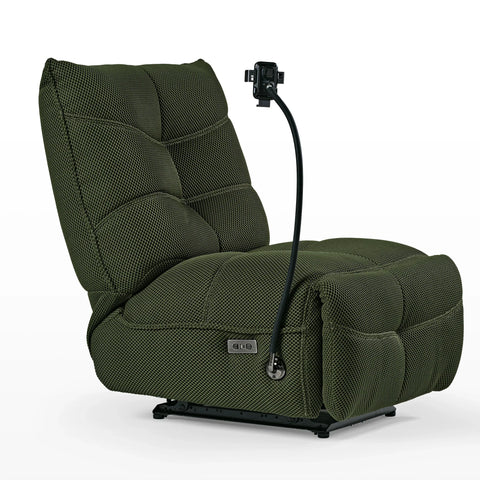
3.3 Sectional or Multi-Seat Lounge with Recliners
Scenario: A large L-shaped sectional or a mix of recliners and chairs, all facing a big display.
Here, a single coffee table often cannot serve everyone effectively.
Design framework:
- Main coffee table: sized to the longest sofa span using the two-thirds rule, with a height 1–2" below seat level.
- Extra clearance for recliners: 18–24" between the front of the seat and the table edge.
- Satellite surfaces: side tables or small nested tables at key positions along the sectional.
Tips for success:
- Place the main coffee table in front of the primary viewing seats.
- Add side tables near corner seats where the main table is harder to reach.
- Ensure no table blocks reclining mechanisms or built-in footrests.
This flexible, multi-surface approach reflects the same logic as workstation layouts recommended by Cornell University’s ergonomics guides: keep frequently used items close to the body while allowing enough free space to move and adjust posture regularly.
4. Materials, Durability, and Cable Management for Gamers
Once the dimensions are right, materials and features determine how well your coffee table stands up to real gaming life: late-night sessions, hot drinks, and multiple devices.
4.1 Surface Materials: Heat, Spills, and Cleaning
For a gaming lounge, prioritize surfaces that handle heat, moisture, and crumbs gracefully.
- Tempered glass: resists heat from mugs and offers a sleek, modern look. It is easy to wipe clean but shows fingerprints, so it suits tidier setups.
- Solid wood or sealed wood veneer: provides warmth and texture. A well-sealed surface resists stains and can handle snacks, drinks, and daily use.
- Mixed-material tops (wood + stone or veneer): like those on the 41" Irregular Round Solid Wood Walnut Coffee Table, balance visual richness with everyday practicality.
Whatever you choose, look for:
- A sealed or finished surface that resists staining.
- Rounded edges to reduce impact injuries when moving quickly during intense matches.
4.2 Cable Management: Hidden, Not Tangled
Most gaming coffee tables act as a charging hub for controllers, handhelds, and sometimes laptops. Without planning, cables quickly take over the surface.
Simple cable-management upgrades:
- Recessed cable channels under the tabletop to route power and charging cables.
- Under-table trays or baskets for power strips, with a single cable running to the wall.
- Magnetic or adhesive cable ties on the underside to keep individual charging leads accessible but invisible.
These ideas align with hazard-control principles from OSHA’s ergonomics solutions, where engineering controls—like better furniture design and cable routing—reduce risks more effectively than constantly “trying to be careful.”
4.3 Weight, Stability, and Safety
Gamers often rest feet on coffee tables, set down heavy game collections, or lean on the table when standing. That means stability is non-negotiable.
Look for:
- Sturdy bases (wide legs, sled bases, or well-balanced pedestals).
- Solid construction materials that resist wobble.
- Weight that feels substantial but not so heavy that you cannot slide the table slightly when needed.
Avoid extremely lightweight or top-heavy designs that tip easily if someone bumps the side or leans down on the edge.
5. Layout Mistakes Gamers Make (and How to Fix Them)
Many lounge frustrations come from a few predictable mistakes. Here’s how to spot and solve them.
5.1 Buying by Style Alone
Problem: Choosing a coffee table based solely on aesthetics—without measuring seat height, sofa length, or clearances.
Symptoms:
- Table feels either oddly tall or uncomfortably low.
- Players lean forward constantly to reach the table.
- The table dominates the room or feels lost.
Fix:
- Measure your sofa seat height, total sofa length, and room size first.
- Apply the height, length, and clearance rules from Section 1.
- Only then shortlist styles that fit your ergonomic envelope.
5.2 Underestimating Multi-User Reach
Problem: A table that works for one person in the center, but leaves corner or edge seats constantly twisting or leaning.
Symptoms:
- End-seat players pass controllers or snacks through the middle person.
- People lean at sharp angles, which contradicts the neutral posture guidance of sources like Ergonomics in Office Work.
Fix:
- Plan for all seats, not just the “prime” spot.
- Use a combination of a main coffee table plus side tables or a split-table design.
- Ensure every seat has a usable surface within 18–24".
5.3 Ignoring Sightlines to the Screen
Problem: A tall or bulky table blocks the bottom of the screen or forces you to look around tall items like decor or stacked controllers.
Symptoms:
- You unconsciously lean forward or sideways to see over the table.
- Your neck and upper back feel tense during long sessions.
Fix:
- Keep table height in the recommended range relative to your seat.
- Place taller items (like decor or storage bins) on side tables rather than directly in front of the screen.
5.4 Blocking Walkways and Doors
Problem: Oversized tables make it hard to move between seating or through the room.
Symptoms:
- Players turn sideways to squeeze past the table.
- The table is constantly bumped or kicked.
Fix:
- Maintain 24–30" of circulation space around the lounge.
- If the room is small, choose smaller tables and use slim side tables or wall-mounted shelves for extra storage.
6. A Simple Measuring & Mockup Process (Before You Buy)
The easiest way to avoid returns and layout regret is to prototype your coffee table dimensions in the room.
6.1 Step-by-Step Setup Test
-
Measure your sofa and seating
- Seat height (floor to top of cushion).
- Sofa length (arm to arm).
- Depth of seating area.
-
Define your comfort range
- Coffee table height = seat height minus 1–2".
- Length = 60–70% of sofa length.
- Distance from sofa front = 14–18" (18–24" for recliners).
-
Create a floor footprint
- Use painter’s tape or cardboard to mark the length and depth of the table on the floor.
- Ensure walkways around the taped area are at least 24" wide.
-
Mock the height
- Stack boxes or books to the planned height.
- Sit on the sofa, hold your controller, and test reaching forward.
- Adjust until the surface feels effortless to reach without shrugging your shoulders.
-
Do a full-session rehearsal
- Spend 20–30 minutes using the mock table during gaming or streaming.
- Notice if you knock into the mock edges, feel crowded, or keep stretching.
If anything feels off, tweak the dimensions and repeat. A single evening of testing can easily prevent a purchase that will bother you for years.
6.2 When to Add Side Tables or Footrests
If your coffee table ends up further away than ideal (for example, because of limited room size or recliner clearance), consider adding side surfaces or foot support.
- Side tables: Use compact tables like the 23" Contemporary Style Side Table next to your main seating to hold controllers, drinks, or a gaming laptop. Its neutral, contemporary design helps it blend into a wide range of living-room or gaming-lounge aesthetics.
- Footrests: If your seating is high or your feet do not fully touch the floor, a separate footrest can keep your legs supported even when the coffee table is low and out of the way. While primarily designed for desk setups, a piece like the Footstool with Wheels can be repurposed in a living room when you want an adjustable, mobile foot support that does not double as a surface for drinks.
This mirrors the principle in ergonomic standards such as BIFMA G1-2013, which emphasize accommodating a wide range of user sizes (roughly the 5th to 95th percentile). Instead of forcing one surface to do everything, you use multiple elements—coffee table, side table, and footrest—to support different body types and activities.
7. Turning Your Coffee Table into a Gaming Command Center
Once the physical dimensions feel right, you can transform your coffee table area into a true gaming command center.
7.1 Zoning the Surface
Divide the tabletop into functional zones:
- Player Essentials Zone (closest to the sofa): controllers, remotes, snacks. Keep this within your 18–24" reach radius.
- Tech Zone (center): charging dock, headset stand, handheld consoles.
- Display Zone (far edge): decor, candles, or items you rarely touch mid-game.
This zoning approach reflects workflow thinking from ergonomic “work process” guidance, such as OSHA’s recommendations on workstation work processes, which encourage placing frequently used items closest to your neutral reach zone.
7.2 Lighting and Ambiance
Your coffee table is also a perfect anchor for creating a cozy, immersive ambiance:
- Place a small lamp or LED strip on or under the table to provide soft, indirect light that doesn’t glare on the screen.
- Use warm color temperatures (around 2700–3000K) for relaxing evening sessions.
- Add a small plant, art book, or sculptural object for inspiration without crowding the essentials zone.
7.3 Storage Hacks for a Clean Look
To keep your gaming lounge visually calm and ready for deep relaxation:
- Use trays to cluster controllers and remotes so you can clear the table in one move.
- Add baskets or fabric bins under the table (if there is an open shelf) for blankets, spare cables, or game cases.
- Reserve one dedicated area for “in-progress” items—games you’re currently playing or devices you charge nightly.
These simple habits keep your lounge feeling like a sanctuary rather than a storage zone.
Wrapping Up: Your Coffee Table as a Gaming Ally
The right coffee table dimensions do more than fill space—they quietly support every part of your gaming experience. When your table is 1–2 inches lower than your seat, roughly two-thirds the length of your sofa, and placed 14–18 inches from your seating (a bit more for recliners), your body relaxes, your movements feel natural, and the room flows.
From compact loveseats paired with an irregular round table to large sectionals supported by a mix of coffee and side tables, the key is always the same:
- Measure first, then choose style.
- Design for every seat, not just the center.
- Protect your sightlines and movement paths.
If you treat your coffee table as part of an ergonomic gaming system—alongside your sofa, lighting, and storage—you’ll build a lounge that looks beautiful, feels effortless, and keeps you comfortable deep into every session.
FAQ: Coffee Table Dimensions for Gaming Lounges
Q1: Is there one “correct” coffee table height for all gamers?
No. A good starting point is 1–2" lower than your sofa seat height (roughly 14–19" for most homes). However, if your household includes very tall or very short users, or people with existing musculoskeletal issues, you may need to adjust. When in doubt, prototype your height with boxes or risers before buying.
Q2: How do I choose coffee table dimensions for a sectional sofa?
Size the main coffee table to about 60–70% of the longest seating span, and keep the table height 1–2" below the seat. Then add side tables so that each corner or chaise seat has a surface within easy reach.
Q3: What if my room is too small for the ideal clearances?
In tighter rooms, prioritize walkways and safety. It is often better to choose a slightly smaller coffee table and add a compact side table than to block movement. Aim for at least 24" of circulation space wherever people walk regularly.
Q4: Can I use an adjustable-height table instead of a standard coffee table?
You can, but be cautious about raising it too high for long periods. Ergonomic principles, including those found in OSHA’s computer workstation guidance, show that over-elevated surfaces increase shoulder and neck loading. Use higher settings temporarily—for occasional meals or laptop work—and return to a lounge-friendly height for gaming.
Q5: Are these guidelines medical advice?
No. These recommendations are based on ergonomic research and practical experience with gaming and lounge setups. They work well for many people but cannot replace personalized guidance. If you have chronic pain, recent injuries, or specific health concerns, consult a qualified healthcare or ergonomics professional before making significant changes to your setup.
Sources
- OSHA eTools: Computer Workstations – Neutral Working Postures
- OSHA eTools: Computer Workstations – Monitors
- OSHA Ergonomics – Solutions to Control Hazards
- Ergonomics in Office Work – OSHwiki
- Checklist for Preventing Bad Working Postures – EU-OSHA
- ISO 9241-5:2024 – Workstation layout and postural requirements
- ISO 11226:2000 – Evaluation of static working postures
- BIFMA G1-2013 Ergonomics Guideline for Furniture
- Cornell University Ergonomics Web – Workstation Guides
Disclaimer: This article is for informational purposes only and does not constitute medical, health, or safety advice. Every body and home is different. If you have existing pain, injuries, or medical conditions, consult a qualified healthcare or ergonomics professional to determine what setup is appropriate for you.




Leave a comment