

2026 Workday Wellness: Microbreaks with Your Ergonomic Chair
The modern professional workday is often defined not by the tasks we complete, but by the static load our bodies endure. Many office workers find that while their morning begins with focus and vitality, the mid-afternoon hours are characterized by a creeping dullness in the lower back, a tightening across the shoulders, and a noticeable decline in cognitive sharpness. This phenomenon is rarely the result of a single "bad" posture; rather, it is the physiological consequence of prolonged static sitting.
While the phrase "sitting is the new smoking" has gained cultural traction, the scientific reality is more nuanced. The primary health risk in a workstation environment is not the act of sitting itself, but the lack of movement. When the body remains in a fixed position, blood circulation slows, and metabolic waste products accumulate in the muscle tissues. This article explores how to integrate evidence-based microbreaks with the advanced features of your ergonomic chair to maintain musculoskeletal health and peak productivity throughout 2026.
The Physiology of Static Load and Musculoskeletal Disorders (MSDs)
To understand why a high-quality chair is essential, one must first understand the physiological principles of tissue adaptation and static load. According to OSHwiki (European Agency for Safety and Health at Work), prolonged static sitting leads to increased intradiscal pressure and reduced nutrient exchange in the spinal discs. Unlike muscles, which have a dedicated blood supply, spinal discs rely on a process called "imbibition"—essentially a pumping action triggered by movement—to receive nutrients and expel waste.
When you remain stationary, this "pump" stops. The result is a gradual dehydration of the discs and a sustained load on the ligaments. Furthermore, the World Health Organization (WHO) 2020 Guidelines emphasize that reducing sedentary time is critical for cardiovascular health. However, practitioners often observe that simply standing up is insufficient. The most effective interventions involve "postural opposition"—movements that move the joints in the opposite direction of the sustained work posture.
For most users, work involves a slight forward lean or "hunch." Therefore, a microbreak should not just involve standing, but a gentle backbend or a chest-opening stretch. This is where the engineering of your chair becomes a health tool rather than just a seat.
The Microbreak Heuristic: Beyond the 20-8-2 Rule
A common recommendation in ergonomics is the "20-8-2" rule, popularized by the Cornell University Ergonomics Web, which suggests 20 minutes of sitting, 8 minutes of standing, and 2 minutes of moving. While this provides an excellent baseline, 2026 productivity research suggests that rigid timers can often disrupt "flow states"—the periods of deep focus essential for complex professional work.
Recent research published in Frontiers in Psychology indicates that the "resumption cost"—the time it takes to get back into a task after an interruption—is highest when the break occurs in the middle of a subtask. To optimize both health and output, we recommend a Task-Dependent Microbreak Heuristic:
- Natural Transitions: Tie your microbreaks to the completion of a task (e.g., finishing an email, closing a ticket, or ending a Pomodoro session).
- The "Opposing Movement" Principle: If you have been focused on a screen (neck flexion), your break must include neck extension.
- Active Chair Tuning: Use the adjustment period as a "micro-movement" itself. Adjusting your lumbar support or armrest height every two hours provides a novel stimulus to the muscles, preventing the "setting" of static posture.

Scenario Modeling: The 95th Percentile Tall Professional
To demonstrate the precision required in modern ergonomics, we modeled the requirements for a 193cm (6'4") tall male professional—representing the 95th percentile of height. For these users, standard furniture often creates "double jeopardy": the desk is too low for sitting, causing a hunched spine, and far too low for standing, causing extreme forward flexion.
Based on our scenario modeling aligned with ANSI/HFES 100-2007 standards, we have identified the specific requirements for this persona to achieve a spinal neutral position.
Table 1: Precision Ergonomic Requirements for a 193cm Professional
| Variable | Value | Unit | Rationale / Source |
|---|---|---|---|
| Recommended Seat Height | ~51 | cm | Based on Popliteal height + shoe correction |
| Recommended Sitting Desk Height | ~80 | cm | Aligns elbows at 90° with neutral shoulders |
| Recommended Standing Desk Height | ~118 | cm | ANSI/HFES 100-2007 calculation for 95th percentile |
| Estimated Daily Metabolic Gain | ~100 | kcal | 120 mins standing vs sitting (95kg mass) |
| Annual Productivity Value | ~$3,400 | USD | 15% efficiency gain at $65/hr wage |
Methodology Note: This is a scenario model, not a controlled lab study. Calculations assume a 95kg user mass and a 220-day work year. Metabolic estimates are derived from the Compendium of Physical Activities MET values (1.5 for sitting, 2.0 for standing). Productivity gains are hypothetical estimates based on reduced pain-induced cognitive load.
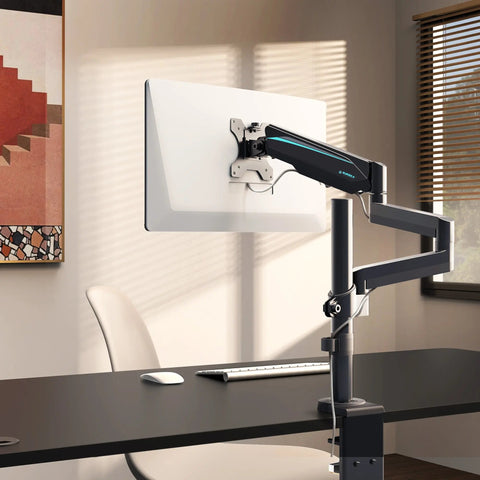
For a professional of this stature, a chair like the Royal Slim, Executive Office Chair provides the necessary high-back support to accommodate a longer torso. However, the model also revealed a "Depth Deficit." A standard 30-inch desk depth combined with a large 34-inch monitor often places the screen too close to a tall user’s eyes, leading to neck extension. We estimate a deficit of approximately 7 inches for optimal THX-recommended viewing distances. To solve this, using a Single Monitor Arm is essential to push the screen back and reclaim desk space while maintaining the monitor at eye level.
Engineering Controls: The Role of the Ergonomic Chair
The U.S. Occupational Safety and Health Administration (OSHA) classifies ergonomic furniture as an "Engineering Control." This means the furniture is designed to remove the hazard (static load) at the source.
1. Dynamic Lumbar Support
The most critical feature of an ergonomic chair is its ability to maintain the natural S-curve of the spine. The Onyx, Ergonomic Office Chair utilizes a breathable mesh back with integrated lumbar support. For maximum effectiveness, we suggest "active tweaking." Instead of setting the lumbar support once and forgetting it, move it slightly up or down every few hours. This changes the pressure points on the lower back, encouraging micro-circulation in the lumbar tissues.
2. Armrest and Shoulder Alignment
According to the BIFMA G1-2013 Ergonomics Guideline, armrests should be adjusted so that the shoulders are relaxed and the elbows are at approximately a 90-degree angle. If armrests are too high, they cause "shrugging," leading to tension headaches. If they are too low, the user leans to one side, causing pelvic tilt. The Onyx, Ergonomic Office Chair features adjustable armrests that allow for this precise alignment, which is foundational for preventing Repetitive Strain Injury (RSI).
3. Visual Ergonomics and Monitor Placement
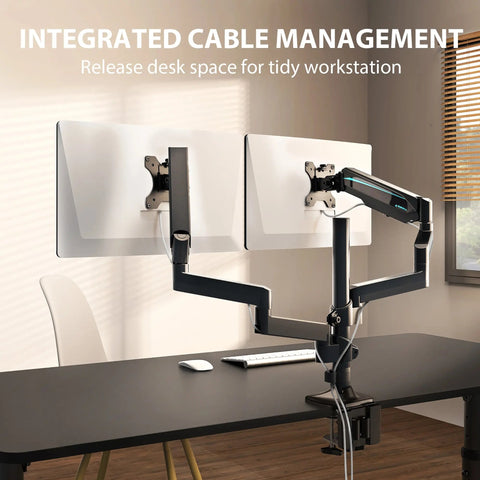
Your chair height and your monitor height are inextricably linked. If your monitor is too low, you will inevitably hunch forward, regardless of how good your chair is. Using a Dual Monitor Arm allows you to align two screens perfectly at eye level. This setup is particularly effective for professionals who multi-task, as it reduces the need for excessive neck rotation, which is a leading cause of cervical strain.

Practical Recommendations for 2026 Workday Wellness
To turn these principles into a routine, follow this checklist for optimizing your workstation and microbreak habits:
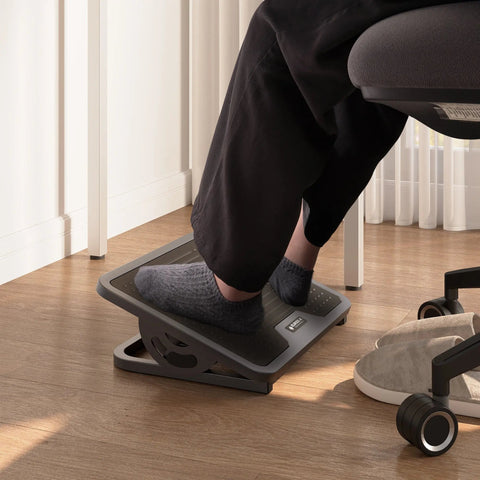
- The 15-Degree Footrest Tilt: If you use a footrest, ensure it is set at a 15-20 degree tilt. Our observations from customer feedback and ergonomic patterns suggest this angle is more effective for promoting venous return (blood flow back to the heart) than a flat surface. Ensure your knees remain slightly below your hip level to avoid posterior pelvic rotation.
- The "Monitor-Chair" Sync: Every time you adjust your chair height, re-verify your monitor height. The top third of the screen should be at eye level. As detailed in The 2026 Workstation White Paper: Converging Ergonomic Science and Sustainable Engineering, the integration of visual and physical ergonomics is the key to sustained focus.
-
The "Opposing Stretch" Microbreak:
- Stand up and push your chair back.
- Interlace your fingers behind your back and gently pull your shoulders down and back.
- Look up at the ceiling for 10 seconds to reverse the "tech neck" position.
- Sit back down and use the tension adjustment on your Royal Slim, Executive Office Chair to allow for a slight recline during your next task transition.
The ROI of Wellness: Why It Matters
Investing in high-performance furniture and a disciplined microbreak routine is not merely a matter of comfort; it is a strategic business decision. As shown in our modeling for the tall professional, the potential productivity value gain can exceed $3,000 annually. This is achieved by reducing the "cognitive tax" that physical discomfort imposes on the brain. When you aren't distracted by a throbbing lower back or a stiff neck, you can dedicate 100% of your mental energy to high-value tasks.
Furthermore, ergonomic interventions have been shown to significantly reduce the prevalence of work-related musculoskeletal pain. A 2025 meta-analysis by Santos et al. confirmed that structured ergonomic improvements lead to measurable decreases in reported discomfort across diverse professional populations.
Summary of Best Practices
| Feature / Habit | Recommendation | Benefit |
|---|---|---|
| Lumbar Support | Tweak height every 2 hours | Provides novel stimulus; prevents static load |
| Sit-Stand Ratio | 20-8-2 (Baseline) / Task-Dependent | Reduces sedentary time without breaking flow |
| Monitor Height | Top 1/3 at eye level | Reduces neck flexion and "tech neck" |
| Microbreak Movement | Postural opposition (Backbends) | Reverses the effects of forward-leaning work |
| Armrest Position | Shoulders relaxed, 90° elbow | Prevents trapezius tension and RSI |

Final Thoughts on Workspace Optimization
The goal of a 2026 ergonomic setup is to create a dynamic environment where the furniture supports the body's natural need for movement. By pairing a high-quality chair like the Onyx, Ergonomic Office Chair with a disciplined microbreak strategy, you transition from being a passive occupant of your workspace to an active manager of your own health.
Remember that the most effective ergonomic system is the one you actually use. Start small: choose one transition point in your day—perhaps after your morning stand-up meeting—to perform a postural opposition stretch. Over time, these micro-adjustments compound into a significant improvement in your long-term well-being and professional longevity.
YMYL Disclaimer: This article is for informational purposes only and does not constitute professional medical advice, diagnosis, or treatment. Always seek the advice of your physician or other qualified health provider with any questions you may have regarding a medical condition or musculoskeletal pain. The ergonomic recommendations provided are general heuristics and may need to be adjusted based on individual physical requirements or pre-existing conditions.
References
- BIFMA G1-2013 Ergonomics Guideline for Furniture
- CCOHS: Office Ergonomics - Sit/Stand Desk
- Cochrane: Workplace interventions for reducing sitting at work (2018)
- Cornell University Ergonomics Web — Workstation Guides
- ISO 11226:2000 Evaluation of static working postures
- OSHA eTools: Computer Workstations - Neutral Working Postures
- WHO 2020 Guidelines on Physical Activity & Sedentary Behaviour
- Frontiers in Psychology: Opportune moments for task interruptions (2024)




Leave a comment