

Quick Summary & Key Takeaways
Organizing a dense academic archive requires balancing heavy physical loads with ergonomic daily use. To help you get started quickly, this guide covers:
- Weight & Safety: How to apply the 70% Capacity Rule and when to check floor load limits (PSF) for heavy shelving to prevent structural failure.
- Ergonomics: Bridging the gap between physical books and digital screens to reduce neck and back strain.
- Workspace Modeling: A practical look at desk height and equipment load calculations to help you choose the right furniture setup.
The Physical and Cognitive Toll of Academic Archiving
For higher education faculty and research staff, the office is more than a workspace; it is a repository of intellectual history. The accumulation of thousands of books, journals, and archival documents represents years of inquiry, yet this physical wealth often creates a silent crisis of organization and health. When research materials are poorly managed, the result is not merely a cluttered aesthetic, but a decline in retrieval efficiency and a heightened risk of musculoskeletal strain.
In our experience helping professionals configure their workspaces, the "search cost" in a disorganized academic office is noticeably high. Studies on Knowledge Organization Systems (KOSs) suggest that taxonomies and systematic categorization are fundamental to managing information effectively. Without a structured physical archive, researchers often spend excessive time in static, awkward postures—reaching for high shelves or crouching to access floor-level stacks—which can exacerbate the risk of Work-Related Musculoskeletal Disorders (WMSDs).
According to the U.S. National Institute for Occupational Safety and Health (NIOSH), ergonomics is the science of fitting workplace conditions and job demands to the capabilities of the working population. For the academic professional, this means designing a workspace that supports both the heavy weight of physical archives and the high-precision requirements of modern digital research.
The Biomechanics of Retrieval and Static Load
The physiological impact of managing a large library is often underestimated. Prolonged periods of searching through archives involve "static loading," where muscles remain contracted to maintain a position without movement. The European Agency for Safety and Health at Work (EU-OSHA) notes that prolonged static sitting and standing can be significant risk factors for lower limb disorders and back pain.
When a researcher reaches for a heavy reference volume on a high shelf, the shoulder and lumbar spine are subjected to mechanical stress. If the shelving is not positioned at an optimal height, the user may adopt a "compensatory posture," leading to repetitive strain. Furthermore, the sheer weight of academic collections poses a structural challenge. Standard office furniture can fatigue under the density of hardbound journals and archival boxes, leading to shelf sagging—a phenomenon that not only damages materials but also creates potential safety hazards.
Logic Summary: Our analysis of academic workflows assumes a high frequency of "reach-and-retrieve" cycles. We apply the "Hierarchy of Controls" from OSHA, prioritizing engineering controls—such as adjustable, high-capacity shelving—over administrative breaks to help mitigate ergonomic risk.
Structural Integrity: The Physics of Academic Shelving
Organizing a professional library requires an understanding of load distribution and floor capacity. Academic researchers frequently underestimate the weight of their collections. As a standard library planning heuristic, a tightly packed shelf of books often weighs between 20 and 40 pounds per linear foot, depending on paper density and volume size. When these shelves are stacked six or seven high, the "point load" on the floor becomes a critical safety consideration.
Commercial architectural guidelines for high-density mobile shelving typically recommend a floor load capacity ranging from 125 to 300 pounds per square foot (PSF). While a standard faculty office may not reach museum-level storage requirements, the concentration of heavy reference materials on a single wall can lead to structural sagging or failure over time.
⚠️ Safety Alert: Standard residential rooms or older campus office floors are often only rated for 40 to 50 PSF. If you plan to install dense, floor-to-ceiling archival shelving, or if you notice any floor deflection, it is critical to consult a registered structural engineer or your campus facility manager to verify your floor's load capacity before proceeding.
The Rule of Heavy Distribution
A practical shop heuristic we often recommend for academic archiving is the 70% Capacity Rule. To help prevent structural fatigue, shelves should be loaded to no more than 70% of their rated weight capacity, with the heaviest materials—such as archival boxes and large-format journals—placed on the bottom third of the unit. This lowers the center of gravity, significantly reducing the risk of tip-over, a safety concern addressed by the CPSC STURDY Act (16 CFR Part 1261).

For professionals seeking a blend of aesthetic sophistication and archival durability, a purpose-built solution like the Ark EL, 71'' Display Bookshelf with Storage Cabinet, Oak provides a high-capacity option. Its design allows for the systematic organization of primary research materials on open shelves while securing sensitive archival documents within the integrated storage cabinet.
Bridging the Digital-Physical Divide
Modern academic work is rarely purely physical. Most researchers operate in a "hybrid" mode, constantly moving between physical books and digital databases. This transition creates unique ergonomic challenges. If the workstation is not designed to accommodate both, the researcher is forced into a cycle of "context switching" that involves twisting the neck and spine to view different sources.
The ISO 9241-5:2024 standard specifies layout and postural requirements for workstations, emphasizing the need for a "neutral position." For an academic, this generally means the primary monitor should be aligned with the physical materials currently being studied.
Optimizing the Digital Interface
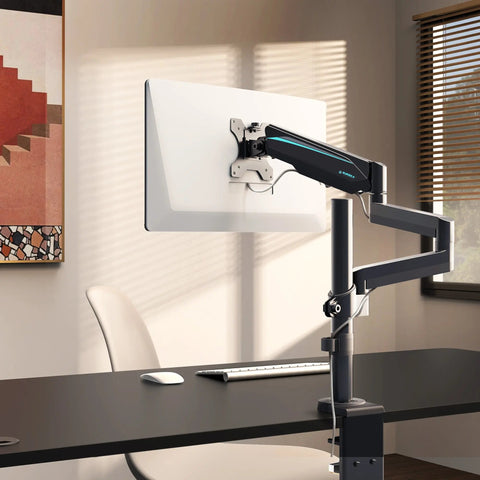
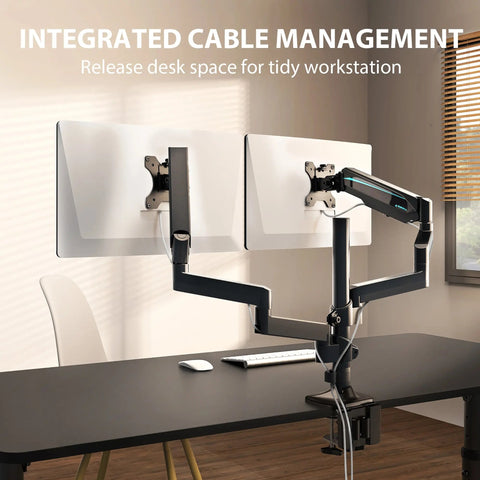
To reduce neck rotation and visual fatigue, we highly recommend the use of a Single Monitor Arm. This allows the researcher to adjust the screen height and angle dynamically, ensuring that the top of the monitor is at or slightly below eye level, as suggested by OSHA eTools. This flexibility is essential when the desk surface is also being used to spread out archival maps or large-scale research documents.

Furthermore, the integration of a 29'' Display File Storage Cabinet, Dark Walnut near the workstation ensures that active research files remain within the "primary reach zone," minimizing the need for excessive torso rotation.
Modeling the Archival Workspace: A Case Study
To understand the specific needs of a senior researcher, we created an illustrative scenario involving "Dr. Eleanor Vance," a hypothetical senior archivist managing an extensive physical-digital collection. This model illustrates how standard furniture can fall short of the specific requirements of academic archiving.
Methodology & Assumptions
Our modeling utilized ANSI/HFES 100-2007 anthropometric ratios adjusted for a 5'2" female researcher with chronic wrist strain. The model assumes a high-precision digital workflow (1600 DPI) and a requirement for significant physical document handling.
| Parameter | Value | Unit | Rationale |
|---|---|---|---|
| Optimal Seated Desk Height | ~64 | cm | Calculated heuristic based on popliteal height + elbow rest clearance |
| Required Desk Width | 60 | in | Practical estimate to accommodate a 34" ultrawide monitor + open archival materials |
| Minimum Mousepad Width | ~49 | cm | Required for precision metadata entry at low sensitivity |
| Total Archival Load | 89 | kg | Calculated sum of estimated equipment (64kg) + tabletop reference stacks (25kg) |
| Safety Utilization Factor | 0.7 | ratio | Conservative margin (70% Rule) for valuable archival materials |
Modeling Insight: The analysis of this scenario revealed that standard 29-inch (73.6 cm) desks are approximately 3.8 inches too high for Dr. Vance's optimal posture, forcing a shoulder elevation that can exacerbate joint strain. Furthermore, the estimated total load of her archival workstation (89kg) pushes the limits of typical single-motor standing desks. In such heavy-load cases, a dual-motor system is highly recommended for structural stability and longevity, aligning with the principles of BIFMA X5.5 standards.
Practical Recommendations for Research Flow
Achieving "Peak Research Flow" requires more than just high-capacity shelving; it requires a behavioral and environmental strategy.
1. The 20-8-2 Rhythm
A practical rule of thumb derived from Cornell University Ergonomics Web suggests an ideal workflow rhythm involving 20 minutes of sitting, 8 minutes of standing, and 2 minutes of moving/stretching. For a researcher deep in an archive, this might mean sitting while performing metadata entry, standing while sorting physical files, and walking to a distant shelf for retrieval.
2. Lower Limb Support
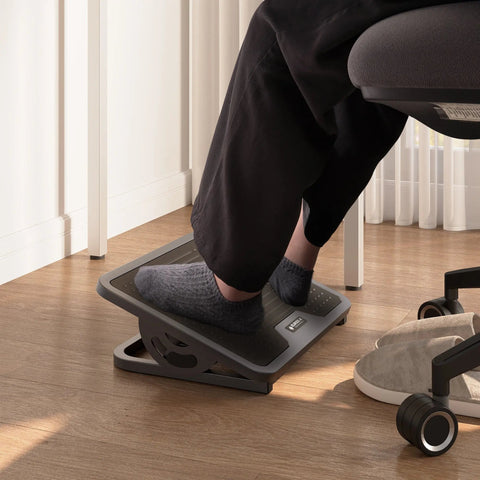
Prolonged standing during archival sorting can lead to blood pooling and lower back fatigue. The WHO 2020 Guidelines emphasize reducing sedentary time, but also warn against static standing. Using a Footstool with Wheels allows for frequent posture shifts while seated, helping to maintain circulation and reduce pressure on the lumbar discs.
3. Archival Preservation and Safety
When storing sensitive research documents, experienced librarians recommend using acid-free folders and boxes to prevent chemical degradation. For heavy archival boxes, ensure they are stored in a sturdy unit like the 29'' Display File Storage Cabinet, Dark Walnut at a height that allows for a "power lift" (keeping the load close to the body) to prevent lower back injuries. Safety Note: If you experience chronic back pain or are unsure of your lifting capacity, consult an occupational therapist or medical professional.
4. Precision Lighting
Task lighting should be positioned at a 45-degree angle to the work surface. This reduces glare on book spines and digital screens, improving readability during extended research sessions. Proper lighting is a key component of the HSE Working Safely with DSE guidelines.
Systematic Organization: The Key to Retrieval
Efficiency in research is dictated by the speed of retrieval. Implementing a Knowledge Organization System (KOS) within the physical office is essential.
- Primary Zone: Materials used daily (reference manuals, active project files). These should be at eye level or within the primary reach zone (arm's length).
- Secondary Zone: Journals and books used weekly. These can be placed on higher or lower shelves of your primary bookcase, such as the Ark EL, 71'' Display Bookshelf.
- Tertiary Zone: Archival materials and completed project files. These should be stored in secure cabinets or off-site.
Methodology Note: This organizational framework is based on the "Frequency of Use" principle commonly applied in industrial engineering and library science to minimize unnecessary travel and reaching motions.
Quick Action Checklist: Securing Your Academic Archive
Before purchasing new shelving or reorganizing your office, run through this quick checklist to ensure a safe and efficient setup:
- [ ] Verify Floor Load: If storing dense, floor-to-ceiling books, check with a facility manager or registered structural engineer to ensure your floor can handle the concentrated PSF (pounds per square foot).
- [ ] Apply the 70% Rule: Leave roughly 30% of your shelf space open or lightly loaded to prevent overloading and structural fatigue.
- [ ] Bottom-Load Heavy Items: Place oversized journals, thick reference books, and fully loaded archival boxes on the lowest shelves to lower the center of gravity and reduce tip-over risks.
- [ ] Align Digital & Physical: Mount your primary monitor on an adjustable arm to match the height of your physical reference materials, minimizing neck twisting.
Designing for the Long Term
The academic office is a dynamic environment. As research interests evolve, the physical space must adapt. Utilizing modular solutions and high-capacity furniture ensures that the workspace remains functional as the library grows. For further insights into planning these complex environments, refer to The 2026 Workstation White Paper: Converging Ergonomic Science and Sustainable Engineering.
By prioritizing structural integrity, ergonomic alignment, and systematic organization, faculty and researchers can transform their offices from cluttered storage spaces into high-performance research hubs. The goal is to create an environment where the physical burden of the archive is minimized, allowing the intellectual work of the university to flourish.
YMYL Disclaimer: This article is for informational purposes only and does not constitute professional medical, legal, or structural engineering advice. The ergonomic recommendations and weight load calculations provided are based on general industry standards, heuristics, and scenario modeling. Individuals with pre-existing musculoskeletal conditions or specific structural concerns regarding floor load capacity should consult with a qualified professional (e.g., an occupational therapist or registered structural engineer) before making significant changes to their workspace or heavy storage setup.
Sources
- BIFMA G1-2013 Ergonomics Guideline for Furniture
- ISO 9241-5:2024 Workstation layout & postural requirements
- OSHA eTools: Computer Workstations - Monitors
- NIOSH – About Ergonomics
- WHO 2020 Guidelines on Physical Activity & Sedentary Behaviour
- Cornell University Ergonomics Web — Workstation Guides
- CPSC STURDY / 16 CFR Part 1261 (ASTM F2057)
- EU-OSHA: Musculoskeletal disorders and prolonged static sitting




Leave a comment