

Finding Harmony: The Art of Small Space Dining
Imagine a home that breathes. You walk into your apartment after a long day, and instead of feeling hemmed in by furniture, you feel a sense of expansive calm. The sun catches the edge of a sleek, white tabletop, and there is a clear path to the balcony. Here, your dining area isn't just a place to eat—it's your morning coffee sanctuary, your focused afternoon workspace, and the heart of intimate evening conversations. This is the power of a "Workspace Sanctuary," where every piece of furniture is chosen with both mindfulness and mathematical precision.
Creating this ideal state begins the moment you stop seeing your small floor plan as a limitation and start seeing it as a canvas for high-performance design. The most common mistake we observe in studio apartments and compact homes isn't choosing a style that's "too bold," but rather underestimating the "breathing room" required for a space to feel functional. When we say goodbye to the chaos of oversized, clunky furniture and embrace smart, adaptable solutions, we unlock a lifestyle of limitless creativity and deep work.

The "Table + 6 Feet" Heuristic: Mastering Clearance
In our years of analyzing interior layouts, we have identified a recurring pattern: a dining area feels "cramped" not because of the table size itself, but because of the lack of circulation space. To ensure your dining area remains a place of inspiration rather than frustration, we recommend the "Table + 6 Feet" Rule.
This heuristic suggests that the ideal dining area footprint should be the table’s dimensions plus six total feet of clearance (three feet on each side). This three-foot (36-inch) buffer allows for a chair to be pulled out comfortably and for another person to pass behind it without causing a disruption. While conventional wisdom often suggests a minimum of 30 inches for basic chair access, our modeling shows that 36 inches is the threshold where a room transitions from "functional" to "harmonious."
Modeling Note: Minimum Functional Footprint This calculation is a scenario model used to estimate the necessary floor area for a standard dining setup. It is a heuristic for quick selection, not a lab-controlled study.
Parameter Value/Range Unit Rationale Chair Pull-out Depth 24 - 30 Inches Based on standard dining chair dimensions Safe Passage Width 30 - 36 Inches Based on BIFMA G1-2013 Ergonomics Guideline Table Width (Standard) 30 - 36 Inches Typical 4-person rectangular or round table Total Room Width Req. Table + 72 Inches Derived from (2 * 36" clearance) Boundary Condition Wheelchair Access 42 - 48 Required for ADA-compliant or high-accessibility spaces
If you are working with an exceptionally tight corner, you might be tempted to push a table against the wall. This is an effective space-saving maneuver, but it requires a shift in how you view seating. By using a product like the Liam, 55.91" Dining Table with Sintered Stone, White, you gain a generous 55.91-inch surface that can comfortably seat six in an open-plan room, or four with one side flush against a wall. The sintered stone surface doesn't just offer a luxurious marble aesthetic; it provides a high-durability workspace that resists the scratches and stains of a multi-functional life.
Shape Selection: Round vs. Rectangular
The debate between round and rectangular tables for small spaces is often misunderstood. While round tables with pedestal bases are frequently recommended for their lack of sharp corners and "visual lightness," a rectangular table can actually be more efficient if you occasionally need to host more than four people.
A 48-inch rectangular table can seat four people along its sides comfortably, but it can also accommodate two additional guests at the ends in a pinch. A round table of a similar diameter would struggle to provide the same elbow room. However, for daily mindfulness and flow, the "no-corner" design of a round or oval table makes navigation much easier in high-traffic apartment corridors.
For those who value adaptability above all else, the Edora Oak Extendable Dining Table (70.9" -92.5") represents the pinnacle of space-efficient engineering. It expands from 70.9 inches to 92.5 inches using a built-in removable leaf. This eliminates the "clutter problem" of storing extra leaves in a closet—a common frustration in small homes.

Linking Functionality with Emotion: The Ergonomic Connection
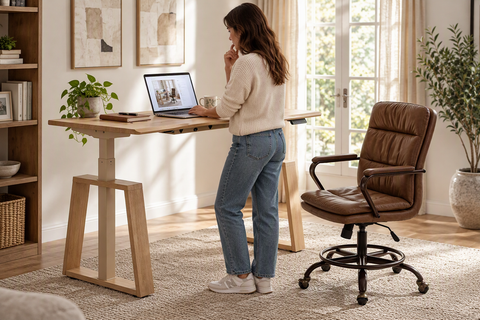
A dining table in a modern apartment is rarely just a dining table. It often doubles as a desk for deep work sessions. This is where the intersection of ergonomic science and furniture design becomes critical. According to the Canadian Centre for Occupational Health and Safety (CCOHS), maintaining a neutral posture is vital for long-term musculoskeletal health.
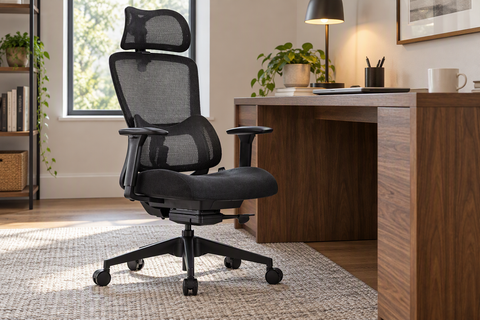
When a dining table is used for work, the height of the chair becomes paramount. A chair that is too low forces the shoulders to shrug; a chair that is too high causes the user to hunch. We recommend pairing your table with a seat that offers both aesthetic beauty and ergonomic support. The Rlesana, Velvet Dining Side Chair 1 PC, Red/Green features a petal-shaped backrest that provides structured support for the mid-back while its plush velvet upholstery adds a tactile, comforting element to your "Workflow."
By choosing chairs with a slim, tapered leg design, you reduce the visual bulk of the room. This "Aesthetic" choice helps the eye travel through the space rather than getting caught on heavy furniture legs, making the room feel larger than its square footage suggests.

Safety and Quality: The Foundation of Trust
When selecting furniture for a home sanctuary, beauty must be backed by rigorous safety standards. For residents in North America and Europe, transparency regarding materials is non-negotiable.
- Anti-Tip Safety: If your dining setup includes storage cabinets or sideboards, ensure they comply with the CPSC STURDY / 16 CFR Part 1261 standards. Even in adult-only households, anchoring furniture is a critical step in creating a safe environment.
- Material Integrity: Look for certifications like UL GREENGUARD Gold, which ensures the product has low chemical emissions, contributing to better indoor air quality.
- Durability Standards: In line with the principles outlined in The 2026 Workstation White Paper: Converging Ergonomic Science and Sustainable Engineering, high-quality materials like sintered stone and FSC-certified wood veneers are preferred for their longevity and lower environmental impact.
Personal Tips for Atmosphere Building
Beyond the dimensions and the math, a true sanctuary is built through the small details that engage the senses.
- The Power of Greenery: A small potted plant on a 23" Contemporary Style Side Table can act as a "visual anchor," bringing a touch of nature into an urban apartment. This side table is particularly useful because it can be split or combined, adapting to your needs as you shift from a morning reading nook to an evening social layout.
- Layered Lighting: Avoid harsh overhead lights. Instead, use a pendant light over the dining table to define the "zone." This creates an island of light that separates the dining area from the rest of the room, even in a small studio.
- Decluttering the Surface: Use the "One-In, One-Out" rule for tabletop decor. If you add a centerpiece, remove the stack of mail. A tidy desk or table helps reduce distractions and maintain focus, as highlighted in our guide on Compact Office Chairs.

Designing Your Future
Choosing the right dining table for a small space is an exercise in intentionality. It requires balancing the rigorous dimensions recommended by the Occupational Safety and Health Administration (OSHA) with the emotional need for a beautiful, welcoming home.
Whether you opt for the sleek, indestructible surface of the Liam table or the flexible, classic oak of the Edora, the goal remains the same: to create a space that supports your productivity and nourishes your well-being. By applying the "Table + 6 Feet" rule and selecting pieces that serve multiple roles, you transform a few square feet of floor space into a limitless sanctuary for living, working, and thriving.
YMYL Disclaimer: This article is for informational purposes only and does not constitute professional medical, legal, or interior design advice. While ergonomic principles can reduce the risk of musculoskeletal strain, individuals with pre-existing conditions should consult a qualified healthcare professional or an ergonomics specialist before making significant changes to their workstation or home setup.
References
- BIFMA G1-2013 Ergonomics Guideline for Furniture
- CCOHS: Office Ergonomics - Sit/Stand Desk
- Cornell University Ergonomics Web — Workstation Guides
- OSHA eTools: Computer Workstations - Desks
- CPSC New Tip-Over Safety Standard for Furniture
- UL GREENGUARD Certification Overview
- The 2026 Workstation White Paper: Converging Ergonomic Science and Sustainable Engineering




Leave a comment