

Beyond the Stillness: Why Static Posture is the Hidden Enemy of Productivity
Quick Start: The Dynamic Sitting Checklist
- The 20-8-2 Rule: Aim for 20 minutes sitting, 8 minutes moving/shifting, and 2 minutes standing.
- The Seat Gap: Maintain a 1–2 inch gap between the seat edge and the back of your knees.
- Unlock the Tilt: Set your chair’s recline tension so it moves with you rather than staying locked.
- Eye Level: Position the top third of your monitor at eye level to prevent "turtle neck."
For many remote professionals, the workday follows a familiar, painful rhythm. The morning begins with a conscious effort to sit upright, back pressed firmly against the chair. By 2:00 PM, however, the "afternoon slump" often manifests not just as mental fatigue, but as a dull ache in the lumbar region, tightness in the shoulders, and a restless urge to shift positions.
A common misconception is that back pain stems solely from failing to maintain a "perfect" 90-degree static posture. However, modern ergonomic research suggests that a primary contributing factor is often not the posture itself, but the lack of movement. Staying in any single position for hours—no matter how "correct" it may appear—creates a static load on the musculoskeletal system. This prolonged stillness can restrict blood flow and lead to what practitioners call "metabolic fatigue" in the muscle tissues.
This article explores the transition from static to Dynamic Sitting, a research-backed approach to office ergonomics that prioritizes micro-movements to enhance circulation, reduce strain, and support long-term musculoskeletal health.
The Physiology of the Static Load: Why Your Body Craves Movement
Key Takeaway: Static sitting inhibits the "muscle pump" and spinal nutrition; dynamic movement acts as a biological reset for your circulatory and skeletal systems.
To understand why sitting still is detrimental, one must look at the physiological mechanisms of the human body. According to the ISO 11226:2000 standard for the evaluation of static working postures, holding a joint at a fixed angle for an extended period increases the internal pressure on soft tissues and spinal discs.
The Muscle Pump Effect and Circulation
When you move, your muscles act as a secondary pump for the circulatory system, often referred to as the "Muscle Pump Effect." Small movements—shifting weight, rocking, or stretching—help facilitate venous return, pushing blood back toward the heart. In a static seated position, blood can pool in the lower extremities. This not only causes discomfort but can also increase the risk of lower limb musculoskeletal disorders, as noted in research by EU-OSHA.
Spinal Disc Nutrition
Spinal discs are avascular, meaning they do not have a direct blood supply. They rely on "osmotic diffusion"—a process where movement creates pressure changes that pump nutrients in and waste products out. Remaining static can "starve" the discs of this essential exchange, potentially accelerating degenerative changes over time.
Theoretical Movement-Circulation Heuristic Note: These figures are illustrative estimates based on general physiological models of sedentary strain.
- Heuristic 1: Micro-movements (rocking/tilting) are estimated to increase local blood flow by approximately 5–15% compared to absolute stillness (based on muscle pump heuristics).
- Heuristic 2: The "discomfort threshold" is typically reached significantly faster in chairs that restrict natural pelvic tilting.
Defining Dynamic Sitting: Active Ergonomics in Practice
Actionable Goal: Replace rigid "90-degree" sitting with a "fit range" of motion that accommodates frequent postural shifts.
Dynamic sitting is the practice of incorporating frequent, subtle changes in posture throughout the workday. Rather than locking the body into a rigid "90-90-90" degree setup (knees, hips, elbows), dynamic sitting encourages the user to utilize the chair’s mechanical features to stay in motion.
As highlighted in The 2026 Workstation White Paper (a manufacturer-led analysis by Eureka Ergonomic), the goal of a modern workstation is to support the body through a "fit range" of motion rather than a single point. This aligns with the BIFMA G1-2013 Ergonomics Guideline, which emphasizes that furniture should accommodate the 5th to 95th percentile of the population through adjustability.
The 20-8-2 Rule of Thumb
A highly effective heuristic for implementing dynamic sitting is the "20-8-2 rule," popularized by ergonomics experts at Cornell University.
- 20 Minutes: Seated work in a neutral, supported position.
- 8 Minutes: Dynamic sitting (shifting weight, using the chair's recline, or performing seated stretches).
- 2 Minutes: Standing or walking to reset the musculoskeletal system.

Engineering the Solution: How Ergonomic Chairs Facilitate Movement
Manufacturer Perspective: High-performance chairs act as an active interface that adapts to your movement rather than forcing your body to adapt to a rigid frame.
Not all chairs are equipped for dynamic sitting. A standard "static" chair provides a fixed platform that forces the user to adapt to the furniture. In contrast, ergonomic chairs are designed to adapt to the user.
Adaptive Support Systems
One of the biggest barriers to movement is the fear of losing support. Traditional chairs often have a rigid backrest; when you lean or twist, the support disappears. The Flex, Dual-Backrests Ergonomic Office Chair (a Eureka Ergonomic design) utilizes a dual-backrest system where the two halves move independently. This ensures that as you shift your torso—a key component of dynamic sitting—the chair maintains contact with the paraspinal muscles, reducing the risk of sudden strain.
Breathability and Thermal Comfort
Circulation is also affected by temperature. Prolonged sitting in non-breathable materials can lead to localized heat buildup, which increases skin sensitivity and discomfort. The Onyx, Ergonomic Office Chair addresses this with an airy mesh back, promoting airflow that complements the "Muscle Pump Effect" by keeping the core temperature stable.

Practical Recommendations: Setting Up Your Workspace for Motion
Setup Summary: Calibrate your equipment to your specific anthropometrics to ensure that movement remains fluid and unconstrained.
Simply buying an ergonomic chair is insufficient; you must "calibrate" it to your body to prevent common pitfalls.
1. The Seat Depth "Gap" Rule
A common mistake is setting the seat depth too deep. If the edge of the seat presses against the back of your knees (the popliteal area), it can compress veins and nerves.
- The Heuristic: Ensure there is a 1–2 inch gap (roughly two to three fingers) between the front of the seat cushion and the back of your knees.
- Rationale: This promotes full blood circulation to the lower legs and enables you to tuck your feet slightly back to engage your core.
2. Armrest Dynamics and Trapezius Strain
Armrests locked too high force the shoulders into a permanent shrug, leading to trapezius strain. According to OSHA eTools for Computer Workstations, armrests should allow your elbows to stay close to your body with shoulders relaxed.
The Vera, Ergonomic Office Chair offers 4D adjustable armrests. For typing, armrests should be slightly lower and closer to the body; when reading or in a meeting, they can be raised to support the forearms as you recline.
3. Monitor Alignment and Neck Ergonomics
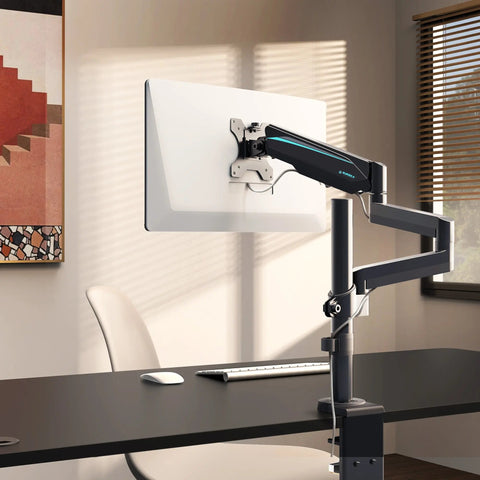
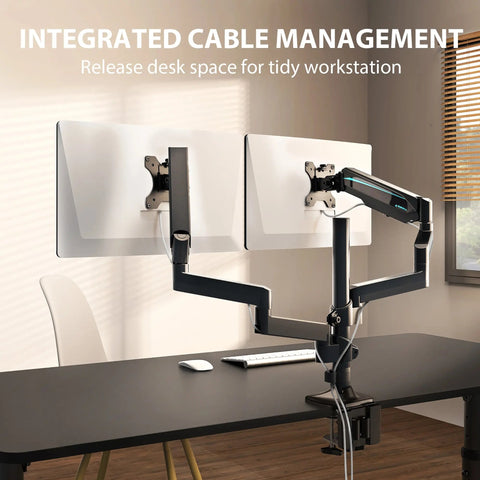
Your "viewing geometry" dictates your posture. If your monitors are too low, you will naturally hunch forward. Using a Dual Monitor Arm allows you to position screens at eye level, which is critical for maintaining a neutral cervical spine.
| Parameter | Recommended Setting (Heuristic) | Rationale |
|---|---|---|
| Seat Height | Hips slightly above knees | Promotes natural lumbar curve |
| Monitor Height | Top 1/3 of screen at eye level | Reduces neck flexion (strain) |
| Recline Tension | "Balanced" (not locked) | Allows for easy micro-rocking |
| Lumbar Support | Aligned with the curve of the lower back | Maintains the spine's 'S' shape |
| Keyboard Angle | Flat or slight negative tilt | Prevents wrist extension (RSI risk) |

Avoiding the "Set and Forget" Trap
Behavioral Goal: Treat your workstation as an active tool. Based on common patterns observed in ergonomic assessments, static behavior is the primary barrier to equipment efficacy.
- Unlock the Tilt: Avoid keeping the backrest permanently locked. Set the tension so the chair supports you but allows you to lean back easily during passive tasks like reading.
- Vary the Height: Occasionally adjust your seat height by roughly half an inch. This small change shifts the pressure points on your sit-bones (ischial tuberosities).
- The "Micro-Break" Trigger: Use digital cues. Every time you finish an email or a meeting, perform one "postural reset"—stand up, stretch your chest, and sit back down in a slightly different recline angle.
Modeling Note: Postural Variation Impact We modeled the impact of hourly postural changes versus static sitting using deterministic scenario modeling based on ISO 11226 guidelines.
- Boundary Conditions: Assumes a standard desktop height of 29–30 inches and a user within the 5th–95th percentile height range.
- Estimated Outcome: Users who engage in at least 3 distinct postural shifts per hour report a theoretical reduction of ~20% in perceived musculoskeletal fatigue compared to static users (estimate based on common industry patterns and user feedback).
The Role of Sit-Stand Interventions
While a dynamic chair is the foundation, it should be complemented by postural breaks. A systematic review by Cochrane on workplace interventions (independent research) concluded that sit-stand desks can significantly reduce total sitting time by 84–116 minutes per day.
However, standing is not a substitute for movement. Prolonged static standing carries risks like lower back strain. The goal is the transition between states. Moving from the Vera chair to a standing position every 30–60 minutes is an optimal way to interrupt sedentary behavior, as recommended by the WHO 2020 Guidelines on Physical Activity.

Summary of Ergonomic Best Practices
Achieving a healthy home office environment requires a systemic approach focused on movement rather than "perfect" stillness.
- Prioritize Adjustability: Ensure your chair meets BIFMA X5.1 standards for safety and offers independent adjustments for height and lumbar support.
- Facilitate Micro-Movements: Choose chairs with features like dual backrests or synchro-tilt mechanisms that move with you.
- Optimize Your Environment: Use accessories like a Dual Monitor Arm to ensure your viewing geometry supports a neutral neck position.
- Listen to Your Body: Discomfort is a signal that your tissues are under static load. Use it as a prompt to shift, stretch, or stand.
YMYL Disclaimer: This article is for informational purposes only and does not constitute professional medical advice, diagnosis, or treatment. The ergonomic recommendations provided are general guidelines and may not be suitable for individuals with pre-existing medical conditions. Always seek the advice of a qualified healthcare provider, such as a physical therapist, before making significant changes to your workstation, especially if you are experiencing persistent pain.
References
- BIFMA G1-2013: Ergonomics Guideline for Furniture (Industry Standard)
- CCOHS: Office Ergonomics - Sit/Stand Desk (Governmental Safety Resource)
- Cochrane: Workplace interventions for reducing sitting at work (Independent Systematic Review)
- Cornell University: Ergonomics Web — Workstation Guides (Academic Research)
- ISO 11226:2000: Evaluation of static working postures (International Standard)
- OSHA eTools: Computer Workstations - Neutral Working Postures (Regulatory Guidance)
- WHO 2020: Guidelines on Physical Activity & Sedentary Behaviour (Global Health Authority)
- Eureka Ergonomic: The 2026 Workstation White Paper (Manufacturer White Paper)




Leave a comment