

The Hidden Risks of Sub-Optimal Seating: Beyond Basic Comfort
Many professionals begin their workday in an expensive office chair, only to find themselves battling lower back stiffness or shoulder tension by 3:00 PM. This common frustration often leads to a widespread misconception: that "ergonomics" is a subjective matter of personal preference. In reality, musculoskeletal discomfort is frequently the result of a mismatch between the furniture’s physical limits and the user’s physiological needs.
When a chair is improperly adjusted or fails to account for the user's specific weight and height profile, it creates a "static load" on the body. This static load restricts blood circulation and forces muscles to work harder just to maintain an upright position. Over time, these minor strains can escalate into Musculoskeletal Disorders (MSDs), which affect the nerves, tendons, and joints. Understanding the science of weight capacity and height settings is not just about finding a comfortable seat; it is a critical safety measure for long-term health and professional productivity.
The Physics of Seating: Static vs. Dynamic Weight Capacity
One of the most frequent safety oversights we observe in workstation audits is the misunderstanding of weight ratings. Most users treat a chair's weight limit as a simple, static threshold. However, office furniture safety is governed by rigorous standards such as the ANSI/BIFMA X5.1 General-Purpose Office Chairs standard, which defines test methods for structural adequacy and durability.
The critical distinction lies between static weight (the weight of a person sitting still) and dynamic load (the force generated when a user shifts, leans back, or sits down quickly). Based on common patterns from customer support and warranty handling, a chair rated for 250 lbs may experience forces exceeding 300 lbs if a user reclines aggressively.
Logic Summary: The 15-20% Safety Buffer Our analysis of structural longevity suggests that users should maintain a usage buffer of approximately 15-20% below the manufacturer's stated maximum weight. This heuristic accounts for dynamic forces and prevents premature wear on the gas cylinder and tilt mechanism.
Parameter Recommended Value Unit Rationale Static Weight Limit 100% lbs/kg Manufacturer Specification Dynamic Force Estimate +15-20% % User movement (reclining/shifting) Recommended User Weight 80-85% of Max lbs/kg Long-term structural integrity Safety Factor 1.2x ratio Standard engineering baseline
Exceeding these limits or failing to account for dynamic movement doesn't just cause "wobble"; it can lead to the slow, inconsistent descent of the gas cylinder—a telltale sign of seal wear that may eventually result in sudden mechanical failure. For high-performance environments, chairs like the Exis, Ergonomic Office Chair are engineered to meet these rigorous safety standards, providing a stable foundation for a wide range of body types.

Anthropometric Reality: Why "Standard" Height Often Fails
The second pillar of chair safety is height adjustment. Traditional office wisdom promotes the "thighs parallel to the floor" rule as a universal standard. However, reality is more complex. According to the BIFMA G1-2013 Ergonomics Guideline, furniture should ideally accommodate the 5th to 95th percentile of the population.
In practice, standard office chair height ranges (typically 16" to 21") often fail to support the seated popliteal height—the distance from the floor to the back of the knee—of petite users (5th percentile female) or very tall users (95th percentile male). When the chair is too high, the front edge of the seat pan applies pressure to the underside of the thighs, restricting blood circulation to the lower limbs. Conversely, a chair that is too low forces the pelvis to tilt backward, flattening the natural lumbar curve and increasing intradiscal pressure in the spine.
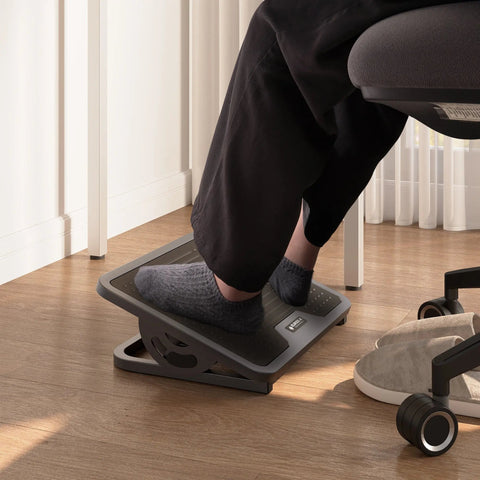
To address this, the ISO 9241-5:2024 standard for workstation layout emphasizes that a "neutral position" is the primary goal. This means the feet must be flat on the floor (or a footrest) to distribute weight evenly, while the backrest maintains the spine's natural S-curve.
The Synergy Solution: Integrating Desks and Chairs
Achieving a safe, ergonomic setup is rarely possible by adjusting the chair in isolation. Professional ergonomists often find that setting the desk height first is a more effective strategy. This "Desk-First" approach ensures that your upper body is supported correctly before finalizing your lower body posture.
- Set Desk Height: Adjust your desk so that your elbows are at approximately a 90-degree angle while your hands rest on the keyboard.
- Adjust the Chair: Bring the chair height up or down until your feet are flat on the floor and your thighs are roughly parallel to the ground.
- Verify Clearance: Ensure there is a 2-3 inch gap between the edge of the seat and the back of your knees to prevent circulation issues.
This synergy is best achieved with adjustable furniture. A high-capacity desk like the Blossom Dynamics® Office Standing Desk (70"x46") allows for precise height tuning (29.5" to 48"), making it easier to find the perfect alignment with your chair. When the desk and chair work together, you reduce the "static load" that leads to fatigue.

Advanced Adjustability: Beyond Height and Weight
While height and weight are the foundations, modern ergonomic science, as detailed in The 2026 Workstation White Paper: Converging Ergonomic Science and Sustainable Engineering, suggests that "personalized comfort" requires multiple points of articulation.
Lumbar Support and Spinal Alignment
The human spine is not designed for 90-degree angles. The Exis, Ergonomic Office Chair features a 4-level adjustable lumbar support system. This allows users to pinpoint the exact location of their lumbar curve, which is essential for preventing the "slumping" that occurs during long periods of static sitting. According to EU-OSHA research on prolonged static sitting, maintaining this curve is the most effective engineering control for reducing lower back pain.
Armrests and Shoulder Strain
Improper armrest height is a leading cause of tension in the trapezius muscles (the "burning" sensation in the upper back). Armrests should support the weight of your arms without pushing your shoulders up or forcing you to lean. Using a chair with 3D or 4D armrests allows for width and depth adjustments, catering to different shoulder widths and keyboard positions.
The Role of Monitor Placement
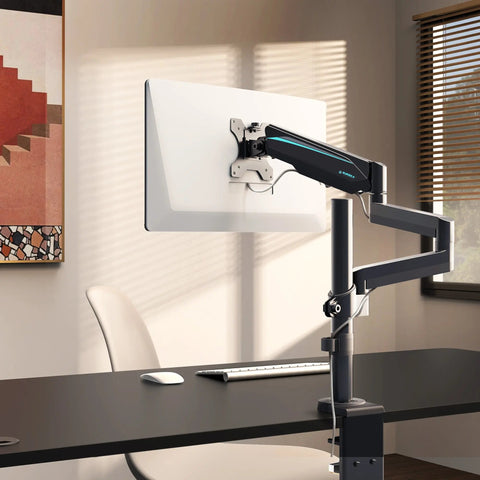
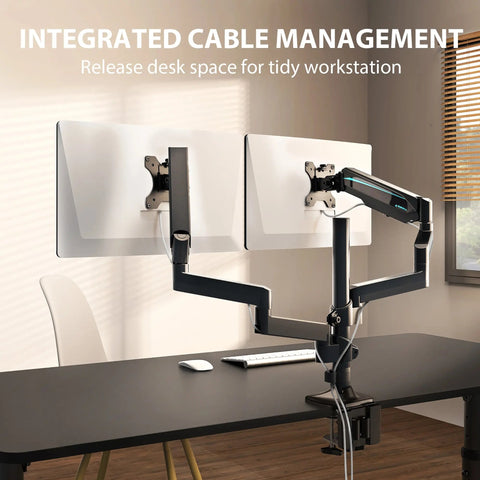
Even a perfect chair cannot fix a neck strain caused by a monitor that is too low. OSHA eTools for Monitors recommends that the top of the screen be at or slightly below eye level. Using a Single Monitor Arm provides the necessary flexibility to adjust the screen height and distance independently of your desk surface, completing the ergonomic circuit.
Maintenance and Safety Compliance
A safe workstation also requires regular maintenance. Beyond weight limits, B2B buyers and safety-conscious individuals should look for specific certifications that guarantee product integrity:
- UL 962: This certification covers the safety of electrical components in height-adjustable desks, ensuring they meet strict fire and shock resistance standards.
- GREENGUARD Gold: This indicates low chemical emissions, which is vital for maintaining indoor air quality in home offices and corporate environments.
- Assembly Integrity: A common cause of "wobble" is the uneven tightening of base-to-gas-cylinder bolts. We recommend tightening bolts in a cross-pattern to ensure even load distribution across the chair's mechanism.
Practical Recommendations: The 20-8-2 Workday Rhythm
To maximize the benefits of ergonomic furniture, users must incorporate movement. The Cornell University Ergonomics Web suggests the "20-8-2" rhythm:
- 20 Minutes Sitting: In a neutral, supported posture.
- 8 Minutes Standing: Using a height-adjustable desk to change the load on your joints.
- 2 Minutes Moving: Stretching or walking to stimulate blood circulation.
This approach aligns with the WHO 2020 Guidelines on Physical Activity and Sedentary Behaviour, which emphasize that reducing sedentary time is as important as active exercise.
Summary Checklist for Ergonomic Safety
To ensure your workstation meets professional safety and health standards, use the following checklist derived from OSHA evaluation guidelines:
- Weight Check: Is your body weight at least 15% below the chair's maximum capacity?
- Feet Placement: Are your feet flat on the floor with knees at a 90-100 degree angle?
- Lumbar Fit: Does the backrest contact your lower back firmly at the natural curve?
- Elbow Alignment: Are your elbows at desk height without shrugging your shoulders?
- Eye Level: Is the top third of your monitor at eye level?
By prioritizing these settings and choosing certified equipment like the Onyx, Ergonomic Office Chair, you transform your workspace from a source of strain into a platform for long-term well-being and peak performance.
Disclaimer: This article is for informational purposes only and does not constitute professional medical advice. If you have pre-existing musculoskeletal conditions or chronic pain, please consult a qualified physiotherapist or medical professional before making significant changes to your workstation setup.
References
- ANSI/BIFMA X5.1 General-Purpose Office Chairs
- BIFMA G1-2013 Ergonomics Guideline for Furniture
- ISO 9241-5:2024 Workstation layout & postural requirements
- OSHA eTools: Computer Workstations
- WHO 2020 Guidelines on Physical Activity & Sedentary Behaviour
- Cornell University Ergonomics Web — Workstation Guides
- Cochrane: Workplace interventions for reducing sitting at work (2018)




Leave a comment