


A breathable ergonomic chair is less about guaranteed cooling and more about how the back, seat, and frame manage airflow and moisture during long sitting sessions. In warm rooms, that difference can change whether a chair feels merely warm or annoyingly sticky. The right choice depends on room humidity, how long you sit, and whether you care more about airflow or plush support.

Why Warm Rooms Make Chair Breathability Matter
When a room runs warm, chair comfort becomes an airflow-and-moisture problem, not just a posture problem. If you sit for hours, body heat builds up at the back and seat, and limited air movement can make skin feel damp before the chair itself feels obviously hot.
That is why warm-room comfort is situational. A chair that feels fine for a short call may feel much less comfortable by midafternoon, especially in a humid office or a room with uneven air conditioning. The ASHRAE Standard 55 is a useful reminder that thermal comfort depends on more than one surface or material. In practice, clothing, room airflow, and how still you sit all change the result.
For most buyers, the useful question is not "Is this chair cool?" but "Does this chair reduce trapped heat enough for my room and schedule?" That framing keeps the decision grounded in real use instead of marketing language.
What Chair Materials Do in the Heat
The clearest way to compare a breathable ergonomic chair against other options is to look at four things: how much air can move through the back and seat, how much of your body touches enclosed material, how sealed the cushion structure is, and how the chair feels after a long stretch rather than a quick test sit.
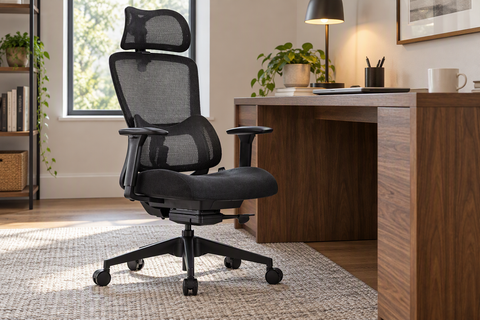
Mesh is usually the airflow-first option. In testing summarized by Forbes Vetted, mesh backrests improve airflow and can help keep skin temperature lower than solid-back foam designs. In plain terms, mesh gives warm air a place to move instead of trapping it behind your back.

Perforated upholstery sits in the middle. It can still feel breathable if the structure stays open enough to release heat and moisture, but it usually depends more on the seat build than mesh does. The KSU study summary is useful here because it shows mesh is not automatically more thermally comfortable than every upholstered chair on the specific comparison it tested: a well-built upholstered seat can still manage moisture well.
Dense, closed foam is the main caution. It often gives a softer, more cushioned feel, but it can also trap more heat during long sitting sessions. That does not make it a bad chair. It just means the trade-off leans toward plush support instead of the airier feel many people want in summer or humid climates.
The central buyer trade-off is simple: airy feel versus plush support. TechGearLab's testing frames this same split directly, comparing chairs built for an airy feel against chairs built for plush support. A chair can feel supportive without being especially breathable, and it can feel airy without being the most comfortable choice for someone who wants more padding.
Mesh Back and Mesh Seat Behavior
Mesh backrests are usually the most obvious breathability signal. They leave less surface area between your body and the chair, which helps heat move away instead of collecting under a solid panel. That is why mesh often becomes the default reference point in a hot office or humid home office.
Still, mesh is not a universal fix. A chair can have a mesh back and still feel warm if the seat is thick, the weave is tight, or the room air is heavy and still. If you sit in one position for long stretches, even a breathable backrest can only do so much.
Perforated Cushions and Foam Density
Perforated cushions try to split the difference between comfort and airflow. They keep some of the cushion feel that many buyers like while adding channels, holes, or a more open structure for heat to escape.
That makes them worth a close look if you dislike the firmer feel of full mesh. The key question is whether the cushion is only cut with a few surface holes or actually built to stay open enough during a long session. In warm rooms, that difference matters more than the label on the product page.
Frame Openings, Edges, and Heat Traps
Breathability is not only about the backrest fabric. Side bolsters, thick arm pads, closed shell frames, and bulky seat edges can all create warm contact points even when the chair looks airy from a distance.
For warm-room use, open transitions are better than heavy wraparound shapes. A chair with fewer hard side panels and less body contact around the edges is usually easier to live with when heat buildup is already a problem.
How to Read Breathable Claims Without Hype
Words like breathable, cooling, and ventilated are not interchangeable. They are design cues, not guarantees.
A practical read is to look for construction details: how much of the back is open, whether the seat is perforated or heavily padded, and whether the frame leaves room for air to move. If a listing only says "cooling" without showing the structure, it may be describing a feeling rather than a feature.
That is also why a breathable chair can still be the wrong pick. If the seat depth is off, the lumbar fit is poor, or the firmness does not match your body, you may notice the posture problem before you notice the airflow benefit.
How to Compare Breathability in Real Use
Compare two chairs by checking how open the backrest and seat actually are, how enclosed the cushion feels at the edges, and how much of your body touches padded side surfaces — then track how your back and seat feel after a short session, a half-day, and a full day of continuous sitting. That pattern tells you more about warm-room fit than any single "breathable" label.
- Start with the backrest. If your main complaint is a sweaty back, check how open the back surface really is. Mesh is usually the clearest airflow signal, but perforated or open-structure upholstery can still be workable if it is genuinely ventilating instead of just styled to look light.
- Then look at the seat. A breathable back does not guarantee a breathable seat. If the seat is thick, flat, and tightly upholstered, you may still feel heat buildup where most of your weight sits.
- Check the contact points. Armrests, side bolsters, and large edge pads can create extra heat traps. The more surfaces the chair presses against your body, the more likely warmth will linger during long meetings.
- Match the chair to your sitting pattern. If you stand up often, short bursts of warmth may not matter much. If you sit for three or four hours at a time, airflow matters more because heat has more time to accumulate.
- Read the product page for construction, not adjectives. Search for mesh coverage, perforation, cushion thickness, and adjustability before you trust words like airy or breathable.
If you are weighing mesh against leather specifically, our mesh vs. leather chair comparison breaks down the heat, maintenance, and style trade-offs in more detail. For readers comparing category options, browsing the ergonomic chair collection can be a sensible starting point, but the real filter is still construction detail.
Which Chair Setup Fits Hot or Humid Workdays
The best breathable ergonomic chair setup depends on the room, not a generic "cooling" label: warm-but-dry offices usually need more airflow, humid rooms need better moisture management, and long uninterrupted sitting calls for the most open construction you can tolerate for support. Match your room condition to the feature below before you shop.
| Room condition | What usually feels most annoying | Better-fit chair feature | What to prioritize first |
|---|---|---|---|
| Warm but dry room | Heat buildup over time | Mesh back or open-structure seat | Airflow and less contact surface |
| Humid room | Sticky skin and lingering moisture | Mesh, perforated upholstery, or moisture-managing upholstery | Heat escape plus open construction |
| Long uninterrupted sitting | Heat accumulation at back and seat | The most open design you can tolerate for support | Back and seat breathability together |
| Mixed work-and-break use | Heat is noticeable, but not constant | A balanced chair with decent airflow and better support | Comfort you can live with all day |
Breathable Ergonomic Chair Features to Check Before You Buy
Before you buy, judge the chair by its backrest and seat construction rather than by words like breathable or cooling — the checklist below covers the specific details that affect warm-room comfort most.
- Check how much of the backrest is actually open. A mostly mesh back usually gives a stronger airflow signal than a chair that only uses breathable language.
- Look at the seat construction. Perforation, channels, or a more open cushion structure are better signs than a thick closed cushion.
- Notice the side contact points. Heavy bolsters, deep shell sides, and thick arm padding can hold heat longer than simpler shapes.
- Treat adjustability as part of thermal comfort. Better fit can reduce pressure and help you stay in position less rigidly, which may make warmth feel less noticeable.
- Do not confuse logistics with breathability. Warranty, shipping, and returns matter after fit, but they do not tell you much about airflow.
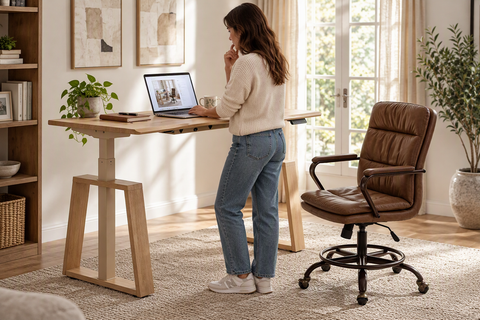
For readers who are also comparing workspace setup, standing desks can help break up long sitting sessions, but they do not replace the need to choose a chair that fits your room.
Final Takeaway
A breathable ergonomic chair can make warm rooms easier to tolerate, but the right choice depends on how your chair handles airflow, moisture, and long contact time. Mesh is usually the airflow-first option, yet perforated upholstery and other open structures can still work if they do not trap heat. Use the chair's construction, not the marketing copy, as your main filter, and if your back gets sweaty fast, start with the most open design that still fits your support needs.
FAQs
How Can I Tell If a Chair Will Feel Breathable in a Hot Office?
Start with the visible structure. Mesh coverage, perforated seating, open sides, and thinner contact surfaces are more useful clues than words like breathable or cooling. Then think about how long you sit and how much airflow your room already has. A chair that seems fine in a showroom can feel very different after a full workday.
What Is Better for Humid Rooms: Mesh or a Cushioned Chair?
Mesh is often the safer airflow-first choice, especially if your back gets sticky quickly. But some cushioned chairs still work well when they use open or perforated structures and do not overinsulate the body. In humid rooms, the better choice is usually the chair that balances moisture management with support you can tolerate for hours.
Why Does My Back Get Sweaty Even in a Comfortable Chair?
Comfort for your posture and comfort for your temperature are not the same. Sweat buildup can come from limited airflow, long static sitting, humid air, and clothing that holds heat against the body. If the chair is comfortable in shape but enclosed in material, the thermal problem can still show up by midafternoon.
Can a Breathable Chair Still Feel Warm After a Few Hours?
Yes. Breathability reduces trapped heat better than a closed foam design, but it does not make warmth disappear. The longer you sit still, the more important room airflow, cushion openness, and contact-surface size become. That is why short test sits can be misleading for warm-room buyers.
What Chair Features Matter Most If I Sit All Day in Summer?
Prioritize airflow through both the back and the seat, then check that the chair fits your body well enough to stay comfortable over time. Adjustable lumbar support, seat depth, and armrest position can help reduce pressure buildup. If you sit for long stretches in heat, open construction matters more than extra padding.





Leave a comment