

Imagine Your Own Christmas Gaming Nook
Imagine tucking into a cozy corner on Christmas Eve. Your RGB-lit glass desk glows softly like a digital fireplace, snowflake lights dance across the wall, and every cable is hidden so the only thing you see is your game, your gear, and a warm mug of cocoa.
You do not need a spare room to create this feeling. A single wall, an unused corner, or the space beside a wardrobe can become a powerful Christmas gaming nook if you plan it with intention.
This guide walks you through:
- How to choose a Christmas-ready gaming desk for a small space
- Smart layouts for corners, alcoves, and wall nooks
- Ergonomic setup tips grounded in leading standards
- Festive lighting and decor that look amazing without adding clutter
- Accessory choices that make a compact setup feel like a full battlestation
Whether you play on PC or console, the goal is simple: transform a small footprint into a joyful, ergonomic, and immersive Christmas gaming setup.

Step 1: Define Your Christmas Gaming Nook Vision
Before you buy anything, get clear on what you want your Christmas gaming nook to do for you.
Clarify Your Primary Use Case
Your ideal layout depends on how you actually game.
Common small-space personas:
-
Solo PC gamer in a studio apartment
You have one wall or corner and share the space with work or study. You need a compact desk, tight cable management, and decor that can look calm during the day and festive at night. -
Console gamer in the living room corner
Your nook might be next to the TV stand, or you may use a monitor on a desk. You need fast setup/tear-down and storage for controllers, headsets, and games. -
Hybrid gamer & remote worker
Your desk must handle Christmas raids at night and spreadsheets in the morning. Ergonomics become essential so long sessions feel sustainable.
Write down your top 3 priorities—for example: “save space, keep cables hidden, feel Christmassy but not messy.” This will guide every choice you make.
Measure Your Space (and Be Honest)
Pull out a tape measure and note:
- Wall width and available depth (from wall to nearest obstacle)
- Distance to power outlets
- Any doors, windows, baseboard heaters, or radiators that limit placement
A practical rule of thumb from installer experience:
- Single-monitor gaming: aim for ≥ 43" desk width and 23–27" depth.
- Dual-monitor setups: aim for ≥ 55" width or an L-shaped corner desk to keep everything within a comfortable 60–90 cm reach.
These dimensions align with the spirit of ergonomic guidelines like BIFMA G1, which are designed to serve a wide range of body sizes (roughly the 5th to 95th percentile of adults). You do not need to hit an exact number; you just need enough surface depth so your arms can rest comfortably and your monitor is not crammed against your face.
Decide Your Festive Ambiance
Think about mood before gear:
- Cozy and warm: warm white fairy lights, soft red/amber RGB, wood tones.
- Frosty and futuristic: cool whites and blues, shimmering glass or metal surfaces.
- Full Christmas fantasy: animated RGB patterns, snowflake wall lights, themed mousepads and wallpapers.
Pick one primary color palette and stick to it. This keeps a tiny nook from feeling chaotic—a key principle when floor space is limited.
Step 2: Choose a Space-Saving Gaming Desk (The Heart of the Nook)
Your desk is the foundation of your Christmas gaming nook. In a small home, the right desk must balance footprint, ergonomics, and visual impact.
Compact vs. Corner: Which Layout Fits Your Room?
Use this table as a quick decision guide:
| Setup Style | Best For | Typical Desk Size | Pros in Small Spaces | Trade-offs |
|---|---|---|---|---|
| Straight compact desk | Along a short wall or window | 43–47" wide, 23–27" deep | Simple to place, easy cable routing, works for single monitor or console | Less surface area for dual monitors and decor |
| Mid-size desk | Studio apartments with one main wall | 47–55" wide | Enough width for dual monitors or monitor + TV, better separation of work and play | Takes more visual space; needs stronger cable management |
| Corner / L-shaped desk | Unused room corner | 55"+ each side | Maximizes corner space, creates distinct zones for PC, console, or work | Harder to move, more planning for cable length |
For small-space gaming, a mid-size RGB standing desk often hits the sweet spot: compact enough for a wall nook but wide enough for dual monitors and Christmas decor.
Why a Sit–Stand Gaming Desk Helps in a Tight Corner
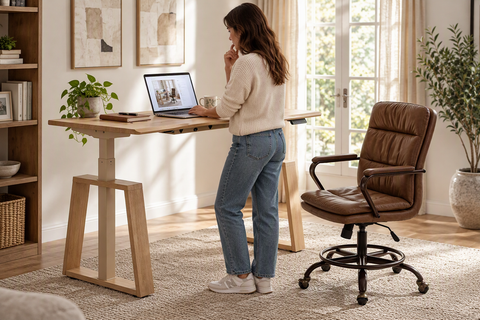
If you spend hours gaming, alternating between sitting and standing can reduce static load on your back and legs. A systematic review in the Cochrane Library found that height-adjustable workstations can reduce sitting time at work by about 84–116 minutes per day when people use them consistently, though long-term health outcomes are still being studied, especially for desk-based workers.
According to the World Health Organization guidelines on physical activity, adults should reduce sedentary time and break up long periods of sitting or standing. A sit–stand desk is a tool that supports this rhythm when you pair it with habits like micro-breaks and light activity.
For a Christmas gaming nook, switching to standing mode can be your “boss fight” posture, while sitting becomes your “story mode” or chill posture.
Example: GTG-G55 RGB Glass Gaming Standing Desk in a Small Space
A practical example of a compact yet feature-rich gaming desk is the GTG-G55, Glass Desktop Gaming Standing Desk (55"x23").
Key ways it supports a small-space Christmas setup:
- Space-efficient footprint: 55" x 23" gives enough depth for proper monitor distance without dominating a studio wall.
- Dual motor sit–stand system: lets you shift between deep work, casual browsing, and gaming modes at different heights.
- Integrated RGB glass surface: turns the entire desktop into a festive canvas—snowfall effects, warm candlelight glows, or icy blue waves—without extra light strips cluttering your edges.
- Built-in controls and USB ports: keep the front edge tidy so you do not fill the limited depth with hubs and switches.
Installers typically recommend allowing 10–15% extra cable length for sit–stand desks and securing cables with flexible sleeves so your Christmas lighting and peripherals move safely with the desk.
Step 3: Layout & Ergonomics – Make Your Nook Comfortable
A beautiful Christmas gaming corner is pointless if it gives you neck or wrist pain. This is where ergonomics and small-space planning come together.
Getting Desk, Chair, and Screen Heights Right
Multiple standards—including ISO 9241-5:2024 and North American guidelines like ANSI/HFES 100—support the same basic ergonomic idea: keep joints in neutral positions and avoid extreme angles.
According to the OSHA eTools guide on neutral working postures:
- Elbows should rest around 90–110°, close to your body.
- Wrists should stay straight, not bent sharply up or down.
- Hips and knees should sit near 90–120°, with feet flat on the floor or on a footrest.
The Canadian Centre for Occupational Health and Safety (CCOHS) adds that the top line of text on your monitor should be at or slightly below eye level for most users to reduce neck strain during screen work.
Simple monitor height rule for gamers:
Aim to place the top third of the screen at eye level. A monitor arm or a dedicated stand makes this easier, especially when you switch between sitting and standing.
Small-Space Ergonomic Checklist
Use this quick checklist when you build your nook:
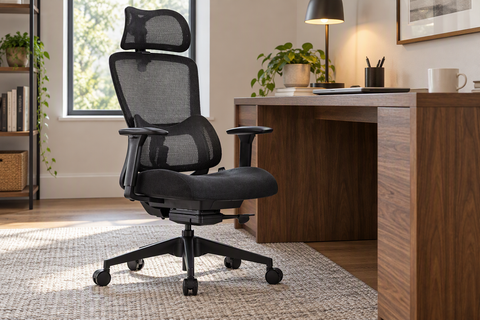
- Start with your chair height. Adjust so your feet rest flat and thighs are roughly parallel to the floor.
- Set desk height (or standing desk position) so your forearms rest parallel to the ground when your shoulders feel relaxed.
- Place keyboard and mouse at the front edge of the desk so you do not reach forward and round your shoulders.
- Adjust monitor distance so your eyes are around 50–70 cm from the screen (about an arm’s length), depending on screen size.
- Center the main monitor directly in front of you to avoid twisting your neck for long periods.
- Check lighting so you avoid glare from fairy lights or windows on your screen.
If you want a deeper dive into general ergonomic layout ideas, the guide on ergonomics in office work gives an excellent foundation that applies just as well to gaming setups.
Myth to Avoid: “Standing All Night Is Healthier”
A common misconception is that if sitting is bad, then standing for entire gaming sessions must be good. Research summarized in OSHwiki’s articles on prolonged static sitting and prolonged standing shows that any static posture—sitting or standing—can strain muscles and joints when held too long.
A practical rhythm from the Cornell University Ergonomics Web is the 20-8-2 pattern for every 30 minutes:
- 20 minutes sitting
- 8 minutes standing
- 2 minutes moving (stretching, walking, or light activity)
This is not a rigid rule, but a helpful starting point. During a Christmas gaming marathon, you can link posture changes with in-game events—stand up for new matches, sit back during cutscenes, and move during queue times.
Step 4: Cable Management & Accessories for Tiny Nooks
In a small Christmas gaming corner, clutter creeps in quickly. The goal is to keep the visual field clean so your lights and screen take center stage.
Smart Cable Management for Sit–Stand and Static Desks
Experienced installers follow a few principles that matter even more in small spaces:
- Allow 10–15% extra cable length for devices on a height-adjustable desk. This prevents tugging when you raise the desk.
- Leave 10–15 cm slack per lift stage (sitting height vs. standing height) and secure cables in a loose loop.
- Use under-desk trays and magnetic ties so power strips and adapters disappear from sight.
- Build the desk near wall outlets to avoid extension cord trip hazards across a tight room.
Mount RGB strips on back edges of the desk or behind the monitor, not directly facing your eyes or screen, to reduce glare.
Accessories That Boost Space Efficiency
For a small Christmas gaming nook, the right accessories act like extra square footage.
Carbon Fiber Dual Monitor Stand: Raise Screens, Free Desk Space
A dual-monitor riser, such as the Carbon Fiber Dual Monitor Stand, elevates your displays to a more ergonomic height and creates storage space underneath.
Practical benefits for small spaces:
- Ergonomic eye-line: Helps you get that “top third of the screen at eye level” target without stacking books.
- Extra storage zone: Slide your keyboard, notebook, or controller underneath when not in use to reclaim surface area for hot chocolate, Christmas candles, or a small desk plant.
- Improved ventilation: Lifting your monitors or small PC off the desk can improve airflow, important in warm rooms with lots of RGB.

Pull-out Keyboard Tray: More Room for Mouse Flicks
If your desk depth is limited, a pull-out tray can be the difference between cramped wrists and smooth movement. The Pull-out Keyboard Tray is designed for this type of situation.
How it helps a compact Christmas nook:
- Frees desktop space: Moving keyboard and mouse to a tray opens up the glass or main surface for decor, speakers, or a second screen.
- Adjustable height options: Make it easier to maintain neutral wrist angles when sitting, even if the desk itself is set to an optimal monitor height.
- Hide-away design: Slide it in when you use a controller, tablet, or just want a clean, minimalist look.
A common mistake is overcrowding the main desk area with decorations, leaving little room for mouse movement. By shifting the keyboard/mouse to a tray, you can keep festive items while still maintaining full control in-game.
Height-Adjustable Illuminated Panel CPU Cart: Protect Your PC in Tight Corners
In small rooms, many gamers tuck their PC under the desk, which can choke airflow or put the case in the path of feet and vacuum cleaners. A dedicated cart like the Height-Adjustable Illuminated Panel CPU Cart solves several issues:
- Improved ventilation: Keeping at least 5–10 cm of clearance around intake and exhaust vents helps maintain airflow.
- Easy repositioning: Smooth casters let you roll the PC out for cleaning or cable changes without dragging it across the floor.
- Visual cohesion: The illuminated panel echoes your desk RGB, so even your PC stand becomes part of the Christmas light show.
This is a simple way to turn an awkward under-desk gap into a safe, stylish home for your tower.
Step 5: Christmas Lighting & Decor Without the Clutter
Now comes the transformation: turning a functional nook into a festive battlestation.
Layer Your Lighting Like a Scene Designer
Think in three layers:
-
Ambient lighting (room glow)
Use wall sconces, LED strips along the back of the desk, or color-changing bulbs to create the base color theme—warm reds and ambers for cozy, blues and whites for frosty. -
Accent lighting (Christmas sparkle)
Add snowflake projectors, fairy lights around a pegboard, or small LED trees on a floating shelf. Keep them off the main desk surface to preserve working space. -
Functional lighting (no eye strain)
A small desk lamp with a warm-white bulb, positioned to the side, helps reduce contrast between your bright monitor and dark room, easing visual fatigue.
Avoid placing RGB strips directly in your line of sight or pointing toward the monitor; this often causes glare and reduces contrast in darker games.
Use Walls and Vertical Space
When floor area is tight, treat your walls as premium real estate:
- Pegboards above the desk for controllers, headsets, and Christmas ornaments.
- Floating shelves for collectibles, small plants, and themed figures.
- Cable clips along wall edges to channel power and network cables cleanly.
This vertical strategy keeps your desk reserved for the essentials: keyboard, mouse or controller, and perhaps one hero Christmas decoration.
If you want more inspiration on using limited space effectively, the article on small room gaming desk setups shows several layout examples that adapt well to holiday theming.
Seasonal Themes You Can Swap Out
Since Christmas lasts a season, not all year, focus on decor that is easy to remove or repurpose:
- Interchangeable keycaps or mousepads with Christmas designs
- Magnetic or adhesive light strips that peel off later
- Screensavers and wallpapers with seasonal art instead of permanent stickers
This keeps your setup adaptable for other themes—spring refresh, neon cyberpunk nights, or calm productivity modes.
Step 6: Sample Small-Space Christmas Nook Configurations
To make everything concrete, here are three practical configurations using the principles above.
1. Studio Wall Nook – RGB Glass Battlestation
- Desk: 55" sit–stand RGB glass desk placed along the longest wall.
- Displays: Dual 24–27" monitors on a carbon fiber dual monitor stand, centered.
- Input: Pull-out keyboard tray under the desk to free the glass surface.
- PC: Under-desk on a height-adjustable illuminated CPU cart, slid slightly to one side.
- Lighting: Desk RGB set to animated “snowfall” mode, warm fairy lights along the wall edge, small desk lamp on low brightness.
- Storage: Pegboard above the desk for controller hooks and cable loops.
Why it works: You get the drama of a glowing glass surface with dual monitors in a relatively compact footprint, plus enough depth to keep proper viewing distance.
2. Corner Console & PC Hybrid Nook
- Desk: Corner desk hugging a room corner.
- Displays: One main monitor on the desk, TV on an adjacent wall.
- Input: Keyboard tray under one side of the desk for PC use; controllers docked on a wall-mounted rack.
- PC/Console: PC on a CPU cart, console on a floating shelf.
- Lighting: Blue and white ambient strips along the desk back edge, red accent lights around the TV. Christmas garland wrapped around the pegboard frame.
Why it works: The corner layout separates PC and console flows while using dead space efficiently.
3. Living Room Side Nook – Compact and Tidy
- Desk: Compact 43–47" desk beside the TV stand.
- Displays: Single 27" monitor, centered.
- Input: Compact keyboard and mouse; controllers stored in a shallow drawer unit.
- PC: Slim PC on a small cart tucked to the side, with good ventilation.
- Lighting: Warm ambient lights shared with the living room tree; subtle desk RGB limited to a soft under-glow.
Why it works: The setup blends into shared family space, switching from festive lounge to focused gaming with minimal disruption.
For further layout ideas in tight rooms, the guide on creator desk setup ideas for small spaces offers additional inspiration that easily translates to gaming.
Wrapping Up: Turn a Small Corner Into a Big Experience
A Christmas gaming nook is not about square footage; it is about how thoughtfully you use every inch.
By:
- Choosing a compact sit–stand desk with integrated RGB lighting
- Aligning your setup with ergonomic guidelines from sources like OSHA’s workstation tools and CCOHS
- Using accessories such as dual monitor stands, pull-out trays, and CPU carts to reclaim surface area
- Treating light, wall space, and decor as design layers rather than clutter
…you can build a small-space gaming corner that feels like a personal Christmas sanctuary.
Once your nook is ready, take a moment before your next match. Dim the room, let the RGB wash the walls, breathe in, and enjoy the feeling of a space crafted for both deep play and mindful rest.
Frequently Asked Questions
Is a sit–stand desk really worth it for a small gaming setup?
For many gamers, yes. Evidence summarized by the Cochrane review on workplace sitting shows that height-adjustable workstations can significantly reduce sitting time when people actually use the feature. In a small space, this flexibility matters because you may not have room for a separate stretching or standing area.
Just remember: a standing desk is one tool. The WHO physical activity guidelines still emphasize regular movement and moderate exercise each week.
How do I avoid neck and back pain in a compact gaming nook?
Focus on neutral posture and regular movement. The OSHA neutral working posture guide recommends keeping elbows close to your body, shoulders relaxed, and screens at a height where you do not need to crane your neck. In practice, that means:
- Raising monitors with a stand or arm
- Using a keyboard tray or adjusting desk height
- Standing up or moving every 30–40 minutes
If you already have musculoskeletal issues, consult a healthcare professional or ergonomist for personalized advice.
How much desk space do I really need for gaming?
For a single-monitor setup with keyboard, mouse, and a bit of decor, 43–47" width and 23–27" depth usually feel comfortable. Dual-monitor setups often benefit from 55" or more or an L-shaped desk so all screens sit within a natural arm’s reach (around 60–90 cm). If your room cannot fit these sizes, prioritize depth and ergonomics over extra decorations.
Will all these lights strain my eyes?
Not if you position them thoughtfully. The key is to avoid bright lights shining directly into your eyes or onto the screen. Use indirect lighting—behind the desk, along walls, or reflecting off the ceiling—and keep a small lamp on low brightness to reduce the contrast between screen and room. If your eyes feel dry or tired, follow the classic 20-20-20 rule: every 20 minutes, look at something 20 feet away for 20 seconds.
Disclaimer: This article is for informational purposes only and does not constitute medical or health advice. Ergonomic and activity recommendations are general guidelines for healthy adults. If you have existing medical conditions, musculoskeletal pain, or other health concerns, consult a qualified healthcare professional or ergonomist before making significant changes to your workstation or activity patterns.
Sources
- BIFMA G1-2013 Ergonomics Guideline for Furniture
- CCOHS: Office Ergonomics – Sit/Stand Desk
- Cochrane Review: Workplace interventions for reducing sitting at work
- Cornell University Ergonomics Web – Ergonomics Guides
- HSE: Working safely with display screen equipment
- ISO 9241-5:2024 – Workstation layout and postural requirements
- OSHwiki: Ergonomics in Office Work
- OSHA eTools: Computer Workstations – Neutral Working Postures
- World Health Organization – Guidelines on Physical Activity and Sedentary Behaviour




Leave a comment