

Want to surprise your child with a “wow” gaming setup this Christmas—but still keep it safe, ergonomic, and practical? This guide walks you through every step, from planning the gift in secret to choosing the right desk and accessories, and finally setting everything up for a healthy, kid‑friendly gaming space.
1. Start With Your Child, Not the Gear
Before thinking about RGB lights or monitor sizes, focus on how your child actually sits, plays, and studies.
Observe Their Current Setup
Spend a few days quietly noticing:
- Do they lean forward or crane their neck up toward the screen?
- Are their feet dangling because the chair is too tall?
- Do cables, power strips, or controllers lie in a tangle on the floor?
According to the OSHA ergonomics guidance, awkward postures and poorly sized furniture are key risk factors for musculoskeletal disorders. Children are especially sensitive because their bones and soft tissues are still developing.
Measure First: Simple Parent-Friendly Method
Installers and ergonomists consistently find that one measurement solves most fit problems: elbow height.
Use this quick process:
- Ask your child to sit on their usual chair with feet flat on the floor (or on a box if the chair is too tall).
- Have them bend their elbows to roughly 90° with forearms parallel to the floor, as if using a keyboard.
- Measure from the floor to the underside of the forearm: this is ideal desk height for sitting (±1 inch).
- Repeat while they stand upright with shoulders relaxed: this is the ideal standing desk height.
This mirrors the neutral posture ranges outlined in OSHA’s computer workstation eTools, which recommend elbows close to 90° and relaxed shoulders to minimize static load on the neck and shoulders.
Think Beyond Gaming
For many families, the Christmas gaming setup doubles as a:
- Homework desk
- Creative space (drawing, coding, music)
- Social hub for friends and siblings
Plan for mixed use. This often means:
- A surface large enough for a monitor plus books.
- Easy-to-clean materials for snacks and drinks.
- Neutral posture whether your child is typing an essay or playing a game.
2. Ergonomic Basics for a Kid-Safe Gaming Setup
Ergonomics is not about fancy gadgets; it is about reducing strain on the body. For kids, a good setup supports growth, encourages movement, and protects developing joints.
What a Neutral Position Looks Like for Kids
The OSHA neutral working posture guide describes a setup where:
- Feet rest flat on the floor or on a stable footrest.
- Knees are roughly at hip level or slightly below.
- Hips, knees, and elbows are close to 90°.
- Wrists are straight, not bent up or down.
- The top of the monitor is at or slightly below eye level.
For children, there are two common hurdles:
- Adult-sized desks and chairs: These make kids reach up, shrug their shoulders, or slump.
- Monitors placed too high: This forces them to tilt the head back or hunch forward, leading to neck fatigue.
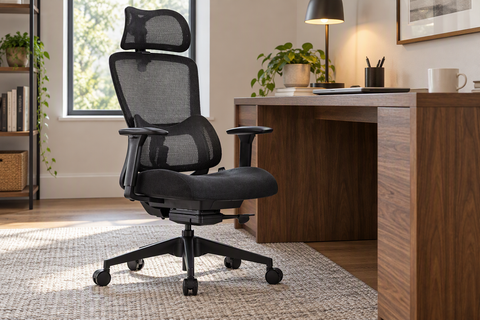
Chair Fit: Simple Heuristics You Can Use
When adjusting or choosing a chair, use this quick checklist:
- Seat height: Can your child place their feet flat on the floor? If not, plan for a footrest or a solid box.
- Seat depth: With your child sitting all the way back, there should be a 2–3 finger gap between the front edge of the seat and the back of their knees.
- Back support: The backrest should support the natural curve of the lower back, preventing slumping.
These principles align with guidelines such as BIFMA G1-2013, which defines furniture dimensions intended to fit a broad range of users. For kids, adjustability and accessories (like cushions and footrests) help “shrink” adult-sized furniture into their range.
Desk Height: The Elbow Rule
Use the elbow measurements you gathered earlier. A good rule is:
- Desk surface within ±1 inch of seated elbow height.
- For sit-stand desks, the lowest height should match your child’s standing elbow height. Many adult sit-stand desks do not go low enough for younger children, so always check specifications.
Screen Placement to Reduce Neck and Eye Strain
According to the OSHA monitor placement guide:
- The top line of text should be at or slightly below eye level.
- The screen should usually sit at an arm’s length distance.
For kids with smaller arms, this often translates into a shorter distance, but the main idea stays: the neck should feel relaxed, not tilted sharply up or down.
3. Choosing the Right Desk for a Surprise Gaming Setup
For a Christmas gaming setup makeover, the desk is the anchor. Parents usually balance three priorities:
- Ergonomics: Proper height, legroom, and space for monitor and keyboard.
- Safety: Stability, rounded edges, and good cable management.
- Excitement: RGB lighting, glass surfaces, and a “futuristic” look that makes the gift feel special.
Comparing Desk Options for Kids and Teens
Use this table as a starting point when deciding what kind of desk fits your child and room.
| Desk Type | Best For | Key Ergonomic Advantages | Watch Outs for Parents |
|---|---|---|---|
| Compact gaming desk (≈43") | Smaller rooms, younger kids, single monitor setups | Easier to fit in bedrooms; child can reach everything without stretching | Ensure height fits measured elbow height; avoid overcrowding with large monitors |
| Larger fixed-height gaming desk (≈60–61") | Older kids/teens, dual-monitor setups, shared spaces | More surface area for schoolwork + gaming; room for speakers and accessories | Check that depth allows screen distance; fixed height may not suit shorter users |
| Sit-stand gaming desk | Active teens, kids who spend long periods gaming or studying | Encourages posture changes; can align with WHO guidance to interrupt sedentary time | Verify lowest height is compatible with your child; standing is not a replacement for exercise |
When a Compact Glass Gaming Desk Makes Sense
If your child’s room is small or you want to test a first “real” gaming setup, a compact RGB gaming desk with a 43-inch tempered glass surface can be a smart choice. A desk such as the GTG - I43, LED Glass Desktop Gaming Desk (43"x23") offers:
- A durable, scratch- and water-resistant glass desktop that handles spills and snack accidents.
- Full-surface RGB lighting with multiple effects, which kids usually find more exciting than a larger but plain desk.
- Built-in organization like a cup holder, dual headphone hooks, and a power strip holder, which keeps essentials within reach and reduces clutter.
For a younger child using a single monitor or a gaming laptop, this size often strikes a good balance between immersion and control—they can reach everything without leaning forward.

When to Consider a Sit-Stand Glass Gaming Desk
For older kids or teens who spend long hours at the screen, a height-adjustable glass gaming desk like the GTG-G55, Glass Desktop Gaming Standing Desk (55"x23") adds two key benefits:
- Movement built into the furniture: Instead of relying only on reminders, the desk itself becomes an “engineering control” to reduce static sitting, echoing the hierarchy of controls described in OSHA’s ergonomics solutions guidance.
- Growth planning: A wider height range lets the desk adapt as your child grows, potentially covering several school years.
In practice, parents often see that simply raising the desk a few inches for short standing sessions can relieve lower back and leg stiffness after long homework or gaming sessions.
Stable Z-Shaped Gaming Desks for Larger Setups
If your child already has a full PC tower, larger monitor, or multiple devices, a sturdy fixed-height desk with Z-shaped legs provides strong lateral stability. A model like the Gaming Desk with Z Shaped Legs (61"x25") offers:
- A generous 61" width for dual monitors, console plus PC, or shared sibling use.
- A stable frame with leveling feet to keep the surface steady during active use.
- RGB lighting to deliver the “wow” factor without sacrificing rigidity.
For teens, this style works well when you already know their sitting height fits a standard desk and you prioritize surface area and stability.
4. Cable Management, Power Safety, and Accessories Parents Should Care About
A visually impressive gaming setup is only a good gift if it is safe and manageable in a child’s room. Two issues frequently worry parents: cables and power.
Why Cable Management Matters for Kids
Untamed cables are not just messy; they can be:
- Tripping hazards.
- Temptations for younger siblings or pets who pull or chew.
- Easy ways for kids to accidentally unplug or strain ports.
Ergonomically, a cluttered floor also forces awkward reaching and twisting to access power buttons or USB ports.
Using a Dedicated CPU Cart for Safety and Flexibility
A desktop tower often ends up on the floor, where it is exposed to dust, kicks, and spills. A dedicated cart such as the Height-Adjustable Illuminated Panel CPU Cart addresses several practical concerns:
- Adjustable height: Keeps the tower off the floor and closer to desk height so cables can be routed safely and neatly.
- Ventilation: Designed panels allow airflow around the case, which is important when gaming loads generate heat.
- Mobility: Smooth casters make it easier to pull the PC out for cleaning or upgrades without dragging it across the floor.
- Visibility: An illuminated panel makes the tower part of the “show” while also helping kids see ports when plugging in headphones or controllers.
Placed next to a gaming desk with an under-desk power strip holder, this setup significantly cuts down on cable clusters and reduces the need for your child to reach into dark corners.
Parent Checklist: Safe Cable and Power Setup
Use this checklist when you build the surprise gaming station:
- Mount the power strip under the desk or on the wall, out of direct foot traffic.
- Route cables through cable trays or along the back of the desk; secure them with clips or ties.
- Avoid tight bends near plugs and ports to prevent damage.
- Keep power bricks off the floor to reduce heat build-up and accidental kicks.
- If younger children are in the home, keep unused outlets covered and cables out of reach where possible.
These steps echo general safety considerations seen in regulations like UL 962 for height-adjustable desks, which focus on safe electrical design and mechanical stability.
5. Sit-Stand Guidance for Children and Teens
Many parents assume that simply giving a sit-stand desk will solve posture and health concerns. The reality is more nuanced.
Myth to Avoid: “Standing All Day Is Healthier Than Sitting”
Research on adults shows clear risks in both prolonged sitting and prolonged standing. For example, OSHwiki’s article on musculoskeletal disorders and prolonged static sitting highlights increased musculoskeletal strain when people stay in one posture for long periods. A companion piece on prolonged static standing warns that standing too long can burden the legs and lower back.
The takeaway for kids: movement and variation, not “always standing,” is what supports long-term comfort.
Practical Sit-Stand Rhythm for Kids
Based on real-world experience with young users and the movement-friendly recommendations from sources like the WHO guidelines on physical activity and sedentary behaviour, a practical pattern for children and teens is:
- 20–30 minutes sitting, focusing on homework or relaxed gaming.
- Followed by 5–10 minutes of standing, light stretching, or walking around the room.
You can turn this into a game:
- Use a timer or desk reminder to trigger position changes.
- Let your child choose RGB colors for “study mode” vs. “break mode.”
As your child adapts, they might comfortably stand for longer stretches, but the key is regular posture changes, not chasing a specific ratio.
Who Should Be More Cautious
Children with existing musculoskeletal issues, balance difficulties, or chronic pain may require a more tailored plan. In these cases, consult a pediatrician, physiotherapist, or ergonomist before introducing long standing periods or significant workstation changes.
6. Step-by-Step: Setting Up the Surprise Gaming Station
Once you have chosen the desk and accessories, the fun part begins: turning everything into a Christmas-morning reveal.
Step 1: Plan the Layout
Sketch a simple top-down layout or use painter’s tape on the floor to plan where each component will go:
- Desk position relative to windows (avoid direct glare on the screen).
- Location of power outlets and Wi-Fi access.
- Space for chair movement and safe walking paths.
Following general advice on workstation environment from OSHA’s guidance, aim for:
- Soft, indirect light to avoid screen glare.
- Sufficient space behind the chair so your child can stand and sit without bumping into furniture.
Step 2: Assemble the Desk and Electronics Safely
Installers consistently recommend this sequence:
- Assemble the desk frame and surface in the final room whenever possible to avoid moving a fully built desk through tight doors.
- If your desk is height adjustable, unbox and check all electronic components (motors, control boxes, RGB panels) before final placement.
- Connect the control panel and test up/down movement and any anti-collision features before loading heavy equipment.
- Route the power cable from the desk to the wall with enough slack for full height travel without tension.
This reduces the risk of pinched cables and makes troubleshooting easier if something needs adjustment.
Step 3: Position the Monitor, Keyboard, and Mouse
Use the ergonomic principles referenced earlier:
- Chair and feet first: Adjust the chair so your child’s feet are supported and knees are near 90°. Add a footrest or firm box if needed.
- Set desk height to match your child’s seated elbow height.
- Position the keyboard and mouse so wrists are straight and elbows stay close to the body. The OSHA guidance on keyboards emphasizes avoiding bent wrists and excessive reach.
- Set monitor height and distance: Align the top of the screen at or slightly below eye level and adjust distance so your child can see comfortably without leaning forward.
If your child uses a laptop, plan for a separate keyboard and mouse with the laptop on a stand, so the screen height and typing posture can both be optimized.
Step 4: Cable Management and Final Safety Check
After all devices are connected:
- Bundle cables and secure them to the underside or back of the desk.
- Ensure there are no loops on the floor that feet or chair casters can catch.
- Test sit-stand movement with all cables connected to confirm nothing pulls tight at maximum height.
A quick “shake test” of the desk and monitor mounts helps confirm stability before your child leans on the surface in excitement.
Step 5: Add the Christmas “Wow” Factor
Now it is time to make the setup feel like a gift, not just a workstation:
- Coordinate RGB colors with holiday themes (greens and reds, icy blues, or warm golds).
- Add a small, non-obstructive decoration like a mini tree or string lights away from vents and fans.
- Preload a favorite game, wallpaper, or Christmas playlist as a surprise on the screen.
For more visual inspiration, you can pair this guide with styling ideas from resources like the holiday gaming desk setup and RGB lighting articles already available on the brand’s blog.
7. Growth Planning: Making the Gift Last 3–5 Years
A gaming setup can be a long-term investment when you plan for growth.
Height and Range Considerations
Look for:
- Wide height adjustment on desks, so they can accommodate growth spurts.
- High weight capacity on the frame in case your child later adds larger monitors or speakers.
- Durable materials like tempered glass or sealed laminates that resist scratches and water damage.
Installers report that when parents choose desks with strong frames and resilient surfaces, the same setup often remains usable for three to five years with only minor accessory changes.
Modular Upgrades Over Time
Instead of trying to buy everything at once, think about a roadmap:
- Year 1: Desk, basic chair, monitor, and safe cable management.
- Year 2: Add a CPU cart, better headphones, or a monitor arm.
- Year 3: Upgrade to a larger monitor, additional lighting presets, or new input devices.
This approach allows you to adjust the setup as your child’s habits and body change.
8. Frequently Asked Questions
How do I know if my child’s desk is the right height?
Check their elbows while they type: shoulders relaxed, elbows about 90°, and forearms parallel to the floor. The desk should be roughly at that level. If shoulders are raised or they lean forward, the height or chair position needs adjustment.
Is a sit-stand desk necessary for a healthy gaming setup?
Not strictly, but it is a useful tool. Evidence summarized by the Cochrane review on workplace sitting shows that sit-stand desks can reduce daily sitting time by around 84–116 minutes in adults, especially when combined with behavior reminders. For kids, the main advantage is encouraging posture change, but it should sit alongside regular physical activity.
Are RGB lights bad for eye health?
RGB lighting itself is not the main concern; overall brightness and contrast are more important. Keep the room softly lit, avoid extremely bright lights directly in your child’s line of sight, and ensure the monitor is not far brighter than the surrounding environment.
My child is very small—can they still use an adult-sized gaming desk?
Yes, with adjustments. You might need a seat cushion to raise them and a stable footrest to support their feet. The desk height must still align with their elbow height. If the desk cannot be adjusted low enough, consider a more compact or height-adaptable model.
How do I keep the surprise while still getting the measurements I need?
You can turn it into a “science experiment” or “homework comfort check,” asking your child to sit and stand while you measure “for better posture.” You do not have to mention the Christmas gift, and you still gather accurate elbow and seated height data.
Key Takeaways for Parents
- Start with fit and safety, not just aesthetics. Measure your child’s seated and standing elbow height to guide desk choices.
- Aim for a neutral posture: feet supported, joints near 90°, and the monitor at or slightly below eye level.
- Use engineered solutions like sit-stand desks and CPU carts to reduce clutter and make posture change easier.
- Treat movement as essential: encourage regular breaks and position changes rather than “standing all day.”
- Plan the setup as a 3–5 year investment, using high-quality materials and a modular upgrade path.
A Christmas gaming setup can be both an unforgettable surprise and a foundation for healthier digital habits when ergonomics and safety are built into every decision.
Disclaimer: This article is for informational purposes only and does not constitute medical or safety advice. Children with existing health conditions or specific needs should be assessed by a qualified healthcare or ergonomics professional before significant changes are made to their workstation or activity patterns.
Sources
- OSHA eTools: Computer Workstations
- OSHA Ergonomics: Identify Problems
- World Health Organization – Guidelines on Physical Activity and Sedentary Behaviour
- OSHwiki – Musculoskeletal disorders and prolonged static sitting
- OSHwiki – Musculoskeletal disorders and prolonged static standing
- Cochrane Review – Workplace interventions for reducing sitting at work (2018)
- BIFMA G1-2013 Ergonomics Guideline for Furniture
- UL 962 – Safety of Height-Adjustable Desks




Leave a comment