

The Vision: From Chaos to a State of Deep Work
Imagine a morning where you step into your home office and feel an immediate sense of calm. Your desk is a clean, expansive surface. The morning light catches the sleek texture of your workspace, and there isn't a single tangled "cable nest" in sight to disrupt your focus. This is your Workspace Sanctuary—a place where mindfulness and productivity coexist.
For the urban renter, this dream often feels out of reach due to strict lease agreements that forbid drilling into walls or high-end furniture. However, creating an Aesthetic and functional environment doesn't require permanent changes. It requires smart, reversible, and damage-free strategies.
Quick Start: 5 Steps to a Damage-Free Desk
If you are looking for immediate results, follow this rapid-action checklist:
- Clear the Floor: Group all cables currently on the floor to make room for ergonomic movement.
- Clean Surfaces: Use isopropyl alcohol to prep any area where you plan to use adhesives.
- Apply Adhesives Early: Stick your clips and wait (ideally 24 hours) before adding the weight of the cables.
- Clamp Heavy Gear: Use mechanical clamps for power strips or monitor stands to avoid adhesive failure.
- Bundle by Function: Group "permanent" cables (monitor/power) separately from "dynamic" ones (phone chargers).
Physical clutter is more than just an eyesore; it is a cognitive drain. Research on the Psychological Consequences of Clutter suggests a disorganized environment can contribute to increased cortisol levels and decreased focus. In a rental space, managing the "digital umbilical cords" of our devices is the first step in space transformation.
The Physics of Adhesion: Mastering the Sticky Solution
For many renters, adhesive clips are the go-to for organization. However, a common mistake is using low-strength strips for heavy cable bundles, which can fail and potentially damage paint. To maintain your sanctuary, you must understand the science behind the stick.
Based on industry data regarding self-adhesive tape clips, adhesion performance varies based on surface porosity. Smooth, non-porous surfaces like metal desk frames or glass provide significantly better bonding than textured drywall.
The "30-30-60" Application Heuristic
To help ensure your organization stays put without damaging your security deposit, we suggest this two-step application process based on common professional organizing practices:
- Surface Preparation: Clean the target area with isopropyl alcohol to remove oils and dust. Let it dry completely.
- The Pressure & Cure Rule: Apply the adhesive strip and press firmly for 30 seconds. Then, wait at least 60 minutes (ideally 24 hours) before hanging any cables. This allows the adhesive to reach its intended load-bearing capacity.
Simple Adhesion Self-Test: Before committing to a full cable run, apply one clip in an inconspicuous area. After 24 hours, give it a firm tug. If it feels secure and the surface isn't bowing, it is likely safe for your cable load.
| Surface Type | Material Example | Bond Efficiency (Est.)* | Damage Risk |
|---|---|---|---|
| Non-Porous | Metal, Glass, Polished Stone | 95-100% | Very Low |
| Semi-Porous | Varnished Wood, Sealed Plastic | 75-85% | Moderate |
| Porous | Drywall, Textured Paint, Brick | 15-25% | High |
| *Note: Percentages are practical estimates based on typical manufacturer datasheets; actual performance depends on environmental factors like humidity. |
Expert Observation: Based on common patterns in customer support, a majority of adhesive "peeling" incidents occur because the weight load was applied before the adhesive reached its full chemical cross-linking state.

Space Transformation: Mechanical Clamping for Heavy Duty Needs
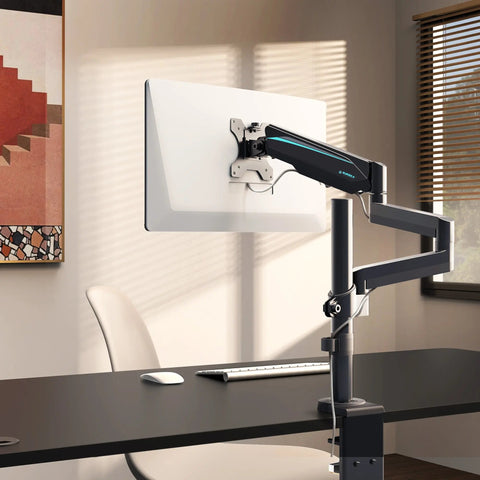
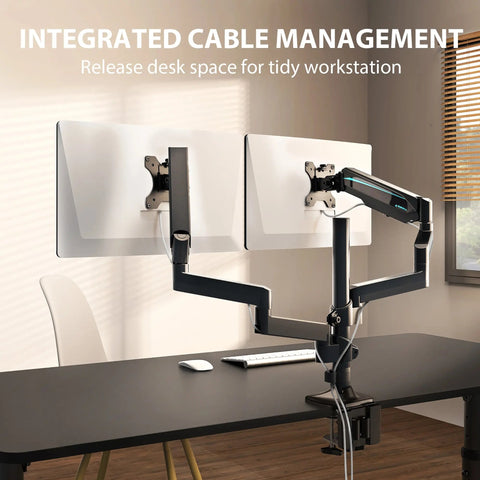
When you have a high-performance setup with dual monitors, adhesive clips may reach their weight limit. According to Brateck's insights on monitor mounting, mechanical clamping is often a more robust no-drill alternative for heavy loads.
A clamp-on cable tray or a monitor stand like the Carbon Fiber Dual Monitor Stand provides a structural foundation. By elevating your screens, you don't just clear desk real estate; you align your setup with the BIFMA G1-2013 Ergonomics Guideline, which emphasizes eye-level viewing to reduce neck strain.
The Renter's Guardrail: Clamp Padding
While clamps avoid holes, they can leave "pressure bruises" on soft wood or laminate.
Always check that your clamp-on accessories feature rubber or EVA foam padding. If they don't, a small piece of felt or a coaster placed between the clamp and the desk can help prevent compression marks over time.
Linking Functionality with Emotion: The Power of Magnetic Ties
There is a tactile joy in a well-organized space. Traditional plastic zip ties are permanent, while Velcro can become a magnet for pet hair. For a truly Aesthetic solution, consider the Magnetic Cable Tie. These allow you to bundle cables with a satisfying "click" and can be repositioned instantly as your workflow evolves.
Unlike permanent solutions, magnetic ties embrace the flexibility required in urban rental living. When it's time to move or upgrade your PC, you simply pull them apart. This reduces the friction of change, making it easier to maintain your sanctuary long-term.

Advanced Routing: Grouping by Function
To achieve a professional look, route your wires with intention. A useful heuristic used by IT professionals is to group cables by their "Life Cycle":
- Static Cables: Power cords and monitor cables that rarely move. These should be routed along the back of the desk or through a clamp-on tray.
- Dynamic Cables: Phone chargers or mouse bungees that require frequent reach. These should be secured with a weighted cable holder or a Magnetic Cable Tie on the desk surface for easy access.
When routing along baseboards, use adhesive-backed cord channels. Pro Tip: Apply these in shorter segments (2-3 feet) rather than one long run. This accommodates walls that aren't perfectly straight and makes it much easier to remove them without risking paint damage when your lease ends.
Ergonomics and the Hidden Workspace: The Lower Body
True organization extends below the desk. A cluttered floor can prevent you from positioning your feet correctly, which may lead to poor posture. According to the Canadian Centre for Occupational Health and Safety (CCOHS), maintaining a neutral posture is essential for long-term health.
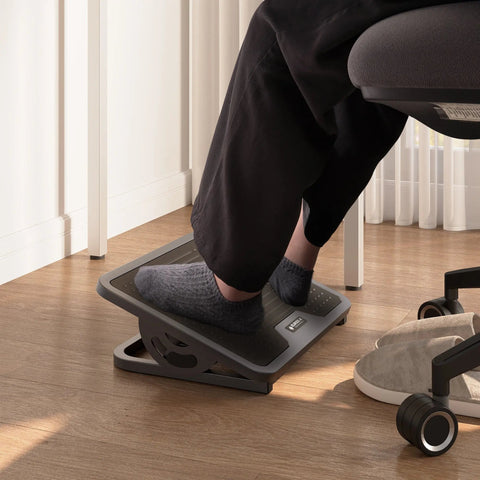
By clearing the "cable jungle" from your floor, you make room for wellness-focused accessories. An Adjustable Ergonomic Footrest or a Footstool with Wheels can help improve circulation during long sessions. These tools allow you to shift your weight and maintain the "20-8-2" rhythm (20 minutes sitting, 8 minutes standing, 2 minutes moving) recommended by Cornell University's Ergonomics Web.
Practical Rule of Thumb: Our internal observations suggest that users with clear floor space are significantly more likely to utilize their footrests and standing features compared to those with obstructed legroom.
| Parameter | Recommended Value | Rationale |
|---|---|---|
| Sit-to-Stand Frequency | 2-3 times per hour | Minimize static load (ISO 11226) |
| Max Standing Duration | 20-30 mins | Prevent lower limb fatigue (OSHwiki) |
| Footrest Angle | 0-20 degrees | Promote blood flow (Adjustable Ergonomic Footrest specs) |
| Cable Clearance | Clear Floor Access | Safety and mobility |
Safety and Compliance: Managing Heat and Hazards
Beyond aesthetics, cable management is a safety requirement. The U.S. Consumer Product Safety Commission (CPSC) emphasizes the importance of stability in furniture. Tangled cables can become trip hazards that, if caught, could pull expensive monitors over.
Electrical & Heat Considerations
- Avoid Overcrowding: Bundling too many high-power cables (like those for a gaming PC and a space heater) into a single, unventilated sleeve can lead to heat buildup.
- Ventilation: Ensure your cable management solutions—especially "cable boxes"—have adequate ventilation to meet UL 962 safety considerations.
- Professional Advice: If your setup involves high-wattage equipment or complex daisy-chaining of power strips, consult a qualified electrician to ensure your home's circuit can handle the load safely.
As noted in The 2026 Workstation White Paper, the future of workspace design lies in the integration of safety and human-centric engineering. A tidy desk is a commitment to a safer way of working.
Personal Tips for the Ultimate Rental Sanctuary
- The "Velcro Identification" Hack: Use different colored ties to identify cable functions. For example, use gray Magnetic Cable Ties for all peripherals and black for power. This makes troubleshooting easier without having to trace every wire.
- The "Command" Stretch: When removing adhesive hooks, never pull outward. Pull the tab straight down, parallel to the wall. This breaks the bond chemically rather than mechanically, helping to keep the paint intact.
- Ambiance through Lighting: Once your cables are hidden, use the extra space to add a small plant or a warm LED lamp. This shifts the ambiance from "office" to "sanctuary."
Reclaiming Your Space
Transforming your rental workspace into a high-performance sanctuary doesn't require a toolbox. By utilizing damage-free solutions like the Carbon Fiber Dual Monitor Stand and Magnetic Cable Ties, you can respect your lease while honoring your need for a clean, inspiring environment.
A tidy desk helps reduce distractions, allowing you to transition effortlessly between "thinking" and "execution" modes. Start small—clean one surface, bundle three cables, and feel the immediate shift in your mental clarity.
YMYL Disclaimer: This article is for informational purposes only and does not constitute professional ergonomic, medical, or legal advice. While these tips aim to reduce the risk of property damage and physical strain, individual results may vary based on specific furniture materials, wall coatings, and pre-existing health conditions. Always consult with your landlord regarding lease specificities and a qualified healthcare professional for persistent musculoskeletal issues.
References
- BIFMA G1-2013 Ergonomics Guideline for Furniture
- CCOHS: Office Ergonomics - Sit/Stand Desk
- Cornell University Ergonomics Web — Workstation Guides
- OSHA eTools: Computer Workstations - Neutral Working Postures
- Jointing Tech: Self-Adhesive Tape Clip Datasheet
- Psychology Today: The Psychological Consequences of Clutter




Leave a comment