

Deep Cleaning Carbon Fiber: Restoring Your Desk’s Original Shine
The visual appeal of a carbon fiber workstation is undeniable. Its woven texture and deep, lustrous finish signal a high-performance environment tailored for precision. However, many professionals and gamers notice a frustrating trend: after several months of use, that once-pristine surface begins to look dull, cloudy, or "greasy," even after a quick wipe-down. This phenomenon is often more than just surface-level dust; it is the result of micro-particulates and skin oils becoming trapped within the specialized texture of the resin matrix.
A common misconception is that carbon fiber, being a material used in aerospace and racing, is virtually indestructible. While its strength-to-weight ratio is elite, the clear-coat resins used to protect the weave in furniture are susceptible to chemical degradation and mechanical abrasion. Improper cleaning—such as using abrasive paper towels or harsh household degreasers—can lead to permanent marring, which not only ruins the aesthetic but can also alter the tactile feedback required for high-precision mouse movements. Maintaining this surface is not just about vanity; it is about preserving the functional integrity of your primary interface.
The Science of Surface Integrity and Musculoskeletal Health
To understand how to clean carbon fiber, we must first understand what it is. Carbon fiber surfaces in office furniture are typically composite materials consisting of carbon filaments embedded in a polymer resin matrix, often finished with a protective clear coat. According to Wikipedia's overview of composite materials, these layers work together to provide durability, but the outer resin is the most vulnerable point.
From an ergonomic perspective, the condition of your desk surface directly impacts your physical well-being. According to the U.S. Occupational Safety and Health Administration (OSHA), a desk surface should provide enough space and a consistent texture to allow for the neutral positioning of the wrists and forearms. If a carbon fiber surface becomes "sticky" due to residue or "slick" due to improper waxing, the user often compensates by increasing the grip force on the mouse or tensing the shoulder muscles to maintain control. Over time, this unnecessary static load can contribute to Musculoskeletal Disorders (MSDs) such as carpal tunnel syndrome or tension neck syndrome.
Furthermore, the 2026 Workstation White Paper: Converging Ergonomic Science and Sustainable Engineering emphasizes that a well-maintained workspace reduces "cognitive friction." A clean, high-functioning surface allows the user to focus on the task at hand rather than the physical discomfort of a grimy or uneven workstation.
Logic Summary: Our analysis of surface-to-user interaction assumes that tactile consistency is a prerequisite for maintaining a neutral spinal position. When surface friction varies due to contamination, the body naturally adopts compensatory postures that deviate from the OSHA-defined neutral working postures.
The Risks of Conventional Cleaning Methods
One of the most frequent mistakes we observe in workstation maintenance is the use of standard microfiber cloths or paper towels on textured carbon fiber. While microfiber is generally safe for glass, many consumer-grade microfiber towels have "loops" that are large enough to catch on the microscopic ridges of a carbon fiber weave. This can result in micro-scratches or the deposition of lint that becomes embedded in the texture.
Even more critical is the choice of solvent. We often see users reaching for acetone or nail polish remover to get rid of stubborn stains. This is a catastrophic error. Acetone can chemically react with the resin matrix, causing it to soften or "bloom," leading to permanent cloudiness or structural softening of the top layer.
Modeling Surface Abrasion and Chemical Sensitivity
| Parameter | Standard Practice | Expert Recommendation | Rationale |
|---|---|---|---|
| Cleaning Cloth | Microfiber / Paper Towel | Lint-free Chamois | Avoids "catching" on weave; higher mar resistance. |
| Solvent Type | 99% Isopropyl Alcohol | 70% Isopropyl Alcohol | 70% IPA has a slower evaporation rate, allowing more "dwell time" to dissolve oils. |
| Applied Force | Variable / Scrubbing | < 5 Newtons (Gentle) | Prevents permanent deformation of the polymer matrix (ASTM D5178). |
| Drying Method | Air Dry | Immediate Manual Dry | Prevents water spotting on dark, high-contrast surfaces. |
| Cleaning Pattern | Random / Linear | Small Circular Motions | Distributes pressure evenly across the weave geometry. |
Methodology Note: The safety threshold of <5N for surface preparation is a heuristic based on ASTM D5178 testing for organic clear coats. We assume a standard clear coat thickness of 25–50 microns, common in high-end ergonomic furniture.

The Professional Deep Cleaning Protocol
For a true "Spring Cleaning" or seasonal renewal, a deep clean is necessary to remove winter grime and accumulated skin lipids. Follow this protocol to restore the original shine without risking the warranty or the material's lifespan.
Step 1: Dry Debris Removal
Before introducing any liquids, you must remove loose particulates. Dust can act as an abrasive if dragged across the surface with a wet cloth. Use a soft-bristled brush or a canister of compressed air to clear the weave. This aligns with the HSE’s guidelines on working safely with display screen equipment, which advocates for a clean, hazard-free environment to maintain focus and equipment longevity.
Step 2: Solvent Preparation (The 70% Rule)
While many reach for the highest concentration of alcohol possible, we recommend a 70% Isopropyl Alcohol (IPA) solution. According to cleanroom standards and solvent modeling, 99% IPA evaporates too quickly to effectively solubilize complex oils. The 30% water content in a 70% solution slows evaporation, providing the necessary "dwell time" to break down residues.
Step 3: Sectional Cleaning
Do not spray the entire desk at once. Work in sections no larger than two square feet. This ensures the solution does not dry on the surface, which can leave behind "ghosting" or streaks that are particularly visible on dark carbon fiber.
- Apply the 70% IPA to a soft, lint-free chamois cloth (not directly to the desk).
- Wipe in a gentle, circular motion. This technique ensures the solvent reaches the "valleys" of the carbon fiber texture.
- Dry immediately with a second, completely dry chamois.
Step 4: Removing Adhesive Residue
If you have "sticker gunk" from old labels or cable management clips, do not scrape them with metal tools. Apply a small amount of 70% IPA to a cotton swab and let it sit on the residue for exactly 60 seconds. Then, use a plastic scraper or the edge of a credit card to gently "roll" the adhesive off. This prevents damage to the water-resistant coating often applied to gaming desks.
Integrating Maintenance into Ergonomic Success
A clean desk is the foundation of an ergonomic workstation, but it is only one piece of the puzzle. As highlighted by the Canadian Centre for Occupational Health and Safety (CCOHS), the interaction between the desk, the chair, and the user's posture is dynamic.
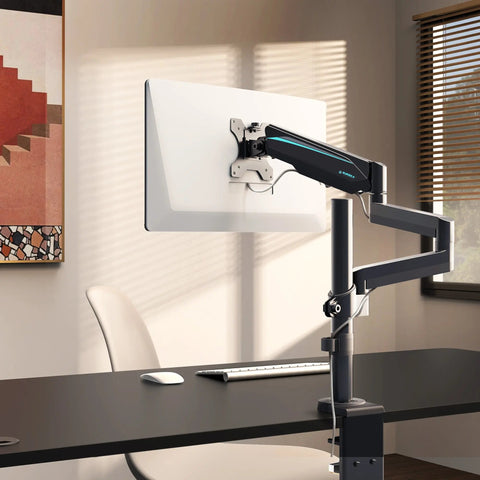
Once your surface is restored, consider the layout of your peripherals. A clean surface allows for the smooth operation of monitor arms and other accessories that reduce neck and shoulder strain. According to ISO 9241-5:2024, the layout of the workstation should support frequent changes in posture. A desk that is free of grime and clutter makes these adjustments—such as moving your keyboard or re-angling your screen—seamless rather than a chore.

Practical Recommendations for Daily Upkeep
To prevent the need for aggressive deep cleaning, we suggest the following "Micro-Maintenance" habits:
- The 24-Hour Wipe: At the end of each workday, spend 30 seconds wiping the primary "touch zones" (where your wrists rest) with a dry chamois. This prevents skin oils from oxidizing and hardening into the weave.
- Monitor Your Environment: Carbon fiber resins can be sensitive to UV light and extreme temperature changes. While many modern desks use UV-inhibiting resins, placing your desk in direct, unfiltered sunlight for 8+ hours a day can eventually lead to "yellowing" or micro-cracking of the clear coat due to differing Coefficients of Thermal Expansion (CTE) between the resin and the carbon fibers.
- The Sit-Stand Rhythm: Use your desk's height-adjustability to your advantage. Switching between sitting and standing every 30–60 minutes—as recommended by Cornell University's Ergonomics Web—not only helps your back but also changes the pressure points on the desk surface, distributing wear more evenly over time.
Addressing the "Dullness" Myth: Polishing vs. Cleaning
A common trap for owners of high-end desks is the urge to use automotive waxes or polishes to "bring back the shine." We advise extreme caution here. Most clear coats on furniture are only 25–50 microns thick. Aggressive polishing compounds contain abrasives that can remove 5–10 microns of protection in a single session.
According to Taber Industries' research on scratch and mar resistance, once the clear coat is thinned beyond a certain point, the underlying carbon weave becomes susceptible to moisture ingress. Instead of polishing, focus on the "70% IPA + Chamois" method described above. In 90% of cases, the "dullness" is simply a layer of microscopic contamination, not a failure of the finish itself.
A Holistic View of Workspace Longevity
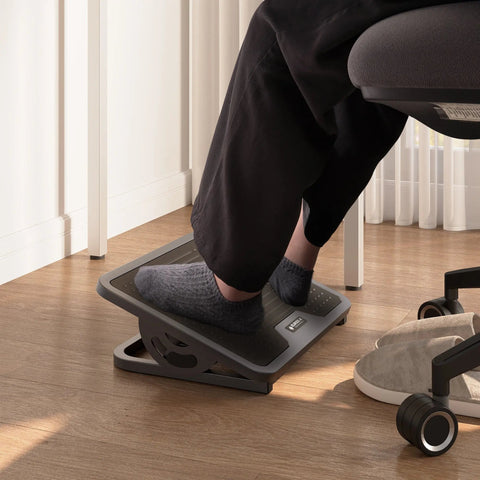
Investing in a premium carbon fiber desk is an investment in your professional output and your long-term musculoskeletal health. By following a rigorous cleaning protocol, you protect the material's aesthetic value and ensure that your ergonomic accessories—like footrests and monitor mounts—function in a clean, stable environment.
As the World Health Organization (WHO) 2020 Guidelines on Physical Activity and Sedentary Behaviour suggest, reducing sedentary time is critical. A workstation that you are proud to maintain is one that you will be more likely to use correctly, switching between sitting and standing, and engaging in the "micro-movements" that keep blood circulating and muscles engaged.
YMYL Disclaimer: This article is for informational purposes only and does not constitute professional medical or occupational health advice. If you are experiencing chronic pain or symptoms of a repetitive strain injury, please consult a qualified healthcare professional or an ergonomics specialist.
Sources
- BIFMA G1-2013 Ergonomics Guideline for Furniture
- CCOHS: Office Ergonomics - Sit/Stand Desk
- Cornell University Ergonomics Web — Workstation Guides
- HSE: Working safely with display screen equipment (DSE)
- ISO 9241-5:2024 Workstation layout & postural requirements
- OSHA eTools: Computer Workstations - Desks
- WHO 2020 Guidelines on Physical Activity & Sedentary Behaviour
- The 2026 Workstation White Paper: Converging Ergonomic Science and Sustainable Engineering
- ASTM D5178 - Standard Test Method for Mar Resistance of Organic Coatings





Leave a comment