

Choosing the Right Desk Size: The Quick Answer
For most small home offices, a 40–50 inch (102–127 cm) wide desk is the sweet spot for a single monitor or laptop setup. If you use dual monitors, aim for at least 55 inches (140 cm) or use a monitor arm to save space. Regardless of width, ensure a minimum depth of 24 inches (60 cm) to maintain a healthy viewing distance and ergonomic posture.
Why Desk Size is More Than Just a Number
Choosing a desk for a small home office often feels like a compromise. You need a surface large enough to be productive, but you don't want a piece of furniture that swallows the entire room. The right desk size is the foundation of a comfortable and efficient workspace. It dictates your posture, defines your workflow, and can either make a small room feel functional and airy or cramped and chaotic.
Based on our experience helping customers optimize tight floor plans, the most common mistake isn't picking a desk that's too small—it's picking one that doesn't account for the "human" space around it.
Measure Twice, Buy Once
Before you even browse for a desk, your most important tools are a tape measure and a plan. A common mistake is only measuring the wall you plan to put the desk against, which ignores the functional space the room needs to remain livable.
Map Your Available Space
Start by measuring the total length and width of the area you've designated for your office. Note the locations of power outlets, windows, and radiators. Use painter's tape on the floor to outline the potential footprint of a desk. This simple step helps you visualize how much floor space it will occupy and how it will interact with the room's layout.
Don’t Forget Clearance (The "90cm Rule")
Your desk doesn't exist in a vacuum. You need space to move around it.
- Chair Clearance: As a practical rule of thumb, leave at least 3 feet (approx. 90 cm) of clearance behind the desk. This is based on the average footprint of an office chair and the space required for an adult to push back and stand up comfortably.
- Traffic Flow: If the desk is in a walkway, you need that same 3-foot clearance to prevent a traffic jam.
- Obstacle Check: Pay attention to door swings and drawers—both yours and those of adjacent furniture. There’s nothing more frustrating than a new desk that prevents you from opening a closet door.
Match the Desk to Your Workflow
A desk is a tool. Its size must match the tasks you perform. A setup for writing with a single laptop is vastly different from a multi-monitor arrangement for coding or design.
Quick Reference: Desk Size Selection Matrix
Note: These dimensions are heuristics based on standard monitor sizes (24"–27") and average adult reach.
| Setup Type | Recommended Width | Recommended Depth | Why? |
|---|---|---|---|
| Laptop Only | 32" – 40" | 20" – 24" | Minimal footprint; focus on portability. |
| Single Monitor | 40" – 50" | 24" – 30" | Space for monitor + speakers/notebook. |
| Dual Monitors | 55" + | 24" – 30" | Prevents screen overlap and neck strain. |
| Creative/Drafting | 60" + | 30" + | Space for tablets, reference kits, or large prints. |
Single vs. Dual Monitors
Your monitor setup is the biggest factor in determining your required desk width.
- Single Monitor: A desk between 40 and 50 inches wide is generally sufficient. It provides enough room for the monitor and leaves space on either side for speakers, a notebook, or a drink.
- Dual Monitors: For two monitors (up to 27 inches each), you should look for a desk that is at least 55 inches wide. This prevents the setup from feeling cramped and gives you functional surface area. In our support interactions, we often see users trying to squeeze two monitors onto a 40-inch desk; this usually forces them to sit too close and angle their necks unnaturally, leading to fatigue.
The Importance of Depth
Desk depth is critical for ergonomic health. According to the U.S. Occupational Safety and Health Administration (OSHA), your monitor should be at least 20 inches (an arm's length) away from your eyes to prevent strain.
- 24-inch Depth: This is the practical minimum for most users. It accounts for the depth of the monitor stand and a standard keyboard.
- 30-inch Depth: If you use large monitors (32"+) or prefer a deep keyboard wrist rest, 30 inches is better. This ensures the screen remains at a comfortable viewing distance without pushing the keyboard off the edge.
Space-Saving Designs for Compact Rooms
Disclosure: The following examples include products from our brand. We recommend these based on their specific utility for small spaces, but similar configurations can be found across the industry.
In a small room, the type of desk you choose can make a significant impact. While a massive executive desk is likely out, many designs are specifically made for tight quarters.
A compact desk is often the most straightforward solution. For example, the GTG - I43, LED Glass Desktop Gaming Desk offers a 43-inch wide surface that’s perfect for a single-monitor setup. It integrates features like headphone and cup holders, which effectively "increases" the usable surface by moving peripherals off the main desktop.

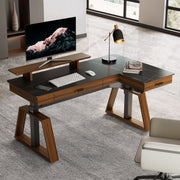
Corner or L-shaped desks can be surprisingly effective in small rooms, turning an awkward, unused corner into a productive hub. For the most minimal spaces, wall-mounted and foldable desks offer a workspace when you need it and disappear when you don’t.
Accessories That Create Space
If you can't get a larger desk, the next best thing is to free up the surface you already have. Reclaiming just 2-3 square feet of surface area can make a 40-inch desk feel like a 50-inch one.
Lift Your Monitors, Free Your Desk
A monitor arm is arguably the most impactful accessory for a small desk. By lifting your screens off the surface, you reclaim the footprint previously taken by bulky plastic stands. A high-quality Dual Monitor Arm allows you to position two screens perfectly, even on a narrower desk. This also helps with ergonomics; Cornell University's Ergonomics Web advises that the top of a monitor screen should be at or just below eye level—an adjustment easily made with an arm.

Think Vertically and Beyond the Desktop
To maintain a clear primary workspace, move non-essential items off the desk:
- Under-desk keyboard trays: These free up the top surface entirely for writing or other tasks.
- External Storage: Pairing your desk with separate, low-profile storage, like the Ark EL, 29" Display File Storage Cabinet, keeps essential documents accessible but out of the way. This strategy of "decentralized storage" prevents your desk from becoming a cluttered catch-all.
Key Takeaways
Finding the right desk for a small space isn’t about sacrificing function for size. It’s about making smart, informed choices based on your physical layout and equipment needs.
- Measure First: Account for a 3-foot (90 cm) chair clearance and door swings.
- Prioritize Depth: Ensure your desk is at least 24 inches deep for proper monitor distance.
- Match Width to Your Monitors: A 40-50 inch desk works for one monitor; aim for 55+ inches for two.
- Use Accessories: A monitor arm is the single best investment to reclaim surface area on a small desk.
- Store Off-Desk: Use vertical shelving or under-desk cabinets to keep the desktop clear.
Frequently Asked Questions (FAQ)
What is the absolute minimum depth for a work desk? While you can find desks as narrow as 20 inches, a depth of 24 inches is the recommended minimum for ergonomic comfort. This allows you to maintain a healthy viewing distance from your monitor (approx. 20-30 inches), as advised by OSHA.
Can I fit a dual monitor setup in a small room? Yes. The key is using a dual monitor arm. This allows you to mount two screens on a relatively compact desk (e.g., 48-55 inches) without sacrificing your entire work surface to monitor stands.
What is the first accessory I should buy to optimize a small desk? A monitor arm. It provides the most significant return in terms of usable space and ergonomic flexibility. It instantly clears the area where a monitor stand would sit and allows you to position your screen at the perfect height for your eye level, which is crucial for reducing neck strain.
This article is for informational purposes only and does not constitute professional ergonomic or medical advice. Always consult with a qualified professional for guidance on your specific needs.

Leave a comment