

The Compromise Is Over: Ergonomics Meets Home Aesthetics
The line between home and office has blurred. While this shift offers flexibility, it also presents a design challenge: how do you create a functional workspace that doesn't feel like a corporate cubicle transplanted into your living room? The biggest offender is often the office chair—typically a bulky, mechanical apparatus of black mesh and plastic that clashes with curated home decor.
For years, professionals faced a false choice: select a chair with the right ergonomic support for an eight-hour day or choose one that complements their home's aesthetic. Today, that compromise is no longer necessary. A new generation of ergonomic chairs delivers essential support while featuring refined silhouettes, premium materials, and thoughtful design that integrate seamlessly into personal spaces.
Why Traditional Office Chairs Disrupt Home Design
Traditional office chairs are purpose-built for function, often at the expense of form. Their design language speaks of utility, with exposed levers, oversized backrests, and industrial-grade casters. While perfect for a corporate environment, these features create visual friction in a home setting. A chair designed for a sea of cubicles can easily overwhelm a living room corner or a bedroom workspace, constantly reminding you of work long after the day is done.
The Science of All-Day Comfort
Choosing a chair based on looks alone is a significant risk to your well-being. Long hours of sitting in an unsupportive chair can contribute to Work-Related Musculoskeletal Disorders (MSDs), a broad category of conditions affecting muscles, nerves, and tendons. According to the Occupational Safety and Health Administration (OSHA), risk factors for these disorders include repetitive tasks and, most importantly, poor posture.
An ergonomic chair is engineered to promote a neutral posture, which involves maintaining the natural curve of your spine, keeping your feet flat on the floor, and aligning your joints to minimize stress. This alignment is crucial for reducing static load on your muscles and ensuring healthy blood circulation, allowing you to stay focused and comfortable. The goal of a well-designed chair is to make proper posture feel effortless.

Debunking the Myth: "A Stylish Chair Can't Be Ergonomic"
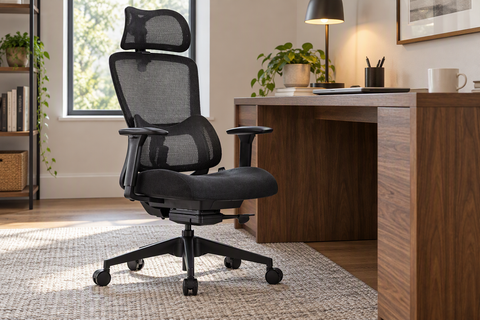
A common misconception is that any chair that looks good must be bad for your back. Many people associate ergonomic support with complex, mechanical-looking designs. In reality, modern engineering allows for powerful ergonomic features to be integrated into minimalist and elegant frames. Adjustability doesn't have to be visually loud. Leading designers now create chairs with streamlined controls and innovative support systems that are practically invisible, providing robust functionality without sacrificing a clean aesthetic. A chair like the Lira, Ergonomic Office Chair, for example, uses a sleek, curved frame and breathable mesh to offer a light, airy look while retaining critical adjustability.
Decoding Stylish Ergonomics: Key Features to Look For
When shopping for an office chair that fits your home, it’s essential to look beyond the surface. A truly great chair marries aesthetic appeal with a core set of adjustable features that adapt to your body. Understanding these features is the key to making an informed decision.
Beyond the Look: Essential Adjustments
Industry standards provide a framework for what makes a chair truly ergonomic. The BIFMA G1-2013 Ergonomics Guideline outlines dimensions that accommodate a wide range of users, from the 5th to the 95th percentile. Here are the non-negotiable adjustments to look for:
- Seat Height: The chair should allow you to sit with your feet flat on the floor and your knees at a 90-degree angle. This is the foundation of a neutral posture.
- Seat Depth: To avoid pressure on the back of your knees, which can impede blood circulation, you need a gap of about two to four inches between the edge of the seat and your knees. An adjustable seat depth slider is a premium feature that enables this precise fit.
- Lumbar Support: The chair’s backrest should have a curve that supports the natural inward curve (lordosis) of your lower back. The best chairs offer height-adjustable lumbar support to target this area correctly. Some innovative designs, like the Flex, Dual-Backrests Ergonomic Office Chair, feature a unique dual-backrest system that moves with you to provide targeted, dynamic support to both sides of your spine.
- Backrest Recline: A healthy sitting routine involves changing your posture throughout the day. A reclining backrest with multiple locking positions allows you to shift from an upright, focused position (around 100-110 degrees) to a more relaxed, contemplative one (110-135 degrees).
- Armrests: Adjustable armrests help reduce strain on your neck and shoulders. At a minimum, they should be height-adjustable. More advanced "3D" or "4D" armrests also adjust forward/backward, sideways, and pivot to support your arms during different tasks like typing or reading.
The Aesthetic Elements: Materials and Silhouettes
This is where form truly meets function. The materials and overall shape of the chair define its character and ability to blend into your home.
- Materials: Instead of standard black nylon or bonded leather, look for chairs upholstered in high-quality fabrics like bouclé, tweed, or soft-touch textiles in a range of colors. These materials add warmth and texture. The chair’s base and frame also matter—polished aluminum or light-colored finishes offer a more modern and less imposing alternative to the traditional black plastic base.
- Silhouettes: High-back, throne-like chairs have their place, but they tend to dominate a room. For most home offices, a mid-back or even a low-profile silhouette is a better choice. These designs are less visually obtrusive and can tuck neatly under a desk. They open up the space and feel more like a piece of furniture and less like a piece of equipment.
A Practical Guide: Choosing and Setting Up Your Chair
Selecting the right chair is only half the battle. Proper setup is what unlocks its ergonomic potential. Here’s how to ensure your chair is tailored to your body and workspace.
Measure Twice, Sit Once: Finding Your Fit
Before you even start shopping, take two simple measurements to determine your ideal seat dimensions. This proactive step ensures you choose a chair that can genuinely fit your body.
Personal Ergonomic Measurement Checklist
| Measurement | How to Take It | Ideal Range | Purpose |
|---|---|---|---|
| Popliteal Height | Sit with your feet flat on the floor. Measure from the floor to the crease behind your knee. | 16–21.5 inches (40–55 cm) | Determines the correct seat height range to keep feet flat and thighs parallel to the floor. |
| Hip-to-Knee Depth | Sit with your back against a wall. Measure from the wall to the back of your knee. | Subtract 2-4 inches | Determines the ideal seat depth, ensuring a gap to prevent pressure on nerves and blood vessels. |
Setting Up for Success: A Step-by-Step Checklist
Once your new chair arrives, follow this sequence to dial in the perfect fit. According to Cornell University's Ergonomics Web, a systematic approach to workstation setup is key. Always start with your body, then adjust the furniture around it.
- Set Your Seat Height: Adjust the chair so your feet are resting flat on the floor. Your thighs should be roughly parallel to the ground, and your knees should be at or slightly below the level of your hips.
- Confirm Your Seat Depth: Sit back fully so your lower back is touching the backrest. Check for the two-to-four-inch gap (about a fist’s width) between the front edge of the seat and the back of your knees.
- Position the Lumbar Support: Adjust the lumbar support’s height so it fits comfortably into the natural curve of your lower back. It should feel supportive but not push your spine forward.
- Adjust the Armrests: Set the armrest height so your elbows are bent at a roughly 90-degree angle when your shoulders are relaxed. Your forearms should be parallel to the floor when typing.
- Set the Recline: For focused work, lock the backrest at a slightly reclined angle of 100-110 degrees. This reduces pressure on your spinal discs more effectively than sitting perfectly upright.
Don't Forget the Feet: The Role of Footrests
If you are a shorter individual, you might find that to get your arms to the right height for your desk, you have to raise your chair so high that your feet dangle. This is a common ergonomic pitfall. The solution is not to compromise your arm posture but to support your feet. An Adjustable Ergonomic Footrest ensures your feet can remain flat and supported, maintaining the entire chain of neutral posture from the ground up.
Key Takeaways
Creating a comfortable and stylish home office is no longer a matter of compromise. By prioritizing both ergonomics and aesthetics, you can find a chair that supports your well-being and enhances your home's decor.
- Look Beyond the Obvious: You don't have to settle for a traditional, corporate-looking office chair. Modern designs offer sophisticated aesthetics without sacrificing health.
- Prioritize Adjustability: Non-negotiable features include seat height, depth, lumbar support, and armrest adjustability. These are the keys to achieving a personalized, neutral posture.
- Measure Before You Buy: Taking your popliteal height and hip-to-knee depth measurements is a critical first step to finding a chair that truly fits you.
- Aesthetics Are in the Details: Pay attention to materials, color, and silhouette. Soft fabrics, refined finishes, and mid-back designs help a chair blend into a residential space.
Frequently Asked Questions (FAQ)
How long does it take to get used to a new ergonomic chair? It can take some time for your body to adjust to a new, more supportive posture, especially if you were previously using a non-ergonomic chair. Expect an adjustment period of a few days to a week. For chairs with firmer materials like leather, a break-in period of 2-6 weeks is common for the materials to soften.
Are mesh chairs better than fabric chairs? Neither is inherently "better"; it depends on your priorities. Mesh chairs offer excellent breathability, which is great for warmer climates. Fabric chairs often provide a plusher feel and come in a wider variety of colors and textures to match home decor.
Do I really need armrests on my office chair? While you can work without them, adjustable armrests play a crucial role in reducing strain on your neck, shoulders, and upper back. By supporting the weight of your arms, they allow your shoulder muscles to relax.
Can't I just use a dining chair for my home office? A dining chair is fine for short tasks, but it's not suitable for full-time work. Dining chairs lack the essential adjustability needed to maintain a healthy posture over several hours, leading to discomfort and increased risk of musculoskeletal strain.
Disclaimer: This article is for informational purposes only and does not constitute professional medical advice. If you have pre-existing health conditions or chronic pain, please consult with a qualified physician or physical therapist to determine the best ergonomic solutions for your specific needs.




Leave a comment