

For the tall and heavy professional, the executive office is often a place of physical compromise. While a standard office chair is designed to accommodate the "average" user—typically defined by the 5th to 95th percentile of the general population—those at the upper end of the anthropometric spectrum frequently find themselves squeezed into seats that are too shallow, too narrow, or structurally inadequate.
The frustration is not merely aesthetic. It is physiological. When a 193cm (6'4") executive sits in a chair designed for a 175cm frame, the mechanical mismatch triggers a cascade of musculoskeletal issues. The seat pan ends mid-thigh, creating pressure points that restrict blood circulation. The lumbar support hits the mid-back instead of the lower curve, forcing the spine into a kyphotic (slouched) posture. This guide provides a definitive framework—an Executive Chair Fit Calculator—to move beyond generic "Big and Tall" labels and into the realm of precision ergonomics.
The Anthropometric Reality: Why "One Size Fits All" Fails
The primary failure of standard office furniture lies in its narrow adjustment ranges. According to the BIFMA G1-2013 Ergonomics Guideline, furniture should ideally accommodate a wide range of users, yet many executive designs prioritize a "throne-like" silhouette over functional adjustability.
Research indicates that height-only calculators are fundamentally flawed. A 1995 study on workstation design revealed that in a sample of nearly 800 people, 33% had at least one key seated dimension—such as popliteal height or buttock-popliteal length—that fell outside the standard 5th–95th percentile range, even if their overall height was considered average. For the tall and heavy professional, this "misfit" rate climbs significantly higher.
When the chair does not fit, the body compensates. This leads to Static Load, where muscles remain in a state of constant tension to support an unnatural position. Over time, this contributes to Work-Related Musculoskeletal Disorders (WMSDs). As noted by OSHA's guide on identifying ergonomic problems, repetitive strain and poor posture are the primary drivers of long-term workplace injury.
The Physics of Heavy-Duty Seating
For users weighing 250 lbs or more, the structural integrity of the chair is as critical as its ergonomic adjustability. Most standard chairs are tested to ANSI/BIFMA X5.1 standards, which define safety and durability for general-purpose office seating. However, heavy users require specifications that exceed these baselines.
One non-obvious indicator of a chair's longevity is the diameter of the gas lift cylinder. While standard chairs often use a 2-inch diameter cylinder, high-performance executive chairs for heavy users should ideally feature reinforced cylinders (often exceeding 2.2 inches) to ensure stability under constant load. Furthermore, the base material—typically heavy-duty nylon or polished aluminum—must be rated for the specific weight capacity to prevent "creep" or structural fatigue over years of use.
The Executive Chair Fit Calculator: Measuring for Precision
To find the correct chair, you must translate your body dimensions into equipment specifications. Follow this step-by-step measurement protocol to determine your required ranges.
1. Seat Height (Popliteal Height)
Measure from the floor to the crease at the back of your knee while wearing your typical office shoes.
- The Rule: Your feet must be flat on the floor with your knees at a 90-degree angle.
- The Data: For a 193cm (6'4") user, the recommended seat height is approximately 50.75 cm (20.0 inches). Standard chairs often max out at 18 or 19 inches, forcing tall users into a "knees-up" position that rotates the pelvis backward.
2. Seat Depth (Buttock-Popliteal Length)
Sit against a wall and measure from the back of your buttocks to the back of your knee.
- The Rule: Subtract 2 to 4 inches from this measurement. This is your ideal seat depth.
- The Pitfall: A common mistake for tall users is accepting a shallow seat pan. If the seat is too short, it fails to support the thighs, increasing the load on the sit-bones (ischial tuberosities). Conversely, if it is too deep, it will press against the back of the knees, restricting circulation.
3. Seat Width
Measure the widest part of your hips while seated.
- The Rule: Add at least 2 inches of clearance on each side.
- Expert Insight: Inclusive seating guidance suggests seat widths of 53–56 cm (approx. 21–22 inches) for larger-bodied users to allow for postural shifts throughout the day.
4. Backrest Height and Lumbar Support
Measure from the seat to the curve of your lower back and the top of your shoulder blades.
- The Rule: The lumbar support must be adjustable to hit the L3-L5 vertebrae. For tall users, the backrest must be high enough that the top of the shoulder blades makes contact. If the backrest ends at the mid-back, it creates a "pivot point" that encourages slouching.
Quantitative Benchmarks for the 95th Percentile User
Based on anthropometric data and ergonomic simulations, the following table illustrates the specific requirements for a tall professional (approx. 193cm / 6'4") compared to standard office equipment.
| Metric | Standard Chair/Desk | Tall & Heavy Requirement | Ergonomic Gap |
|---|---|---|---|
| Seat Height | 15" - 19" | 20" - 22" | +1" to +3" |
| Seat Depth | 16" - 18" | 19" - 21" | +2" to +3" |
| Weight Capacity | 250 lbs | 350 lbs - 400 lbs | +100 lbs+ |
| Sitting Desk Height | 29" | 31.4" | +2.4" |
| Standing Desk Height | 42" | 46.6" | +4.6" |
Values estimated based on ANSI/HFES 100-2007 and common industry benchmarks.
Engineering the Solution: High-Performance Executive Seating
When selecting a chair that meets these calculated needs, certain mechanical features become non-negotiable.
Synchronized Tilt and Seat Sliders
For heavy users, a synchronized tilt mechanism is superior to a simple center-tilt. It allows the backrest to recline at a higher ratio than the seat (usually 2:1), which keeps the feet flat on the floor and the pelvis supported during recline. This prevents the "sliding forward" sensation common in lower-end chairs.
The Royal, Microfiber Leather Executive Office Chair exemplifies this approach, combining a high-back design with a pressure-reducing cushion that utilizes zero-pressure technology. This is particularly beneficial for heavy users, as it distributes weight across the entire seat surface, preventing the "bottoming out" of the foam.

Adjustability for Task-Specific Needs
For professionals who balance deep focus work with collaborative meetings, the Exis, Ergonomic Office Chair offers a 4-level adjustable lumbar support system. This allows the user to fine-tune the pressure against the lower spine, addressing the specific height requirements of a taller torso. Its 3D adjustable armrests are also vital; for tall users, armrests that are too low force the shoulders to drop, leading to trapezius strain.
The Role of the Standing Desk in the Executive Suite
A chair, no matter how well-fitted, cannot solve the problem of prolonged static sitting. The World Health Organization (WHO) recommends reducing sedentary time to lower cardiovascular risk.
For the tall professional, a standard 29-inch fixed desk is often 2 to 3 inches too low, leading to a persistent hunch. Integrating a height-adjustable solution like the Zen Pro Series, 87"/72" Executive Standing Desk with Cabinets Set allows for a seamless transition between sitting and standing.
However, setup is key. According to the Canadian Centre for Occupational Health and Safety (CCOHS), a standing desk must be high enough that the user's elbows are at a 90-degree angle while typing, with the monitor at eye level. For a 193cm user, this requires a desk that reaches at least 118cm (46.6 inches).
Essential Accessories: The Footrest and Monitor Alignment
Even with a perfectly sized chair, specific "friction points" can occur.
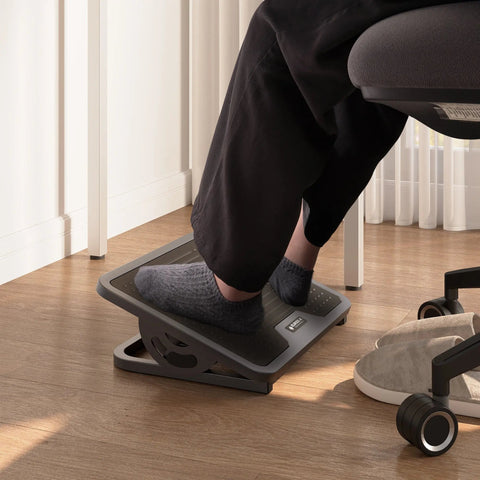
- The Dangle Factor: If a tall user must raise their chair to align with a desk that is too high, their feet may no longer reach the floor. This increases pressure on the underside of the thighs. An Adjustable Ergonomic Footrest resolves this by providing a stable platform, promoting blood circulation and allowing for micro-movements of the ankles.
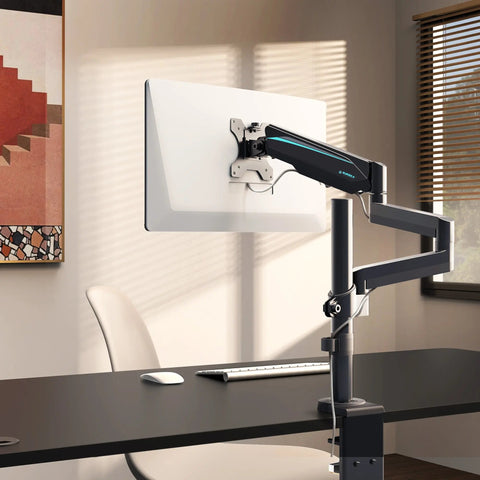
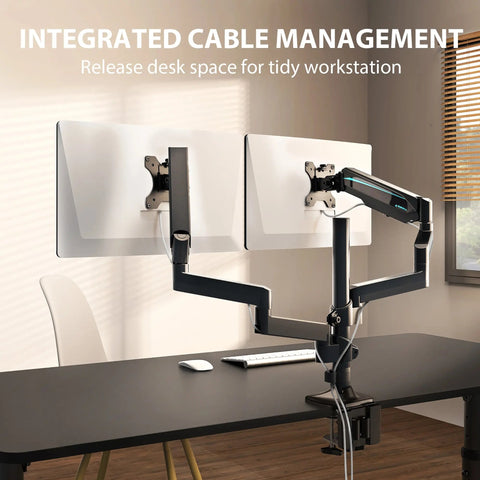
- Visual Parallax: Tall users often look down at their monitors, leading to "tech neck." OSHA's eTools for monitors suggest the top line of text should be at or slightly below eye level. For tall users, this almost always requires a monitor arm or riser.
Maintenance and Longevity for Heavy-Duty Furniture
Executive furniture is a significant investment. For chairs supporting heavy loads, a proactive maintenance schedule is required to ensure safety and performance.
- Cylinder Inspection: Every six months, check the gas lift for signs of "sinking" or oil leakage.
- Fastener Tightening: Heavy use increases the vibration and stress on bolts. Tighten all connections under the seat pan and at the armrests semi-annually.
- Material Care: Microfiber leather, such as that used in the Royal, Microfiber Leather Executive Office Chair, should be wiped down to remove salts from perspiration, which can degrade the material over time.
Summary of Practical Recommendations
To achieve the ideal executive setup, follow this priority-based checklist:
- Measure First: Use the popliteal and buttock-popliteal measurements to define your seat height and depth requirements.
- Verify Weight Ratings: Ensure the chair is rated for at least 20% more than your current body weight to account for dynamic loads (the force of sitting down).
- Prioritize Seat Depth Adjustment: Look for chairs with a "seat slider" to ensure 2-4 inches of clearance behind the knee.
- Match the Desk to the User: If you are over 6'0", a fixed 29-inch desk will likely cause strain. A height-adjustable desk is a functional necessity, not a luxury.
- Adopt the 20-8-2 Rule: As recommended by Cornell University Ergonomics, aim for 20 minutes of sitting, 8 minutes of standing, and 2 minutes of moving/stretching every half hour.
By applying these scientific principles and technical specifications, tall and heavy professionals can transform their workspace from a source of discomfort into a foundation for sustained productivity and long-term musculoskeletal health.
YMYL Disclaimer: This article is for informational purposes only and does not constitute professional medical advice, diagnosis, or treatment. Always seek the advice of your physician or other qualified health provider with any questions you may have regarding a medical condition or musculoskeletal pain. Ergonomic adjustments should be made gradually, and individuals with pre-existing back or joint conditions should consult a physiotherapist before significantly altering their workstation setup.
References
- BIFMA G1-2013 Ergonomics Guideline for Furniture
- OSHA eTools: Computer Workstations - Neutral Working Postures
- CCOHS: Office Ergonomics - Sit/Stand Desk
- WHO 2020 Guidelines on Physical Activity & Sedentary Behaviour
- Cornell University Ergonomics Web — Workstation Guides
- ANSI/BIFMA X5.1 General-Purpose Office Chairs




Leave a comment