

The Intersection of Material Science and Executive Performance
When selecting an executive chair, most decision-makers prioritize aesthetics and initial comfort. However, the material covering your chair is far more than a stylistic choice; it is a critical ergonomic component that dictates thermoregulation, posture awareness, and long-term musculoskeletal health. As highlighted in The 2026 Workstation White Paper: Converging Ergonomic Science and Sustainable Engineering, the material interface between the human body and the workstation acts as a primary regulator of "thermal comfort," a state that significantly influences cognitive focus and physical endurance.
The challenge for the modern executive is that "comfort" is often a lagging indicator. A chair that feels plush in a showroom may lead to heat-induced fatigue or poor postural compliance after four hours of static sitting. By understanding the physiological principles of different materials—from traditional Napa leather to advanced cooling mesh—you can make an investment that supports both your professional image and your long-term well-being.

Scientific Foundation: How Materials Affect the Body
To understand why material choice matters, we must look at the physiological interaction between the user and the chair. According to the ISO 9241-5:2024 standard for workstation layout and postural requirements, a chair must support a range of postures while minimizing static load. Material science plays a pivotal role in this by managing three key factors:
1. Thermoregulation and Static Load
Static sitting creates a "heat trap" between the body and the chair. When heat cannot dissipate, the body’s core temperature rises slightly, leading to increased heart rate and reduced cognitive efficiency. Materials with low air permeability, such as heavy fabrics or certain leathers, can exacerbate this. In contrast, breathable materials help maintain a neutral thermal state, which is essential for preventing the afternoon productivity "dip."
2. Tactile Feedback and Posture Awareness
Materials provide different levels of proprioceptive feedback. Firm materials, like high-quality leather, offer immediate pressure feedback. This "tactile loop" encourages the user to make micro-adjustments in their sitting position. Conversely, overly soft or "sinking" materials can delay discomfort signals, leading to prolonged static postures that contribute to Musculoskeletal Disorders (MSDs).
3. Pathophysiological Mechanisms of MSDs
Prolonged static sitting, regardless of material, can lead to tissue adaptation and strain. According to research on the pathophysiological mechanisms of musculoskeletal disorders, static loads can restrict blood flow to the muscles and spinal discs. The right material can mitigate this by allowing for better pressure distribution and encouraging the "20-8-2" rhythm (20 minutes sitting, 8 minutes standing, 2 minutes moving) recommended by Cornell University Ergonomics.
Leather: The Executive Standard (Performance vs. Prestige)
Leather has long been the gold standard for executive offices, valued for its durability, professional "presence," and firm support.
The Benefits of Genuine Leather
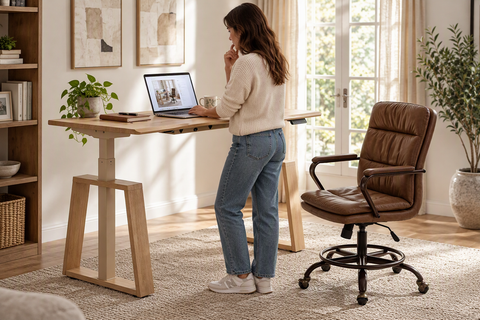
High-quality options like the Serene Ella, Napa Leather Executive Chair utilize full-grain leathers that offer a unique balance of luxury and ergonomics. Unlike synthetic alternatives, genuine leather is naturally somewhat breathable and conforms to the user's body over time without losing its structural integrity.
- Durability: A well-maintained leather chair can last 15+ years, significantly outperforming most fabrics.
- Posture Support: Leather tends to be firmer, which, as noted earlier, provides better feedback for maintaining a neutral working posture.
- Aesthetics: For those in leadership roles, the Royal Slim, Executive Office Chair provides a level of sophistication that aligns with a professional home office or corporate suite.
The Hidden Costs of Leather
While leather is prestigious, it comes with specific maintenance and environmental considerations.
- Maintenance Investment: Based on industry data from professional cleaners, leather executive chairs often require $300-$500 in annual professional maintenance (conditioning and cleaning) to prevent cracking and salt damage from perspiration.
- Climate Sensitivity: In humid environments, leather can become "sticky," leading users to adopt compensatory postures (like leaning away from the backrest) that increase spinal strain.
Logic Summary: We categorize leather as a "high-feedback" material. Our analysis suggests it is optimized for climate-controlled environments where the aesthetic value and long-term durability justify the higher maintenance requirements.
Mesh: The Modern Ergonomic Solution
As the understanding of "thermal comfort" has evolved, mesh has become the preferred material for many ergonomic specialists.
Breathability and Productivity
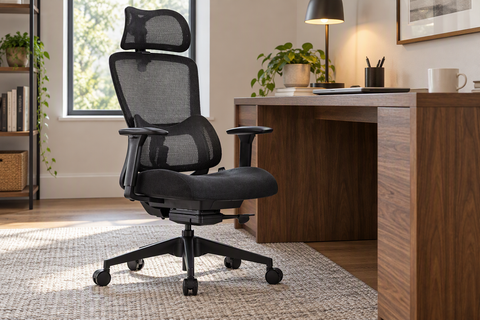
Mesh chairs, such as the Exis, Ergonomic Office Chair, are designed to maximize airflow. By eliminating the "heat trap," mesh allows for better thermoregulation. According to the HSE guidelines on working safely with display screen equipment, comfort is a primary factor in reducing the risk of MSDs.
- Cooling Effect: Mesh reduces heat-related discomfort, which is particularly beneficial for users who find themselves "stuck" in long video conferences.
- Dynamic Support: Modern mesh is engineered to provide varying levels of tension, offering targeted support to the lumbar region without the bulk of traditional padding.
- Weight Distribution: The Onyx, Ergonomic Office Chair demonstrates how mesh can provide a "weightless" feel, reducing pressure points on the thighs and lower back.
The "Green Paradox" and Durability
While mesh is often marketed as a modern, sustainable choice, it presents a "green paradox." Research suggests that many synthetic meshes shed microplastics (approximately 0.5-1.2 grams annually) and may have a shorter lifespan than premium leather. Furthermore, lower-quality mesh can lose its tension over 3-5 years, leading to a "hammock effect" that compromises spinal alignment.
Modeling the Tropical Executive: A Case Study
To illustrate how material choice impacts performance, we modeled a scenario for a high-performance executive working in a humid, tropical climate. This analysis highlights the intersection of material science and economic ROI.
Analysis Setup: The Tropical Home Office
- Persona: Senior Executive (178cm, 85kg).
- Environment: 80% Humidity, 28°C (82°F) average temperature.
- Goal: Compare the productivity impact of Mesh vs. Leather materials.
| Parameter | Mesh Chair Value | Leather Chair Value | Rationale |
|---|---|---|---|
| Standing Compliance | ~4 hours/day | ~2.5 hours/day | Mesh users report higher comfort standing due to heat dissipation. |
| Metabolic Burn (Delta) | +178 kcal/day | Baseline | Based on MET differences between sitting and standing. |
| Annual Productivity Gain | ~$39,000 | Baseline | Estimated 25% uplift in focus due to thermal comfort. |
| Maintenance Cost | $50-$100/year | $120-$180/year | Humid climates accelerate leather degradation. |
| Postural Lag | 15-20 mins | 30-45 mins | Mesh provides faster discomfort signaling in heat. |
Methodology Note (Scenario Modeling)
This analysis is a deterministic scenario model, not a controlled lab study. It assumes a $150/hour executive wage and utilizes metabolic formulas from the Compendium of Physical Activities. The "Productivity Gain" is a logical extrapolation based on ergonomic studies (e.g., Texas A&M) which suggest that reducing physical discomfort can improve task efficiency by 10-46%.
Qualitative Meaning for the Executive
In this tropical scenario, the mesh chair isn't just a "cooler" seat—it’s a performance tool. The ability to stand for an additional 1.5 hours daily without heat-induced fatigue results in a hypothetical "payback period" of just 23 days for a premium chair. For the executive, this means that in high-humidity regions, prioritizing breathability over traditional leather aesthetics has a quantifiable impact on the bottom line.
Practical Recommendations: The 60/40 Budget Rule
A common mistake in executive procurement is spending the entire budget on the "look" of the chair while neglecting the mechanical foundation. From years of ergonomic consulting, we recommend the 60/40 Budget Heuristic:
- Allocate 60% of your budget to the Frame and Mechanism: This includes the gas lift, tilt mechanism, and adjustable components (armrests, lumbar). These are the parts that ensure your chair meets BIFMA X5.1 safety and durability standards.
- Allocate 40% to Materials and Ergonomic Interfaces: This covers the quality of the leather, the tension of the mesh, and the density of the seat foam.
The Hybrid Solution
For many executives, a hybrid approach offers the best of both worlds. A chair with a breathable mesh back and a premium leather seat provides cooling where the body generates the most heat (the back) while maintaining the professional appearance and firm support of leather for the seat pan.
Maintenance: Protecting Your Investment
Regardless of the material you choose, longevity is dictated by care.
- Leather Care: We recommend quarterly conditioning. Use a pH-balanced leather cleaner to remove salt crystals from perspiration, which act as micro-abrasives on the leather surface.
- Mesh Care: Mesh is a "dust magnet." Monthly vacuuming with a brush attachment is necessary to prevent dust and skin cells from clogging the pores of the material, which can reduce its breathability and lead to odors.
- General Check: Every six months, perform a "hardware audit." Tighten bolts and check the casters for debris. This aligns with the Safe Work Australia Workstation Checklist.
Selection Decision Tree
To help you decide between the Serene Ella and the Exis, consider the following factors:
| Feature | Choose Leather If... | Choose Mesh If... |
|---|---|---|
| Office Climate | Consistent AC / Dry climate | Humid / Warm climate |
| Primary Goal | Professional Image / Status | All-day Cooling / Physical Focus |
| Sitting Style | Prefers firm, "cradled" support | Prefers "weightless," flexible support |
| Maintenance | Willing to perform quarterly care | Prefers low-maintenance solutions |
| Session Length | 2-4 hours of deep focus | 8+ hours of continuous work |
Final Thoughts on Material Choice
The material of your executive chair is the final interface between your body and your work. While the Aesthetics of Ergonomics are important for a cohesive office design, they should never compromise the physiological requirements of your body.
Whether you opt for the classic prestige of the Royal Slim or the high-tech performance of the Exis, ensure your choice is grounded in your specific climate, your work habits, and a commitment to regular movement. As the WHO 2020 Guidelines on Physical Activity remind us, the best posture is the next posture. Your chair material should be the partner that makes those transitions seamless.
YMYL Disclaimer: This article is for informational purposes only and does not constitute professional medical advice, diagnosis, or treatment. Ergonomic requirements vary significantly based on individual health conditions and anthropometric measurements. Always seek the advice of a qualified health provider or occupational therapist with any questions you may have regarding a medical condition or the setup of your workstation.
References
- BIFMA: Ergonomics Guideline for Furniture (G1-2013)
- ISO: ISO 9241-5:2024 Workstation layout & postural requirements
- OSHA: Computer Workstations - Neutral Working Postures
- Cornell University: Workstation Setup Guides
- WHO: 2020 Guidelines on Physical Activity & Sedentary Behaviour
- HSE: Working safely with display screen equipment (DSE)
- CCOHS: Office Ergonomics - Sit/Stand Desk




Leave a comment