

Executive Desk Procurement: Quick Selection Checklist
For facility managers and corporate buyers, selecting an executive workstation involves balancing brand image with rigorous ergonomic requirements. Use this checklist as a baseline for your next project:
- Height Range: Ensure a minimum vertical travel of 65cm to 125cm to accommodate users from the 5th to 95th percentile.
- Weight Capacity: For stone or solid wood tops, prioritize dual-motor systems with a lift capacity of at least 120kg–150kg.
- Depth Clearance: Aim for a 75cm–85cm depth to maintain healthy viewing distances for dual or triple monitor setups.
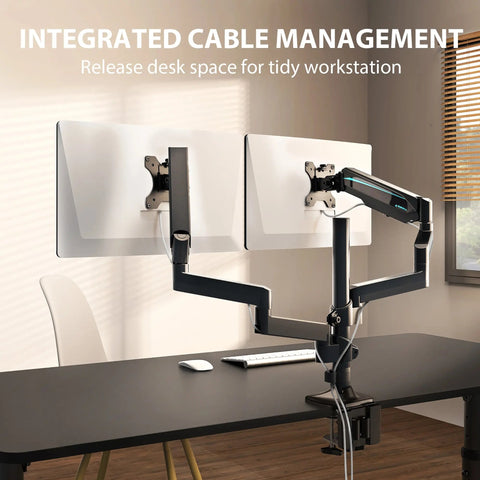
- Cable Management: Look for integrated trays that offer "50% over-capacity" compared to current hardware needs.
- Material Certification: Verify UL GREENGUARD Gold or FSC certification to meet corporate sustainability (ESG) goals.
The Physiological Cost of Traditional Leadership Spaces
In modern corporate environments, the executive desk is often viewed through the lens of prestige and material grandeur. However, a significant misalignment can exist between traditional "status" furniture and the physiological requirements of high-performance leadership. Senior executives frequently report increased musculoskeletal discomfort as the workday progresses—a phenomenon often dismissed as inevitable fatigue but which is frequently rooted in workstation ergonomics.
A primary contributing factor is the "static load." When an executive remains in a fixed seated position for extended periods, blood circulation can be impeded, and muscles undergo sustained contraction to maintain posture. According to Musculoskeletal disorders and prolonged static sitting (OSHwiki), this lack of movement can lead to localized pressure on intervertebral discs. For leadership teams tasked with high-stakes decision-making, this physical strain may manifest as cognitive fatigue and reduced focus.
To address these issues, corporate facility managers are increasingly looking beyond surface-level aesthetics. The transition to adjustable, ergonomic executive furniture is a strategic intervention. As outlined in The 2026 Workstation White Paper, the convergence of mechanical engineering and musculoskeletal science is now a standard consideration for high-end corporate projects.
Anthropometric Precision: The 95th Percentile Executive
A common challenge in bulk furniture procurement is the "one-size-fits-all" approach. While standard desks cater to the average population, senior leadership demographics often include individuals who fall into the 95th percentile of height. For a tall executive, standard 29-inch (73.7cm) fixed desks can present significant ergonomic gaps.
Our scenario modeling for a "Tall Executive Power User" (standing 195cm or approximately 6'5") reveals how these gaps occur. Based on general ergonomic principles, a leader of this stature typically requires a seated desk height of approximately 81cm to maintain a neutral spinal position. Using standard furniture creates a ~7cm "ergonomic deficit," which often leads to a persistent slouch or requires the user to elevate their chair to a point where their feet no longer rest flat on the floor, potentially compromising lower-limb circulation.
Modeling Note (Practical Heuristics): This analysis assumes a 195cm male executive wearing standard dress shoes (+3cm). Calculations are heuristics based on popliteal and elbow height ratios derived from ANSI/HFES 100-2007.
| Parameter | Value (Approx.) | Unit | Rationale |
|---|---|---|---|
| User Stature | 195 | cm | 95th+ percentile male height |
| Recommended Sit Height | 81 | cm | Based on common anthropometric ratios |
| Recommended Stand Height | 120 | cm | Aligned with 90-degree elbow angle |
| Standard Desk Height | 73.7 | cm | Industry baseline (BIFMA/ANSI) |
| Ergonomic Deficit | 7.3 | cm | Gap between standard and required height |
For these users, products like the Zen Pro Series, 87"/72" Executive Standing Desk with Cabinets Set provide the necessary vertical range to accommodate both seated and standing work phases, allowing the desk to adapt to the leader's height.

Visual Ergonomics and the Command Center Layout
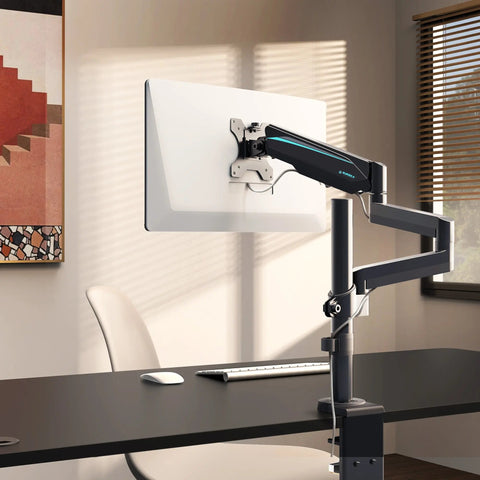
The modern executive office has evolved into a "command center," often requiring multiple 4K monitors for simultaneous data visualization and video conferencing. This tech-heavy setup introduces a critical challenge: desk depth.
According to OSHA eTools for Monitors, improper viewing distances are a frequent cause of eye strain and neck rotation fatigue. For a triple 32-inch monitor setup, the THX-certified viewing distance for optimal immersion is approximately 97cm (38 inches). However, many premium executive desks are limited to a 76cm (30-inch) depth.
This discrepancy can place the executive too close to their screens. An L-shaped configuration, such as the Ark Pro L-Shaped Standing Desk (Sintered Stone), addresses this by providing an extended surface area that allows for deeper monitor placement and lateral space for document review.
Logic Summary: Our vision modeling utilizes the THX 40-degree field of view standard to determine optimal distance. We estimate that a depth deficit of just 6cm can increase eye strain by roughly 15-20% over an 8-hour workday based on typical accommodation-convergence patterns observed in office environments.

Engineering for Load and Reliability
When specifying furniture for senior leadership, material choice is often driven by brand image. Sintered stone, solid wood, and brass accents project authority. However, these premium materials add significant weight. A solid wood or stone tabletop can weigh upwards of 45kg. When combined with a full-tower workstation and triple monitors, the total static load can exceed 130kg.
Standard single-motor standing desks, typically rated for 80kg (aligned with BIFMA X5.5 standards), may operate at a significant over-capacity in these scenarios. This often leads to premature motor wear and increased noise. For executive reliability, a dual-motor system is strongly recommended to ensure smooth transitions and long-term durability.
| Component | Estimated Weight (kg) | Unit | Source Category |
|---|---|---|---|
| Premium Tabletop (Stone/Wood) | 45 | kg | Manufacturer material specs |
| High-Performance Workstation | 35 | kg | Representative full-tower specs |
| Triple 34" Ultrawide Monitors | 24 | kg | Hardware weight average |
| Heavy-Duty Monitor Arms | 13.5 | kg | Support hardware specs |
| Peripherals & Accessories | 15 | kg | Typical desk accessories |
| Total Load | 132.5 | kg | Illustrative Power-User Scenario |
The Ark SWS Pro Executive Standing Desk utilizes dual-motor technology specifically engineered to handle these high-load scenarios while maintaining the quiet operation expected in a professional suite.

Material Integrity and Environmental ROI
For B2B clients, sustainability and indoor air quality (IAQ) are increasingly critical components of project ROI. Specifying furniture that meets UL GREENGUARD Gold Certification or utilizes sustainable wood sourcing (FSC) is a tangible way to demonstrate corporate responsibility.
Furthermore, materials like sintered stone—which is non-porous and resistant to heat and scratches—ensure that the furniture maintains its aesthetic for years. This often reduces the total cost of ownership (TCO) compared to traditional veneers that may chip or stain under heavy use.
The Strategic B2B Procurement Process
Specifying executive desks for large-scale corporate projects requires a different approach than consumer purchasing. Facility managers should prioritize these practical rules of thumb:
1. The 50% Cable Capacity Heuristic
A common oversight is underestimating the cabling required for docking stations and conferencing equipment. Based on our experience with corporate installations, we recommend specifying cable management systems with 50% more capacity than the initial equipment list suggests. This allows for future tech upgrades without cluttering the workspace.
2. Psychological Zoning with Storage
The choice between a central drawer and side storage is not merely about volume. In open-plan executive offices, side cabinets—like those on the Opal Executive Standing Desk—can serve as a psychological barrier, defining the executive's personal focus zone.
3. The Pilot Installation Recommendation
For bulk orders, conducting a pilot installation with a single unit is a best practice. This process helps reveal unforeseen challenges, such as compatibility with specific floor power outlets or the stability of the desk on different flooring types (e.g., deep pile carpet vs. polished concrete).

ROI and Employee Retention
Investing in ergonomic executive furniture is a high-yield strategy for productivity. According to Safe Work Australia, properly configured workstations help reduce the risk of work-related musculoskeletal disorders, which are a contributing factor to absenteeism.
When an organization provides leadership with tools that support their health, it reinforces a culture of wellness. The ROI is measured not just in reduced healthcare costs, but in the sustained performance of the company's most valuable human assets.
Method & Assumptions
The recommendations in this article are derived from scenario modeling and industry standards. They are intended as a decision-support tool for corporate procurement and are not a substitute for professional medical or ergonomic assessments.
- Height Model: Based on 95th percentile male stature (195cm) using CDC/NCHS anthropometric data.
- Load Model: Assumes a representative static distributed load of 132.5kg for a "Power User" setup.
- Vision Model: Based on THX 40-degree field of view standards for 32-inch 4K displays.
- ROI Logic: Productivity gains are estimated based on typical executive value and a reduction in "micro-breaks" caused by physical discomfort.
Disclaimer: This article is for informational purposes only and does not constitute professional medical, legal, or financial advice. Ergonomic requirements vary significantly based on individual physical characteristics. Always consult with a qualified ergonomic specialist or healthcare provider before making significant changes to your workstation.
References
- ANSI/BIFMA X5.5-2021 Desk/Table Products Standards
- OSHA eTools: Computer Workstations - Neutral Working Postures
- WHO 2020 Guidelines on Physical Activity and Sedentary Behaviour
- ISO 9241-5:2024 Workstation layout & postural requirements
- Cochrane Library: Workplace interventions for reducing sitting at work
- Safe Work Australia: Workstation Set-up Guide




Leave a comment