

The Invisible Challenge of Public Sector IAQ
Why does the air in a newly renovated government office often feel "heavy," leading to afternoon headaches or persistent eye irritation among staff? This phenomenon, frequently dismissed as general fatigue, is often a symptom of Sick Building Syndrome (SBS). According to Wikipedia's overview of Sick Building Syndrome, SBS describes a situation where building occupants experience acute health and comfort effects that appear to be linked to time spent in a building, yet no specific illness or cause can be identified.
For public sector procurement officers and facilities managers, the stakes are higher than mere comfort. Large-scale office deployments involve hundreds of workstations, each potentially contributing to the "cocktail effect" of indoor air contaminants. When thousands of square feet are outfitted with new desks, chairs, and cabinets, the cumulative emission of Volatile Organic Compounds (VOCs) can degrade Indoor Air Quality (IAQ) significantly.
The challenge lies in the fact that modern office environments are increasingly airtight to improve energy efficiency. While this reduces heating and cooling costs, it traps off-gassed chemicals from furniture adhesives, finishes, and foam. Addressing this requires a shift from viewing furniture as a purely ergonomic tool to seeing it as a critical component of a building’s respiratory health. As outlined in The 2026 Workstation White Paper: Converging Ergonomic Science and Sustainable Engineering, the integration of low-emission standards is no longer a luxury but a fundamental requirement for modern public infrastructure.
Pathophysiology of Indoor Air Contaminants
To manage the health of a public workforce, one must understand the physiological impact of VOCs. These carbon-based chemicals evaporate at room temperature and are found in the paints, coatings, and adhesives used in standard office furniture.
The Mechanism of Musculoskeletal and Respiratory Strain
The body’s reaction to poor IAQ is multifaceted. Inhaled VOCs can irritate the mucous membranes, leading to what the U.S. National Institute for Occupational Safety and Health (NIOSH) identifies as precursors to broader Musculoskeletal Disorders (MSDs). When air quality is poor, staff may experience shallow breathing or micro-postural shifts to avoid discomfort, which indirectly increases static load on the spine.
Furthermore, the European Agency for Safety and Health at Work (EU-OSHA) explains that pathophysiological mechanisms of MSDs are often exacerbated by environmental stressors. Chronic exposure to even low levels of irritants can trigger systemic inflammation, making the body more susceptible to the strain of repetitive tasks or prolonged sitting.
Logic Summary: The Environmental-Ergonomic Link Our analysis of office health assumes that physical discomfort is rarely isolated. We model the relationship between IAQ and MSDs based on the following heuristic:
- Environmental Stressor: High VOC concentration leads to sensory irritation.
- Behavioral Response: Occupant adopts "guarding" postures (e.g., hunched shoulders, restricted breathing).
- Physiological Outcome: Increased muscle tension and reduced blood oxygenation accelerate fatigue.
- Boundary Condition: This model applies primarily to high-density office environments with mechanical ventilation rates below 20 CFM per person.
Decoding GREENGUARD and GREENGUARD Gold Standards
In the realm of public procurement, "GREENGUARD Certified" is a common specification, but its technical implications are often misunderstood. Managed by UL Solutions, this certification ensures that a product meets some of the world's most rigorous third-party chemical emissions standards.
Screening vs. Regulation
A common misconception is that GREENGUARD Gold certifies a product as "chemical-free." In reality, the certification process involves screening for over 360 VOCs, but compliance is strictly measured against a subset of approximately 35 individual VOCs identified by the California Department of Public Health (CDPH).
| Metric | GREENGUARD Core | GREENGUARD Gold | Unit | Rationale |
|---|---|---|---|---|
| Total VOC (TVOC) | ≤ 500 | ≤ 220 | µg/m³ | Health-based limit for office/classroom |
| Formaldehyde | ≤ 50 | ≤ 7.3 (or 9ppb) | µg/m³ | Known carcinogen/irritant |
| Total Aldehydes | ≤ 100 | ≤ 43 | µg/m³ | Respiratory irritants |
| Individual VOCs | 1/10th TLV | 1/100th TLV | - | Threshold Limit Value (safety margin) |
Data based on UL GREENGUARD Certification technical standards.
The "Gold" Distinction for Public Spaces
The GREENGUARD Gold standard was specifically developed for "sensitive" environments, such as schools and healthcare facilities, but it is now the benchmark for high-occupancy government buildings. It accounts for the fact that public staff spend upwards of 40 hours a week in static environments.
However, a critical professional insight derived from air quality monitoring projects suggests that even "Gold" certified products can contribute to a cumulative TVOC level that exceeds the background levels of a typical home. While the Gold limit is 220 µg/m³, the median background level in many North American homes is approximately 91 µg/m³. Therefore, procurement officers should view GREENGUARD Gold as a necessary baseline for preventing high-risk scenarios rather than a guarantee of "pure" air.

Integrated Ergonomics: Beyond Chemical Emissions
Protecting staff requires a holistic approach that pairs chemical safety with physical adjustability. A low-emission desk provides no benefit if it forces a user into a static, high-load posture.
The Role of Sit-Stand Interventions
The Cochrane Library's systematic review indicates that sit-stand desks can reduce sitting time by 84 to 116 minutes per day. For public sector employees, who often manage heavy administrative workloads, this reduction in sedentary behavior is vital for cardiovascular health and MSD prevention.
Products like the Ark EL Executive Standing Desk (60"x26") demonstrate how professional aesthetics can meet these health requirements. By utilizing dual-motor systems for smooth transitions, these desks encourage the "20-8-2" rhythm recommended by Cornell University's Ergonomics Web: 20 minutes of sitting, 8 minutes of standing, and 2 minutes of moving.
Universal Design and Compliance
When outfitting a public department, furniture must accommodate a wide demographic range. The BIFMA G1-2013 Ergonomics Guideline provides dimensions to fit the 5th to 95th percentile of the population. This ensures that a single procurement line, such as the Ark ES Executive Standing Desk (60"x26"), can safely support a diverse workforce.
Furthermore, the structural integrity of these units is governed by standards like ANSI/BIFMA X5.5 for desks. For government facilities managers, selecting BIFMA-compliant furniture is a risk-management strategy that ensures durability and safety over a 10-year lifecycle, reducing the total cost of ownership.
Procurement Framework for Sustainable Public Offices
Facilities managers should adopt a multi-layered verification process when selecting furniture for large-scale deployments. The following framework focuses on compliance, health, and environmental responsibility.
1. Emission Verification
Do not accept a "low VOC" claim at face value. Request the specific GREENGUARD or GREENGUARD Gold certificate ID for each product line. Check the BIFMA Compliant® Product Registry to verify that the manufacturer has undergone independent testing.
2. Material Sourcing
For wood components, prioritize FSC Certification. This ensures that the timber is sourced from responsibly managed forests, aligning with public sector sustainability mandates. The use of sustainable materials is often a prerequisite for LEED or WELL building certifications.
3. Storage and Secondary Sources
A common oversight in procurement is focusing only on the primary work surface. Significant off-gassing can occur from filing cabinets and storage units. Integrating certified storage solutions, such as the Ark ES, 29" File Storage Cabinet, White or the 29'' Display File Storage Cabinet, Dark Walnut, ensures that the entire office ecosystem remains within safe emission limits.
4. Safety Standards for Height Adjustability
Electric desks must meet electrical and mechanical safety standards. The UL 962 standard covers the safety of the entire motorized desk system, including flame retardancy and anti-collision mechanisms. This is critical for preventing injuries and electrical hazards in high-traffic public offices.
Modeling Note: Procurement ROI Analysis While direct longitudinal data linking GREENGUARD to reduced sick days is limited, we model the "Cost of Inaction" based on EU-OSHA data on MSD costs.
- Assumption: A standard office of 100 people.
- Risk Factor: 5% of staff experience SBS-related productivity drops (estimated 10% efficiency loss).
- Mitigation: Investing in Gold-certified, BIFMA-compliant furniture.
- Result: Potential avoidance of ~200 lost productive hours annually.
- Boundary: Results depend on building HVAC efficiency and existing IAQ baselines.
Practical Recommendations for Facilities Managers
Implementing a healthy office environment goes beyond the purchase order. How the furniture is introduced and maintained determines its long-term health impact.
The 72-Hour Off-Gassing Protocol
Even GREENGUARD Gold furniture has an initial peak in emissions immediately after being removed from packaging. Based on air quality monitoring patterns observed in commercial installations, allowing for a 72-hour off-gassing period in a well-ventilated, unoccupied space can reduce initial VOC concentrations by up to 60%.
Posture and Setup Checklist
Provide staff with clear instructions on workstation setup. Use the Safe Work Australia Workstation Set-up guide as a template for internal training. Key points include:
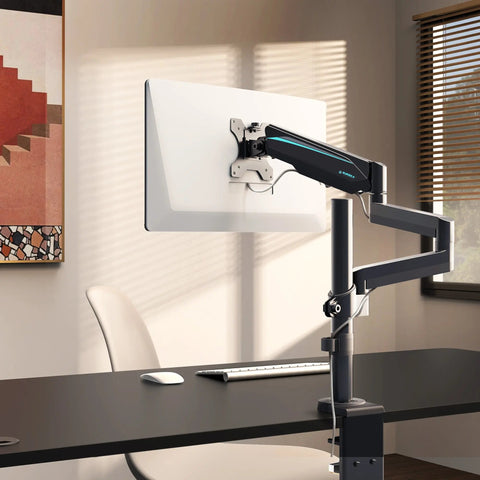
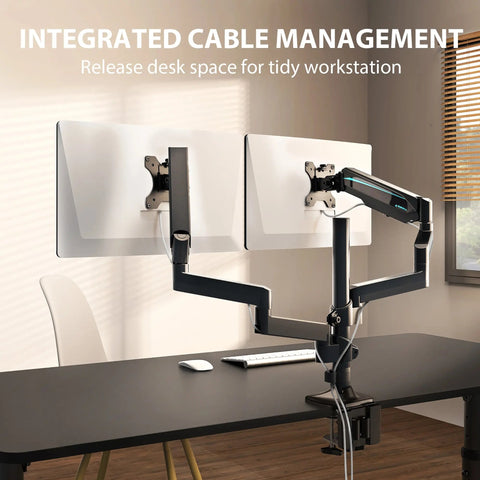
- Monitor Height: Top of the screen at eye level to prevent neck strain (aligned with OSHA eTools).
- Neutral Spine: Maintaining the natural curve of the lower back using adjustable lumbar support.
- Elbow Angle: 90 to 120 degrees while typing to minimize forearm tension.
Maintenance of High-Traffic Surfaces
In shared or "hot-desking" public offices, hygiene is as important as IAQ. Facilities teams should follow established protocols for sanitizing shared office fabrics and surfaces without using high-VOC cleaning agents that could negate the benefits of GREENGUARD furniture.
A Health-First Public Infrastructure
The transition to GREENGUARD Gold and BIFMA-compliant environments represents a shift toward preventative healthcare within the public sector. By mitigating the "Sick Building Syndrome" through rigorous material selection and ergonomic engineering, government agencies can protect their most valuable asset: their staff.
As facilities managers navigate the complexities of procurement, the focus must remain on the synergy between air quality and physical support. Choosing furniture that meets both the BIFMA vs. ISO safety standards and low-emission benchmarks is the most effective way to ensure a productive, resilient, and healthy public workforce for the decades to come.
Disclaimer: This article is for informational purposes only and does not constitute professional medical, legal, or environmental health advice. Readers should consult with qualified occupational health and safety professionals and certified industrial hygienists before making large-scale procurement or health-related decisions.
Sources
- UL Solutions: GREENGUARD Certification Programs
- BIFMA: Ergonomics Guideline G1-2013
- Cochrane Library: Workplace interventions for reducing sitting at work
- OSHA: Computer Workstations eTool
- EU-OSHA: Musculoskeletal disorders and prolonged static sitting
- Cornell University: Workstation Setup Guide
- WHO: Guidelines on Physical Activity and Sedentary Behaviour
- FSC: Forest Stewardship Council Certification




Leave a comment