

The Challenge of Small Spaces: More Than Just Square Footage
Limited space doesn't have to mean a compromised study area. For many families in apartments or homes with smaller bedrooms, the kitchen table often becomes the default homework spot. While convenient, this setup can lead to distractions, poor posture, and a lack of routine. The key to fostering focus and supporting a child's physical development is creating a dedicated, ergonomic homework nook. This guide provides creative ideas and practical, expert-backed solutions for setting up a functional and organized study area in even the most compact rooms.
Why a Dedicated Homework Nook is Non-Negotiable
Creating a specific place for schoolwork is about more than just organization; it's a crucial investment in a child's health and academic success. A dedicated nook establishes a powerful psychological boundary. It signals to a child that when they are in this space, it's time to focus on learning, helping to build consistent study habits.
More importantly, it addresses the critical need for proper ergonomics during a child's formative years. The habits and postures developed now can have lifelong consequences. According to the U.S. Occupational Safety and Health Administration (OSHA), prolonged poor posture is a primary risk factor for musculoskeletal disorders (MSDs). For a growing child, slouching over a laptop on the sofa or an improperly sized desk can strain their developing spine, neck, and wrists. A well-designed nook promotes a neutral posture, which is essential for preventing discomfort and long-term health issues.

Planning Your Compact Nook: A Foundation of Measurement
Before purchasing any furniture, the most critical step is to measure both the space and your child. A common mistake is buying a "kid-sized" desk that doesn't actually fit the specific child, forcing them into awkward positions.
The Golden Rule: Measure Your Child First
Ergonomics is not one-size-fits-all. To find furniture that provides proper support, you need two key measurements, as recommended by pediatric ergonomists:
- Seated Elbow Height: Have your child sit in a chair with their feet flat on the floor and arms relaxed at their sides, bent at a 90-degree angle. Measure the distance from the floor to the bottom of their elbow. This is the ideal height for their desk surface or keyboard tray.
- Popliteal Height: While seated, measure the distance from the floor to the back of their knee. This determines the correct seat height for their chair, allowing their feet to rest firmly on the ground.
Pre-Purchase Measurement Checklist
Use this simple table to record your measurements and define the ideal dimensions for your child's ergonomic furniture. This data-driven approach ensures you select pieces that truly fit.
| Measurement | Instructions | Your Child's Measurement | Ideal Furniture Dimension |
|---|---|---|---|
| Seated Elbow Height | Child seated, feet flat, arms at 90°. Measure floor to elbow. | ______ inches/cm | Desk height should match this. |
| Popliteal Height | Child seated, feet flat. Measure floor to back of knee. | ______ inches/cm | Chair seat height should match this. |
| Seat Depth | Child seated. Ensure a 2-3 finger gap between the back of the knees and the edge of the seat. | N/A | Choose a chair with appropriate seat depth. |
| Available Space | Measure the width, depth, and height of the intended nook area. | W: __ D: __ H: __ | Furniture must fit within these dimensions. |
Choosing the Right Tools: Essential Furniture for Small Spaces
With your measurements in hand, you can confidently select furniture that is both space-efficient and ergonomically sound. In a small area, every piece must be functional and adaptable.
The Adjustable Desk: The Cornerstone of a Healthy Setup
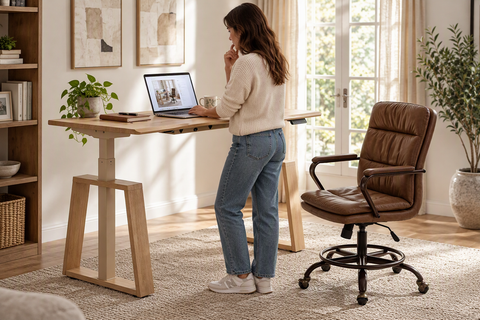
For a growing child, an adjustable-height desk is not a luxury; it's a necessity. It allows you to set the surface at their precise elbow height, ensuring a neutral wrist and shoulder posture. As they grow, the desk grows with them, making it a sustainable long-term investment.
Furthermore, a sit-stand desk is one of the most effective tools for combating a sedentary lifestyle. The World Health Organization's guidelines emphasize the importance of reducing and interrupting long periods of static behavior. While adults often follow a "20-8-2" rhythm (20 minutes sitting, 8 standing, 2 moving), a more effective cadence for children is shorter cycles of 30-45 minutes of sitting followed by 10-15 minutes of standing or active movement. This can help reduce fidgeting and improve concentration.
For a blend of style, durability, and compact design, the Faux Saddle Leather Adjustable Standing Desk (55"x23") offers a sophisticated look that fits well in a bedroom while providing the essential electric height adjustment needed for proper ergonomics.
The Ergonomic Chair: Support Where It Counts
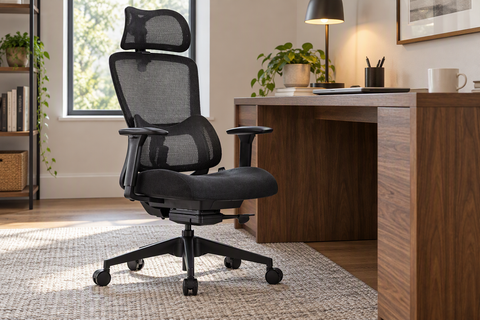
An adult office chair is often too large for a child, particularly in seat depth. A seat that is too deep forces a child to slouch forward, negating any lumbar support. When selecting a chair, ensure there is a gap of two to three fingers between the front edge of theseat and the back of your child's knees. This allows them to sit back fully and receive proper back support while keeping their feet on the floor. If their feet don't reach the floor even at the lowest setting, a small footrest is an excellent solution to provide stability.
Common Misconception Debunked
A common myth is that any small desk will suffice for a child. In reality, a desk that is the wrong height—either too high or too low—is often worse than a temporary solution like the kitchen table. An improperly sized desk forces a child into a fixed, unhealthy posture, leading to neck, shoulder, and back strain. Prioritizing adjustability is the only way to guarantee a perfect fit over time.

Smart Organization and Setup for Maximum Focus
In a small nook, clutter is the enemy of concentration. A well-organized space keeps essential tools within reach without creating a mess.
Vertical Victory: Using Wall Space
When floor space is limited, look up. Walls are valuable real estate for storage. Floating shelves, pegboards, and wall-mounted file holders can store books, binders, and supplies, keeping the desktop clear for active work. Products like the Convertible Desktop Shelves can be configured in various ways to add a tier of storage directly on the desk, maximizing vertical space without expanding the footprint.

Ergonomic Workstation Setup Checklist
Once you have your furniture, setting it up correctly is paramount. Follow this checklist, based on guidelines from authorities like the Canadian Centre for Occupational Health and Safety (CCOHS), to create an optimal workspace.
- Adjust the Chair First: Set the chair height so your child's feet are flat on the floor and their knees are at a 90-degree angle.
- Set the Desk Height: Adjust the desk so that when your child's arms are resting at their sides, their elbows are at a 90-degree angle and their forearms are parallel to the floor. Their wrists should be straight when typing.
- Position the Monitor: Place the monitor directly in front of them, about an arm's length away. The top of the screen should be at or slightly below eye level to maintain a neutral neck position.
- Arrange the Keyboard and Mouse: Place the keyboard and mouse on the same level and close enough to prevent reaching. A Pull-out Keyboard Tray is an excellent accessory for small desks, as it frees up the main surface for writing and reading while ensuring the keyboard is at the correct height.
- Optimize Lighting: Position the desk to avoid glare on the computer screen from windows or overhead lights. A dedicated, adjustable task lamp can provide focused light for reading and writing, reducing eye strain.
Safety and Durability: Building a Nook That Lasts
A child's study area must be safe and able to withstand daily use.
Tip-Over Prevention: A Non-Negotiable Priority
In any room with children, furniture stability is a critical safety concern. The U.S. Consumer Product Safety Commission has implemented the mandatory STURDY / 16 CFR Part 1261 standard to prevent tip-over incidents with storage units. This principle should be applied to all tall or potentially unstable furniture. Always secure tall bookshelves or L-shaped desks to a wall stud using anti-tip hardware, especially in a small room where they might be bumped into.
Material Matters: Choosing Kid-Friendly Surfaces
Choose furniture with durable, easy-to-clean surfaces like scratch-resistant laminate. Rounded corners and edges are safer and prevent bumps and scrapes. For health-conscious families, look for products with certifications like UL GREENGUARD, which indicates that the materials have low chemical emissions, contributing to healthier indoor air quality.
Wrapping Up: Key Takeaways for a Successful Homework Nook
Creating a functional and healthy homework nook in a small space is entirely achievable with careful planning. By prioritizing ergonomics, smart organization, and safety, you can design a space that not only fits your home but also supports your child's growth, focus, and well-being.
Remember these core principles:
- Measure First: Always measure your child and your space before buying furniture to ensure a perfect ergonomic fit.
- Prioritize Adjustability: Choose a desk and chair that can adapt as your child grows.
- Organize Vertically: Use walls and desktop risers to maximize storage without cluttering the workspace.
- Ensure Safety: Secure all tall furniture and choose durable, kid-friendly materials.
A thoughtfully designed nook is a powerful tool that helps a child build the routines and physical habits necessary for a successful and healthy academic journey.
Disclaimer: This article is for informational purposes only and does not constitute professional medical advice. The ergonomic recommendations provided are based on general guidelines. Please consult with a pediatrician or a certified ergonomist for personalized advice, especially if your child has pre-existing health conditions.
References:
- Canadian Centre for Occupational Health and Safety (CCOHS): Office Ergonomics - Sit/Stand Desk
- U.S. Consumer Product Safety Commission (CPSC): STURDY / 16 CFR Part 1261
- U.S. Occupational Safety and Health Administration (OSHA): Ergonomics - Identify Problems
- World Health Organization (WHO): WHO 2020 Guidelines on Physical Activity & Sedentary Behaviour




Leave a comment