

The Sanctuary of Trust: Redefining the Legal Workspace
In a modern law firm, the office environment serves as more than just a backdrop—it is a functional component of your security and compliance strategy. To effectively safeguard client privacy while maintaining high productivity, we recommend an answer-first approach centered on three pillars:
- The Three-Zone System: A spatial heuristic that separates active discovery from long-term archives.
- Physical-Digital Fireproofing: Recognizing that digital media requires significantly lower temperature thresholds (UL Class 125) than paper (UL Class 350).
- Regulatory Alignment: Ensuring physical storage meets standards like HIPAA (45 CFR § 164.310) and accounts for the GDPR/CLOUD Act conflict.
By integrating these strategies with ergonomic furniture, you transform a cluttered office into a Workspace Sanctuary—a place where Deep Work and Mindfulness coexist with rigorous data protection.
The Architecture of Security: Physical Safeguards and Compliance
While digital encryption is vital, physical security remains a cornerstone of legal ethics and regulatory compliance. Under the Attorney–client privilege, lawyers have an ethical duty to prevent the inadvertent or unauthorized disclosure of information relating to the representation of a client (see ABA Model Rule 1.6(c)).
In practice, a well-organized workspace is the first line of defense. For firms handling Protected Health Information (PHI), maintaining HIPAA Compliance requires specific physical safeguards. According to 45 CFR § 164.310, covered entities must "limit physical access to its electronic information systems and the facility or facilities in which they are housed."
Expert legal administrators often employ the "Visibility Deterrent." This is a heuristic based on behavioral patterns in professional environments: placing locked cabinets in areas visible from common paths—rather than hiding them in remote corners—can discourage unauthorized access through the psychological barrier of being observed.
To support these requirements, furniture should meet ANSI/BIFMA X5.5 standards, ensuring that storage units are structurally sound for the heavy load of legal archives.
Note on Recommendations: Product examples provided in this guide, such as the Eureka Ergonomic collection, are selected based on their alignment with BIFMA standards and professional durability.

Strategic Organization: The Three-Zone Efficiency Model
A common inefficiency in legal practice is the commingling of active case files with archived materials. To optimize Workflow, we suggest a "Three-Zone System." This model is a practical heuristic designed to allocate space based on frequency of use.
| Zone | Usage Type | Space Allocation | Recommended Storage (Examples) |
|---|---|---|---|
| Zone 1: Immediate | Active case files, current discovery | ~60% | Desk drawers, mobile pedestals |
| Zone 2: Secondary | Recently closed matters, reference books | ~25% | Lateral cabinets, Grayson Recliner with Storage (Featured Product) |
| Zone 3: Secure Archive | Closed files (7+ years), sensitive backups | ~15% | Fire-rated vaults, locked off-site storage |
This model aims to keep your primary desk surface as a "Thinking Mode" area. For Zone 2, pieces that blend utility with an executive Aesthetic are ideal. For instance, the Grayson, Manual Recliner Chair Rocking Swivel with Storage (a Eureka Ergonomic proprietary design) offers a discreet storage compartment for secondary materials while providing a space for Inspiration breaks.

The Digital-Physical Divide: Protecting Every Byte and Page
Modern firms manage a hybrid of paper and digital media, each with vastly different survival thresholds. A critical technical distinction often overlooked is the fire-resistance requirement:
- Paper typically remains legible until temperatures exceed 350°F.
- Digital Media (hard drives, USBs) can begin to corrupt or fail at just 125°F to 150°F.
According to industry Fire-resistance ratings, a cabinet rated only for paper (UL Class 350) may offer insufficient protection for digital backups. If storing digital media on-site, a UL Class 125 rated vault is the standard recommendation.
Furthermore, firms must navigate the "Compliance Paradox" of the cloud. While digital storage reduces physical Declutter, GDPR Article 48 can conflict with the US CLOUD Act regarding data requests by non-EU authorities. For firms with international clients, maintaining secure physical storage for sensitive digital drives remains a strategic necessity to mitigate cross-border data transfer risks.
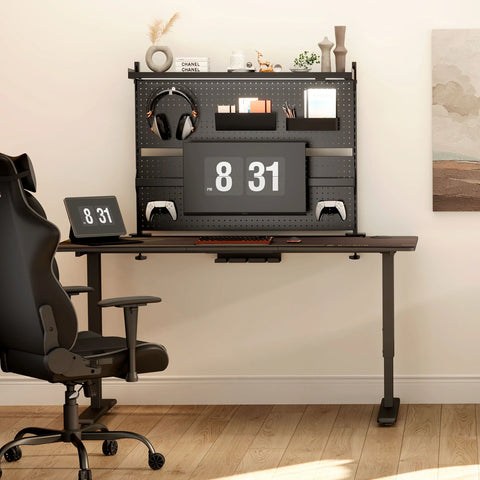
To house the hardware required for these archives, the Height-Adjustable Illuminated Panel CPU Cart (available in our shop) provides an elevated design to ensure proper ventilation and prevent dust buildup, which is essential for hardware longevity.
Ergonomics as an Asset: Comfort Meets Compliance
Ergonomics is not merely a comfort feature; it is a tool to facilitate the shift between "Thinking" and "Execution" modes. Aligned with the BIFMA G1-2013 Ergonomics Guideline, a professional workstation should support a neutral posture to reduce musculoskeletal strain during long discovery sessions.
We have observed that the addition of an Adjustable Ergonomic Footrest (Featured Product) can help maintain circulation. By allowing a slight tilt (0-20 degrees), these tools promote healthy blood flow and help sustain focus.
As noted in the 2026 Workstation White Paper, the integration of sustainable materials is the new benchmark. Selecting furniture with UL GREENGUARD Certification helps ensure high indoor air quality by limiting VOC emissions, which is vital for a healthy "Workspace Sanctuary."

Future-Proofing the Firm: Longevity and Regulatory Integrity
The efficacy of a storage system is often tested during discovery. While timelines vary by jurisdiction and court order (such as those under FRCP Rule 34), a common internal benchmark for high-performing firms is the ability to locate and produce documents within a 72-hour window. Failure to do so can lead to sanctions or lost client trust.
A "Space Transformation" must also include a policy for Secure Document Destruction. Files that have passed their retention period (typically 7 years, though this varies by practice area and state law) should be destroyed to mitigate liability.
For the executive office, the Lounge Chair-Red Yellow & Blue Yellow Stripe (Featured Product) can serve as a "Gallery-Ready" accent, proving that museum-quality design can coexist with a professional environment.
Summary Checklist for Legal Storage
- Audit Fire Protection: Verify digital media is stored in a UL Class 125 environment.
- Apply the 60/25/15 Rule: Use the Three-Zone heuristic to prioritize desk space.
- Verify Air Quality: Choose UL GREENGUARD Gold certified furniture (like Eureka Ergonomic products) to protect staff health.
- Navigate Data Privacy: Consult with a compliance expert regarding the GDPR/CLOUD Act conflict if handling international data.
- Enhance Ergonomics: Use an Adjustable Ergonomic Footrest to support circulation during deep work.
Disclaimer: This article is for informational purposes only and does not constitute professional legal, financial, or medical advice. Compliance requirements vary by jurisdiction and practice area; please consult with a qualified compliance officer or legal counsel regarding your specific firm requirements.
Sources
- ABA Model Rule 1.6: Confidentiality of Information
- HIPAA Security Rule: 45 CFR § 164.310 - Physical Safeguards
- BIFMA G1-2013 Ergonomics Guideline
- HSE: Working safely with display screen equipment (DSE)
- UL GREENGUARD Certification Standards
- EDPB-EDPS Joint Opinion 3/2019 on the US CLOUD Act
- Fire-resistance rating - Technical Specifications




Leave a comment