

Upgrading Legacy Banking Furniture: A Checklist for Suite Renewal
In the high-stakes environment of private banking and financial consultations, the physical environment serves as a silent partner in every transaction. Facility managers and partners often face a critical question as furniture ages: why does client engagement seem to dip during long afternoon sessions, and is the current furniture actually hindering the firm’s performance? There is a common misconception that legacy furniture, particularly heavy, traditional pieces, projects "stability" regardless of its ergonomic state. However, if a client or an advisor begins to shift uncomfortably thirty minutes into a portfolio review, the environment has failed its primary objective.
The decision to renew a financial suite is frequently framed as a choice between refurbishment and replacement. While conventional wisdom suggests that reupholstering can save significant capital, modern data indicates that this approach often overlooks the technological and physiological requirements of the 21st-century workplace. A strategic renewal is not merely an aesthetic update; it is an investment in human capital and client trust.
The Physiology of the High-Stakes Consultation
To understand the necessity of modern ergonomic furniture, one must first examine the physical toll of prolonged static sitting. In a typical financial consultation, which can last anywhere from 60 to 120 minutes, the human body is subjected to what ergonomists call "static load."
When an individual sits in a non-ergonomic "legacy" chair, the spine often loses its natural S-curve, leading to posterior pelvic tilt and increased pressure on the intervertebral discs. According to the ISO 11226:2000 standard on the evaluation of static working postures, maintaining these positions for extended periods without adequate support leads to muscle fatigue and decreased blood circulation. This physiological strain is not just a comfort issue; it directly impacts cognitive function. As blood circulation slows and Musculoskeletal Disorders (MSDs) begin to manifest as minor aches in the lumbar or cervical regions, the brain’s ability to process complex financial data diminishes.
Modern ergonomic design aims to maintain a "spinal neutral position." This is achieved through dynamic support systems that adapt to the user's movements, ensuring that the musculoskeletal system is not bearing an uneven load. For high-level executives and their clients, the furniture must facilitate a transition from focused analysis to relaxed discussion without compromising this neutral alignment.
The Refurbishment Trap vs. Strategic ROI
A frequent pitfall for facility managers is opting for refurbishment based on the assumption of a 70% cost saving over new purchases. However, reality in the financial sector often dictates a different ROI. According to research from JLL on refreshing the office for hybrid working, new furniture designed for modern technology integration can improve space utilization metrics by up to 15% and significantly reduce long-term churn costs.
Logic Summary: ROI Modeling for Suite Renewal Our analysis of the financial suite lifecycle assumes that while repair costs are lower upfront, they fail to address "hidden" costs such as technological obsolescence and poor ergonomic health.
Parameter Refurbishment Strategic Replacement Rationale Upfront Cost Low ($) Moderate to High ($$$) Acquisition vs. Labor Tech Integration None/Retrofit Integrated (IoT/Charging) Modern client needs Ergonomic Compliance Legacy (Fixed) High (Adjustable) BIFMA G1/ISO 9241-5 Space Utilization Static Optimized (15% gain) JLL Scenario Modeling Brand Equity Preserved Enhanced/Modernized Client perception
Legacy furniture often lacks the "double-rub" durability required for high-traffic lounges. For a professional financial environment, we recommend a practical minimum of 30,000 double rubs to ensure longevity. Furthermore, older pieces rarely meet current safety and flammability standards, such as California Technical Bulletin 117 (CAL 117), which is a de facto requirement for insurance compliance in many jurisdictions.
The Definitive Suite Renewal Checklist
When evaluating whether to repair or replace your legacy assets, use the following technical checklist to ensure the new environment meets the rigorous demands of a modern financial institution.
1. Structural Integrity and Safety Compliance
Any piece of furniture in a professional setting must meet or exceed the ANSI/BIFMA X5.1 standards for general-purpose office chairs. This ensures the chair can withstand the weight and usage patterns of a diverse population.
- Check: Does the base show signs of stress or micro-fractures?
- Check: Is the upholstery compliant with NFPA 101 Life Safety Codes for flammability?
- Verification: Look for the "BIFMA Compliant" mark to ensure third-party verification of structural adequacy.
2. Ergonomic Adjustability (The 5th to 95th Percentile Rule)
Banking furniture must accommodate a wide range of body types, from the 5th percentile petite user to the 95th percentile tall user. The BIFMA G1-2013 Ergonomics Guideline provides the dimensions necessary to achieve this.
- Seat Height: Must be adjustable to allow the user’s feet to rest flat on the floor, reducing pressure on the underside of the thighs.
- Lumbar Support: Should be height-adjustable to fit the natural curve of the lower back.
- Armrests: Should allow the shoulders to remain relaxed and the elbows to stay at a 90-degree angle.
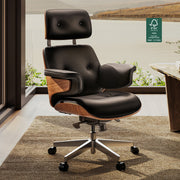
For executive offices, the Royal II, Silicone & Leather Executive Ergonomic Office Chair provides the necessary high-back support and sophisticated aesthetic required for long consultations. Its design ensures that even during a 90-minute portfolio review, the user maintains a healthy posture through its integrated lumbar support and premium materials.

3. Support for Movement (The Sit-Stand Paradigm)
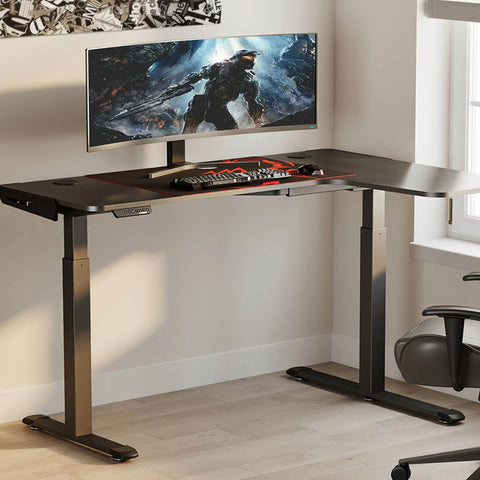
Modern financial work is no longer strictly sedentary. A systematic review by Cochrane (2018) concluded that sit-stand desks can reduce sitting time by approximately 84 to 116 minutes per day. In a private banking suite, providing a height-adjustable surface signals a commitment to the well-being of both the advisor and the client.
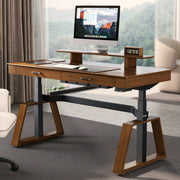
The Zen Pro Series, 87"/72" Executive Standing Desk with Cabinets Set represents the pinnacle of this integration. Featuring a Lauren Black Gold Sintered Stone desktop, it combines the luxury of traditional banking furniture with the health benefits of modern ergonomics.

4. Technology Integration and Cable Management
A common mistake in suite renewal is neglecting the "invisible" needs of the modern client. Integrating wireless charging and discreet cable ports is no longer a luxury but an expected convenience.
- Check: Are there accessible power outlets for client laptops or tablets?
- Check: Does the desk surface provide integrated technology without cluttering the aesthetic?
Practical Recommendations for Implementation
Once the furniture is selected, the layout must be optimized to prevent strain. Following the OSHA eTools for Computer Workstations, the top of the monitor should be at or slightly below eye level, and the screen should be roughly an arm's length away.
For the most effective work rhythm, we recommend the "20-8-2" rule pioneered by Cornell University Ergonomics Web:
- 20 Minutes Sitting: In a neutral, supported posture.
- 8 Minutes Standing: To encourage blood circulation and muscle activation.
- 2 Minutes Moving: A short walk or stretch to reset the musculoskeletal system.
In consultation areas where multiple staff members might share a space, the Flex, Dual-Backrests Ergonomic Office Chair is an excellent choice. Its innovative dual-backrest design moves independently to adapt to the body's natural shape, providing targeted lumbar support for different users without the need for complex manual adjustments.

To maintain a clean and professional environment, storage solutions like the 19" File Storage Cabinet, Dark Walnut should be utilized to keep the consultation area free of clutter, which can otherwise lead to cognitive distraction.
Strategic Investment Outlook
Upgrading legacy banking furniture is a multifaceted decision that involves balancing heritage with health. While a historic piece may carry brand equity, it should not come at the cost of the user's well-being or the firm's efficiency. As noted in The 2026 Workstation White Paper: Converging Ergonomic Science and Sustainable Engineering, the future of professional environments lies in the seamless convergence of ergonomic science and high-end materials.
By adhering to international standards like ISO 9241-5 and BIFMA G1, and selecting furniture that supports the physiological needs of the human body, financial institutions can create spaces that truly reflect their commitment to excellence and long-term stability.
Disclaimer: This article is for informational purposes only and does not constitute professional medical, legal, or financial advice. Individuals with pre-existing musculoskeletal conditions should consult a qualified healthcare professional before making significant changes to their workstation setup.
References
- BIFMA G1-2013 Ergonomics Guideline for Furniture
- Cochrane: Workplace interventions for reducing sitting at work (2018)
- Cornell University Ergonomics Web — Workstation Guides
- ISO 11226:2000 Evaluation of static working postures
- JLL: Four ways to refresh the office for hybrid working
- OSHA eTools: Computer Workstations
- The 2026 Workstation White Paper


Leave a comment