

If you need a lift recliner for small spaces, start with the room, not the showroom. The right chair can work in an apartment or compact den when you confirm doorway clearance, wall space, and the chair’s full recline path before checkout. In practice, fit depends less on the marketing label and more on the actual dimensions, the mechanism, and how you plan to live around it.

Will a Lift Recliner Fit in a Small Room?
Yes, often it will, but only if the chair matches the room’s usable footprint, not just the corner where it will sit. A lift recliner for small spaces needs room for the base, the back when it moves, the footrest, and the lift motion itself. That means the fit question has two parts: static size and operating space.
A wall hugger lift chair can help because its mechanism is designed to reduce rear wall clearance compared with traditional recliners. Still, less clearance is not the same as no clearance. A chair can fit visually and still block a doorway, a heating vent, or the path to a bedroom or kitchen once it reclines or rises.

For a compact room, think in three dimensions together: width, depth, and motion. Compact-looking does not always mean apartment-safe. A chair can be narrow and still take over the room once the seat moves forward and the footrest opens.
If you are planning a multi-use nook, it helps to picture how the chair will share space with a desk, table, or TV stand.
The safest mindset is conservative: assume the chair needs more room than the product photos suggest, then confirm every dimension against your actual floor plan.
Measure the Room Before You Shop
Measure the room before you compare models. That sounds basic, but it is the step most buyers skip when they are focused on comfort features. Start with the path into the room, then measure the wall where the chair will sit, and finally measure the clear floor area in front of the chair.
A helpful workflow is to measure the intended space, then measure the furniture in its fully extended position, then compare both against the room’s circulation path. This is especially useful when you are sizing a lift recliner for small spaces.
If you are in an apartment, do not forget the move-in path. Door openings, stair turns, elevators, and hallway jogs can matter as much as the room itself. The standard residential door size is often 32 by 80 inches, and that can still be a tight squeeze once you account for packaging, frame depth, and the angle of approach.
The ADA standards also reinforce the idea that usable space matters, not just object size. For example, accessible routes and clear floor space are designed so a person can move, turn, and use a space safely; the ADA accessibility standards are a good conservative framework for circulation planning.
A simple measurement checklist:
- Measure the wall width where the chair will sit.
- Measure the open floor space in front of the chair.
- Measure from the wall to the nearest obstacle, including baseboards, vents, and trim.
- Measure the doorway and hallway route to the room.
- Measure the lift path if the chair will be used near a coffee table or bed.
If any number feels close, round up the space requirement rather than down.
Wall-Hugger Clearance Versus Compact Footprint
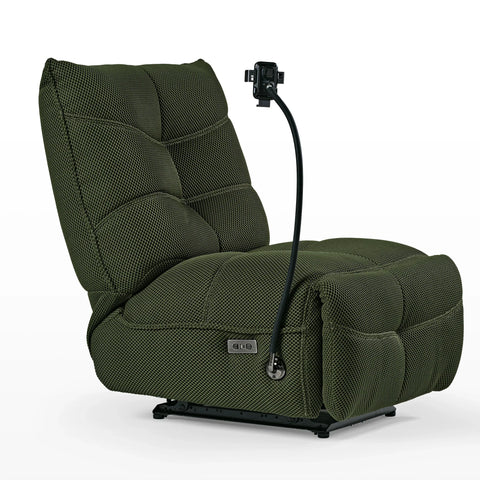
The phrase wall hugger lift chair sounds like it solves everything, but the real story is more specific. Wall-hugger refers to the mechanism, while compact footprint refers to the chair’s base size and shape on the floor. You need both to work in a small room.
Mechanically, a wall-hugger design can keep the back closer to the wall while the seat and footrest move forward during recline. That is why wall hugger power lift chair dimensions often matter more than the product name. Some models need only about 4 to 6 inches of rear clearance, but that is model-specific. Treat it as a bounded range, not a promise.
Here is a practical comparison of what to look for:
| Fit Factor | What It Means | What To Check |
|---|---|---|
| Wall clearance | Space behind the chair when upright and reclined | Confirm the manufacturer’s rear-clearance requirement in the product spec sheet |
| Footprint | Space the chair occupies on the floor | Measure width, depth, and the widest points of the arms and base |
| Recline path | Space needed as the chair moves | Verify the full extended length, not just the seated depth |
| Lift zone | Space needed for safe standing assistance | Make sure nearby tables, rugs, and walls do not interfere |
| Traffic lane | Walking path around the chair | Leave a clear route to doors and other furniture |
When shoppers search for wall hugger power lift chair dimensions, they often focus on rear clearance alone. That is only one part of the equation. A chair with low wall clearance can still be too deep, too wide, or too long once fully reclined.
The mechanism can save rear space by moving the seat forward as the chair reclines, but it does not remove the need to check the full operating envelope.
If you are comparing styles, the best small space lift recliner recommendations usually come from models that balance three things: modest width, manageable depth, and a mechanism that does not demand excessive rear clearance. That balance matters more than any single feature.
What to Check in the Spec Sheet
The spec sheet is where a promising chair becomes either a real candidate or a pass. For a compact lift chair for apartments, check every measurement that affects fit, delivery, and everyday use.
Start with the chair’s listed width, depth, and height. Then look for the fully reclined depth, wall clearance requirement, seat height, seat width, and lift capacity. Those numbers tell you whether the chair is likely to work in a small room, but they also help you judge whether you can stand up, sit down, and move around the chair comfortably.
A few spec-sheet details matter more than most shoppers expect:
- Width at the widest point. Arms, wings, and side controls can extend farther than the seat itself.
- Depth in the reclined position. This is usually the biggest space variable.
- Wall clearance requirement. Useful, but only when paired with the reclined depth.
- Seat-to-floor height. Affects standing ease and foot placement.
- Clearance around nearby surfaces. A console table or window ledge can become a problem when the chair lifts or reclines.
If the chair will need to pass through a tight hallway or apartment entry, a tight-entryway fitting article can help you sanity-check the delivery route.
The ADA standards are helpful here as a conservative reference for accessible clearances and usable routes, even if your apartment is not being built to those standards. When a chair or side table cuts into the route, the space can feel much smaller than the measurements suggest.
For caution around expectations, keep in mind that product pages may summarize mechanism behavior, but they do not replace your room measurements. A wall hugger lift chair may be a better fit than a traditional recliner, yet the actual fit still depends on the exact dimensions listed for that model.
Best Fit Moves for Apartment Layouts
A small room usually works best when the lift recliner becomes part of a plan rather than an isolated object. In apartments, the layout should support the chair, the path to the kitchen or bedroom, and the other furniture you use every day.
One of the easiest small-space moves is to place the chair against the longest uninterrupted wall. That usually gives you the best balance of openness and traffic flow. If you need the chair near a window, make sure window treatments, baseboard heaters, and radiators will not interfere with recline or lift motion.
Another smart move is to choose a side table that is proportionate to the chair. Oversized furniture makes a room feel tighter than it is. A compact surface can hold a lamp, water, charger, and book without crowding the lift path.
Use these layout tactics when you are fitting a wall hugger lift chair into an apartment:
- Keep the chair off the main travel lane.
- Avoid placing it where a reclined footrest will block a doorway.
- Leave enough side clearance for a walker, cane, or rolling cart if needed.
- Use visual anchors like a rug edge or lamp base to define the seating zone.
- Choose slimmer companion furniture so the chair can remain the focus.
The 36-inch walkway benchmark is a practical guide for keeping a route comfortable, even though real homes do not always allow it everywhere. In many apartments, a chair works better diagonally in a corner than squarely in the center of a wall. That can open a walking lane while still keeping the seat easy to reach.
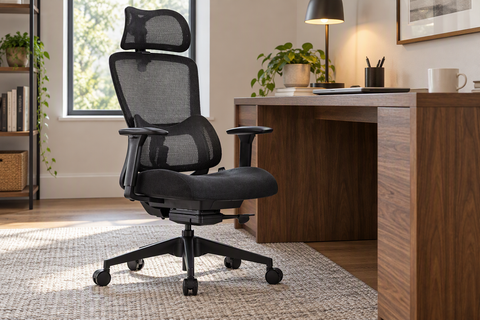
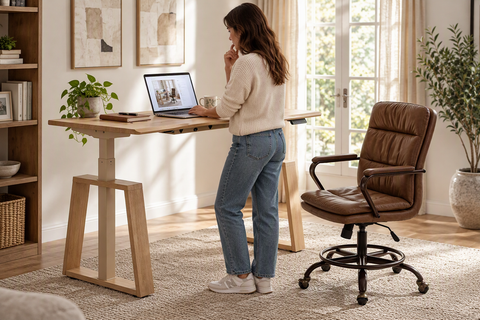
If you want a broader room-planning reference while you compare options, the same approach used for office or hybrid spaces can help. A seating area that shares space with a desk or media console needs crisp boundaries, just like a compact work zone.
Final Fit Check Before You Buy
Before you add a chair to cart, run one last fit check. Confirm the room measurements, the delivery path, and the chair specs all line up.
If any answer is uncertain, pause and remeasure. That caution matters in apartments, where a few inches can determine whether a chair feels comfortable or crowded. If the chair clears your checklist, compare compatible options and choose the lift recliner for small spaces that matches your room plan.
FAQs
How Much Wall Clearance Does a Wall Hugger Lift Chair Usually Need?
It varies by model. Some wall-hugger mechanisms are designed to reduce rear clearance significantly, but the spec sheet is the final word. Focus on the listed clearance for the exact chair, not the general category name.
Is a Smaller Chair Always Better for an Apartment?
Not necessarily. A chair can be compact in width but still too deep once reclined. The better choice is the chair that matches your floor plan, your doorway route, and your sitting height, even if another model looks smaller at first glance.
Do I Need to Measure the Lift Position Too?
Yes. The lift motion can change how much room you need in front of the chair and around the arms. If a table, rug, or ottoman sits too close, the chair may feel awkward even if the reclined depth works on paper.
What Makes a Wall Hugger Lift Chair Different From a Regular Power Recliner?
The mechanism is the key difference. A wall-hugger style is intended to move the seat forward as it reclines so it can sit closer to the wall than a traditional recliner. But the room still has to accommodate the full motion envelope.
What Should I Prioritize If My Apartment Is Very Tight?
Prioritize usable path first, then chair depth, then width, then extra features. If you can only have one seating area, choose the model that preserves circulation and does not block a doorway or walkway when it is fully extended.
Can a Lift Recliner Work in a Studio Apartment?
Yes, if you treat it as a space plan, not a single purchase. In a studio, the chair often needs to coexist with sleeping, dining, and work zones. That makes clearance and traffic lanes more important than in a larger living room.




Leave a comment