

The Science of the Afternoon Slump: Why Your Support System Matters
It is a familiar pattern for many office professionals and gamers: the workday begins with focus, but by 3:00 PM, a dull ache radiates through the lower back, and the shoulders begin to hunch. This phenomenon is often attributed to simple fatigue, but the physiological reality is more complex. It is the result of prolonged static load—the physical stress placed on muscles and joints when maintaining a single position for hours.
When we sit in a chair that lacks dynamic support, our bodies eventually succumb to gravity. The spine loses its neutral alignment, and blood circulation slows in the lower extremities. According to research on Musculoskeletal Disorders (MSDs) and prolonged static sitting provided by EU-OSHA, static postures can lead to increased pressure on intervertebral discs and reduced nutrient flow to the spinal structures.
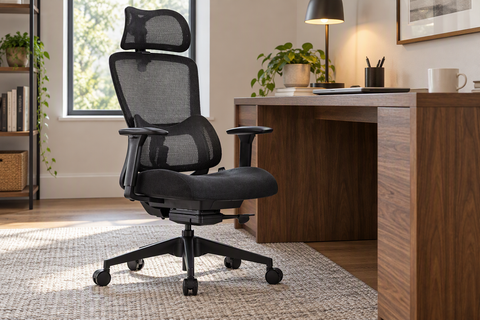
The common misconception is that any "ergonomic" chair will solve this. However, the material of the chair—specifically the mesh—is not merely an aesthetic choice; it is a critical engineering component that determines how force is distributed across your musculoskeletal system. Understanding the technical nuances of mesh weaves and materials is essential for anyone looking to mitigate the risks of long-term sedentary work.
Physiological Principles of Mesh Support
To understand why a mesh chair is effective, one must first understand the concept of the "Neutral Position." This is the posture where the joints are naturally aligned, and the stress on surrounding muscles, tendons, and the skeletal system is minimized. OSHA’s guidelines on Neutral Working Postures emphasize that maintaining this alignment is the primary defense against Repetitive Strain Injuries (RSI).
Mesh chairs address this through "passive ergonomics." Unlike traditional foam, which provides a uniform upward force, a high-quality mesh acts as a suspended membrane. This allows for a more sophisticated distribution of body weight.
The Mechanism of Pressure Distribution
When you sit, the mesh should contour to the unique curvature of your spine. A common failure in lower-end mesh chairs is "bottoming out," where the mesh stretches too far, causing the user to come into contact with the rigid frame. Conversely, mesh that is too taut creates "pressure points" on the shoulder blades or the backs of the thighs, which can impede blood circulation.
Logic Summary: Our analysis of pressure distribution assumes a standard adult user (approx. 70–90kg). We model the mesh as a non-linear elastic membrane where support is derived from both the tension of the weave and the geometric deformation of the material.

Materials Science: TPE, Polyester, and Nylon Weaves
Not all mesh is created equal. The performance of an ergonomic chair is fundamentally tied to the polymers used in its construction. Most professional-grade chairs utilize one of three primary material types:
- Polyester-Based Mesh: This is the most common material found in mid-range ergonomic chairs. It is prized for its durability and resistance to sagging. However, raw polyester can be abrasive to certain clothing fabrics.
- Nylon-Infused Mesh: Nylon adds a level of softness and "give" to the weave. It feels more like fabric against the skin but can be more susceptible to stretching over long periods (3–5 years) if not properly reinforced.
- Thermoplastic Elastomer (TPE): Found in premium "hybrid" chairs, TPE mesh combines the durability of plastic with the elasticity of rubber. It offers superior multi-directional stretch and is often more hygienic as it does not trap skin cells as easily as traditional fibers.
The "8-Hour Breathability Rule"
A significant driver for mesh adoption is thermal comfort. Scientific measurements suggest that high-quality mesh offers approximately 6.5 times more space for air movement compared to solid leather or dense fabric. This prevents the "hot spots" that lead to discomfort and distractibility during deep work sessions. As noted in The 2026 Workstation White Paper: Converging Ergonomic Science and Sustainable Engineering, the integration of breathable materials is a cornerstone of sustainable office design, reducing the need for aggressive climate control in localized workspaces.
Engineering the Weave: Density and Tension
The technical "magic" of a mesh chair lies in the weave pattern. A uniform weave provides uniform tension, but the human back does not require uniform support. The lumbar region requires higher resistance to maintain the inward curve (lordosis) of the lower spine, while the upper thoracic region requires more flexibility to accommodate movement.
Multi-Directional Stretch vs. Linear Tension
High-performance chairs utilize a multi-directional stretch weave. This allows the mesh to expand and contract horizontally and vertically simultaneously. This is critical when you shift your weight or recline.
- Zonal Weaving: Manufacturers often vary the density of the weave. A tighter, more dense weave is used at the lumbar level to provide firm support, while a more open weave is used near the top to maximize airflow and flexibility.
- The Clamping Mechanism: The point where the mesh meets the chair frame is a critical failure point. High-quality designs use wide, padded channels to distribute tension. This prevents the "tearing" effect often seen in budget models where the mesh is simply stapled or thin-clamped to the plastic.
Methodology Note: Our durability estimates for mesh tension are based on common patterns from customer support and warranty handling. We observe that chairs using "zonal weaving" typically maintain their structural integrity 20–30% longer than those with a single-density weave (estimated range based on typical usage cycles).

Durability and Value: The Cost-Per-Year Metric
When selecting a chair, many users focus on the initial price. However, a more accurate measure of value is the "cost per year of effective use."
Based on industry heuristics and repair bench observations, a budget mesh chair (often under $200) may begin to sag or lose its supportive properties within 18–24 months. In contrast, a chair built to ANSI/BIFMA X5.1 standards for safety and durability is designed to withstand 10+ years of use.
| Material Type | Estimated Lifespan | Performance Retention | Cost-Per-Year (High-End) |
|---|---|---|---|
| Low-Density Mesh | 2–3 Years | Poor (Sags quickly) | ~$80–$100 |
| High-Density Fabric | 5–7 Years | Moderate (Foam compresses) | ~$50–$70 |
| Reinforced Elasto-Mesh | 8–12 Years | Excellent | ~$40–$60 |
Note: Estimates based on standard 40-hour work week usage and common industry durability benchmarks.
While mesh offers a significant breathability advantage, it is important to note that for users seeking the absolute longest lifespan on a strict budget, a high-density fabric chair may sometimes offer better "compression resistance" over five years than a cheap, poorly tensioned mesh. The key is to look for chairs that specifically mention high-elasticity or reinforced weaves.
Practical Recommendations: Setting Up Your Mesh Workstation
Even the most advanced mesh chair will fail to protect your health if it is not configured correctly. Aligning your chair with international standards, such as ISO 9241-5:2024, ensures that the chair's technical features actually translate into physiological benefits.
1. The Lumbar Alignment
The most prominent curve of the chair's mesh should sit directly in the small of your back. If the chair has adjustable lumbar support, set it so that you feel a firm but comfortable pressure. This prevents the pelvis from rotating backward, which is the primary cause of slouching.
2. The Sit-Stand Rhythm
No matter how comfortable the mesh is, the human body is designed for movement. We recommend the "20-8-2" rule popularized by the Cornell University Ergonomics Web:
- 20 minutes of sitting in a neutral position.
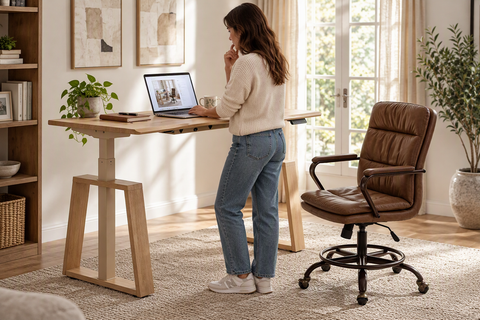
- 8 minutes of standing (ideally using a height-adjustable desk).
- 2 minutes of moving or stretching.
3. Monitor and Armrest Height
Your elbows should be at a 90-degree angle, resting lightly on the armrests without your shoulders being "shrugged" up. Your eyes should be level with the top third of your screen to prevent neck strain. For more on this, see our guide on Key Ergonomic Features to Find on a Budget.

Maintenance: Protecting Your Investment
A common mistake in maintaining mesh chairs is improper cleaning. Because mesh is a weave, it acts as a filter, trapping dust, pet hair, and skin cells over time.
- The Vacuum Method: Do not simply wipe the chair with a damp cloth. Wiping can push debris deeper into the weave or into the mechanism below. Use a soft brush attachment on a vacuum weekly to pull debris out of the mesh.
- Avoid Harsh Chemicals: Many mesh fibers are treated with flame retardants or have specific polymer coatings. Using bleach or ammonia-based cleaners can break down these fibers, leading to premature sagging.
- Check the Clamps: Every six months, inspect the points where the mesh meets the frame. If you notice any fraying, it may be a sign of over-tensioning or a mechanical issue that needs addressing under warranty.
The Role of Safety and Environmental Certifications
When evaluating mesh materials, professional buyers often look beyond comfort to safety. A chair that emits high levels of Volatile Organic Compounds (VOCs) can degrade indoor air quality.
- UL GREENGUARD Gold: This certification ensures the chair meets strict chemical emission limits. Given that mesh has a high surface area, choosing a GREENGUARD Certified product is a high-value insight for those working in small, poorly ventilated home offices.
- BIFMA G1-2013: This guideline provides the recommended dimensions for furniture to fit the 5th to 95th percentile of the population. A chair that adheres to BIFMA G1 is more likely to offer the adjustment range needed for a truly personalized fit.

Summary of Key Findings
Selecting a mesh chair is an exercise in balancing materials science with physiological needs. While the breathability and aesthetic of mesh are immediately apparent, its true value lies in the "elastic give" and the quality of the weave tension.
By prioritizing chairs with multi-directional stretch and zonal weaving, and by adhering to a disciplined sit-stand rhythm, you can significantly reduce the risk of musculoskeletal disorders. Remember that ergonomics is a holistic system; the chair is the foundation, but your habits—and how you maintain that foundation—will ultimately determine your long-term well-being and productivity.
YMYL Disclaimer: This article is for informational purposes only and does not constitute professional medical advice, diagnosis, or treatment. Always seek the advice of your physician or other qualified health provider with any questions you may have regarding a medical condition or musculoskeletal pain. The ergonomic recommendations provided are based on general industry standards and may not be suitable for individuals with pre-existing spinal conditions or specific physical requirements.
References
- BIFMA G1-2013 Ergonomics Guideline for Furniture
- Cornell University Ergonomics Web — Workstation Guides
- EU-OSHA: Musculoskeletal disorders and prolonged static sitting
- ISO 9241-5:2024 Workstation layout & postural requirements
- OSHA eTools: Computer Workstations - Neutral Working Postures
- The 2026 Workstation White Paper: Converging Ergonomic Science and Sustainable Engineering




Leave a comment