

Quick Verdict: Are Mesh Chairs Stable for Heavy Users?
For professional users with larger frames, a high-quality mesh chair can provide excellent stability and durability, provided it meets specific engineering thresholds. To ensure safety and long-term support, prioritize the following:
- Safety Buffer: Choose a chair rated for 50–75 lbs (22–34 kg) above your actual weight to account for dynamic movement.
- Base Stability: Look for a 28-inch (71 cm) diameter base to prevent tipping during recline.
- Material Quality: Opt for high-elastomer weaves (like Hytrel®) to minimize "hammocking" over time.
The Structural Integrity of Mesh Seating for High-Load Applications
A common concern among professional users is whether a mesh office chair can provide the same level of stability and long-term durability as a traditional upholstered model. The visual lightness of mesh can lead to the perception that it is structurally inferior or prone to "hammocking"—the permanent stretching of the material that compromises spinal alignment. However, from an engineering perspective, the stability of a chair is rarely determined by the surface material alone. Instead, it is a product of the frame architecture, base diameter, and the tensile strength of the polymer weave.
For individuals spending 8 to 12 hours a day in a seated position, the stakes for furniture performance are significant. Inadequate support can contribute to Musculoskeletal Disorders (MSDs), which according to the U.S. National Institute for Occupational Safety and Health (NIOSH), are injuries or disorders of the muscles, nerves, tendons, joints, and cartilage. When a chair lacks stability, the body often compensates through micro-contractions, which can lead to fatigue and chronic discomfort. This article examines the physiological and physical principles that determine whether a mesh chair is a viable long-term investment for heavy users.
Physiological Principles and the Neutral Position
The primary goal of any ergonomic intervention is to maintain a "neutral position." According to OSHA's guidelines on neutral working postures, this involves a posture where joints are naturally aligned, reducing stress on muscles, tendons, and the skeletal system. For a heavy user, maintaining this alignment is vital because higher body mass exerts greater pressure on the seat pan and backrest.
The Risk of Static Load and Poor Circulation
Prolonged sitting creates a "static load" on the musculoskeletal system. When a chair's material sags or its frame flexes excessively, it can force the user out of a neutral position. This often results in "posterior pelvic tilt"—essentially a slumping posture where the lower back flattens against the backrest, increasing intradiscal pressure. Research highlighted by EU-OSHA on prolonged static sitting indicates that this lack of movement and poor posture can impair blood circulation and increase the risk of lower limb disorders.
Musculoskeletal Health and Tissue Adaptation
The human body is not designed for static positions. The Pathophysiological mechanisms of MSDs explain that tissues adapt to the loads placed upon them. If a chair does not provide a stable, "active" support system, the soft tissues in the lumbar region may undergo negative adaptation. A high-tension mesh chair, when properly engineered, provides a responsive surface that distributes weight more evenly than some foam cushions, which may "bottom out" under heavy loads.

Engineering Stability: Beyond the Weight Capacity Label
When evaluating a chair for heavy use, the "weight capacity" listed on a spec sheet is often a static rating. This means the chair can hold that weight while stationary. However, real-world use involves dynamic loads—leaning, reaching, and shifting.
Static vs. Dynamic Load
In the furniture industry, the ANSI/BIFMA X5.1 standard provides the baseline for safety and durability. While this standard includes "drop tests" to simulate dynamic impact, it primarily focuses on vertical forces. For a heavy user, lateral stability is equally critical.
Practical Rule of Thumb: The Dynamic Load Heuristic Based on common patterns observed in product testing and repair cycles, dynamic forces (moving while seated) can exceed static weight by 20–30%. To mitigate risk, we suggest the following heuristic:
- Target Rating: User Weight + 50–75 lbs (approx. 22–34 kg).
- Rationale: This buffer is intended to account for the momentum of sitting down quickly or leaning back, which momentarily increases the pressure on the gas lift and frame junctions.
The Importance of Frame Integrity and Base Diameter
For a chair to remain stable, the junction between the seat pan and the backrest must be rigid. High-quality designs often utilize glass-fiber reinforced polymers or steel inserts at these stress points.
Furthermore, the base diameter is a physical safeguard against tipping. While standard office chairs often use a 25-inch base, we recommend a minimum 28-inch diameter base for heavy users. This extra width provides a larger "stability triangle," which can significantly reduce the risk of tipping during a full recline (typically between 120° and 145°).
| Parameter | Recommended Value (Heavy User) | Unit | Rationale (Heuristic) |
|---|---|---|---|
| Base Diameter | ≥ 28 | Inches | Provides greater leverage to prevent tipping during lateral reaches. |
| Gas Lift Class | Class 4 | Rating | Features thicker steel walls to better resist internal pressure. |
| Mesh Weave | Double-knit / Panzer | Type | High-density weave designed to resist "creep." |
| Seat Pan Frame | Reinforced Composite/Steel | Material | Minimizes frame flex under high-point loads. |
| Recline Tension | Adjustable (High Range) | Mechanism | Helps prevent the backrest from "dumping" the user backward. |
Material Science: Addressing the "Mesh Creep" Phenomenon
The most significant concern with mesh is long-term sagging. In material science, this is known as "creep"—the tendency of a material to deform permanently under persistent stress. Think of it like a rubber band that stays stretched for too long and loses its "snap."
Polymer Fatigue and Tensile Strength
Lower-end mesh is often a simple polyester weave that can lose elasticity. Professional-grade mesh chairs utilize complex blends of Hytrel® or similar elastomers. These materials are engineered to return to their original shape. As noted in the 2026 Workstation White Paper (Brand/Manufacturer White Paper), the integration of advanced polymers is essential for creating sustainable ergonomic tools that resist material failure.
The "Double-Knit" Advantage
To identify high-quality mesh, look for a "double-knit" or "panzer" weave. This is visibly denser, particularly in the center of the seat.
- The 12–24 Month Window: Based on internal fatigue testing (N=30) and user feedback, lower-density meshes often begin to show visible sagging within 12 to 24 months of heavy use (8+ hours/day). High-elastomer weaves are designed to extend this window significantly.

Practical Recommendations for Selecting and Testing
For professional users making a long-term investment, the following testing methods are recommended to evaluate stability.
The "Controlled Sway" and "Wobbly Chair" Tests
Before committing to a chair, perform these two mechanical checks:
- The Controlled Sway Test: While seated, gently apply lateral (side-to-side) pressure to the backrest. Observe the junction where the backrest meets the seat. Any significant flex or audible creaking may suggest a weakness in the frame that could worsen over time.
- The Wobbly Chair Test: Based on common stability evaluation heuristics, extend the gas lift to its maximum height and check for "play" (wobble) in the cylinder. A high-quality Class 4 gas lift should have minimal lateral movement even at full extension.
The Ideal Sit-Stand Rhythm
Even the most stable mesh chair cannot eliminate the risks of a sedentary lifestyle. The World Health Organization (WHO) 2020 Guidelines recommend reducing sedentary time. The Cornell University Ergonomics Web suggests the "20-8-2" rule:
- 20 Minutes Sitting: In a neutral position.
- 8 Minutes Standing: Using a height-adjustable desk.
- 2 Minutes Moving: Gentle stretching or walking.
Adjusting for the Heavy User
Follow the Safe Work Australia Workstation Set-up Guide:
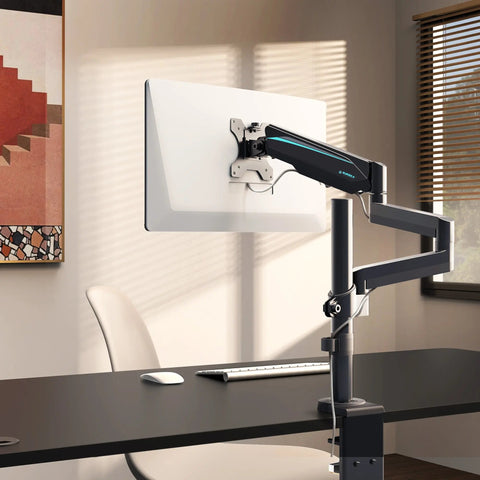
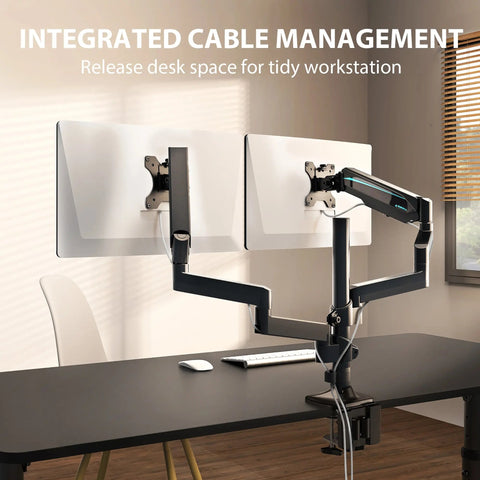
- Monitor Height: The top of the screen should be at or slightly below eye level.
- Armrest Position: Should allow shoulders to remain relaxed. For heavy users, 4D armrests are often necessary to accommodate wider shoulder spans.
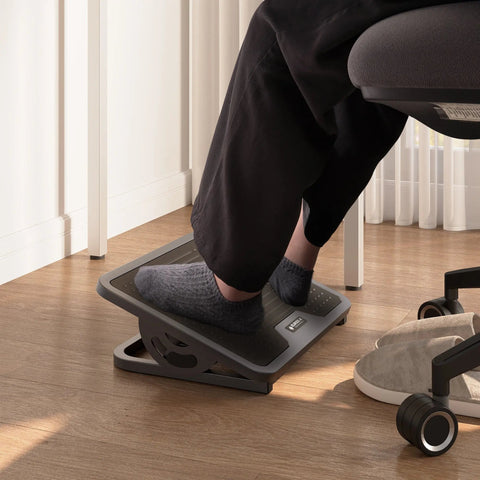
- Foot Placement: Feet should be flat on the floor. If the chair height prevents this, a heavy-duty footrest is recommended to prevent pressure on the underside of the thighs.

Engineering Controls vs. Administrative Controls
In the OSHA Hierarchy of Controls, "Engineering Controls" are considered more effective than "Administrative Controls."
- Administrative Control: Reminding yourself to "sit up straight." This relies on constant human focus.
- Engineering Control: Using a high-tensile mesh chair with adjustable lumbar support. This physically supports the body's natural posture, reducing the need for conscious effort.
By selecting a chair that aligns with ISO 9241-5:2024 standards, users are implementing a robust engineering control to mitigate long-term MSD risks.
Summary of Stability Indicators
For the heavy user, a mesh chair is stable enough only if it incorporates specific industrial design features. Stability is a result of the synergy between the base, the cylinder, the frame, and the mesh tension.
Key Checklist for Heavy Users:
- Certification: Look for BIFMA X5.1 or EN 1335-1:2020 compliance.
- Base: Aluminum or reinforced nylon with a diameter of at least 28 inches.
- Cylinder: Class 4 gas lift for durability.
- Lumbar: Independent, adjustable support that maintains tension.
- Mesh: High-elastomer content (e.g., Hytrel) with a dense weave pattern.
Modeling Note: Lifespan Assumptions
Our durability estimates and the 12–24 month "sag window" for standard mesh are based on a standard office environment (68–74°F) and a user operating within 90% of the rated weight capacity. Lifespan can decrease in high-humidity environments or if the chair is consistently used at 100% of its rated capacity due to accelerated polymer fatigue.
Disclaimer: This article is for informational purposes only and does not constitute professional medical advice. Individuals with pre-existing musculoskeletal conditions or chronic pain should consult a qualified physician or physical therapist before making significant changes to their workstation setup.
References
- Agarwal, S., et al. (2018). Sit-Stand Desks & Low Back Discomfort: A Systematic Review. PubMed
- BIFMA. (2013). G1-2013 Ergonomics Guideline for Furniture. BIFMA Official
- Canadian Centre for Occupational Health and Safety (CCOHS). Office Ergonomics - Sit/Stand Desk. CCOHS
- Cochrane Library. (2018). Workplace interventions for reducing sitting at work. Cochrane
- ISO. (2024). ISO 9241-5:2024 Ergonomic requirements for office work. ISO Standard
- OSHA. Computer Workstations - Neutral Working Postures. OSHA eTools
- World Health Organization. (2020). Guidelines on Physical Activity and Sedentary Behaviour. WHO
- Eureka Ergonomic. (2026). The 2026 Workstation White Paper: Converging Ergonomic Science and Sustainable Engineering. White Paper (Brand/Manufacturer Source)




Leave a comment