

The Unseen Foundation of a Minimalist Workspace
Imagine a home office that’s more than just a place to work. Picture a workspace sanctuary, a clean, elegant space designed for deep work and limitless creativity. Every element has a purpose. The desk is clear, the light is perfect, and the ambiance is calm. In this carefully curated environment, the wrong office chair can feel like a discordant note—bulky, complicated, and visually loud.
Many ergonomic chairs, designed for function above all else, seem to clash with a minimalist aesthetic. Their exposed knobs, complex levers, and heavy profiles can disrupt the very sense of order we seek. But what if you didn’t have to choose between a chair that supports your body and one that complements your style?
The truth is, the best minimalist office chairs don’t sacrifice ergonomics; they simply integrate them more thoughtfully. They blend sophisticated support systems into clean lines and uncluttered forms. This guide is for anyone looking to find that perfect balance. We’ll explore the key design principles, materials, and hidden features that allow an office chair to become a seamless part of your modern, decluttered setup.
Core Principles of Minimalist Chair Design
Minimalism in furniture isn’t about stripping away function—it’s about refining it. A truly minimalist chair is an exercise in intentionality, where every curve, material, and mechanism serves a purpose without adding visual noise.
Beyond the Obvious: Clean Lines and Uncluttered Silhouettes
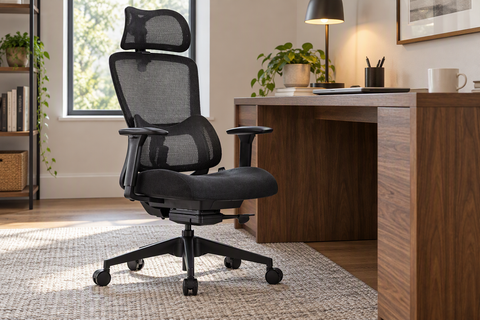
The first impression of a minimalist chair comes from its silhouette. It should feel like a single, cohesive object rather than an assembly of parts. This is achieved through continuous lines and a visually light profile. Expert designers often hide the chair’s complexity, integrating ergonomic mechanisms directly into the seat’s shell or undercarriage. Instead of seeing a collection of levers and knobs, you perceive a clean, uninterrupted form.
This design philosophy favors chairs with a slim backrest, a gracefully curved frame, and a base that feels grounded yet unobtrusive. The goal is to reduce the chair's visual weight, allowing it to complement the space rather than dominate it.
The Material Palette: Texture, Finish, and Feel
Materials are central to the minimalist aesthetic. They communicate quality and intention through texture and finish. For office chairs, the choice often comes down to mesh, fabric, or leather.
- High-Quality Mesh: A popular choice for its breathability and modern look. However, not all mesh is created equal. A high-quality, tightly woven mesh in a neutral matte finish will maintain its shape and clean look for years. Cheaper, shiny mesh, on the other hand, can sag and show wear, quickly disrupting the minimalist vibe.
- Performance Fabrics: Tightly woven fabrics in solid, neutral colors offer a soft, warm alternative to mesh. Look for materials with high durability ratings (often measured in "double rubs") and stain-resistant finishes to ensure they look crisp and clean over time.
- Matte Finishes: Polished chrome bases are often marketed as sleek, but their high reflectivity can create visual distraction in a well-lit room. A matte black, white, or satin-finished metal base typically reads as quieter and does a better job of hiding minor scuffs and dust, preserving the uncluttered look. The Onyx, Ergonomic Office Chair is a great example of how a clean mesh back and simple frame can deliver a minimalist feel without sacrificing core support.

A Quiet Color Story
Color plays a crucial role in creating a serene workspace. While black is a classic choice, it isn’t always the best one for a minimalist office. In smaller rooms or spaces with limited natural light, a dark chair can feel like a "black hole," absorbing light and making the space feel heavier.
Often, a light grey, soft white, or warm beige chair will actually enhance a minimalist aesthetic. These lighter tones tend to recede visually, blending in with the surroundings and contributing to an open, airy ambiance. The key is to choose a color that complements the overall palette of your workspace, creating a harmonious and unified look.
Ergonomics Without the Clutter: The Art of Hidden Adjustability
A chair that looks beautiful but causes discomfort is a failure in design. True minimalism marries form and function. The most innovative minimalist chairs offer a full suite of ergonomic adjustments, but they do so with subtlety and grace.
Why Adjustability is Non-Negotiable
Ergonomics is the science of fitting a workspace to the user. A non-adjustable chair forces your body to conform to it, often leading to poor posture and discomfort. According to the Occupational Safety and Health Administration (OSHA), achieving a neutral body position is key to preventing musculoskeletal strain. This means your feet should be flat on the floor, your knees at a 90-degree angle, your spine supported in its natural curve, and your arms resting comfortably at your sides.
Achieving this ideal posture is only possible with an adjustable chair. Features like seat height, seat depth, lumbar support, and armrest position allow you to tailor the chair to your unique body shape and size.
The Mechanisms of Minimalism
So, how do you get full adjustability without the visual clutter of bulky levers and knobs? The answer lies in clever, integrated design.
- Low-Profile Paddles: Instead of large, protruding levers, look for sleek, low-profile paddles that sit flush against the underside of the seat. Often color-matched to the chair's frame, they become nearly invisible from most sightlines.
- Concealed Controls: Some chairs hide adjustment controls within the armrests or in a discreet ring under the seat edge, allowing for quick changes without disrupting the chair’s silhouette.
- Weight-Sensing Recline: Advanced chairs may feature a self-adjusting recline mechanism that automatically adapts to your body weight, providing the right amount of tension without needing a manual knob.
The Lira, Ergonomic Office Chair embodies this principle perfectly. Its adjustments are seamlessly integrated into its unique, flowing frame, providing full ergonomic control while maintaining a strikingly clean and modern aesthetic.

Key Adjustments for a Minimalist Chair
When evaluating a chair, prioritize these core ergonomic features. This checklist ensures you get the support you need, even from a visually simple design.
| Feature | What to Look For | Why It Matters |
|---|---|---|
| Seat Height | A pneumatic lever for smooth, easy adjustment. The ideal range should allow your feet to rest flat on the floor with your thighs parallel to it. | Proper height is the foundation of good posture and is essential for preventing leg and back strain. |
| Seat Depth | A sliding mechanism to adjust how far the seat pan extends. Look for a range that allows 2-4 inches of space between the seat edge and the back of your knees. | According to guidelines like the BIFMA G1-2013 Ergonomics Guideline, proper depth ensures even weight distribution and prevents circulation issues in the legs. |
| Lumbar Support | Ideally, it should be adjustable in height and sometimes depth to fit the natural curve of your lower back (the L3-L5 region). | Targeted support for the lumbar spine is critical for preventing lower back pain during long periods of sitting. |
| Armrests | 3D or 4D adjustable armrests (height, width, pivot). Low-profile or "tuckable" arms that can slide under the desk reduce visual clutter. | Properly positioned armrests support the weight of your arms, reducing strain on your neck and shoulders. |
Proportional Harmony: Sizing Your Chair for a Balanced Workspace
In a minimalist setup, every object's relationship to the space and other objects matters. The size and scale of your office chair are just as important as its style and color.
Debunking a Myth: The Smallest Chair Isn't Always the Most Minimalist
There's a common misconception that to achieve a minimalist look, you should choose the smallest chair possible. In reality, an underscaled chair can make a workspace feel unbalanced and visually awkward, especially when paired with a substantial desk. It creates a sense of disproportion that draws unwanted attention. The goal is not to make the chair disappear, but for it to exist in quiet harmony with its surroundings. A chair that is properly scaled to your desk and the room will feel calmer and more integrated than one that is noticeably too small.
A good rule of thumb is to aim for a chair width that is roughly 60-65% of the width of your desk's seating area. This creates a pleasing visual balance and ensures the setup feels composed and intentional.
The Seat Itself: Comfort in Simplicity
The design of the seat cushion is a critical detail. Many people associate a thin, flat seat with minimalism, but this can be a trap. An extremely thin seat pad often trades long-term comfort for a short-term aesthetic, "bottoming out" over time and creating pressure points.
Instead, look for a subtly contoured seat with a "waterfall" edge—a gentle downward slope at the front. This design, recommended in ergonomic guidelines, reduces pressure on the back of your thighs and promotes better circulation. A high-quality, medium-firm foam that allows for about 10-20 mm of compression provides the ideal balance of support and comfort without appearing bulky.
Final Touches for a Truly Minimalist Setup
You've chosen a chair with a clean silhouette, high-quality materials, and hidden ergonomics. Here are a few final considerations to perfect your workspace sanctuary.
Pro Tip: A Low-Profile Mat Creates a Cleaner Foundation
We often think of a bare floor as the most minimalist option. However, a chair's casters can create visual noise as they scatter across the floor, and they can leave scuffs and marks over time. A low-profile, solid-color chair mat that closely matches your flooring can actually enhance the minimalist feel. It creates a clean, defined "base" for the chair, grounding it in the space and reducing the visual clutter of rolling casters and cable shadows.
Your Minimalist Office Chair Buying Checklist
Use this simple checklist to guide your decision-making process:
-
Aesthetic Check:
- Does it have a clean, continuous silhouette?
- Are the materials high-quality and the finishes matte?
- Does the color complement your workspace palette?
-
Functional Check:
- Does it offer essential adjustments (seat height, depth, lumbar)?
- Are the adjustment controls discreet and well-integrated?
- Are the armrests low-profile or able to tuck under your desk?
-
Durability and Quality Check:
- Is the chair certified to industry standards, such as ANSI/BIFMA X5.1, which tests for safety and durability?
- Are the materials built to last (e.g., high-density foam, durable mesh)?
Wrapping Up: Your Workspace Sanctuary Awaits
Creating a minimalist workspace is an act of intention. It’s about curating an environment that clears away distraction and allows you to focus on what truly matters. Your office chair shouldn't be an obstacle to that vision; it should be its foundation.
By prioritizing designs with clean lines, high-quality materials, and cleverly hidden ergonomics, you can find a chair that offers uncompromising support without sacrificing your aesthetic. It’s not about having less; it’s about making room for more—more focus, more comfort, and more inspiration. Now you have the tools to choose a chair that not only supports your body but elevates your entire workspace.
Disclaimer: This article is for informational purposes only and does not constitute professional medical advice. The ergonomic suggestions provided are general guidelines. If you have pre-existing health conditions or experience persistent pain, please consult with a qualified physician or a certified ergonomics professional to determine the best setup for your individual needs.
References
- Occupational Safety and Health Administration (OSHA). (n.d.). Computer Workstations eTool: Good Working Positions. Retrieved from https://www.osha.gov/etools/computer-workstations/positions
- BIFMA International. (2013). BIFMA G1-2013 Ergonomics Guideline for Furniture. Retrieved from https://www.bifma.org/news/119419/Updated-BIFMA-Ergonomics-Guideline-Now-Available.htm
- Micom Laboratories Inc. (n.d.). BIFMA X5.1 Testing. Retrieved from https://www.micomlab.com/micom-testing/bifma-x5-1/




Leave a comment