

Your Checklist for a Modern Minimalist Desk Setup: Creating a Workspace Sanctuary
Imagine a home office that sparks your limitless creativity. You walk into the room, and instead of a tangle of wires and a stack of unfinished business, you are greeted by a serene expanse of walnut and "visual whitespace." Here, every object has a purpose, and every line serves the flow of your ideas. This is your workspace sanctuary—a place where deep work isn't just a goal, but a natural state of being.
Building a minimalist desk setup is about making smart, intentional choices rather than simply removing items. It is a transformation from a state of chaos to one of mindful productivity. By focusing on the intersection of aesthetic elegance and ergonomic science, you can create an environment that supports your physical health while reducing the cognitive load that clutter inevitably brings.
This checklist serves as your definitive guide to constructing that ideal environment, grounded in industry standards like the BIFMA G1-2013 Ergonomics Guideline and the latest findings in workplace wellness.
1. The Foundation: An Active, Height-Adjustable Desk
The centerpiece of any minimalist sanctuary is the desk. In a modern setup, a desk is no longer a static piece of furniture; it is a tool for movement. The core principle of "functional minimalism" suggests that your furniture should adapt to you, not the other way around.
When selecting a desk, look for a surface that offers enough room for "thinking" and "execution" modes without overwhelming the room. The Ark Executive Standing Desk (63"x29") exemplifies this balance. Its walnut finish provides a warm, organic aesthetic that grounds the room, while its dual-motor system allows for a smooth transition between sitting and standing.
Why Height Adjustability Matters: According to a systematic review by Cochrane: Workplace interventions for reducing sitting at work, sit-stand desks can significantly reduce sitting time by approximately 84 to 116 minutes per day. This reduction is a vital step in interrupting long periods of static behavior, which the WHO 2020 Guidelines on Physical Activity & Sedentary Behaviour identify as a key factor in improving long-term health outcomes.
Minimalist Checklist for the Desk:
- Integrated Storage: Choose a desk with built-in drawers to hide away stationery and tech, keeping the surface clear.
- Clean Geometry: Look for tapered or trapezoidal legs that provide stability without the visual "weight" of traditional boxy desks.
- Smooth Operation: Ensure the motor is quiet (typically under 50dB) to maintain the ambiance of your sanctuary during transitions.

2. The Ergonomic Anchor: Dynamic Seating
If the desk is the foundation, the chair is the anchor. A common mistake in minimalist setups is choosing a "designer" chair that looks beautiful but offers zero lumbar support. True minimalism in ergonomics means the chair should "disappear" beneath you, providing support so intuitive that you forget it’s there.
The Flex, Dual-Backrests Ergonomic Office Chair is designed with this philosophy. Its dual backrest moves independently, adapting to your natural movements as you lean in to focus or recline to reflect. This aligns with ISO 9241-5:2024 standards, which emphasize the importance of postural requirements and the ability of a chair to encourage frequent posture changes.
The Logic of Support: The OSHA eTools for Computer Workstations highlight that a chair must provide firm lumbar support and a pressure-relieving seat to maintain a neutral spinal posture. When your body is properly supported, your brain can redirect energy from managing physical discomfort to solving complex problems.
Logic Summary: Based on the The 2026 Workstation White Paper: Converging Ergonomic Science and Sustainable Engineering, we prioritize "dynamic support" over static padding. This is because static positions, even "correct" ones, lead to muscle fatigue over time.
3. Visual Whitespace: The 70% Surface Rule
A hallmark of a high-performance minimalist setup is the "70% Rule." Our internal practitioners recommend keeping at least 70% of your desktop surface completely clear. This visual whitespace is critical for reducing cognitive load. Research suggests that visual clutter can reduce cognitive performance by up to 20% and increase cortisol levels (the stress hormone).
How to achieve 70% clearance:
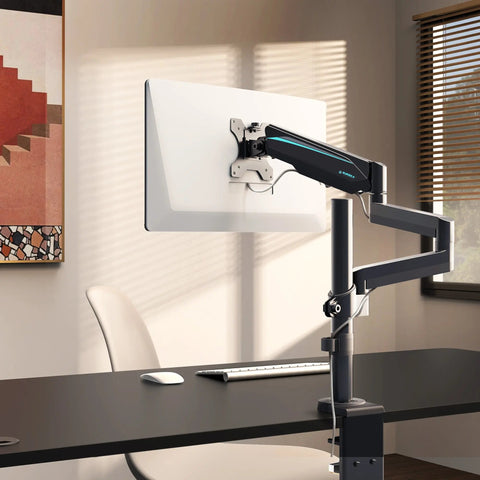
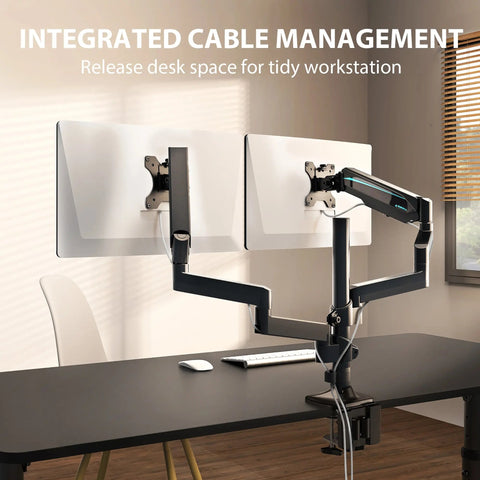
- Use a Monitor Arm: This is the single most effective way to reclaim "real estate" on your desk. By eliminating the bulky monitor base, you open up the area directly beneath your screen for a clean, airy feel.
- Mount the Power Strip: Never let a power strip sit on top of the desk. Mount it underneath the surface using high-quality adhesive or screw-in brackets.
- Utilize Magnetic Solutions: Traditional Velcro ties attract dust and pet hair, which can look "fuzzy" and messy over time. The Magnetic Cable Tie offers a cleaner alternative. These ties allow you to snap cables together and even anchor them to the metal frame of your desk, keeping them out of sight.

4. Precision Ergonomics: The Keyboard and Monitor Layout
Minimalism shouldn't come at the cost of your wrists or neck. The Cornell University Ergonomics Web provides a "20-8-2" rhythm (20 minutes sitting, 8 minutes standing, 2 minutes moving), but this only works if your equipment is positioned correctly in both modes.
The Keyboard Tray Advantage: While many minimalist desks prioritize a thin profile, adding a Pull-out Keyboard Tray can actually enhance the minimalist aesthetic by hiding the keyboard and mouse when not in use. More importantly, it allows you to maintain a "neutral" wrist position. OSHA's guidelines on keyboards state that the keyboard should be at a height that allows your elbows to stay at an open angle (90 to 110 degrees), which is often lower than the desk surface itself.
Monitor Height: Your monitor should be positioned so the top line of text is at or slightly below eye level. This prevents the "forward head poke" that leads to neck strain. Safe Work Australia's workstation setup guide warns that musculoskeletal disorders are often the result of these small, repetitive postural errors.
5. Scenario Modeling: The Petite Professional
To demonstrate how these principles apply in the real world, we modeled a setup for a "Petite Professional" (a user approximately 155cm / 5'1" tall). This persona often struggles with standard furniture that is designed for a much larger "average" user.
The Challenge: A standard 29-inch desk is roughly 4.5 inches too high for a 5'1" user when sitting. This forces the user to raise their chair, which then leaves their feet dangling—a major cause of lower back pain and poor circulation.
The Minimalist Solution: By using a height-adjustable desk like the Ark Executive Standing Desk (63"x29"), the user can lower the surface to their ideal sitting height (~24.5 inches). This allows them to keep their feet flat on the floor while maintaining a clear, minimalist desktop.
Modeling Note: Petite Professional Setup (155cm User)
Methodology: This scenario uses a deterministic parameterized model based on ANSI/HFES 100-2007 anthropometric ratios. It is a scenario model, not a controlled lab study.
| Parameter | Value | Unit | Rationale |
|---|---|---|---|
| Ideal Sitting Desk Height | ~24.5 | inches | 5th percentile female elbow height |
| Ideal Standing Height | ~37 | inches | 5th percentile female standing elbow height |
| Viewing Distance (27" 4K) | ~31 | inches | Optimal 60° FOV for visual immersion |
| Est. Annual Productivity Gain | ~$1,575 | USD | 10% uplift coefficient based on comfort |
| Surface Clearance Goal | >70 | % | Cognitive load reduction target |
Boundary Conditions: This model assumes a lightweight tech setup (laptop + 1 monitor). Users with pre-existing back conditions should consult a professional before adopting a standing routine.

6. Atmosphere and Ambiance: Lighting and Greenery
A true sanctuary appeals to all the senses. Once the functional elements are in place, the final step is to build the "Ambiance."
- Indirect Lighting: Avoid bulky, focal-point desk lamps. Instead, use ambient LED strips under shelves or behind the monitor. This provides "bias lighting," which reduces eye strain by decreasing the contrast between the bright screen and the dark room, as recommended by OSHA's workstation environment guide.
- Mindfulness with Greenery: A single, low-maintenance plant (like a Snake Plant or Pothos) adds a touch of life without creating clutter. This "biophilic design" has been shown to improve mood and focus.
- Acoustic Mindfulness: In a minimalist space, sound carries. A high-quality desk mat can dampen the sound of your keyboard and mouse, contributing to a quieter, more focused environment.
7. Maintenance: The Daily Declutter Ritual
The most beautiful minimalist setup will fail if it isn't maintained. We recommend a "Reset to Zero" ritual at the end of every workday.
- Clear the Surface: Return all pens, notebooks, and headphones to their designated storage (like the drawers in the Ark Executive Standing Desk (63"x29")).
- Wipe Down: A quick wipe of the walnut surface removes dust and fingerprints, preserving the "Aesthetic" and "Workflow."
- Cable Check: Ensure your Magnetic Cable Ties are still securely holding your charging cables in place.
By spending just two minutes at the end of the day to "reset," you ensure that tomorrow starts with a clean slate and a clear mind.
Summary Checklist for Your Workspace Sanctuary
| Component | Minimalist Action Item | Ergonomic Goal |
|---|---|---|
| Desk | Choose a height-adjustable walnut surface with drawers. | Enable sit-stand transitions (20-8-2 rule). |
| Chair | Select a dual-backrest design for dynamic support. | Support neutral spine and micro-movements. |
| Cables | Use magnetic ties and mount power strips underneath. | Achieve 70% surface clearance; reduce stress. |
| Input | Install a pull-out keyboard tray. | Maintain neutral wrist angles (90-110°). |
| Monitor | Use a monitor arm for height and depth adjustment. | Align top of screen with eye level; reduce neck strain. |
Trust & Safety Disclaimer
This article is for informational purposes only and does not constitute professional medical or ergonomic advice. While the setup tips provided are based on industry standards like BIFMA and OSHA, individual needs vary significantly. If you suffer from chronic pain or have pre-existing musculoskeletal conditions, please consult a qualified ergonomist or healthcare professional before making significant changes to your workstation or starting a standing routine.
References
- BIFMA G1-2013 Ergonomics Guideline for Furniture
- Canadian Centre for Occupational Health and Safety (CCOHS): Office Ergonomics - Sit/Stand Desk
- Cochrane Library: Workplace interventions for reducing sitting at work (2018)
- Cornell University Ergonomics Web — Workstation Guides
- OSHA eTools: Computer Workstations Checklist
- Safe Work Australia: Workstation set-up infographic
- World Health Organization (WHO): Guidelines on Physical Activity & Sedentary Behaviour
- The 2026 Workstation White Paper: Converging Ergonomic Science and Sustainable Engineering




Leave a comment