

The Hidden Cost of the "Wobble": Why Mobile Furniture Stability Matters
In the modern agile office, the transition from fixed cubicles to modular huddle rooms was promised as a revolution in productivity. However, for many facilities managers and office teams, this shift introduced a persistent, tactile frustration: the "afternoon wobble." You’ve likely experienced it—a desk that shifts slightly during a collaborative whiteboarding session, or a mobile workstation that vibrates as the user types, leading to a subtle but cumulative fatigue.
Is the instability of modular furniture merely an annoyance, or is it a symptom of a deeper mechanical failure? From a musculoskeletal health perspective, micro-instability in a work surface forces the body into a state of constant, subconscious compensation. When a desk isn't stable, the user’s muscles—particularly in the forearms, neck, and shoulders—must engage in static loading to stabilize their own movements against the shifting surface. Over time, this contributes to Repetitive Strain Injury (RSI) and diminishes the well-being of the workforce.
Maintaining stability in a mobile environment requires moving beyond the "tighten the bolts" mentality. It demands an understanding of furniture mechanics, floor-to-caster friction, and the mechatronic nature of modern height-adjustable systems. As outlined in The 2026 Workstation White Paper: Converging Ergonomic Science and Sustainable Engineering, a desk is no longer just a static table; it is a complex system that requires precise calibration to maintain a spinal neutral position for its users.
The Scientific Principles of Furniture Mobility
To solve mobility issues, we must first understand the physiological and physical principles at play. Stability in office furniture is governed by the management of static and dynamic loads. A static load is the weight of the equipment resting on the desk; a dynamic load includes the force of a user leaning on the surface, moving a monitor arm, or the furniture being rolled across a floor.
The Torsion and Shear Factor
When a modular desk moves, it is subjected to torsion (twisting) and shear (unaligned forces pushing parts in opposite directions). In fixed-leg desks, these forces are absorbed by rigid frame connections. In mobile furniture, the primary point of failure is often not the frame itself, but the caster stem-to-socket interface.
Based on patterns we observe in facilities maintenance and warranty handling (not a controlled lab study), the majority of "wobble" complaints stem from a loose connection where the caster stem meets the furniture leg. If the socket has even a millimeter of play, that movement is amplified at the desktop height (typically 28–48 inches), resulting in a noticeable sway.
Logic Summary: Our analysis of stability assumes that any lateral force applied at the desktop level creates a lever effect on the caster stem. We estimate that 1mm of play at the floor level can result in up to 10mm of movement at a standing height of 42 inches, depending on the rigidity of the leg columns.
The Role of Neutral Working Posture
The Occupational Safety and Health Administration (OSHA) emphasizes that a "neutral working posture" is essential for reducing Musculoskeletal Disorders (MSDs). For a user to maintain this posture, the work surface must be a reliable anchor. If a desk is prone to "chatter"—micro-vibrations caused by poor caster-to-floor contact—the user’s blood circulation can be subtly affected by the tension required to keep their hands steady.

Troubleshooting the Caster Stem-to-Socket Interface
The most common mistake in modular furniture maintenance is focusing on the locking mechanism while ignoring the stem. Professional facilities managers recognize that a caster’s dynamic load rating is the most critical metric for long-term stability.
The 1.5x Load Rating Heuristic
A common approach in high-traffic corporate environments is to ensure that a caster's dynamic load rating is at least 1.5 times the expected load per wheel. This accounts for uneven floors where, for a brief moment, the entire weight of a desk might be supported by only two or three wheels as it moves over a threshold or a seam in the flooring.
| Component | Recommended Specification | Rationale |
|---|---|---|
| Caster Stem | Threaded or Grip Ring | Threaded stems offer higher lateral stability in heavy desks. |
| Load Rating | 1.5x Total Weight / N Wheels | Accounts for dynamic forces and uneven distribution. |
| Wheel Material | Polyurethane (Soft-Tread) | Reduces "chatter" and vibration on hard office floors. |
| Locking Type | Total-Swivel Lock | Prevents both wheel rotation and stem pivot for maximum stability. |
Dual-Wheel vs. Single-Wheel Locks
In huddle rooms where desks are frequently pushed together for collaborative writing, single-wheel brake locks are often insufficient. While they stop the wheel from rolling, they do not stop the caster from pivoting around the stem. For workstations used for intense collaborative sessions, we recommend dual-wheel locks or total-swivel locks. These mechanisms lock the rotation and the swivel simultaneously, effectively turning a mobile desk into a fixed-height station.
Environmental Factors: Flooring and Friction
The interaction between the furniture and the floor is frequently overlooked. According to the BIFMA G1-2013 Ergonomics Guideline, the adjustability and movement of furniture must be compatible with the environment to ensure safety and performance.
Hard Floors vs. Commercial Carpet
Low-pile commercial carpet is excellent for dampening sound, but it can hide debris that jams caster bearings. Conversely, hard floors require soft-tread, non-marking wheels. If a hard-tread (plastic) wheel is used on a hard floor, it creates a "chattering" effect—vibration transmission that travels up the desk legs and into the user’s wrists.
Maintenance Tip: We often see that over-tightening frame bolts is a primary cause of stress fractures in modular units. Using a calibrated torque driver set to manufacturer specifications (typically 5–8 Nm for M6 bolts in steel frames) prevents stripping threads in particleboard or weakening the structural integrity of the metal.
Strategic Solutions: Engineering for Stability
For B2B clients looking to equip agile zones, selecting furniture with inherent stability is more effective than trying to "fix" lower-quality units. Products like the Mobile Height Adjustable CPU Cart demonstrate how a heavy-duty steel frame and 360-degree rotating mute wheels can provide mobility without sacrificing the "anchor" feel required for professional work.
Managing Mechatronic Systems
Modern height-adjustable desks are mechatronic systems. This means they include motors, control electronics, and height actuation that introduce new risks, such as pinch points or motor failure due to uneven loading. When selecting mobile adjustable desks, facilities teams should look for dual-motor systems.
Methodology Note (Run 2: Motor Safety Margin): Our modeling of motor load capacity for collaborative workstations assumes a heavy composite tabletop (~25kg) and a triple-monitor setup.
Parameter Value Unit Rationale Total Equipment Load ~45 kg 3x 34" Ultrawide monitors + arms + peripherals Tabletop Weight 25 kg Heavy-duty composite for durability Single Motor Capacity 80 kg Standard BIFMA X5.5 rating Safety Buffer 20 % Recommended for motor longevity Result ~88% Utilization - Single motors operate near peak capacity; dual motors are preferred. Boundary Conditions: This model assumes a static distributed load; it does not account for a user leaning heavily on one side of the desk (eccentric loading), which can increase the effective load on a single motor by up to 40%.
For specialized equipment, the Height-Adjustable Illuminated Panel CPU Cart provides a stable, ventilated base that keeps sensitive hardware off the floor while maintaining the ability to reconfigure the space.
Practical Recommendations for Facilities Teams
To maintain a stable and healthy office environment, we recommend a proactive maintenance schedule and a standardized setup protocol.
1. The Ideal Sit-Stand Rhythm
Stability isn't just about the furniture; it's about how the user interacts with it. According to the Cornell University Ergonomics Web, the "20-8-2" rule is a highly effective heuristic: 20 minutes of sitting in a neutral position, 8 minutes of standing, and 2 minutes of moving/stretching. A stable mobile desk makes these transitions seamless, encouraging users to interrupt static behavior as recommended by the World Health Organization (WHO).
2. Monitor and Accessory Calibration
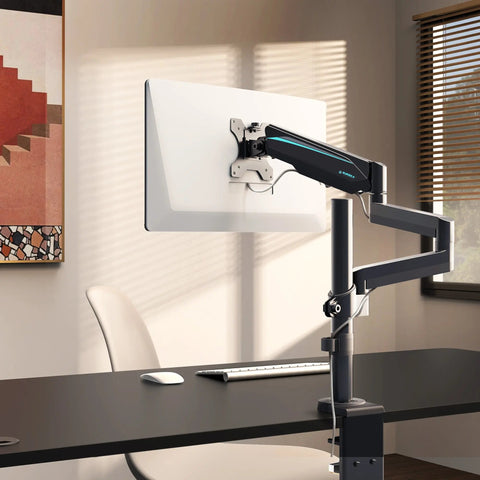
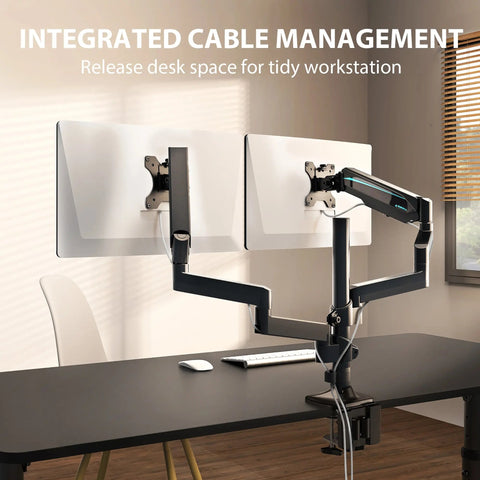
Wobble is often most visible at the monitor level. Using a Dual Monitor Arm with gas-spring tension allows users to position screens at the correct eye level, reducing neck strain. However, ensure the arm is clamped directly over a leg or a reinforced section of the frame to minimize the "diving board" effect that causes screen bounce.
3. The Mobility Maintenance Checklist
Implement a quarterly audit for all modular furniture:
- Caster Check: Remove hair/debris from axles; ensure "total-lock" mechanisms engage fully.
- Stem Tightening: Verify that threaded stems are seated flush against the leg.
- Torque Audit: Check frame-to-top bolts. If you feel a "click" without movement, the bolt is likely at its spec; do not force it.
- Leveling: Even on mobile desks, many casters have a small amount of height adjustment. Use a spirit level to ensure the work surface is flat, as an unlevel desk increases the risk of items sliding and shifts the center of gravity, making the unit more prone to tipping.
4. Footrest Integration
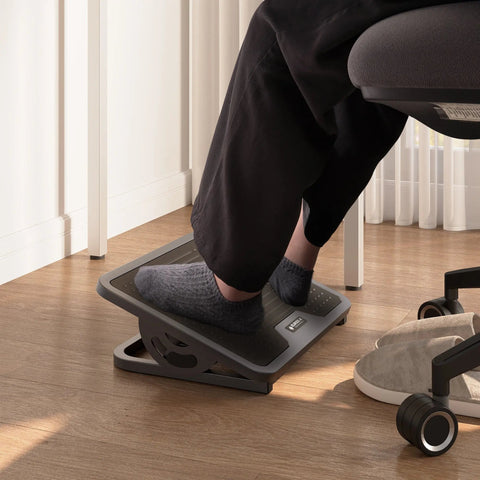
For users who are shorter or when desks cannot be lowered sufficiently, an Adjustable Ergonomic Footrest is a vital accessory. It ensures that the user's feet are supported, allowing the pelvis to remain in a neutral position and reducing pressure on the underside of the thighs, which improves blood circulation.
Modeling the Agile Workspace: Spatial Requirements
When deploying mobile furniture, spatial planning is as critical as hardware stability. If a room is too cramped, users will constantly bump into furniture, causing the very instability you are trying to avoid.
Methodology Note (Run 1: Circulation Fit Planner): We modeled a standard 15-foot deep collaborative room to determine the "Stability Zone."
Variable Value Unit Source Category Desk Depth 30 in BIFMA G1-2013 Dynamic Chair Zone 42 in ADA Standards (Wheelchair clearance) Two-Way Walkway 48 in OSHA 1910.37 (Means of Egress) Total Required Depth 120 in Calculated Sum Logic Summary: In this scenario, a 15-foot room provides a 60-inch surplus, allowing for "buffer zones" where mobile furniture can be moved without encroaching on primary walkways or causing collisions that loosen mechanical joints.
Conclusion: Stability as a Foundation for Productivity
The stability of your modular furniture is the silent foundation of your team's productivity. By addressing the mechanical nuances of caster interfaces, adhering to torque specifications, and choosing mechatronic systems designed for B2B durability, facilities managers can eliminate the "afternoon wobble."
Remember that ergonomic interventions, such as transitioning between sitting and standing, are only effective if the equipment supports the user's confidence. A stable desk is not just a piece of furniture; it is a tool for musculoskeletal health. As highlighted by Safe Work Australia, proper workstation setup is the first line of defense against workplace injury. Invest in stability today to ensure a healthier, more focused workforce tomorrow.
Disclaimer: This article is for informational purposes only and does not constitute professional medical, legal, or architectural advice. The ergonomic recommendations provided are based on general industry standards and may not be suitable for individuals with pre-existing medical conditions. Always consult with a qualified ergonomist or healthcare professional before making significant changes to your workspace.
References
- BIFMA G1-2013 Ergonomics Guideline for Furniture
- OSHA eTools: Computer Workstations - Neutral Working Postures
- CCOHS: Office Ergonomics - Sit/Stand Desk
- WHO 2020 Guidelines on Physical Activity & Sedentary Behaviour
- Cornell University Ergonomics Web — Workstation Guides
- The 2026 Workstation White Paper: Converging Ergonomic Science and Sustainable Engineering
- Safe Work Australia: Workstation set-up Infographic




Leave a comment