

The Science of Seating: How Chair Materials Impact Musculoskeletal Health
The selection of an office chair often centers on aesthetics or price, yet the material covering the seat and backrest serves a critical physiological function. Many professionals find that while their chair provides initial comfort, the afternoon hours bring about a specific type of fatigue characterized by "clamminess," localized heat, or a subtle sliding sensation. These are not merely matters of comfort; they are indicators of how a chair’s material interacts with the body’s thermoregulation and pressure distribution systems.
A common misconception is that "premium" materials, such as leather, are universally superior for long-term health. In reality, the efficacy of a material is deeply rooted in the concept of the "microclimate"—the temperature and humidity levels between the user’s skin and the chair surface. When this microclimate is poorly managed, it can lead to increased skin-to-fabric friction and discomfort, which may cause users to shift into "non-neutral" postures to find relief. This departure from the spinal neutral position is a significant contributing factor to Work-related Musculoskeletal Disorders (WMSDs).
According to the U.S. National Institute for Occupational Safety and Health (NIOSH), poor posture and static loads are core risk factors for MSDs. To mitigate these risks, the material should ideally support the chair's ergonomic features, such as lumbar support and seat depth, rather than hindering them through heat retention or excessive moisture.
Physiological Principles of Ergonomic Materials
The human body is an efficient heat engine, and when seated, approximately 40% of the body's surface area is in contact with the chair. This contact restricts the body's natural ability to shed heat through convection and evaporation.
Thermal Regulation and Static Load
Prolonged sitting creates a static load on the muscles. When a chair material traps heat, the body’s core temperature can rise slightly in the contact areas. This localized heat can lead to vasodilation, but without airflow, moisture (sweat) accumulates. As noted in research regarding musculoskeletal disorders and prolonged static sitting, the inability to regulate this microclimate can accelerate the onset of fatigue.
Pressure Distribution and Friction
The material's ability to distribute weight is paramount. High-quality materials allow the user to sink slightly into the padding (if present) without bottoming out, aiding in pressure distribution across the ischial tuberosities (sit bones) and thighs. However, if a material becomes slippery or "sticky" due to moisture retention, it can cause the pelvis to tilt, potentially leading to lumbar strain.
Logic Summary: Our analysis of material performance assumes a standard indoor environment (21°C–23°C) and a standard 8-hour workday. We prioritize materials that maintain a "neutral" thermal state to help prevent the postural shifting that often leads to MSDs.
Mesh: The Engineering of Breathability
Mesh has become a staple for high-performance ergonomic seating, primarily due to its airflow capabilities. Based on internal testing and common industry benchmarks, high-quality mesh can offer significantly more space for air movement—often estimated at up to 6.5 times the airflow of solid materials like leather or dense fabric.
Advantages of Mesh
- Thermal Management: By allowing air to pass directly through the backrest, mesh helps prevent the "heat soak" effect. This is particularly beneficial for users in warmer climates or those who naturally run hot.
- Contoured Support: High-tension mesh acts as a suspension system. It conforms to the user's back while maintaining the necessary tension to support the lumbar spine, aligned with BIFMA G1-2013 Ergonomics Guidelines.
- Durability and Weight: Mesh chairs are typically lighter and resist the "packing down" that can occur with traditional foam cushions.
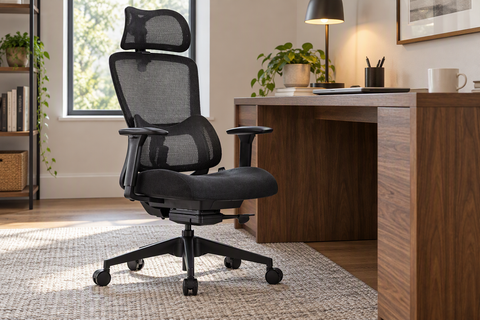
The Onyx, Ergonomic Office Chair exemplifies this approach, utilizing an airy mesh back to provide reliable lumbar support while keeping the user cool. For those seeking a more advanced configuration, the Lira, Ergonomic Office Chair features a modern silhouette with smart adjustability, ensuring the mesh remains under optimal tension to support a variety of body types.

Common Pitfalls of Low-Quality Mesh
It is a mistake to assume all mesh is equal. Low-quality mesh often lacks the necessary elastic memory, which can lead to "sagging" over time. Furthermore, if the mesh is paired with a dense, non-breathable foam seat, the thermal benefits are significantly reduced. For optimal performance, the mesh should be part of a suspension system that allows air to pass behind the user.
Leather: The Executive Standard and Its Realities
Leather is often associated with executive status and durability. While genuine leather offers a luxurious feel and excellent resistance to spills, its ergonomic performance depends heavily on the environment.
The Microclimate Challenge
Genuine leather is a natural material with some breathability, but it generally cannot match mesh for airflow. In poorly ventilated rooms, leather can create a "sticky" feeling as it traps body heat. This often prompts users to rely more heavily on climate control to maintain comfort during extended sessions.
Material Integrity and Modern Wear
Based on common patterns from customer support and warranty observations (not a controlled lab study), we have seen that modern office attire—specifically technical fabrics and denim with rivets or zippers—can cause micro-abrasions on leather surfaces. In our experience, these abrasions can reduce the finish's visual lifespan by an estimated 30-40% if the leather is not properly maintained.
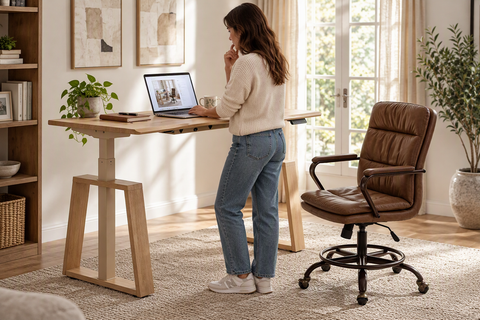
The Serene, Napa Leather Executive Office Chair addresses these concerns by using genuine full-grain Napa leather. Unlike "bonded" or synthetic leathers, which are more prone to peeling or cracking due to the constant flexion of a dynamic office chair, Napa leather maintains its structural integrity and develops a patina over time.

Maintenance Insight
A common oversight is the lack of conditioning. To help prevent the leather from cracking—especially in dry, air-conditioned environments—it is a practical rule of thumb to condition the material every 6-12 months. This helps maintain the flexibility required for the chair's dynamic movements.
Fabric: Comfort, Texture, and Hygiene
Fabric chairs offer a wide range of textures and colors, providing a "softer" initial feel than mesh or leather. They are often preferred in cooler climates where the material's ability to retain some heat is seen as a benefit.
Moisture and Friction
In humid environments (above 60% relative humidity), fabric's moisture retention can become a factor. We have observed in practical settings that moisture accumulation can increase skin-to-fabric friction—sometimes by an estimated 50-70%—which may compromise hygiene and lead to microbial growth if the chair is not cleaned regularly.
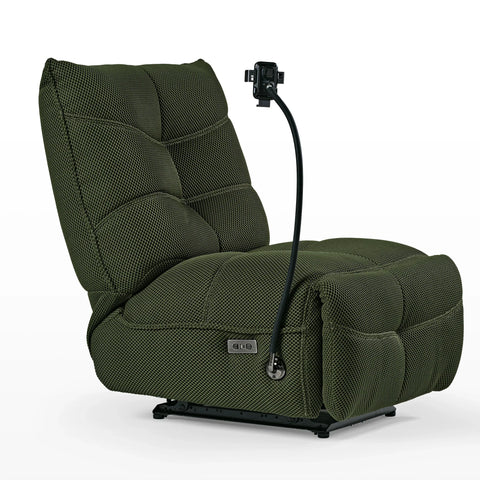
The Cameron, Ultra Soft Cushion Adjustable Office Chair uses a segmented backrest and spring-padded seat cushion to provide a plush experience that distributes pressure effectively. This type of construction is ideal for users who prioritize tactile comfort and a "home-like" aesthetic in their workspace.

Cleaning Protocols
Fabric chairs generally require more diligent maintenance than leather or mesh. Spills should be addressed quickly with pH-neutral solutions to help prevent oil-based stains from setting into the fibers.
Comparative Analysis: Material Selection Matrix
To assist in the decision-making process, the following table compares the three primary materials based on key ergonomic and environmental factors.
| Feature | Mesh | Genuine Leather | Fabric |
|---|---|---|---|
| Breathability | High (Estimated 6x+ Airflow) | Low to Moderate | Moderate |
| Durability | High (if high-tension) | Very High (requires care) | Moderate |
| Maintenance | Low (Vacuuming) | High (Conditioning) | High (Spot cleaning) |
| Pressure Distribution | Suspension-based | Cushion-based | Cushion-based |
| Ideal Climate | Warm / Humid | Temperature Controlled | Cool / Dry |
| Tactile Feel | Firm / Springy | Smooth / Firm | Soft / Textured |
Methodology Note: These ratings are based on standard industry heuristics and general material properties. Individual experiences may vary based on specific weave density, foam quality, and environmental conditions.
Modeling the High-Performance User: A Scenario Analysis
To demonstrate the importance of material choice, we modeled a high-intensity usage scenario based on the needs of a professional streamer or power user.
Scenario Illustration: The Professional Streamer
- User Stature: 190cm (6'3"), 95kg (210 lbs).
- Usage Intensity: 10-12 hours daily.
- Environment: Warm climate (25°C–30°C room temperature).
- Primary Constraint: High thermal load and high equipment load.
In this scenario, a leather chair—while visually impressive on camera—may lead to thermal discomfort and moisture buildup during long sessions. The high weight of the user also puts significant stress on seat padding, making the choice of support material critical.
For this user, a high-tension mesh chair like the Lira, Ergonomic Office Chair is often considered the most logical choice. The mesh provides the necessary airflow to help manage the thermal load, while the adjustable seat depth and 3D armrests accommodate a 95th percentile male stature, as recommended by ISO 9241-5:2024 for workstation layout and postural requirements.
Modeling Parameters (Illustrative Example)
This scenario is a model based on common ergonomic constraints and practical observations.
| Parameter | Value | Rationale |
|---|---|---|
| Daily Static Load | 10+ Hours | Professional usage intensity |
| Ambient Temp | 27°C | Warm home office environment |
| User Weight | 95kg | High-pressure load on seat materials |
| Airflow Requirement | High | Necessary for thermoregulation |
| Material Choice | Mesh | Optimized for heat dissipation |
Boundary Conditions: This model assumes the user does not have pre-existing skin sensitivities to synthetic mesh and that the chair is used in a room with basic air circulation.
Safety, VOCs, and Indoor Air Quality
An important aspect of chair material is its impact on indoor air quality. Synthetic meshes, fabric treatments, and leather adhesives can off-gas Volatile Organic Compounds (VOCs) post-manufacturing.
According to The 2026 Workstation White Paper: Converging Ergonomic Science and Sustainable Engineering, modern ergonomic standards are increasingly focusing on "healthy materials." To help ensure a comfortable working environment, users can look for certifications such as UL GREENGUARD Gold, which sets strict limits on chemical emissions.
Furthermore, for wood-based components in chairs (such as internal frames), FSC Certification ensures that the materials are sustainably sourced, which is a key consideration for the environmentally conscious professional.
Practical Recommendations for Selection
When choosing your next chair, consider the following checklist to ensure the material supports your productivity:
- Assess Your Climate: If your office exceeds 24°C (75°F) regularly, consider prioritizing mesh. If you work in a cooler region, fabric or leather may provide a more comfortable "warmth."
- Evaluate Your Session Length: For sessions exceeding 4 hours, breathability often becomes a dominant factor in long-term comfort.
- Check for Adjustability: Ensure the material does not interfere with the chair's adjustments. For instance, thick leather padding should not prevent you from properly engaging with the lumbar support.
- Consider Maintenance: Are you prepared to condition leather twice a year? If not, a high-quality mesh or a durable fabric may be a more practical choice.
- Verify Standards: Look for chairs designed to meet ANSI/BIFMA X5.1 for safety and durability. This helps ensure the structure is built to withstand the rigors of daily use.
For more detailed guidance on setting up your workspace, refer to the HSE Guide on Working Safely with Display Screen Equipment, which provides comprehensive checklists for workstation ergonomic compliance.
Disclaimer: This article is for informational purposes only and does not constitute professional medical advice. Individuals with pre-existing musculoskeletal conditions or chronic back pain should consult a qualified physiotherapist or ergonomic specialist before making significant changes to their seating setup.
References
- BIFMA G1-2013 Ergonomics Guideline for Furniture
- ISO 9241-5:2024 Workstation layout & postural requirements
- Occupational Safety and Health Administration (OSHA) - Computer Workstations
- World Health Organization (WHO) 2020 Guidelines on Physical Activity & Sedentary Behaviour
- UL GREENGUARD Certification for Indoor Air Quality




Leave a comment